
Selecting the right Makita air compressor for home garage tire maintenance in Singapore requires a clear understanding of your vehicle’s specifications, your residential layout, and local electrical standards. Whether you live in a high-rise Housing & Development Board (HDB) flat, a condominium, or a landed property, your choice of equipment must align with practical constraints like noise limits, storage space, and power accessibility. Rather than purchasing the largest or most powerful unit available, the most effective approach is to match a compressor’s capabilities with your routine maintenance needs.
Regular tire inflation is crucial for vehicle safety, fuel efficiency, and tire longevity. In Singapore’s warm climate, tire pressures can fluctuate, making routine checks a vital part of car ownership. By evaluating key performance metrics, power delivery systems, and environmental factors, you can identify a reliable Makita tool that fits seamlessly into your home garage setup without causing unnecessary disruption to your household or neighbors.
Key Specifications for Tire Inflation and Garage Use
To choose an appropriate air compressor, you must first understand the technical specifications that dictate how quickly and safely a unit can inflate your tires. The three primary metrics to evaluate are maximum pressure (measured in PSI), air flow rate (measured in CFM), and the motor’s duty cycle.
Products mentioned in this guide
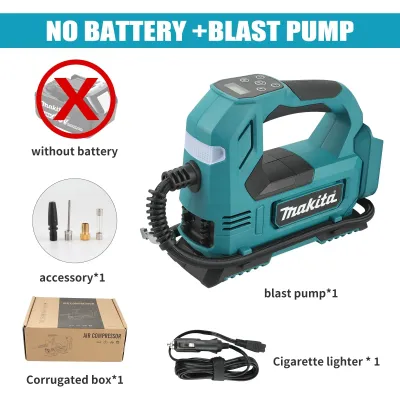
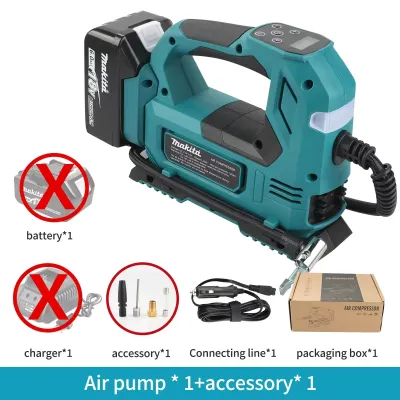
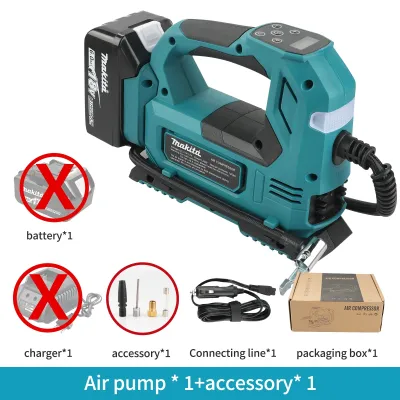
Prices are valid at publication and may change. Please refer to the product page for the latest price.
Maximum pressure, or Pounds per Square Inch (PSI), determines the compressor’s ability to push air into a tire against its existing internal pressure. For standard passenger cars in Singapore, recommended tire pressures typically range from 30 to 35 PSI. Larger vehicles, such as sports utility vehicles (SUVs), multi-purpose vehicles (MPVs), or light commercial vans, often require higher pressures, sometimes ranging from 40 to 45 PSI or more. When reviewing Makita’s product lineup, ensure the compressor or inflator has a maximum PSI rating that comfortably exceeds your vehicle’s requirements. Most portable Makita inflators easily deliver up to 120 PSI or more, which is more than sufficient for domestic vehicles, but verifying this on the product’s official specification sheet is a necessary first step. Always refer to your vehicle’s tire placard, usually located on the driver’s side door pillar or in the owner’s manual, to confirm the exact recommended cold inflation pressure.
Cubic Feet per Minute (CFM) measures the volume of air the compressor delivers at a specific pressure level. While PSI determines whether a compressor can inflate a tire, CFM determines how fast it can do so. A higher CFM rating means the compressor can fill a tire much quicker, reducing the time you spend waiting. For simple tire top-ups, a low CFM rating is perfectly acceptable, though it will take longer to inflate a completely flat tire. If you plan to use the compressor for larger tires or multiple vehicles in succession, look for a model that offers a balanced CFM delivery at typical tire pressures (usually rated at 40 PSI or 90 PSI on technical data sheets).
The duty cycle is another critical specification, representing the percentage of time a compressor can operate within a specific timeframe (usually 10 minutes) without overheating. For example, a compressor with a 50% duty cycle can run continuously for 5 minutes but must rest for the next 5 minutes to cool down. Dedicated tire inflators often have shorter duty cycles compared to larger, tank-based workshop compressors. If you are performing routine maintenance on four large SUV tires, a low duty cycle might force you to pause between tires to prevent the motor from overheating. Always check the manufacturer’s operating manual for the recommended continuous run-time limits to protect the tool’s motor from premature wear.
Power Source Options: Cordless vs. Corded in Singapore
Deciding between a cordless battery-powered inflator and a corded electric air compressor depends heavily on where you park and maintain your vehicle. Singapore’s diverse housing landscapes present unique challenges for power access, making the power source a primary decision factor.

Cordless air compressors and inflators, particularly those utilizing Makita’s 18V LXT or 40V Max XGT battery platforms, offer unmatched portability and convenience. If you park your vehicle in an HDB multi-storey car park, an open-air surface lot, or a condominium shared garage, a cordless tool is often the only practical option. These units allow you to move freely around the vehicle without searching for an electrical outlet or managing long, tangled extension cords. Furthermore, if you already own other Makita cordless power tools, you can purchase the compressor as a “bare tool” (without batteries or a charger), which significantly reduces the initial purchase cost.
If you have a dedicated garage or driveway in a landed property with easy access to a wall outlet, a corded electric compressor provides continuous, uninterrupted power. However, when purchasing a corded model, you must perform critical electrical checks to ensure safety and compatibility with Singapore’s electrical grid. Singapore operates on a 230V/50Hz electrical supply and utilizes Type G three-pin plugs. You must verify that any corded Makita compressor you purchase is designed for this voltage and frequency. Avoid purchasing parallel imports intended for markets with 110V/60Hz standards (such as North America), as plugging these into a local outlet will cause immediate, irreversible damage to the motor and poses a severe electrical hazard. Using heavy step-down transformers is highly impractical for garage environments and should be avoided.
It is also worth comparing dedicated 12V vehicle inflators—which plug directly into your car’s accessory socket—against standard garage compressors. While 12V inflators are highly portable and excellent for emergency roadside use, they generally offer lower flow rates and shorter duty cycles than cordless battery-powered tools or corded workshop models. For regular, comfortable home maintenance, a robust cordless platform or a dedicated home compressor is typically more efficient and reliable than relying on your vehicle’s electrical system.
Residential Constraints: Noise, Storage, and Climate
Operating an air compressor in a residential area in Singapore requires careful consideration of your immediate environment. Noise levels, storage limitations, and the tropical climate all play a significant role in determining which model is most suitable for your home.
Noise is a primary concern in high-density residential areas. Standard oil-free air compressors can be exceptionally loud, often producing noise levels between 80 and 90 decibels (dBA). In an HDB estate or a close-knit condominium development, operating a loud compressor can easily disturb your neighbors. When browsing Makita’s catalog, pay close attention to the dBA rating listed in the specifications. Some models are specifically engineered as “quiet series” compressors, utilizing dual-piston pumps and lower-speed motors to keep noise levels below 60 dBA. Regardless of the model you choose, it is best practice to perform tire maintenance during reasonable daytime hours to maintain good neighborly relations.
Storage space is another major constraint for many Singapore homeowners. Large, tank-based compressors with capacities of 10 to 20 liters or more require significant floor space and can be difficult to store in utility closets or household shelters. For basic tire maintenance, a tankless cordless inflator or a highly compact 3-liter to 10-liter portable compressor is usually sufficient. These smaller units can be easily tucked away on a shelf or in a cabinet when not in use. Consider the physical dimensions and weight of the unit before purchasing, ensuring you can comfortably lift and transport it to your vehicle.
Singapore’s tropical climate, characterized by high temperatures and relative humidity levels that frequently exceed 80%, presents a harsh environment for mechanical equipment. High humidity leads to rapid moisture accumulation inside air compressor tanks during the compression process. If left unmanaged, this moisture can cause internal rust, weakening the tank over time and posing a safety risk. To protect your equipment, you must implement a strict moisture management routine. This includes storing the compressor in a dry, well-ventilated indoor area rather than an exposed outdoor carport, and regularly draining any accumulated water from the tank.
Building Your Makita Shortlist: Verification and Purchasing Steps
Once you have defined your technical requirements and residential constraints, you can begin building a shortlist of potential Makita models. Because product availability can vary significantly by region, a structured verification process is essential before making a purchase.
Start by cross-referencing official Makita specification sheets with the inventories of local authorized dealers in Singapore. Manufacturers frequently update their product lines, and certain models popular in overseas markets may not be officially distributed locally. Purchasing from an authorized local dealer ensures that you receive a product designed specifically for the local market, complete with the correct voltage ratings and safety certifications.
Verifying warranty coverage is another crucial step. Official Makita products purchased through authorized local channels typically come with a manufacturer’s warranty that can be serviced at official service centers in Singapore. If you purchase a parallel import from an online marketplace or an unauthorized seller, you may find yourself without warranty protection, meaning any repairs or replacement parts must be paid for out of pocket. Always ask the seller to confirm the warranty terms and verify where the tool must be sent for servicing.
Finally, check the package contents of your chosen model to ensure you have all the necessary accessories for tire maintenance. A basic compressor or inflator may not always include the specific hose, tire chuck, or pressure gauge you need. For safe and accurate tire inflation, you will need a high-quality, flexible air hose, a secure clip-on or screw-on tire chuck that prevents air leakage during inflation, and a reliable pressure gauge. While many Makita cordless inflators feature built-in digital pressure gauges with auto-shutoff functions, it is always wise to verify the accuracy of these gauges against a calibrated standalone tire pressure gauge. Always follow the safety instructions provided in both your vehicle’s manual and the compressor’s operating guide, and never exceed the maximum pressure rating of your tires.
Frequently Asked Questions (FAQ)
Can I use a Makita tire inflator for other garage tasks like powering air tools?
No, dedicated tire inflators are generally not suitable for powering air tools. Tire inflators are high-pressure, low-volume (HPLV) devices designed to deliver a small volume of air at high pressure, which is ideal for filling tires or sports equipment. Conversely, air tools like impact wrenches, air ratchets, or paint sprayers require high-volume, low-pressure (HVLP) air delivery, measured in high CFM ratings. To run air tools, you need a larger, tank-based air compressor with a motor and pump capable of maintaining a high continuous CFM output. Attempting to run air tools off a small portable inflator will not work and can damage the tool’s motor.
How often should I check and drain the air tank on a portable compressor?
If you are using a tank-based portable compressor, you should drain the air tank after every use, especially in Singapore’s highly humid climate. When air is compressed, the moisture suspended in the atmosphere condenses into liquid water inside the tank. If this water is left inside, it will cause internal corrosion and rust, which can eventually compromise the structural integrity of the steel tank. To drain the tank safely, first turn off the compressor and disconnect it from the power source. Slowly open the drain valve located at the bottom of the tank to allow the accumulated moisture and remaining air to escape. Always wear eye protection and keep your face away from the valve during this process.
Community discussion
Share your experience or ask a question. Comments are reviewed before publication.