
Selecting the most suitable foam sprayer for home car washing in Singapore depends entirely on your residential setup—specifically whether you wash your vehicle in a landed property with dedicated outdoor taps, a condominium wash bay, or a Housing & Development Board (HDB) multi-storey car park. For landed homes with access to high-pressure water and power outlets, a pressure washer foam cannon delivers the thickest, most effective cleaning foam. Conversely, for HDB residents utilizing shared washing bays or standard parking lots, a manual pump foam sprayer or a portable battery-powered foam gun offers the necessary mobility and independence from fixed utility lines. Selecting the right tool requires balancing your access to water pressure, electrical power, and local estate regulations to ensure a safe, compliant, and efficient wash.
Assessing Your Residential Setup for Car Washing
Singapore’s housing landscape is highly diverse, ranging from high-density HDB estates and private condominiums to landed properties. Each environment presents distinct infrastructural limitations that directly impact your choice of a foam sprayer for car detailing. Before purchasing any equipment, you must conduct a thorough audit of your washing location to avoid buying tools that you cannot legally or physically operate.
First, evaluate your water source. Landed properties typically feature outdoor garden taps with standard threaded connections, allowing for direct hose hookups and high-pressure setups. In contrast, HDB washing bays and condominium car parks often utilize shared, non-threaded taps or push-button water dispensers designed to conserve water. These public taps frequently lack standard threading, requiring specialized universal adapters or clamp-on fittings to secure a hose. Furthermore, the water pressure in shared residential bays can fluctuate significantly depending on usage, which directly affects the performance of low-pressure foam guns.
Products mentioned in this guide
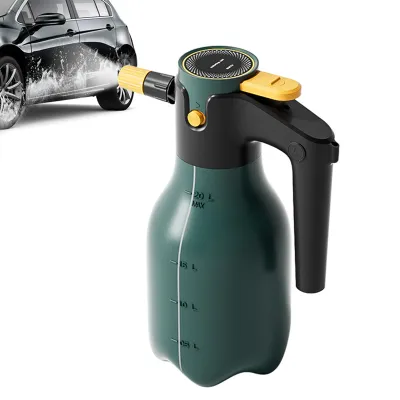
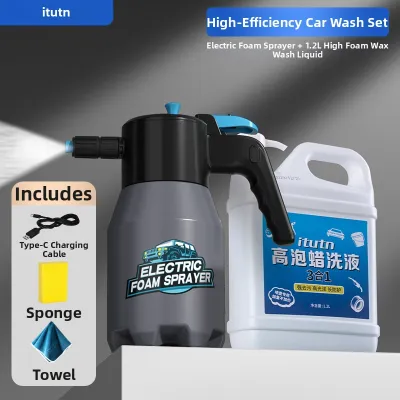
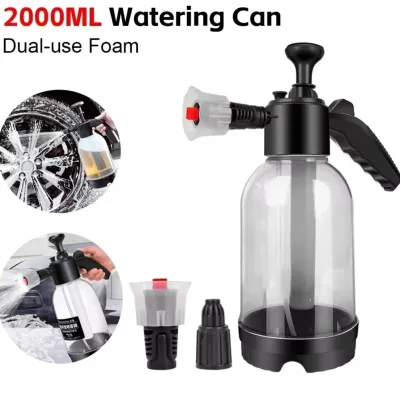
![[SG] 2L Car Wash Foam Spray Gun 🌟 Car Wash Foam Sprayer Car Wash Shampoo Car Wash Sponge Car Wash Cloth Watering Plants](https://img.lazcdn.com/g/p/3446208842b3d5445af222e94ce3bcc3.jpg_400x400q80.jpg_.webp)
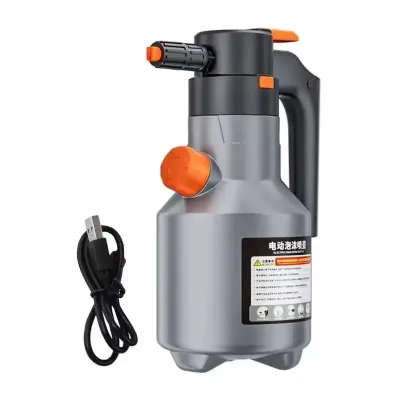
Prices are valid at publication and may change. Please refer to the product page for the latest price.
Second, assess power accessibility. High-performance pressure washers and some heavy-duty foam systems require a constant connection to a mains electrical outlet. In HDB multi-storey car parks and most condominium washing bays, public power outlets are either non-existent or locked for municipal use. Attempting to run long extension cords from your apartment is highly impractical and poses severe safety hazards. If you do not have a dedicated, safe electrical outlet within reach of your washing area, you must rule out corded electric pressure washers and instead focus on manual pump sprayers or battery-operated cordless alternatives.
Finally, consider storage space and portability. Living in a high-rise apartment means every square meter of storage space is valuable. A large pressure washer, along with its hoses, extension cords, and foam cannon attachments, can quickly clutter a utility closet or bomb shelter. If you must transport your washing gear from a high-floor apartment down to a basement or multi-storey car park, a lightweight, self-contained manual pump sprayer or a compact cordless foam gun that fits easily into a portable bucket is far more practical than a bulky, multi-component setup.
Comparing Foam Sprayer Types for Home Use
To choose the most effective foam sprayer for car washing, you must understand the mechanical differences, physical demands, and equipment requirements of the three primary categories available on the market. Each type serves a specific user profile and operating environment, offering distinct trade-offs in terms of foam density, preparation time, and physical effort.

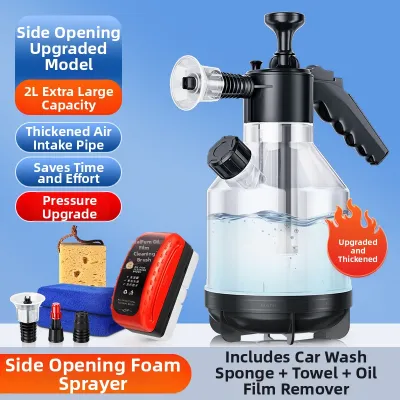
Manual pump sprayers are the most accessible and self-contained option for Singaporean car owners. These devices operate via a hand pump that pressurizes the air inside the plastic bottle, forcing the water-soap mixture through a foaming nozzle when the trigger is depressed. Because they require no external water pressure or electrical power, they are highly portable and ideal for HDB car parks or quick spot-cleaning. However, they demand continuous physical effort; you must manually pump the canister multiple times during a single wash to maintain the internal pressure required for a consistent foam spray. The resulting foam is generally thinner than that produced by high-pressure systems, but it remains highly effective for pre-washing and loosening light road grime.
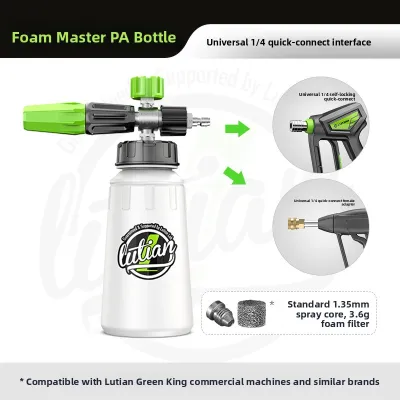
Pressure washer foam cannons represent the highest-performing option for foam density and coverage, making them a popular choice for detailing enthusiasts with landed properties or dedicated wash bays. These devices attach directly to the wand of a high-pressure washer. The high-velocity water stream creates a venturi effect, drawing the concentrated car shampoo from the bottle and mixing it with air to produce a thick, clinging foam. To operate a foam cannon effectively, your pressure washer must meet specific minimum specifications, typically requiring a water pressure of at least 1,100 pounds per square inch (PSI) and a flow rate of 1.4 gallons per minute (GPM). While this setup provides excellent cleaning performance by allowing the foam to dwell on the paintwork longer, it requires a significant initial investment, a constant water supply, and access to electrical power.
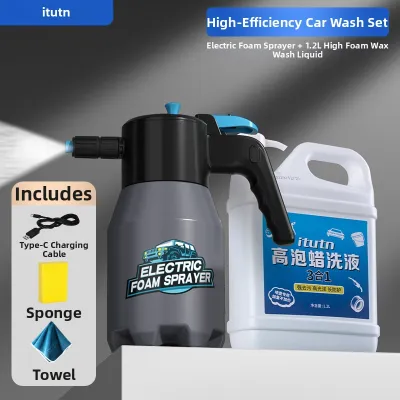
Cordless and battery-powered foam guns offer a modern compromise, blending the portability of manual pump sprayers with the effortless operation of pressurized systems. These devices feature an integrated, rechargeable lithium-ion battery that powers a small internal air compressor or water pump, maintaining constant pressure automatically. This eliminates the physical fatigue of manual pumping while remaining completely independent of wall outlets and garden hoses. When selecting a battery-powered model, you must verify the battery capacity and run-time specifications to ensure it can complete a full vehicle wash on a single charge. Additionally, because these units contain sensitive electronic components and batteries, they require careful maintenance to prevent water ingress and must be stored away from the extreme heat of car trunks or sunny balconies.
Navigating Local Housing and Climate Constraints
Washing a vehicle in Singapore involves navigating strict environmental regulations, community guidelines, and a challenging tropical climate. High-density residential living requires a high level of civic mindfulness to avoid fines, neighbor disputes, or damage to your vehicle’s finish.
In HDB estates and private condominiums, you must strictly adhere to designated washing bays. Washing your car in a standard parking lot is generally prohibited due to water runoff regulations and the risk of creating slipping hazards for pedestrians. Designated wash bays are equipped with proper drainage systems designed to handle soapy runoff and prevent environmental contamination. When using these shared spaces, you must manage your water usage responsibly. Because many public wash bays utilize push-button taps that shut off automatically after a few seconds, using a foam sprayer that requires a continuous, high-pressure water feed can be extremely difficult. In these settings, a manual pump sprayer or a battery-powered unit that draws water from a bucket is often the most compliant and practical choice.
Adapting to local tap configurations is another common hurdle. Public taps in Singaporean car parks often feature non-standard, smooth spigots without threads, or they may use quick-release fittings that are incompatible with standard garden hose connectors. To avoid leaks, high-pressure blowouts, or damaging the public utility fixtures, you should invest in a high-quality universal tap adapter. These adapters typically use a rubber collar and a secure screw-clamp mechanism to grip non-threaded taps, providing a stable connection for your hose. Always verify the physical dimensions of the tap before attempting to connect your equipment, and never force a mismatched fitting, as cross-threading or breaking a public tap can lead to costly repair liabilities.
Singapore’s tropical climate—characterized by high humidity, intense sunlight, and high ambient temperatures—profoundly affects how foam behaves on your car’s paintwork. In hot and humid conditions, water evaporates rapidly from the foam, causing the soap to dry onto the vehicle’s surface. Dried soap residue can leave unsightly water spots, streaks, and chemical etching that are difficult to remove and can damage the clear coat over time. To mitigate this, you must avoid washing your car in direct sunlight. Opt for early morning, late evening, or shaded multi-storey car park bays. Additionally, work in manageable sections rather than foaming the entire vehicle at once, ensuring you rinse the soap off before it has a chance to dry. The high humidity also means that wet detailing gear, microfiber cloths, and foam sprayer bottles will remain damp longer, increasing the risk of mold, mildew, and plastic degradation if stored improperly.
Pre-Purchase Compatibility and Verification Checklist
Before finalizing your purchase of a foam sprayer for car detailing, you must verify that all components are fully compatible with your existing equipment and home setup. Mismatched threads, incompatible quick-connect fittings, or insufficient pressure ratings can render your new tool unusable. Use the following checklist to guide your pre-purchase verification:
- Pressure Washer Specifications: If you are purchasing a foam cannon, check your pressure washer's user manual to confirm its operating pressure (PSI) and flow rate (GPM or liters per minute). Ensure the foam cannon's internal orifice size matches your pressure washer's output; an orifice that is too large will result in watery foam, while one that is too small can cause the pressure washer to pulse or overheat.
- Quick-Connect Standards: Most modern foam cannons utilize a standard 1/4-inch quick-connect plug. Verify whether your pressure washer wand features a matching 1/4-inch female quick-connect coupler. Many European and domestic pressure washer brands use proprietary bayonet fittings, which require specific brand-to-quick-connect adapters to accept standard foam cannons.
- Hose and Tap Connections: For hose-end foam guns, inspect your garden hose fittings. Standard garden hoses in Singapore typically use 1/2-inch or 5/8-inch quick-connect couplings. Ensure your foam gun package includes the correct male or female hose connectors. If you plan to connect directly to a household tap, verify the thread pitch (such as standard G 1/2 or G 3/4 threads) or secure a universal clamp-on adapter for smooth, non-threaded taps.
- Chemical Compatibility and Safety: Always use car detailing shampoos according to the manufacturer's label-authorized dilution ratios to ensure the mixture is safe for your vehicle's paint, clear coat, plastics, and rubber seals. Never use household detergents or unapproved chemicals in your foam sprayer, as these can cause permanent paint damage and degrade the sprayer's internal seals.
- Material and Build Quality: Examine the product specifications for durable materials. Look for brass or high-grade stainless steel manifolds rather than cheap plastic threads, as metal connections resist cross-threading and withstand high water pressure much better over time. The bottle itself should be made of high-density polyethylene (HDPE) with clear dilution markings to ensure accurate soap-to-water ratios.
- Warranty and Retailer Support: Because foam sprayers contain seals, O-rings, and delicate mixing valves that can fail under pressure, review the warranty terms and return policies of the online marketplace or local retailer. Ensure that replacement parts, such as spare mesh filters, O-rings, and alternative orifice nozzles, are readily available for purchase, as these are wear-and-tear items that will eventually require replacement.
Frequently Asked Questions (FAQ)
Can I use a standard garden hose for a foam sprayer without a pressure washer?
Yes, you can use a standard garden hose with a specialized low-pressure foam gun, but you must adjust your expectations regarding foam density. Unlike a pressure washer foam cannon, which uses high-velocity water and compressed air to create thick, clinging foam, a hose-end foam gun relies solely on municipal water pressure. This results in a much wetter, runnier foam that resembles soapy water rather than shaving cream. While this runny foam does not cling to the vertical surfaces of your car for very long, it is still highly effective for pre-wetting the vehicle, lubricating the paintwork, and safely encapsulating loose dirt before you begin the physical contact wash with a wash mitt.
How should I store a foam sprayer to prevent damage in a humid climate?
To prolong the lifespan of your foam sprayer in Singapore’s humid climate, you must perform basic maintenance after every use. Always flush the sprayer by filling the bottle with clean, warm water and spraying it for 30 to 60 seconds. This simple step rinses out residual car shampoo from the internal suction tube, mixing valve, and delicate steel mesh aerator, preventing dried soap from clogging the system. After flushing, disassemble the components, empty any remaining water, and allow them to air-dry completely in a shaded, well-ventilated area. Avoid storing the sprayer in direct sunlight, hot car trunks, or unventilated outdoor cabinets, as extreme heat and humidity can accelerate the degradation of rubber O-rings, weaken plastic bottles, and promote mold growth inside the container.
Community discussion
Share your experience or ask a question. Comments are reviewed before publication.