
Selecting the right crash bars for your Honda ADV350 in Singapore requires a careful balance of structural protection, material durability under tropical weather conditions, and precise fitment. Because the ADV350 is a mid-sized adventure scooter featuring a mix of plastic fairings and a steel underbone frame, the right crash bar must protect vulnerable bodywork without compromising the scooter’s handling, cooling efficiency, or structural integrity. Rather than searching for a single universal winner, riders must evaluate options based on their specific riding habits, installation capabilities, and compatibility with existing accessories.
To make an informed decision, you need to understand how different designs distribute impact forces, how Singapore’s humid climate affects various metal finishes, and how to verify compatibility before making a purchase. This guide provides a comprehensive framework to help you evaluate, source, and safely install crash bars on your ADV350.
Understanding Crash Bar Designs and Materials
When evaluating crash bars for the Honda ADV350, the choice of material is your first major decision. Most aftermarket options are constructed from either tubular steel or aluminum alloys, each offering distinct physical properties. Tubular steel is the industry standard for impact protection due to its high tensile strength and excellent energy absorption. Under a heavy impact, steel is designed to bend slightly, a process that absorbs and dissipates kinetic energy away from the scooter’s frame. Furthermore, steel is highly repairable; a bent steel bar can often be cold-bent back into shape or welded by a professional. However, steel is significantly heavier than aluminum, which can affect the scooter’s front-end weight distribution.
Products mentioned in this guide
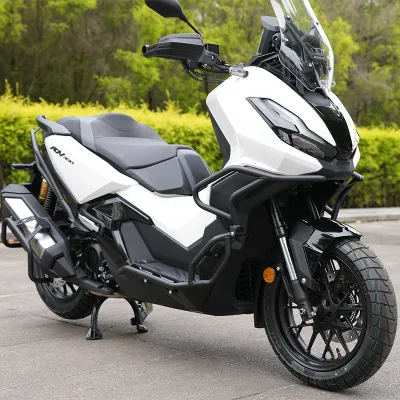
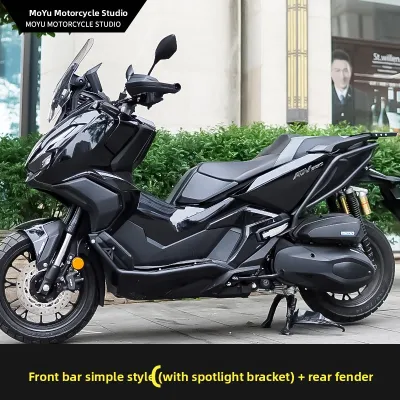
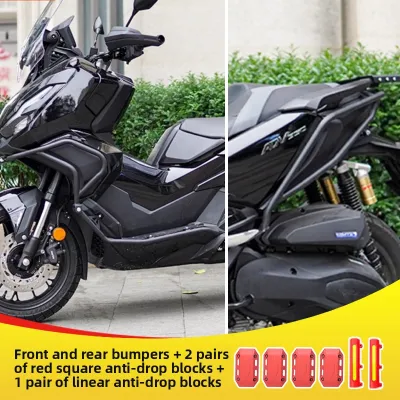
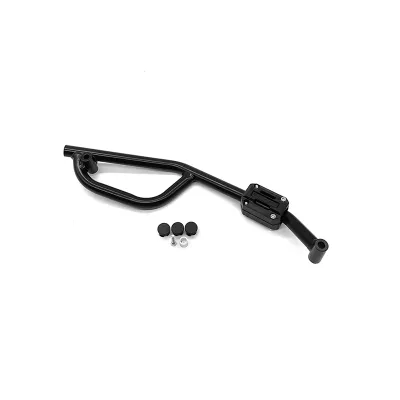
Prices are valid at publication and may change. Please refer to the product page for the latest price.
Aluminum alloys, on the other hand, offer a lightweight alternative that minimizes the impact on your scooter’s power-to-weight ratio and steering feel. While aluminum does not rust, it behaves differently under impact. Instead of bending and absorbing energy elastically, aluminum tends to transfer more of the shock directly to the mounting points, and under extreme force, it is more prone to cracking or shearing rather than bending. Once cracked, aluminum is difficult and costly to weld reliably.
Beyond materials, you must choose between lower engine guards and full-coverage fairing guards. Lower guards focus strictly on protecting the engine casings, exhaust headers, and lower frame rails. They are compact, lightweight, and unobtrusive. Full-coverage fairing guards extend upward to shield the wide front plastics, radiator, and turn signals. While full guards offer maximum protection against costly cosmetic damage during a tip-over, they add substantial weight and complexity to the front of the scooter.
Singapore’s tropical climate introduces another critical factor: corrosion resistance. High humidity, frequent heavy downpours, and coastal salt air will quickly exploit any weakness in a metal’s finish. If you choose steel bars, ensure they feature a high-quality powder-coated finish or are made of marine-grade stainless steel. Powder coating provides a thick, durable plastic-like barrier that resists chipping, but any deep scratch that penetrates to the bare steel must be sealed immediately to prevent sub-film corrosion from bubbling the surrounding finish. Stainless steel offers inherent rust resistance but is typically more expensive and heavier.
Critical Fitment and Compatibility Checks
Before purchasing any crash bar, you must verify its physical compatibility with your specific Honda ADV350 model year and variant. Never assume that a crash bar designed for other Honda models, such as the ADV150 or ADV160, will fit the ADV350. Even minor changes in frame geometry, radiator placement, or plastic fairing shapes between model years can render a crash bar impossible to mount without dangerous modifications.

Always consult the manufacturer’s official compatibility documentation rather than relying solely on retail category listings. A proper fitment check involves verifying that the crash bar utilizes the scooter’s existing factory mounting points on the main frame. Avoid any product that requires you to drill, cut, or weld the scooter’s original frame, as this can permanently compromise structural integrity and void your manufacturer warranty.
Clearance is another vital safety dimension. Once installed, the crash bar must maintain adequate clearance from several critical components throughout the entire range of suspension travel and steering lock:
- The Radiator: The bars must not block the airflow to the radiator. In Singapore's stop-and-go traffic, restricted airflow can quickly lead to engine overheating.
- The Front Fender and Forks: Ensure that when the front suspension is fully compressed under heavy braking, the front mudguard or tire does not contact the crash bar structure.
- Brake Lines and Wiring Harnesses: Turn the handlebars fully from lock to lock to verify that no cables, hoses, or wiring harnesses are pinched, stretched, or chafed by the crash bar brackets.
Finally, consider accessory stackability. Many ADV350 riders install aftermarket upgrades such as auxiliary fog lights, center stands, front fender extenders, or larger touring windshields. Some crash bars occupy the same mounting points as these accessories or physically block their installation paths. If you plan to mount auxiliary lights directly to the crash bar tubes, verify that the tube diameter (typically 22mm or 25mm) is compatible with standard light mounting clamps.
Evaluating Protection Levels and Build Quality
To ensure a crash bar actually protects your scooter rather than causing secondary damage during an impact, you must evaluate its structural engineering and build quality. The most critical factor is load dispersion. A well-engineered crash bar features multiple, widely spaced mounting brackets that form a rigid cage. This design ensures that when the scooter falls, the impact force is distributed across several points on the frame rather than being concentrated on a single bolt. A poorly designed single-point mount can act as a lever during a crash, multiplying the force and bending the frame mount itself, resulting in catastrophic structural damage.
Inspect the weld joints of the crash bar closely before installation. High-quality manufacturing is characterized by clean, uniform, and continuous welds (often TIG welded) that resemble a stack of coins. Avoid bars with sloppy, porous, or uneven welds, as these indicate poor heat control during manufacturing, leaving the joint brittle and prone to cracking under vibration or impact. Look for structural gussets—triangular reinforcing plates welded into the corners of high-stress bends—which significantly increase the rigidity of the assembly.
While independent impact testing certifications are rare for motorcycle accessories, you can review the manufacturer’s technical specifications for tube dimensions. For a scooter of the ADV350’s weight class, look for a tube outer diameter of at least 22mm to 25mm, with a wall thickness of no less than 2.0mm. Ultra-lightweight, thin-walled cosmetic bars may look aggressive, but they will fold instantly under the static weight of the scooter during a simple parking lot tip-over.
Some premium crash bar systems include replaceable sacrificial slider pucks made of high-density plastic (such as Delrin or POM). These sliders are positioned at the outermost contact points. During a slide, they absorb the initial friction and wear, preventing the metal bars from grinding down or catching on the road surface, which could cause the scooter to flip.
Installation Requirements and Safety Boundaries
Installing crash bars on the Honda ADV350 is a safety-critical modification. Because these bars bolt directly to structural frame points and engine mounts, incorrect installation can lead to loose hardware, frame stress, or mechanical failure while riding. If you do not possess a calibrated torque wrench, metric socket sets, and experience with motorcycle mechanics, you should seek qualified professional installation at a reputable workshop.
For those undertaking a DIY installation, you must strictly adhere to the original vehicle manufacturer’s torque specifications for any chassis bolts you temporarily remove or replace. Over-tightening bolts can strip the threads in the scooter’s aluminum engine casings or frame mounts, while under-tightening can allow the bolts to back out due to engine vibrations. Always use a medium-strength thread-locking compound (such as blue Loctite) on all mounting bolts to prevent them from vibrating loose over time.
Be aware of the risk of galvanic corrosion. When steel bolts are threaded directly into aluminum engine cases or frame components, moisture can trigger chemical reactions that seize the threads. Applying a thin layer of anti-seize lubricant or using the manufacturer-specified thread locker is essential to prevent permanent thread damage.
Once the installation is complete, perform a comprehensive post-installation safety check before riding:
- Visual Alignment: Ensure the bars are perfectly symmetrical and do not touch any plastic fairings. Engine vibrations will cause touching metal to quickly chafe through paint and plastic.
- Steering Clearance: Turn the handlebars fully to the left and right. Confirm that your hands, levers, and cables do not contact the bars or any mounted accessories.
- Suspension Bounce: Compress the front forks vigorously to ensure no contact occurs between the front fender and the lower crossbar.
- Re-Torque Check: After your first 100 kilometers of riding, use a torque wrench to re-check all mounting bolts, as the components can settle slightly under road vibrations.
Sourcing and Verifying Options in Singapore
When sourcing crash bars for your Honda ADV350 in Singapore, purchasing through authorized local distributors or established motorcycle accessory shops is highly recommended over unverified online marketplaces. Local motorcycle hubs located in industrial estates such as Ubi, Kaki Bukit, Toh Guan, and Bukit Merah house specialized workshops that stock reputable aftermarket brands. Buying locally allows you to physically inspect the weld quality, paint finish, and material thickness before committing to a purchase.
Furthermore, local sourcing provides crucial consumer protections. Reputable local dealers offer warranties against manufacturing defects, paint peeling, or fitment issues. If a crash bar arrives warped or with misaligned brackets, a local shop can quickly exchange the part or assist with fitment. Conversely, returning a heavy, bulky steel crash bar to an overseas online seller can incur shipping fees that exceed the value of the product itself.
When comparing costs, always calculate the total price in S$, including the base product cost, international shipping (which is substantial for heavy metal items), import taxes, and professional installation fees. While a cheap unbranded import might seem cost-effective initially, the added expense of purchasing replacement plastic clips broken during DIY fairing removal, or paying a local workshop to modify poorly fitting brackets, often makes a premium, locally supported brand the more economical choice in the long run.
Frequently Asked Questions (FAQ)
Do crash bars affect the handling or weight distribution of the ADV350?
Yes, adding crash bars will increase the overall curb weight of your Honda ADV350, typically by 3kg to 6kg depending on the design and materials used. Because this weight is mounted relatively high and forward on the chassis, it can slightly alter the scooter’s center of gravity. You may notice a slightly heavier steering feel during low-speed maneuvers or when filtering through tight traffic. However, at cruising speeds, the impact on stability and general handling is minimal, provided the bars are installed symmetrically and torqued correctly.
Can I install ADV350 crash bars without removing the fairings?
In most cases, you cannot install full-coverage crash bars without removing or loosening several plastic fairing panels. The main structural mounting points on the ADV350’s frame are located beneath the outer bodywork. Attempting to force brackets behind the plastics without proper disassembly carries a high risk of scratching the paint, cracking the fairings, or breaking the fragile plastic clips that hold the bodywork together. If you are performing the installation yourself, use dedicated plastic trim removal tools and refer to the official service manual to locate all hidden screws and clips before applying pressure.
Community discussion
Share your experience or ask a question. Comments are reviewed before publication.