
Choosing the right blind spot mirror in Singapore requires matching the physical dimensions of your factory mirror, selecting the appropriate optical curvature—such as a 3R blind spot mirror with a multi-radius design—and verifying that the adhesive can withstand the country’s high humidity and intense heat. By carefully evaluating these factors, you can significantly improve your situational awareness on the road, making lane changes and parking maneuvers much safer.
Evaluating the Need for a Blind Spot Mirror in Singapore's Driving Conditions
Singapore’s urban road network is among the most densely packed in the world, presenting drivers with a unique set of visual challenges. Navigating major expressways like the Pan Island Expressway (PIE) or the Ayer Rajah Expressway (AYE) during peak hours requires rapid decision-making. Vehicles constantly merge from acceleration lanes, and motorcycles frequently lane-split between traffic. In these fast-moving, high-density scenarios, a split-second delay in spotting an overtaking vehicle can lead to a serious collision.
Beyond the expressways, Singapore’s infrastructure features tight, winding spaces that test a driver’s spatial awareness. Older Housing & Development Board (HDB) multi-storey carparks are notorious for narrow ramps and tight concrete pillars. Navigating these structures requires precise placement of your vehicle. A well-positioned auxiliary mirror allows you to monitor your rear wheels and the curb simultaneously, preventing expensive wheel scrapes and bodywork damage.
Products mentioned in this guide
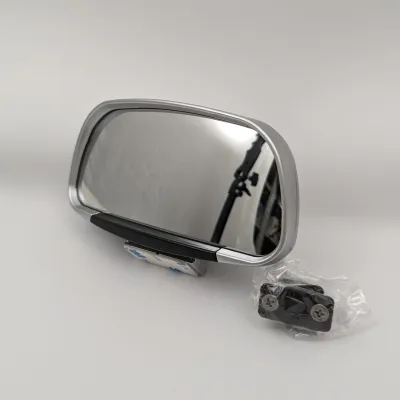
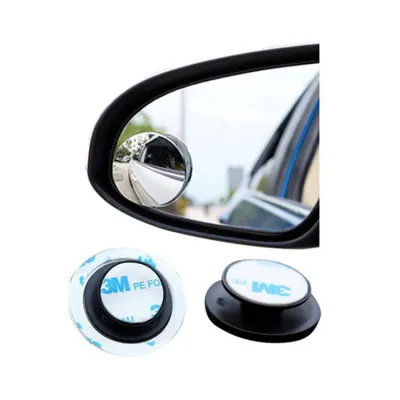
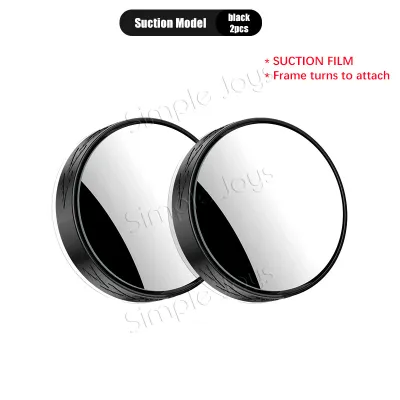
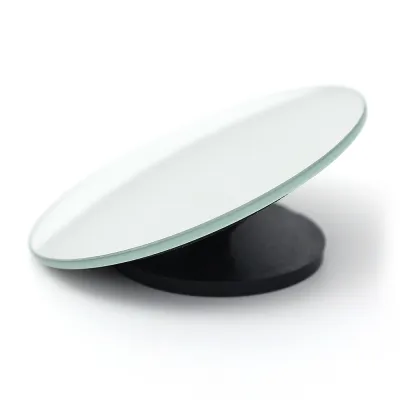
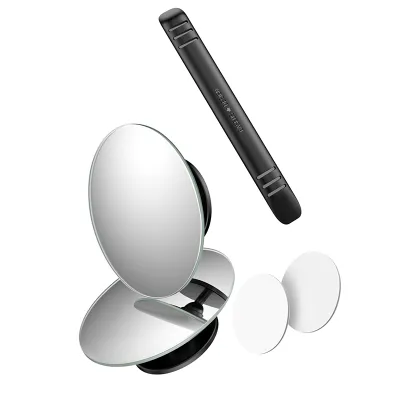
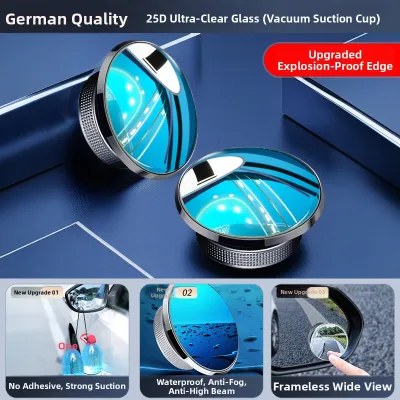
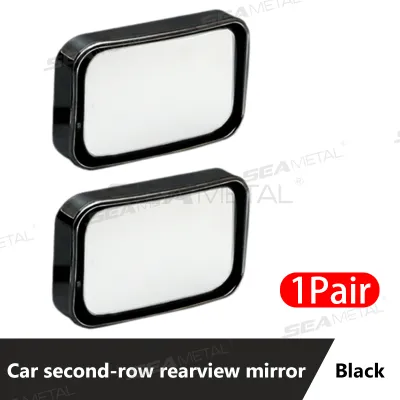
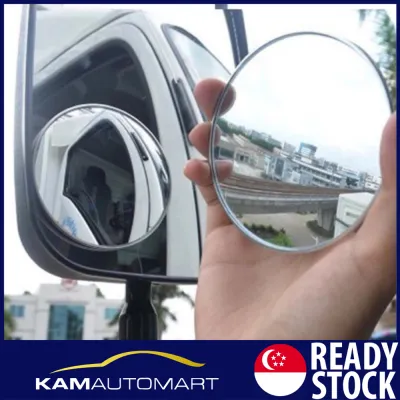
Prices are valid at publication and may change. Please refer to the product page for the latest price.
Weather conditions in Singapore further compound these driving difficulties. Tropical monsoon seasons bring sudden, torrential downpours that instantly reduce visibility. When heavy rain covers your side windows and factory mirrors with water droplets, distinguishing the outline of an adjacent vehicle becomes incredibly difficult. Standard mirrors often fail to provide the contrast and angle needed to cut through the visual noise of a rainstorm.
Standard factory-installed side mirrors have inherent optical limitations. Most passenger vehicles come equipped with flat or slightly convex side mirrors designed to provide a clear, undistorted view of the road directly behind. However, this design inevitably leaves a blind spot zone—typically between 15 and 45 degrees relative to the driver’s shoulders. Overtaking vehicles, especially smaller motorcycles, can easily disappear into this zone.
An aftermarket auxiliary mirror serves as a supplementary safety tool to bridge this visual gap. It is crucial to remember that these mirrors are designed to enhance your situational awareness, not to replace your physical driving habits. A physical shoulder check remains a mandatory safety practice before any lane change or turn. The auxiliary mirror simply provides an early warning, allowing you to identify potential hazards before you begin your physical turn.
Core Selection Criteria: Fit, Optics, and Mounting Safety
Selecting the right auxiliary mirror is not a matter of one-size-fits-all. To ensure the product enhances your safety rather than compromising it, you must evaluate how the mirror physically fits your vehicle, how its optical curvature behaves, and how securely it mounts to your existing glass.

Matching Shape and Size to Your Factory Mirror
Before purchasing any aftermarket accessory, check your vehicle’s documentation and measure the usable flat glass area of your side mirrors. Use a flexible measuring tape to determine the vertical and horizontal dimensions of the flat portion of the glass. This measurement is critical because installing an oversized blind spot mirror can create a serious safety hazard by blocking the primary field of view.
If the add-on mirror occupies more than 15% to 20% of your factory mirror’s surface, it will obstruct your view of vehicles directly behind you. This forces you to rely on a compressed, distorted image for standard rearview tracking, which can impair your depth perception. The goal is to find a balance where the auxiliary mirror is large enough to show adjacent lanes clearly but small enough to preserve the main line of sight.
Drivers must also choose between frameless and framed designs. Frameless mirrors feature a clean, beveled edge that blends seamlessly with your factory glass, minimizing visual clutter and maximizing the reflective surface area. Framed designs, while slightly more visually obtrusive, offer a protective plastic border that helps shield the mirror glass from chipping or cracking during high-pressure car washes or minor physical impacts.
Evaluating Curvature and Field of View
The optical curvature of an auxiliary mirror determines its viewing angle and how it projects images to your eyes. Convex mirrors curve outward, scattering light rays to compress a much wider field of view onto a small surface. This design allows you to see vehicles that would otherwise remain hidden in your blind spot.
However, this wide field of view comes with a physical trade-off: objects in a convex mirror appear smaller and much further away than they actually are. This distortion can make it difficult to judge the speed and distance of overtaking vehicles. If you misjudge the gap based solely on a highly distorted reflection, you risk cutting off another motorist.
Because of this distortion, drivers must undergo a cognitive adaptation period. Your brain needs time to calibrate and accurately interpret the compressed images displayed in a convex mirror. When shopping for a mirror, look for a curvature that provides adequate lane coverage—typically extending your field of view by 10 to 15 degrees—without creating a severe “fish-eye” effect that makes the reflection unrecognizable.
Verifying Adhesive Quality for Tropical Climates
Singapore’s tropical climate places immense stress on automotive adhesives. With ambient temperatures frequently exceeding 32°C and relative humidity levels regularly rising above 80%, low-quality glues can quickly degrade. Under intense sunlight, the adhesive backing on cheap mirrors can melt or lose its shear strength, causing the mirror to detach while you are driving.
A falling mirror is not only a loss of your safety aid, but it also poses a significant hazard to trailing motorists, especially motorcyclists. To prevent this, avoid mirrors that rely on generic double-sided tape or weak suction cups. Instead, verify that the product utilizes high-quality, automotive-grade acrylic foam tape (such as genuine 3M VHB tape).
Acrylic foam tape is engineered to withstand extreme heat, ultraviolet (UV) radiation, and continuous moisture exposure. It forms a durable, viscoelastic bond that absorbs vibrations and maintains its grip through heavy downpours and automatic car washes. Always check the product packaging or retailer specifications for temperature resistance ratings before making a purchase.
Decoding 3R Blind Spot Mirrors and Alternative Optical Designs
When searching for auxiliary mirrors, you will frequently encounter the term “3R.” Understanding the optical engineering behind a 3r blind spot mirror, and how it compares to other common designs, is essential for choosing the right level of clarity and coverage.
The Optical Concept Behind 3R Designs
In the automotive accessory industry, the “3R” designation typically refers to a specific multi-radius or aspherical optical design. Unlike standard convex mirrors that feature a uniform, spherical curve across the entire glass surface, a 3R blind spot mirror utilizes a variable curvature that changes gradually from one side of the mirror to the other.
This multi-radius design divides the mirror into functional zones. The inner portion of the mirror—the area closest to the driver—has a flatter curvature with a larger radius. This flatter zone preserves accurate distance perception, allowing you to judge the speed of vehicles in the adjacent lane with minimal distortion. It behaves very much like a standard factory mirror.
As the glass extends toward the outer peripheral edge, the curvature progressively sharpens, reducing the radius. This gradual transition bends the light more aggressively at the outer edge, widening the field of view precisely where your factory mirror’s coverage ends. This seamless gradient allows you to spot overtaking vehicles without the sudden jump in perspective common in older, split-glass designs.
Comparing 3R, Standard Convex, and Aspherical Mirrors
To choose the best mirror for your driving style, it helps to compare the three primary optical profiles available on the market today. Each design offers a different balance of field of view, distance accuracy, and visual distraction.
Standard Convex: These mirrors feature a uniform dome-like shape. They are highly effective at providing a wide field of view, but they suffer from consistent image compression. Every object appears significantly smaller and further away, which can increase the cognitive load on the driver as they try to estimate actual distances.
Aspherical (with a visible line): Often found as factory equipment on European vehicles, these mirrors feature a flat inner section and a highly curved outer section, separated by a distinct dotted or solid line. While they offer excellent distance accuracy in the center and wide coverage at the edge, the physical line can be visually distracting and may cause a “jumping” effect as a vehicle passes through the transition zone.
3R / Multi-Radius: These mirrors employ a continuous, line-free gradient curvature. They strike a balance by reducing the fish-eye effect in the primary viewing area while smoothly expanding the peripheral field of view. This design is highly favored for modern passenger vehicles because it minimizes cognitive load and visual fatigue.
| Optical Design | Field of View | Distance Accuracy | Visual Distraction |
|---|---|---|---|
| Standard Convex | Wide | Low (uniform compression) | Moderate (fish-eye effect) |
| Aspherical (with line) | Very Wide | High (inner zone) / Low (outer zone) | High (due to the dividing line) |
| 3R / Multi-Radius | Wide to Very Wide | Moderate to High (smooth transition) | Low (seamless gradient) |
Matching Mirror Profiles to Your Vehicle Type
Your vehicle’s body style and the size of its factory side mirrors should dictate the shape and profile of the auxiliary mirror you choose. Selecting a profile that complements your vehicle ensures optimal coverage without creating visual clutter.
Compact Cars and Hatchbacks
Compact vehicles, such as hatchbacks and small sedans, typically feature smaller factory side mirror housings. Installing a large, bulky blind spot mirror on these vehicles will severely compromise the primary rearview line. For these vehicles, opt for small, round, or fan-shaped frameless mirrors (typically 2 inches or less in diameter).
Positioning is critical: place the auxiliary mirror in the outermost lower corner of the factory glass. This preserves the main field of view while capturing the low-angle blind spot where small motorcycles or bicycles might linger. Because of the smaller surface area, precise angle adjustment is required. Even a minor misalignment can result in the auxiliary mirror reflecting your own car door rather than the adjacent lane.
SUVs, MPVs, and Larger Family Vehicles
Larger vehicles like sport utility vehicles (SUVs) and multi-purpose vehicles (MPVs) have significantly larger physical dimensions and taller profiles, which naturally create larger, more dangerous blind spots. Fortunately, their factory side mirrors also offer a much larger surface area. For these vehicles, larger rectangular, oval, or 3R aspherical mirrors are highly recommended.
These shapes align well with the wider, taller glass of large SUVs and MPVs, providing a comprehensive view of the adjacent lanes and the ground near the rear wheels. The generous surface area of the factory mirror allows for more flexible placement. Drivers can comfortably place the blind spot mirror in either the upper outer corner or the lower outer corner without obstructing the primary view of traffic directly behind. A wider curvature is essential here to account for the vehicle’s broader physical footprint and longer wheelbase, ensuring that overtaking vehicles are detected early.
Modern Housings with Integrated Signals or Complex Curves
Modern vehicle designs often feature highly sophisticated side mirrors equipped with integrated LED turn signals, auto-dimming elements, or heating elements. The glass itself may also feature complex, aerodynamic curvatures. Before purchasing any stick-on mirror, map out the flat, usable glass area. Ensure that the placement of the auxiliary mirror does not block or interfere with integrated LED turn signal indicators embedded within the glass.
If your factory mirror glass has a highly pronounced curve or a built-in aspherical outer edge, forcing a rigid, flat-backed blind spot mirror onto it will compromise adhesive contact. The lack of surface contact will leave gaps, allowing moisture to penetrate and eventually lead to adhesive failure. In these scenarios, look for flexible-backed or specifically contoured blind spot mirrors that can adapt to slight curves, or consult your vehicle’s manufacturer for approved accessories.
Safe Installation and Adjustment Protocols
To ensure your blind spot mirror functions correctly and remains securely attached to your vehicle, you must follow a precise installation and adjustment process. Proper preparation prevents premature adhesive failure and ensures optimal viewing angles.
Surface Preparation:
- Begin by thoroughly cleaning the factory mirror glass. Use isopropyl alcohol (rubbing alcohol) and a clean, lint-free microfiber cloth to remove all traces of road grime, wax, glass polish, grease, and dust.
- Avoid using standard household glass cleaners that contain ammonia or silicones, as they can leave a thin residue that prevents the adhesive from bonding securely.
- Ensure the surface is completely dry before proceeding.
Curing Time:
- Peel the backing from the automotive-grade adhesive tape and press the blind spot mirror firmly onto the pre-cleaned, designated spot for at least 30 seconds.
- Do not immediately drive or expose the vehicle to water. Most high-quality acrylic foam adhesives require a specific curing time—typically 24 hours—to achieve maximum bond strength.
- Check the manufacturer's instructions on the packaging for exact curing times. Park the vehicle in a shaded, dry area during this period to prevent rain or direct sunlight from disrupting the curing process.
Adjustment Sequence:
- Sit in your normal driving position.
- First, adjust your primary factory side mirrors according to standard driving guidelines (where you can just barely see the side of your own car in the inner edge of the mirror).
- Once the primary mirror is set, gently angle or rotate the adjustable blind spot mirror so that it covers the zone starting where the primary mirror's reflection ends, extending outward into the adjacent lane.
- Verify the angle by having someone walk slowly from the rear of the vehicle outward to the side, checking that their image transitions smoothly from the rearview mirror to the side mirror, then to the blind spot mirror, and finally into your peripheral vision.
Safety Boundary:
- Always remember that a blind spot mirror is a supplementary driving aid. It does not replace the physical requirement to perform a shoulder check before changing lanes or turning. Always look over your shoulder to verify that the lane is clear before executing any maneuver.
Frequently Asked Questions (FAQ)
Are add-on blind spot mirrors compliant with local vehicle regulations?
In Singapore, small, stick-on blind spot mirrors are generally considered acceptable aftermarket accessories under Land Transport Authority (LTA) guidelines, provided they do not obstruct the driver’s primary field of view, interfere with the operation of the side mirrors, or project dangerously beyond the vehicle’s physical width. Ensure the mirror is securely attached with high-quality adhesive to prevent it from falling off and posing a hazard to other road users. If you are unsure about a specific modification, consult the LTA guidelines or an authorized vehicle inspection center.
What is the optimal placement for a blind spot mirror on the side glass?
The optimal placement depends on your driving habits and vehicle height. The two most common positions are the outer lower corner and the outer upper corner of the factory mirror glass. Placing the mirror in the outer lower corner is highly effective for low-speed maneuvers, as it helps you see the rear wheel, curb, and low-lying obstacles during parallel parking or navigating tight HDB carpark ramps. Placing it in the outer upper corner is often preferred for expressway driving, as it provides a higher, more distant view of oncoming traffic in adjacent lanes. Before peeling off the adhesive backing, use a small piece of removable painter’s tape to temporarily secure the mirror in both positions. Sit in the driver’s seat to test which placement offers the most comfortable and useful field of view for your specific height and seating position.
Community discussion
Share your experience or ask a question. Comments are reviewed before publication.