
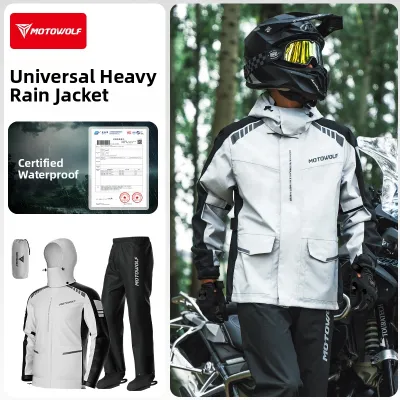
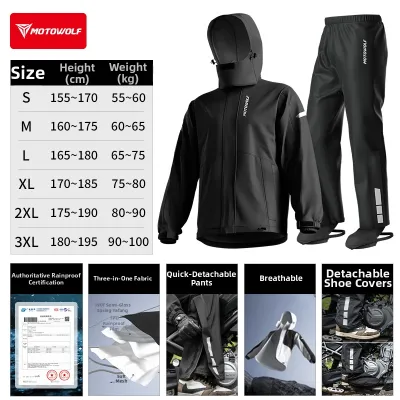
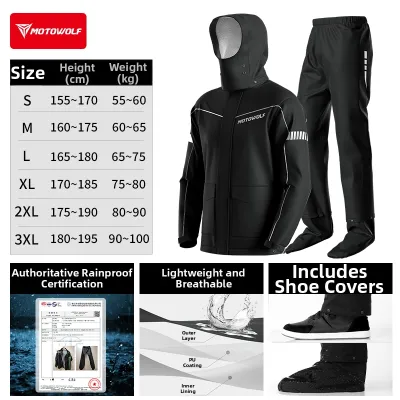
Selecting the best Motowolf raincoat for daily motorcycle commuting in Singapore’s tropical climate requires balancing high waterproof reliability with exceptional breathability. The most effective option for daily riders is a high-quality two-piece raincoat suit featuring a hydrostatic head rating of at least 10,000 mm, integrated mesh ventilation, and bright reflective panels. A two-piece configuration offers the optimal combination of rapid deployment during sudden monsoonal downpours, superior ventilation to combat high humidity, and the flexibility needed to navigate dense urban traffic comfortably.
While one-piece suits provide a slightly better absolute seal against water, they are often too warm and cumbersome for the rapid temperature shifts and stop-and-go traffic characteristic of Singapore roads. Conversely, simple ponchos fail to provide adequate protection at highway speeds and can become safety hazards in high winds. By focusing on a well-ventilated two-piece Motowolf model, you can ensure that you stay dry from both external rain and internal perspiration during your daily commute.
Key Criteria for Choosing a Motowolf Raincoat for Singapore Commutes
Daily motorcycle commuting in Singapore presents a highly demanding set of environmental challenges that standard rain gear rarely accommodates. The local tropical rainforest climate is characterized by sudden, intense monsoon downpours that can flood roads within minutes, accompanied by high ambient temperatures that rarely drop below 25°C even during storms. This combination means that a commuter’s primary enemy is often not just the rain outside, but the stifling humidity inside the suit. If your raincoat does not breathe, you will quickly find yourself drenched in sweat, defeating the purpose of wearing protective gear.
Products mentioned in this guide
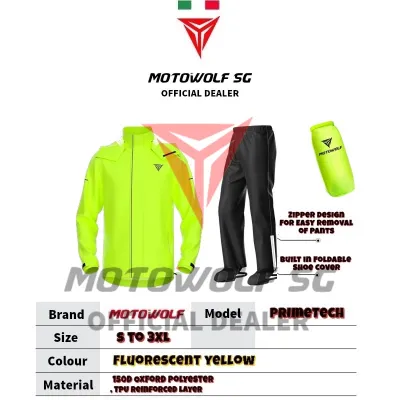
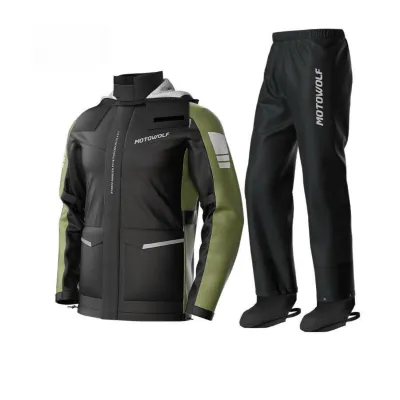
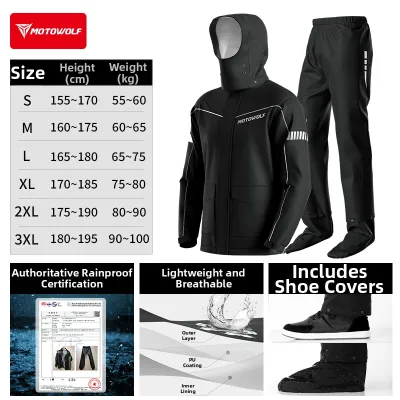
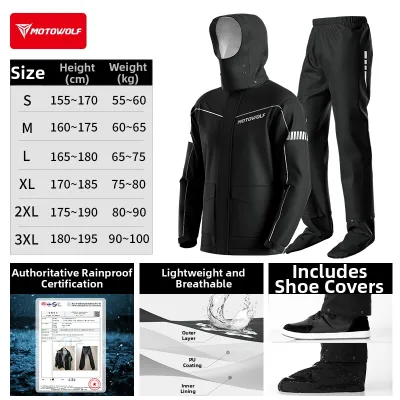
Prices are valid at publication and may change. Please refer to the product page for the latest price.
To make an informed decision when browsing Motowolf models, you must evaluate four core dimensions: waterproof reliability, breathability, high visibility, and ease of daily use. Waterproof reliability ensures that the fabric and construction can withstand the high-velocity impact of rain at highway speeds. Breathability prevents the dreaded “sauna effect” by allowing body heat and moisture vapor to escape. Visibility is critical because heavy rain severely reduces the line of sight for surrounding motorists, while ease of use determines how quickly you can pull over and don the gear when a storm suddenly hits.
Before selecting a specific model, you must also analyze your personal riding profile, starting with your daily commute distance and typical speeds. A rider traveling short distances at low speeds through residential areas has very different aerodynamic and comfort requirements compared to someone commuting along major expressways like the PIE or AYE. Furthermore, your riding posture—whether you sit upright on a scooter or lean forward on a sportbike—affects where water tends to pool on the suit, particularly around the crotch and torso areas. Finally, your raincoat must fit seamlessly over your existing protective riding jacket and pants without restricting your range of motion.
Evaluating Protection Levels and Material Specifications
Waterproof Ratings and Seams
When evaluating any Motowolf raincoat, you should look beyond basic water-resistant claims and verify the manufacturer’s technical specifications, specifically the hydrostatic head rating. This rating, measured in millimeters (mm), indicates the amount of water pressure the fabric can withstand before moisture begins to penetrate. For daily commuting in heavy tropical downpours, a rating of 10,000 mm or higher is highly recommended to ensure that the fabric remains impermeable even when subjected to wind-driven rain at expressway speeds.

However, even the most waterproof fabric will fail if the construction seams are left unprotected. Every needle hole created during the stitching process is a potential pathway for water ingress. To prevent this, high-quality Motowolf raincoats feature fully taped or heat-sealed seams on the interior. During manufacturing, a specialized polyurethane tape is applied under high heat and pressure over every seam, creating a continuous waterproof barrier. Before purchasing, inspect the interior lining of the raincoat to confirm that all major seams—especially around the shoulders, crotch, and underarms—are completely sealed.
Durability and Abrasion Resistance
Daily commuting subjects a raincoat to significant physical wear and tear, especially if you wear it over abrasive protective gear or carry a backpack. To ensure long-term durability, look for models constructed from high-denier polyester or nylon fabrics, such as 190T or 210T polyester coated with a durable water repellent (DWR) finish and a polyurethane (PU) backing. These materials offer an excellent balance between lightweight packability and resistance to tearing.
Additionally, high-wear areas require targeted reinforcement to prevent premature failure. The seat of the pants experiences constant friction against the motorcycle saddle, while the shoulders bear the weight and movement of backpack straps. Premium Motowolf models address this by incorporating double-layered fabric panels or reinforced stitching in these critical zones. Choosing a model with these structural reinforcements prevents the fabric from wearing thin and leaking after a few months of daily use.
Windproof and Thermal Considerations
While Singapore is generally warm, riding through a heavy storm on an open expressway can introduce significant wind chill. As water evaporates from the outer surface of your raincoat, it draws heat away from your body, which can lead to shivering and reduced concentration. A high-quality raincoat must act as an effective windbreak to maintain your core body temperature at a comfortable level.
To manage this thermal balance, look for models that feature a lightweight, breathable mesh inner lining. This lining serves a dual purpose: it prevents the cold, wet outer shell of the raincoat from clinging directly to your skin or damp clothing, and it facilitates air circulation within the suit. This small gap of air helps regulate your body temperature, keeping you comfortable without causing you to overheat when traffic slows down.
Practical Features for Tropical Weather and Urban Riding
Ventilation and Breathability
In a highly humid environment, passive ventilation is essential to prevent internal condensation from building up inside your raincoat. When riding in the rain, your body still generates heat, and without proper airflow, this moisture has nowhere to go. To combat this, look for Motowolf models designed with dedicated ventilation systems, such as horizontal back vents (often styled as a storm cape) and underarm zippered vents.
These ventilation systems are engineered to allow hot air and moisture to escape from the upper torso while utilizing overlapping fabric flaps to prevent rain from entering. When you are in motion, the air flowing over your shoulders creates a low-pressure zone that actively draws warm, humid air out of the back vents. This continuous air exchange is highly effective at keeping you dry from the inside out, even during slow-moving urban commutes.
Visibility and Reflective Elements
Heavy rain and road spray can reduce visibility on Singapore roads to less than a few meters, making it incredibly difficult for car drivers to spot motorcyclists. For this reason, choosing a raincoat with high-visibility design elements is a critical safety decision. Bright, high-contrast colors such as neon yellow, fluorescent green, or vibrant orange are highly visible during overcast daylight hours.
For night riding, retroreflective strips are indispensable. These strips are strategically positioned across the chest, upper back, and outer sleeves of the raincoat to catch and reflect the headlights of surrounding vehicles. When choosing a Motowolf model, ensure that the reflective materials comply with standard safety visibility guidelines and are wide enough to remain visible from multiple angles, particularly from the rear and sides.
Convenience and Storage
For a daily commuter, the practicality of a raincoat extends beyond its performance in the wet; it must also be easy to store and manage when dry. Look for models that offer compact packability, allowing the entire suit to fold down into a small, lightweight carrying pouch that fits easily inside a scooter’s under-seat compartment, a top box, or a daily backpack. This ensures you are never caught unprepared when a sudden shower begins.
Other practical features to look for include quick-access waterproof pockets equipped with storm flaps and water-resistant zippers, which are perfect for keeping your parking cards, cashcards, or mobile devices dry and accessible. Adjustable wrist cuffs, ankle straps, and waist adjusters using durable Velcro closures are also essential. These adjusters allow you to customize the fit, preventing wind from flapping the fabric at high speeds and stopping water from blowing up your sleeves or trouser legs.
Comparing Motowolf Raincoat Styles for Daily Commuting
Selecting the right raincoat style depends heavily on your specific commute patterns, speed requirements, and how much effort you are willing to spend putting the gear on and taking it off. Motowolf offers several distinct configurations, each catering to different riding scenarios.
Two-Piece Suits (Jacket and Pants)
Two-piece suits consisting of a separate jacket and pants are widely considered the gold standard for daily commuting. By separating the upper and lower body, this style provides maximum freedom of movement and allows you to adjust your riding posture without pulling or binding. It also offers superior aerodynamic stability at highway speeds, as the snug-fitting pants and jacket do not billow or catch the wind like looser garments.
Another major benefit of the two-piece design is its versatility. On days when the road is wet but the rain has stopped, you can wear just the pants to protect yourself from road spray. If it is merely cold or drizzling lightly, you can wear just the jacket. The main drawback is that it takes slightly longer to put on both pieces compared to a single over-suit.
One-Piece Suits
One-piece suits, also known as jumpsuits, offer the absolute highest level of waterproof protection. Because there is no gap at the waist, there is zero risk of water riding up under the jacket or pooling at the waistband of the pants. This makes them highly suited for riders who face long, grueling commutes through severe, unrelenting downpours.
However, one-piece suits have notable practical limitations for daily commuters. They are notoriously difficult to slide into quickly, especially when you are standing on the side of a busy road over bulky riding boots and armored jackets. Additionally, they offer very limited ventilation, making them exceptionally hot in tropical climates, and they present obvious inconveniences when you need to use the restroom.
Rain Ponchos and Over-suits
Rain ponchos or loose-fitting over-suits are designed for maximum convenience and speed. They can be thrown over your head in seconds and require very little storage space. This makes them a popular choice for very short, low-speed urban hops, such as riding to the local market or MRT station.
Despite their convenience, ponchos are poorly suited for standard daily commuting. At speeds above 40 km/h, the loose fabric will billow violently in the wind, creating dangerous aerodynamic drag and destabilizing your motorcycle. Furthermore, they offer virtually no protection for your lower legs and feet, leaving you exposed to water kicked up by your front tire and passing vehicles.
| Raincoat Style | Protection Level | Daily Convenience | Best Commuter Profile |
|---|---|---|---|
| Two-Piece Suit | High | Moderate | Long-distance, expressway, or high-speed daily commuters |
| One-Piece Suit | Very High | Low to Moderate | Riders facing extreme, prolonged downpours over long distances |
| Poncho / Over-suit | Low to Moderate | High | Short, low-speed urban hops and neighborhood trips |
Sizing, Fit, and Helmet Compatibility
Layering Considerations
One of the most common mistakes riders make when purchasing a Motowolf raincoat is selecting their standard t-shirt size. A motorcycle raincoat is designed to be worn as an outer protective shell over your existing clothing, which often includes a structured riding jacket with integrated shoulder, elbow, and back armor. If the raincoat is too tight, it will compress your armor, restrict your blood circulation, and limit your ability to turn your head or reach the handlebars safely.
To ensure a proper fit, always consult the manufacturer’s specific sizing chart and measure yourself while wearing your full daily riding gear. In most cases, you will need to size up by one or two sizes to accommodate your protective jacket, pants, and any daily carry items like a small backpack. A properly sized raincoat should fit snugly enough to prevent excessive flapping at speed, yet remain loose enough to allow full, unrestricted movement of your arms and torso.
Helmet Collar and Neck Seals
A frequent failure point in rain gear is the neck area, where water running down the back of your helmet can easily seep inside the collar of your jacket. To prevent this, look for Motowolf models that feature a high, padded collar equipped with an adjustable drawstring or a secure Velcro storm flap. This allows you to tighten the collar snugly around your neck, creating a reliable seal.
Some models also include a thin, stowable hood designed to be worn underneath your motorcycle helmet. When deployed, the hood covers your head and neck entirely, ensuring that any water dripping from the helmet slides down the outside of the raincoat rather than entering the collar. If your model does not have a hood, ensure the collar is tall enough to tuck slightly under the base of your helmet’s rear rim.
Boot and Glove Integration
To maintain a continuous waterproof barrier across your entire body, your raincoat must integrate seamlessly with your footwear and gloves. When riding in the rain, water running down your sleeves will enter your gloves if they are tucked inside the sleeves. To prevent this, always pull your raincoat sleeves over the cuffs of your gloves, and secure the adjustable wrist straps tightly to seal the gap.
Similarly, water running down your legs will pool inside your boots if your pants are tucked in. Always wear your raincoat pants over your riding boots. Look for Motowolf pants that feature wide leg openings with zippered gussets and adjustable Velcro ankle straps, which make it easy to slide the pants over bulky boots and fasten them securely to prevent water from splashing upward.
Purchasing Checklist and Maintenance Basics
Where to Buy
To ensure you receive an authentic Motowolf product with valid warranty support, you should purchase your raincoat from authorized physical motorcycle gear shops in Singapore or verified official brand stores on major online marketplaces. Be cautious of extremely low-priced listings on unverified platforms, as counterfeit raincoats made from substandard materials and lacking sealed seams are common and will fail quickly in heavy rain.
Pre-Purchase Verification
Before completing your purchase, go through this final checklist to ensure the model is right for you:
- Size Verification: Double-check your measurements against the specific Motowolf size chart while wearing your riding armor.
- Return Policy: Confirm that the seller offers a flexible exchange policy in case the fit is incorrect when tried on over your gear.
- Care Label Inspection: Review the care instructions to ensure you can maintain the raincoat properly according to the manufacturer's guidelines.
- Feature Check: Verify the presence of taped seams, reflective strips, and adjustable cuffs on the specific model variation you are ordering.
Care and Maintenance
Proper maintenance is essential to preserve the waterproof coating and prolong the lifespan of your Motowolf raincoat. After a wet commute, never fold the damp raincoat and stuff it directly back into its storage bag or under your seat. Doing so creates a breeding ground for mold, mildew, and unpleasant odors, which will rapidly degrade the polyurethane backing and cause the seam tape to peel away.
Instead, hang the raincoat on a wide hanger in a well-ventilated, shaded indoor area to dry completely. If the raincoat is dirty from road grime or salt spray, rinse it gently with clean, cold water. Never machine wash, tumble dry, dry clean, or use harsh detergents on your raincoat, as the mechanical agitation and chemicals will strip away the durable water repellent (DWR) coating. For stubborn dirt, use a soft sponge and mild soap to gently spot-clean the surface before air-drying.
Community discussion
Share your experience or ask a question. Comments are reviewed before publication.