
Installing a dash cam is one of the most practical steps you can take to protect your vehicle on Singapore’s busy roads. However, before purchasing any aftermarket car electronics, you must ensure the device complies with local road safety laws.
iROAD dash cams can be fully compliant with Singapore’s Land Transport Authority (LTA) regulations, provided they are selected, positioned, and installed correctly. Compliance is not simply a matter of the brand name; rather, it depends on the camera’s physical size, its power source, and where it is mounted on your windshield. To remain within legal boundaries, the device must never obstruct your forward line of sight, interfere with vehicle safety systems, or create a visual distraction while you are driving.
Before finalizing your purchase, you must verify the specific dimensions of your preferred iROAD model and compare them against your vehicle’s windshield layout. Utilizing a professional installation service is highly recommended to ensure the device is safely integrated without compromising your vehicle’s electrical system or warranty.
Products mentioned in this guide

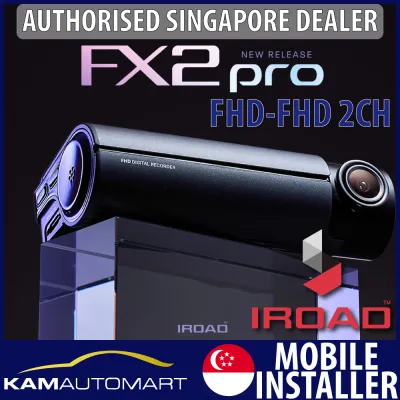
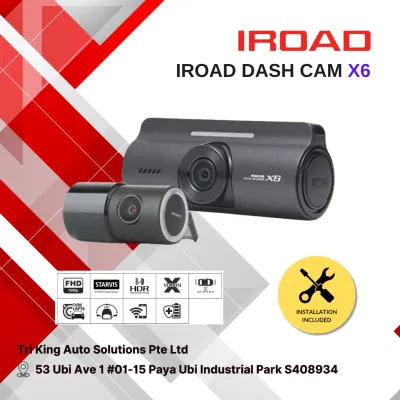
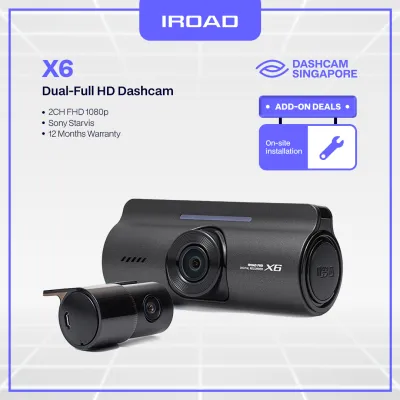
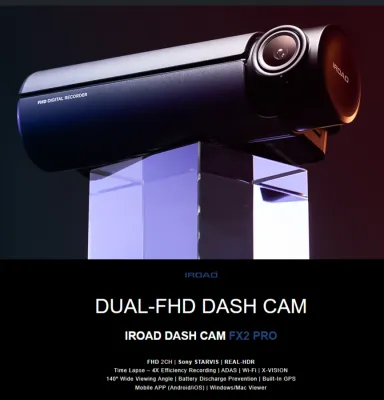
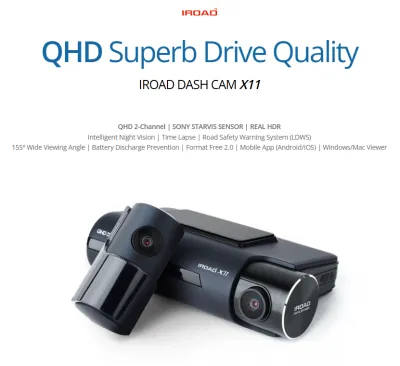
Prices are valid at publication and may change. Please refer to the product page for the latest price.
Core LTA Regulations You Must Know
To ensure your dash cam setup is fully legal in Singapore, you must understand the key regulatory frameworks established by the LTA and traffic safety guidelines. These rules are designed to maintain maximum driver visibility and prevent aftermarket accessories from becoming safety hazards.
Windshield Visibility and Obstruction Rules
The primary regulation governing dash cam installation is the preservation of the driver’s forward field of vision. The LTA dictates that no aftermarket accessories may be mounted in a manner that obstructs the driver’s direct line of sight.
When planning your installation, the critical benchmark is the sweep area of your windshield wipers. The area directly in front of the driver’s seat, which is kept clear by the wipers, must remain free of large electronic devices. Mounting a bulky camera in this zone can lead to an immediate failure during periodic vehicle inspections at authorized centers like VICOM or STA. To stay compliant, the camera body should be positioned high up on the windshield, ideally hidden behind the physical body of the rearview mirror.
Screen and Distraction Limits
Under Singapore’s Road Traffic Act, drivers are strictly prohibited from operating or viewing active screens while the vehicle is in motion. This rule extends to dash cams that feature integrated LCD touchscreens.
If your iROAD model has a built-in display, it must not show live video feeds or emit bright, distracting light while you are driving. To comply with these anti-distraction laws, you must configure the camera’s settings so that the screen automatically enters a sleep or power-saving mode within a few seconds of starting the engine. The screen should only be active during initial setup or when the vehicle is safely parked.
Electrical and Fire Safety in Tropical Climates
While the LTA does not explicitly certify individual dash cam brands, general vehicle safety standards require all aftermarket electrical components to be safe for road use. Singapore’s intense tropical climate poses a unique challenge for car electronics, as cabin temperatures in vehicles parked in open-air HDB car parks can easily exceed 60 degrees Celsius.
Under these extreme thermal conditions, devices powered by traditional lithium-ion batteries pose a significant safety risk. High temperatures can cause lithium batteries to swell, leak, or experience thermal runaway, potentially damaging your car’s interior or causing an electrical fire. To meet general safety expectations, automotive accessories should utilize high-temperature-resistant power delivery systems, such as supercapacitors, which do not store volatile chemical energy.
Signal Interference and ADAS Compatibility
Any electronic device installed near your windshield must not emit electromagnetic interference (EMI) that could disrupt your vehicle’s onboard systems. This is particularly critical for modern cars equipped with Advanced Driver Assistance Systems (ADAS), rain sensors, and GPS navigation units.
Furthermore, your dash cam must not interfere with the signals of your Electronic Road Pricing (ERP) In-vehicle Unit (IU). A poorly shielded camera placed too close to the IU can block the radio frequencies required for ERP transactions, resulting in missed payments and subsequent administrative fines. High-quality dash cams are designed with electromagnetic shielding, but proper physical separation between the camera, the IU, and any central sensor housings must still be maintained.
Comparing iROAD Dash Cam Types for Compliance
iROAD offers a variety of dash cam designs, ranging from screenless, minimalist units to advanced multi-channel systems with large touchscreen displays. Understanding how these different product categories align with LTA visibility and safety rules will help you make an informed decision.

Compact Single-Channel Models
Compact, screenless, front-facing dash cams are among the easiest models to install in full compliance with LTA visibility guidelines. Because these devices lack a bulky physical screen, they feature an exceptionally small, cylindrical, or low-profile form factor.
- Visibility Advantage: The primary benefit of these models is their ability to be completely concealed behind your vehicle's rearview mirror. From the driver's seating position, the camera is virtually invisible, ensuring zero obstruction of your forward line of sight.
- The Usability Trade-Off: Because these units do not have an onboard display, you cannot view footage or adjust settings directly on the device. Instead, you must rely entirely on a smartphone application connected via local Wi-Fi to manage the camera.
- Best Suited For: Drivers who prioritize a minimalist, "set-and-forget" setup that guarantees compliance with windshield clearance rules while maintaining a clean cabin aesthetic.
Dual-Channel Models with Displays
Dual-channel systems feature a main front-facing camera paired with a smaller secondary camera mounted on the rear windshield. Many of these front units include an integrated LCD touchscreen for direct user interaction.
- Compliance Challenges: The physical size of a touchscreen camera is naturally larger than a screenless model. If mounted carelessly in the center of the windshield, the housing and screen can easily encroach into the driver's field of view, violating LTA guidelines.
- Correct Mounting Strategies: To keep these models compliant, you must position the front unit strictly within the passenger-side blind spot created by the rearview mirror, or lower down on the windshield where it does not block your view of the road. Additionally, you must enable the auto-screen-off feature in the settings menu.
- The Practical Benefit: These models allow you to review recorded footage, format the memory card, and adjust safety settings instantly on the screen without needing to pair your smartphone, which is highly convenient during a roadside incident.
Supercapacitor vs. Lithium-Battery Models
When evaluating different iROAD models, pay close attention to the internal power source specified in the product documentation. The choice between a supercapacitor and a lithium-ion battery has direct implications for vehicle safety and device longevity.
- Why Supercapacitors Are Preferred: Supercapacitors are designed to store just enough electrical energy to safely save the current recording and shut down the camera when the vehicle's engine is turned off. They do not retain a large chemical charge, making them highly stable and resistant to the extreme heat that accumulates inside a car parked under the direct Singapore sun.
- The Risks of Lithium Batteries: Dash cams that rely on internal lithium-ion batteries are poorly suited for Singapore's climate. Over time, constant exposure to high temperatures accelerates battery degradation, leading to swelling, housing deformation, and a heightened risk of internal short circuits.
- Verification Step: Always check the official technical specifications of your chosen iROAD model to confirm it utilizes a supercapacitor power supply. This ensures your installation remains safe and reliable over years of daily exposure to local weather conditions.
Decision Framework: Which iROAD Model Fits Your Car?
Selecting the right iROAD dash cam category requires matching the device’s physical design and installation requirements with your specific vehicle type and driving habits.
Choose a compact single-lens iROAD if:
- You drive a compact car or hatchback: Vehicles with smaller windshields have very limited glass surface area. A screenless, compact model ensures you do not clutter your limited field of view.
- Your car has a large central ADAS housing: If your rearview mirror area is already crowded with factory-installed safety cameras and rain sensors, a tiny, screenless camera can be tucked neatly adjacent to the housing without blocking the factory sensors.
- You want a discreet installation: If you prefer a clean interior design where the camera does not distract you or your passengers, a screenless model is the most unobtrusive option available.
Choose a dual-lens supercapacitor iROAD if:
- You require comprehensive coverage: If you frequently drive on busy expressways like the PIE or AYE, having a rear-facing camera is essential for capturing rear-end collisions and tailgating incidents.
- You rely on parking mode surveillance: If you regularly park in high-traffic public car parks, a dual-channel system provides critical 360-degree security coverage. The supercapacitor power supply ensures the system can operate safely in parking mode without the risk of overheating.
- You want maximum thermal safety: For vehicles parked in open, unshaded areas throughout the day, a supercapacitor-equipped model is the only choice that guarantees long-term thermal stability.
Neither option may fit if:
- Your windshield layout is highly specialized: If your vehicle's central rearview mirror housing is exceptionally large or uniquely shaped, it may leave no flat, legal glass surface within the windshield wiper sweep zone.
- What to do: In this scenario, do not attempt to force an non-compliant installation. You must physically inspect your windshield layout and consult a professional installer to determine if a specialized mounting bracket or alternative camera position is required.
Verify parking mode requirements first:
- Hardwiring and Power Management: Utilizing your iROAD camera's parking mode requires hardwiring the device directly to your vehicle's fuse box. This allows the camera to draw power from the car's battery when the ignition is switched off.
- Safety and Warranty Boundaries: Hardwiring must be performed using an approved wiring kit equipped with an active low-voltage cutoff feature. This prevents the camera from draining your vehicle's battery to the point where the engine cannot start. Because improper electrical modifications can damage your vehicle's wiring or void your manufacturer's warranty, always refer to your vehicle's manual and have the work completed by a certified automotive technician.
Pre-Purchase and Installation Verification Checklist
To guarantee that your iROAD dash cam setup is both legally compliant and safe to operate, follow this structured verification checklist before and during the installation process.
1. Physical Dimension and Clearance Check
- Measure the Windshield Space: Before purchasing, obtain the exact physical dimensions (width, height, and depth) of the iROAD model from the official product documentation.
- Sit in the Driver's Seat: Physically assess the area around your rearview mirror from your normal driving posture. Ensure there is adequate space to mount the camera body and route the necessary cables without the assembly protruding into your direct line of sight.
- Account for Cable Clearance: Remember that power and rear-camera cables often plug into the top or sides of the dash cam. You must allow at least 2 to 3 centimeters of extra clearance around the ports for the cable connectors and bends.
2. Safety Marks and Local Warranty Verification
- Buy from Authorized Sources: Purchase your iROAD device through authorized local distributors in Singapore. This ensures you receive a genuine product designed for the local market, complete with a valid local warranty.
- Check for Safety Certifications: Verify that the product packaging or official documentation displays recognized international safety testing marks (such as CE, FCC, or KC certifications). These marks indicate that the device has undergone rigorous testing for electrical safety and electromagnetic compatibility.
3. Professional Hardwiring and Cable Routing
- Consult Your Vehicle's Manual: Before undertaking any electrical work, review your vehicle manufacturer's guidelines regarding the installation of aftermarket accessories. If the instructions conflict with the dash cam's installation manual, stop and consult a professional.
- Avoid Airbag Deployment Zones: If you are routing cables along the A-pillar, the wiring must be positioned safely behind the side-curtain airbags. Running a cable directly across the front of an airbag housing is extremely dangerous; if the airbag deploys during an accident, the cable can obstruct the airbag or fling the camera into the cabin, causing severe injury.
- Use Dedicated Fuse Taps: Ensure the installer uses proper fuse taps to connect the hardwire kit to non-critical circuits in your fuse box (such as the accessory socket or cabin lights). Never tap into critical safety systems like the engine control unit, ABS, or SRS airbag circuits.
4. Firmware and Software Settings Configuration
- Update the Firmware: Immediately after installation, connect the camera to the iROAD mobile app and check for available firmware updates. Keeping the firmware current ensures optimal system stability and video processing performance.
- Configure the Display Timeout: If your model features an LCD screen, access the settings menu and set the screen saver or auto-off timer to its shortest duration (typically 10 to 30 seconds). This ensures the screen darkens quickly after you start driving, keeping you compliant with anti-distraction laws.
- Set the Low-Voltage Cutoff: If hardwired for parking mode, configure the low-voltage cutoff threshold in the settings (typically set to 12.0V or 12.2V for standard 12V car batteries). This protects your car's battery health and ensures you can always start your engine.
Frequently Asked Questions (FAQ)
Do I need to declare my iROAD dash cam to LTA?
No, you do not need to declare or seek prior approval from the Land Transport Authority (LTA) to install a standard dash cam in your private vehicle. Dash cams are classified as non-standard aftermarket accessories. However, this exemption only remains valid if the camera is installed in a safe manner that does not alter the vehicle’s structural integrity, does not interfere with your forward view of the road, and does not pose a physical hazard to the vehicle’s occupants during a collision.
Can I use the parking mode feature legally in Singapore?
Yes, using the parking mode feature on your iROAD dash cam is entirely legal in Singapore. It serves as an important security tool to record incidents of vandalism, hit-and-runs, or accidental damage while your vehicle is unattended in public or private car parks. To use this feature safely and legally, ensure your camera is installed with an approved hardwiring kit that includes an active low-voltage cutoff to protect your car battery. Additionally, be aware of local privacy guidelines when parking in highly restricted areas, military installations, or private properties where recording may be restricted or prohibited by the property owners.
Are there restrictions on recording audio inside the car?
While there is no specific LTA regulation that prohibits recording audio inside a private vehicle, you must remain mindful of Singapore’s Personal Data Protection Act (PDPA) and general privacy laws. If you use your vehicle strictly for personal and family use, recording audio is generally unrestricted. However, if you operate a commercial transport service, a taxi, or a private hire vehicle (such as Grab or Gojek), you are subject to stricter data privacy regulations. In these commercial scenarios, you may be required to display clear, prominent notices inside the cabin informing passengers that audio and video recording is active. If you do not require in-cabin audio for security or commercial compliance, you can easily disable the microphone through your iROAD camera’s settings menu to respect passenger privacy.
Community discussion
Share your experience or ask a question. Comments are reviewed before publication.