
Navigating Singapore’s sudden, intense tropical downpours on a motorcycle requires gear that does more than just keep you dry. To ride safely and comfortably through a heavy monsoon rain, you need a motorcycle rain jacket that offers a high waterproof rating—ideally verified at 10,000 mm hydrostatic head or higher—combined with certified impact armor and abrasion-resistant materials. Balancing these protective features with breathability is essential to prevent overheating in high humidity, making it crucial to understand how to read product specifications and care labels before making a purchase.
Understanding Waterproof Ratings for Tropical Downpours
When shopping for wet-weather gear, it is important to differentiate between water-resistant treatments and true waterproof membranes. Water-resistant jackets typically rely on a temporary surface coating that can quickly saturate and fail under the pressure of wind-driven rain. True waterproof jackets utilize an internal membrane or a laminated outer shell designed to physically block water droplets from penetrating the fabric while still allowing smaller sweat vapor molecules to escape. Checking the manufacturer’s technical specifications will help you identify which technology a jacket uses.
To determine how much water pressure a jacket can withstand, look for the hydrostatic head rating on the garment’s label or product sheet. This rating, measured in millimeters, indicates the height of a water column the fabric can support before moisture begins to seep through. For Singapore’s heavy downpours, where wind pressure at riding speeds forces water against the fabric, a rating of at least 10,000 mm is highly recommended. Jackets rated at 15,000 mm to 20,000 mm offer an even greater safety margin for highway riding, helping to ensure you stay dry during prolonged exposure.
Products mentioned in this guide
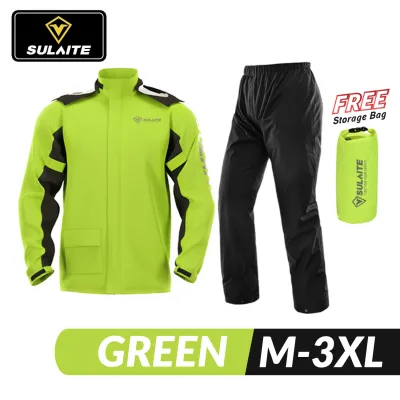
![[Ready Stock] Breathable Raincoat Motorcycle Hooded Rainsuit Oxford Cloth Men Women Raincoat Rain Pants Jacket Suit Outdoor Waterproof Rain Gear Baju Hujan](https://img.lazcdn.com/g/p/a2c3e60d7669b3f9c1b8ccf73e236b3e.jpg_400x400q80.jpg_.webp)
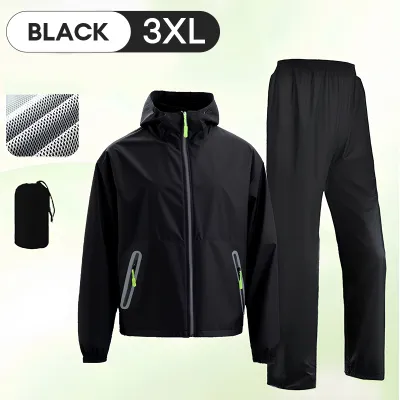
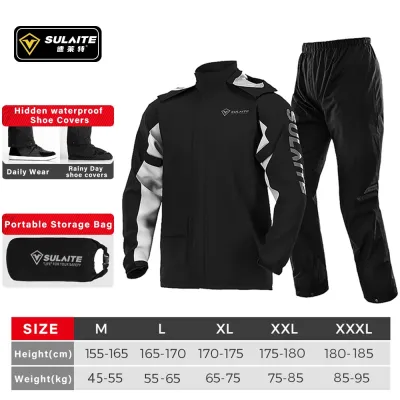
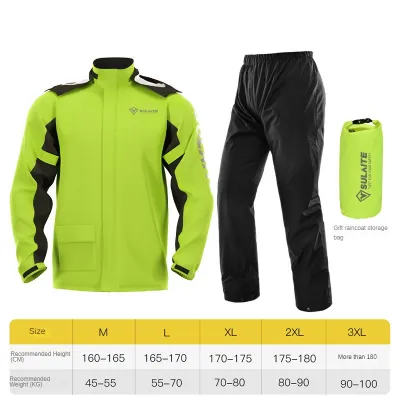
![🇸🇬 [In Stock]Motorcycle raincoat Bicycle raincoat Waterproof jacket Reflective waterproof breathable PVC jacket raincoat](https://img.lazcdn.com/g/p/9f54116258c264d1edd034c6e88eaebb.png_400x400q80.png_.webp)
![[SG STOCK] Reusable EVA Lightweight Long Raincoat and Rain Shoes Covers for Men Women Kids– Hooded Elastic Cuffs Outdoor Essentials Individually Packed](https://img.lazcdn.com/g/p/e8ca9fc8b63c5aa0ab9f7785c9d1462d.png_400x400q80.png_.webp)
Prices are valid at publication and may change. Please refer to the product page for the latest price.
Even the most advanced waterproof fabric will fail if the jacket’s construction allows water to leak through the stitching. When evaluating a jacket, check the product description for fully taped or sealed seams, which feature a waterproof tape applied to the inside of every stitched joint. Additionally, inspect the main zipper and pockets. High-quality rain jackets feature rubberized waterproof zippers or wide storm flaps secured with hook-and-loop fasteners to prevent water from being forced through the zipper teeth by the oncoming wind.
Evaluating Safety and Protection Levels
Wet road surfaces significantly reduce tire traction, making robust impact protection and abrasion resistance critical during a downpour. A dedicated motorcycle rain jacket must either feature integrated armor pockets or be sized to fit comfortably over your standard protective riding gear. Never rely on a basic plastic raincoat, as it offers zero protection in the event of a slide on wet asphalt.

To verify the impact protection of a jacket, locate and interpret the CE (Conformité Européenne) certification labels sewn into the armor pockets or printed directly on the protective inserts. The standard EN 1621-1 governs shoulder and elbow protectors, while EN 1621-2 applies to back protectors. These standards are divided into Level 1 and Level 2, with Level 2 indicating a higher level of impact absorption. Check the physical armor pieces inside the jacket to confirm they carry these official markings and are securely positioned over your joints.
In addition to impact armor, the outer shell material must be durable enough to resist tearing and abrasion. Look for high-density synthetic fabrics, such as polyester or nylon with a denier rating of 500D or higher, especially in high-impact zones like the shoulders and elbows. Some jackets incorporate reinforced double-layer panels in these areas to provide extra durability where it is needed most during a fall.
Finally, examine how the internal lining and armor pockets interact with the waterproof layer. In many premium jackets, the armor is housed in a breathable mesh lining that keeps the protective pads securely in place against your body, preventing them from shifting during a slide. Ensure that the armor can be easily removed for cleaning without damaging the delicate waterproof membrane laminated to the inside of the outer shell.
Balancing Waterproofing with Breathability and Comfort
Singapore’s tropical climate presents a unique challenge: high humidity and warm temperatures year-round. Wearing a completely sealed, non-breathable plastic jacket creates a humid microclimate inside, leaving you soaked in sweat rather than rain. To prevent this, look for fabrics with a verified breathability rating, often measured in grams of water vapor per square meter over a 24-hour period (such as 10,000 g/m²/24h), which allows body heat and moisture to escape.
Effective ventilation is crucial for maintaining comfort in slow-moving traffic or during lighter showers. Check the jacket for specialized zippered vents under the arms, across the chest, or on the upper back. These vents should feature waterproof zippers or deep storm flaps so you can leave them slightly open for airflow without allowing rainwater to seep inside.
When choosing a jacket, compare the benefits of integrated waterproof laminates versus removable layering systems. A laminated outer shell prevents the jacket from absorbing water and becoming heavy, but it can run warmer in slow traffic. Conversely, a jacket with a removable waterproof liner offers excellent airflow when the liner is detached, but you must pull over and install the liner before the rain starts, which can be highly inconvenient during sudden tropical storms.
Fit and mobility are critical for safe riding. Before purchasing, put on the jacket and sit in your typical riding position to ensure the sleeves are long enough to cover your wrists when reaching for the handlebars. The collar should seal snugly around your neck to prevent water from running down your chest, but it must not pinch or restrict your head movement. Adjustable straps on the arms and waist are also valuable, as they prevent the fabric from flapping violently at high speeds.
Maintenance and Care for Long-Lasting Waterproof Performance
To preserve the waterproof membrane and protective qualities of your jacket, establish a careful maintenance routine. Never wash a technical motorcycle jacket with harsh household detergents or fabric softeners, as these chemicals can clog the breathable pores of the membrane and strip away the durable water repellent (DWR) finish on the outer fabric.
Always consult the manufacturer’s care label for specific washing instructions. Most brands recommend hand washing in cool water using a mild, technical liquid detergent designed specifically for outdoor gear. Gently rinse the jacket and avoid wringing or twisting it, which can crack the internal waterproof coating or delaminate the taped seams.
Inspect your jacket regularly for visible signs of wear and degradation. Look for peeling seam tape on the inside, fraying fabric around high-stress areas, or water that immediately saturates the outer fabric rather than forming beads and rolling off. If the outer fabric absorbs water, a phenomenon known as “wetting out,” it restricts breathability and makes the jacket feel heavy and cold, indicating that the DWR coating needs attention.
Proper storage is vital in Singapore’s humid environment. Hang the jacket on a wide, padded hanger in a cool, dry, and well-ventilated space away from direct sunlight. Storing a damp jacket in a closed closet or under your motorcycle seat encourages mold, mildew, and bacterial growth, which can permanently damage the fabric and cause unpleasant odors.
Frequently Asked Questions (FAQ)
Can I use a standard raincoat instead of a dedicated motorcycle rain jacket?
A standard raincoat is entirely unsuitable for motorcycle riding because it lacks the necessary abrasion resistance and impact armor, meaning it will tear instantly upon contact with the road during a slide. Additionally, standard raincoats are not tailored for the riding posture; they tend to balloon with wind, flap violently at speed, and ride up your back, exposing you to both water and potential injury.
How do I know if my jacket's waterproof coating needs reapplication?
You can test your jacket’s outer water-repellent performance by spraying a small amount of clean water onto the dry outer fabric. If the water beads up into round droplets and rolls off effortlessly, the durable water repellent (DWR) finish is functioning correctly. If the water quickly flattens, darkens the fabric, and sinks into the fibers, the DWR finish has worn off and should be restored using a manufacturer-approved DWR spray or wash-in treatment.
Community discussion
Share your experience or ask a question. Comments are reviewed before publication.