
Selecting the right car wheel rim protector requires matching your vehicle’s physical specifications, driving patterns, and local environmental conditions. In urban driving environments like Singapore, where tight parallel parking alongside high concrete curbs is common, protecting alloy wheels from curb rash is a practical priority. The ideal choice depends on whether you seek a simple adhesive strip, a heavy-duty mechanical guard, or a tire-integrated solution. Each option offers distinct performance trade-offs regarding impact absorption, heat resistance, and installation complexity.
Decoding Wheel Specs: How Diameter and Lip Profile Dictate Fitment
Before purchasing any wheel protection product, you must decode your wheel’s precise dimensions and structural profile. The rim diameter—indicated by the number following the “R” on your tire’s sidewall (such as R18 or R19)—dictates the exact circumference needed for a proper fit. Universal-fit protectors often fail if they do not align perfectly with this measurement, leading to loose edges that can detach at highway speeds.
The shape of the wheel lip is equally critical. Wheel lips generally fall into flat, curved, or stepped profiles. Adhesive-based protectors require a flat, smooth outer lip of a specific width to establish a secure bond. If your wheels feature a curved or stepped lip, there may not be enough surface area for the adhesive to grip, increasing the risk of the protector peeling off. Conversely, mechanical or insert-style guards rely on the gap between the tire bead and the rim, which requires a compatible lip profile to seat securely without damaging the tire.
Products mentioned in this guide

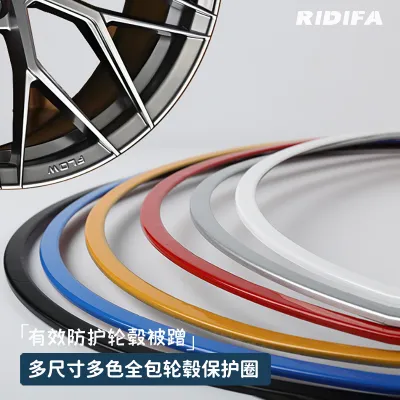
Prices are valid at publication and may change. Please refer to the product page for the latest price.
Tire sidewall height also influences your choice. Low-profile tires, common on sporty vehicles, offer very little cushion and expose the outer rim edge to immediate impact. These setups require robust, shock-absorbing protectors. However, standard or high-profile tires might bulge slightly over the rim edge, limiting the physical clearance available for thick, bolt-on guards. Ignoring these baseline physical constraints can compromise tire bead seating, leading to slow pressure leaks or sudden tire deflation.
Car Wheel Rim Protector Styles Compared: Strips, Bolt-On Guards, and Integrated Options
Adhesive Rubber Strips and Rings
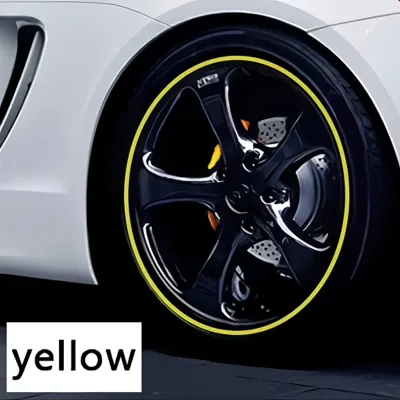
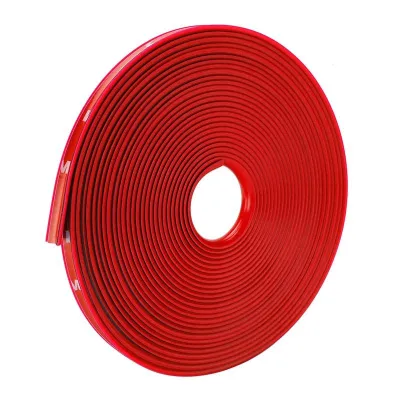
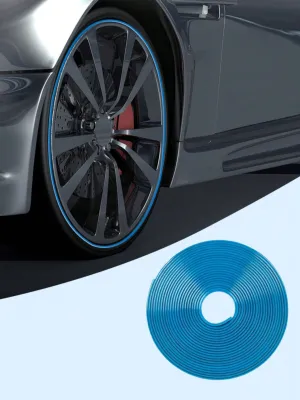
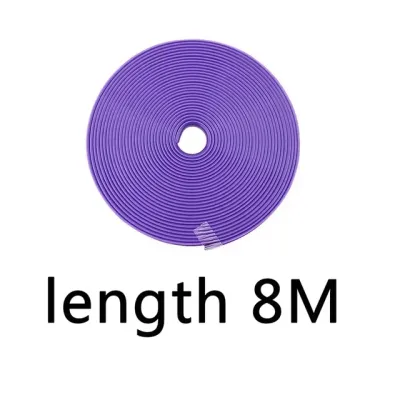
Flexible, stick-on rubber strips or rings are popular for everyday commuter cars due to their straightforward installation and cost-effectiveness. These protectors use automotive-grade double-sided tape to bond directly to the outer edge of the wheel lip. Because they are highly flexible, they easily conform to standard circular wheels and provide a clean, low-profile aesthetic. Adhesive strips are generally budget-friendly, often costing under S$50 to S$100 for a full set.

However, adhesive strips have distinct limitations. Singapore’s tropical climate, characterized by high ambient temperatures and sudden, heavy downpours, can accelerate the degradation of adhesive bonds. Furthermore, intense heat radiating from the brake calipers during prolonged stop-and-go traffic can soften the adhesive. Harsh chemical wheel cleaners used during routine car washes can also break down the glue over time. These factors mean adhesive strips are best suited for preventing minor, low-speed scuffs rather than surviving heavy impacts.
Bolt-On Alloy Wheel Guards
For drivers seeking maximum durability, rigid bolt-on alloy wheel guards offer superior mechanical protection. Instead of relying on adhesives, these guards are physically secured to the wheel assembly using existing wheel nuts, specialized mounting clips, or integrated tension rings. This mechanical connection makes them highly resistant to shifting or detaching, making them suitable for off-road vehicles, commercial vans, or larger SUVs. Premium mechanical alloy guards typically range from S$150 to over S$300.
Despite their strength, bolt-on guards introduce several technical variables. They require precise compatibility with your wheel’s bolt pattern and spoke configuration. Because they are made of metal or dense composites, they add unsprung weight to each corner of the vehicle, which can subtly alter steering feel and suspension dynamics. Additionally, you must verify that any mechanical guard does not protrude beyond the vehicle’s bodywork. In Singapore, vehicle modifications must comply with Land Transport Authority (LTA) guidelines regarding track width and protruding parts, making it essential to cross-reference product dimensions with official regulations before installation.
Full-Coverage and Tire-Integrated Options
Tire-integrated rim protectors represent a seamless, factory-engineered solution. Many premium tire manufacturers mold a raised rubber rib—often called a rim flange protector—directly into the lower sidewall of the tire. This integrated rib absorbs minor curb scrapes without requiring aftermarket attachments. While highly effective and visually unobtrusive, this option requires purchasing an entirely new set of compatible tires, making it a long-term investment rather than a quick retrofit.
In contrast, aftermarket full-coverage decorative wheel covers clip over the entire face of the wheel. While they offer comprehensive cosmetic protection, they are generally designed for stationary show cars or long-term vehicle storage. For daily driving, full-face covers can trap road grime, brake dust, and moisture against the alloy surface. This trapped debris acts as an abrasive, potentially corroding or scratching the very wheels you are trying to protect.
Material Specifications Decoded: Heat Tolerance and Impact Absorption
Evaluating the raw materials used in rim protectors helps you understand how they will perform under thermal stress and physical impact. The most common materials are standard rubber, polyurethane (PU), and hard nylon plastics. Each material handles the transfer of kinetic energy and environmental exposure differently.
Hard nylon and plastic protectors offer excellent resistance to deep scratches and do not fade easily under intense ultraviolet (UV) radiation. However, their rigid structure makes them brittle. Under a heavy, sharp impact—such as striking a concrete curb at speed—hard plastics can crack or shatter, potentially sending sharp debris into the tire sidewall. Polyurethane, on the other hand, provides a highly practical balance. PU is highly elastomeric, meaning it absorbs and disperses impact energy efficiently while resisting abrasion, tearing, and environmental weathering.
Thermal tolerance is another critical factor. During heavy braking, brake rotors and calipers generate substantial heat that transfers directly to the wheel hub and rim. Lower-grade plastics and cheap adhesives can warp, melt, or lose bonding strength when exposed to these elevated temperatures. Before selecting a product, check the manufacturer’s specified operating temperature range and material safety data. Ensure the material is rated to withstand both the external tropical climate and the localized heat generated by your specific vehicle’s braking system.
Sizing and Fitment: Measuring Your Wheels and Verifying Clearance
Achieving a safe and secure fit requires precise measurements and meticulous surface preparation. To begin, check your tire sidewall to confirm the exact wheel diameter and width. Next, use a precise ruler to measure the depth and flat surface area of your wheel’s outer lip. Compare these measurements directly with the product specifications provided by the rim protector manufacturer.
Before installing any adhesive-based protector, the mounting surface must be completely free of contaminants. Brake dust, road grime, tire shine silicone, and residual oils will prevent proper bonding. Clean the wheel thoroughly with a dedicated wheel cleaner, then perform a final wipe-down using isopropyl alcohol on a clean, lint-free microfiber cloth. Ensure the alcohol is compatible with your wheel’s specific paint or clear-coat finish by testing a small, inconspicuous area first.
Safety must remain your primary concern. If the installation of your chosen rim protector requires deflating the tire, breaking the tire bead, or removing wheel nuts, do not attempt to perform these steps yourself. Improper tire bead seating or incorrect wheel nut torque can lead to catastrophic tire failure or wheel detachment. Always have these products installed by a qualified tire professional at a professional workshop. If you notice any interference with the tire bead, brake calipers, or suspension components during a test fit, stop immediately and consult the manufacturer or a professional technician.
Frequently Asked Questions (FAQ)
Do rim protectors affect tire balancing or TPMS sensors?
Lightweight adhesive rubber or polyurethane strips generally weigh very little and do not add enough unsprung mass to disrupt tire balancing. However, heavier mechanical bolt-on guards can alter weight distribution, requiring you to have the wheels rebalanced at a professional tire shop after installation. Properly fitted rim protectors do not interfere with internal Tire Pressure Monitoring System (TPMS) sensors, which are located inside the tire cavity on the valve stem. However, during the installation of bead-mounted or mechanical protectors, care must be taken not to pinch the tire bead or disturb the valve stem assembly, as this can damage the TPMS sensor housing.
Can I install adhesive rim protectors on curved or multi-spoke wheels?
Flexible adhesive strips can easily conform to mild, continuous curves along a standard wheel lip. However, wheels with complex multi-spoke designs, deeply concave profiles, or heavily sculpted outer lips present significant fitment challenges. If the wheel lip is interrupted by spokes that extend to the absolute edge, or if the surface is highly irregular, standard adhesive strips will not adhere flatly. Attempting to force a flexible strip over complex contours creates internal tension in the material, which inevitably leads to the adhesive peeling off at high speeds. For complex wheel designs, look for specialized, segmented protectors or consult a professional installer to evaluate mechanical options.
Community discussion
Share your experience or ask a question. Comments are reviewed before publication.