
Choosing the right method to maintain your vehicle’s exterior finish depends entirely on whether you need to repair existing surface damage or shield the paint from future environmental wear. Many car owners confuse the processes of correcting paint with protecting it, leading to wasted effort or disappointing results. Car polish is a corrective, abrasive compound designed to level the clear coat and erase imperfections, whereas traditional waxes and modern ceramic sprays, such as Sonax ceramic spray, serve as sacrificial protective barriers.
For most DIY detailers, the choice between these protective methods involves a clear trade-off: ceramic sprays offer modern durability, chemical resistance, and hydrophobic ease, while traditional waxes deliver a classic, warm gloss that requires more frequent physical upkeep. Understanding how these products interact with your car’s clear coat is the key to achieving a professional-grade finish at home. This guide breaks down the distinct roles, application demands, and performance characteristics of polish, wax, and ceramic spray so you can build the ultimate car care routine.
Clarifying the Roles: Paint Correction vs. Paint Protection
To establish an effective detailing routine, you must first distinguish between correcting paint and protecting it. These two processes serve entirely opposite functions, yet they rely on each other to produce a flawless, long-lasting shine. Applying a protectant over damaged paint will only seal in the defects, while polishing paint without following up with a protectant leaves the delicate clear coat completely exposed to the elements.
Products mentioned in this guide
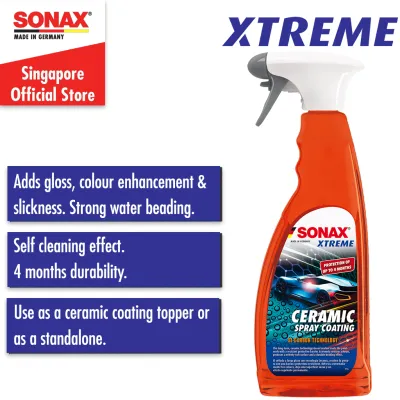
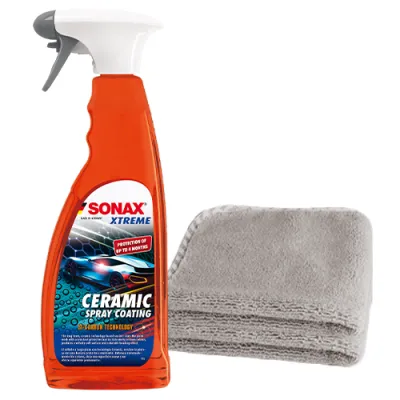
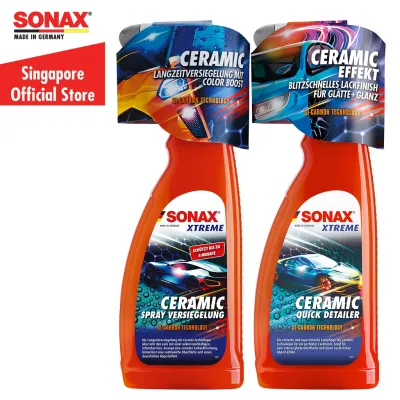
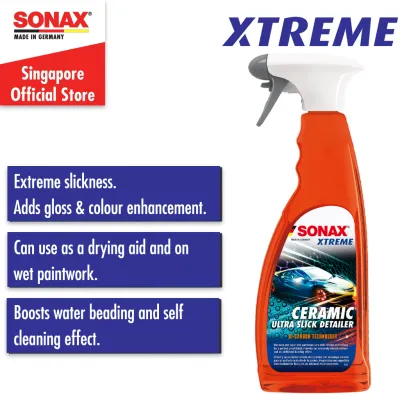
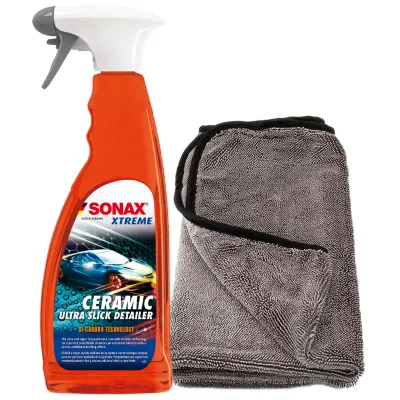
Prices are valid at publication and may change. Please refer to the product page for the latest price.
Car polish is an abrasive liquid containing microscopic particles that physically wear down a minute fraction of the clear coat. This leveling process removes physical defects like swirl marks, light scratches, and oxidation, restoring a flat, highly reflective surface. Polish does not leave behind a protective layer; its sole purpose is to prepare and refine the surface.
In contrast, waxes and ceramic sprays are non-abrasive formulas designed to sit on top of the clear coat. They fill in microscopic pores and create a sacrificial barrier that absorbs environmental abuse, such as UV rays, bird droppings, and acid rain. The correct detailing sequence always dictates that you polish first to correct the paint, thoroughly clean the surface to remove polishing oils, and then apply your chosen protectant to seal in the corrected finish.
Ceramic Spray: Modern Durability and Easy Application
Ceramic sprays represent a major technological leap in DIY car care, utilizing active silica (SiO2) chemistry to deliver professional-grade protection in a user-friendly format. When sprayed onto a clean surface, these liquid formulas chemically bond with the clear coat, creating an ultra-thin, glass-like crystalline structure. This semi-permanent barrier is highly hydrophobic, causing water to bead up and roll off the surface rapidly, taking loose dirt and road grime with it.

The primary appeal of a ceramic spray lies in its exceptional durability compared to traditional alternatives. While exact longevity varies based on environmental exposure and washing habits, a quality ceramic spray typically maintains its protective qualities and hydrophobic behavior for several months, as detailed on the manufacturer’s label. This chemical bond also provides superior resistance to UV radiation, harsh detergents, and high temperatures, making it highly resilient against daily driving hazards.
Application effort is remarkably low, often requiring a simple spray-on, wipe-off technique with high-quality microfiber towels. However, the ease of application is highly dependent on meticulous surface preparation. Any lingering oils, old wax, or road grime will prevent the SiO2 molecules from bonding correctly to the clear coat, leading to premature failure of the coating. Additionally, you must pay close attention to the manufacturer’s specified curing conditions, which often require keeping the vehicle completely dry and out of direct sunlight for several hours immediately after application.
Traditional Wax: Classic Shine and Hands-On Maintenance
Traditional car wax, typically formulated from natural carnauba wax or synthetic polymers, remains a favorite among automotive enthusiasts who enjoy a hands-on detailing experience. Carnauba wax is harvested from the leaves of a Brazilian palm tree and is prized for its ability to produce a warm, deep, and wet-looking gloss. This unique visual characteristic is difficult to replicate with synthetic coatings, making traditional wax the preferred choice for show cars and weekend cruisers.
Despite its aesthetic appeal, traditional wax offers limited durability and requires a high level of ongoing maintenance. Natural wax has a relatively low melting point, meaning it can degrade quickly when exposed to intense engine heat or hot tropical sunshine. Heavy rain, road salt, and alkaline car wash soaps will also strip the wax layer rapidly, necessitating frequent reapplication to maintain adequate protection.
Applying traditional paste or liquid wax is a labor-intensive process that requires physical effort and patience. The product must be spread evenly across the paintwork, allowed to dry to a hazy finish, and then buffed off by hand using clean microfiber towels. Over-applying the product or leaving it on the paint for too long can make buffing extremely difficult, and accidental contact with unpainted plastic or rubber trim can leave behind stubborn white stains that are difficult to remove.
Car Polish: Restoring the Surface Before Protection
Car polish is a specialized corrective tool that should only be used when your vehicle’s paint shows visible signs of degradation or wear. Over time, improper washing techniques, automatic brush car washes, and environmental contaminants create a network of fine scratches known as swirl marks. Polish is designed to eliminate these defects, along with light scratches, water spot etching, and oxidation that makes the paint look dull and faded.
Before you begin polishing, it is critical to strip away any existing layers of wax, sealant, or ceramic spray. If you attempt to polish over an active protectant, the abrasive particles in the polish will quickly become clogged with the old product, reducing their effectiveness and potentially creating an uneven finish. A dedicated strip wash shampoo or an isopropyl alcohol (IPA) surface prep spray should be used to ensure you are working directly on the bare clear coat.
Working with abrasives requires a strict adherence to safety limits to prevent permanent damage to your vehicle’s finish. Modern factory clear coats are incredibly thin, and aggressive or excessive polishing can wear through this protective layer, exposing the base paint underneath. Always start with the least aggressive polish and pad combination that can get the job done, and monitor the temperature of the panel; if the paint feels excessively hot to the touch during machine polishing, stop immediately to let it cool. If you are uncertain about the thickness of your clear coat, consult a professional detailer who can measure the paint depth before proceeding.
Side-by-Side Comparison: Durability, Effort, and Finish
To help you decide which product fits your current car care goals, the table below summarizes the key differences in performance, application, and visual results.
| Product Type | Primary Function | Expected Durability | Application Effort | Visual Finish |
|---|---|---|---|---|
| Ceramic Spray | Long-term protection & water beading | High (Several months per label instructions) | Low to Moderate (Requires thorough prep) | Sharp, reflective, glass-like gloss |
| Traditional Wax | Sacrificial protection & deep shine | Low to Moderate (Requires frequent top-ups) | High (Manual application and buffing) | Warm, deep, wet-look gloss |
| Car Polish | Paint correction & defect removal | None (Removes clear coat defects) | High (Requires careful hand or machine work) | Restores original clarity and smoothness |
When evaluating these options, local environmental factors play a massive role in how long your paint protection will last. In tropical climates like Singapore, vehicles are subjected to intense, year-round UV radiation, high humidity, and sudden, heavy downpours. These harsh conditions accelerate the breakdown of traditional natural waxes, which can melt or wash away much faster than they would in milder climates. Ceramic sprays, with their superior thermal resistance and robust chemical bonding, are far better suited to withstand these intense tropical elements, keeping your car protected for longer.
Regardless of the product you choose, always verify the specific manufacturer instructions on the packaging. Pay close attention to recommended curing times, maximum layering limits, and ambient temperature restrictions to ensure the product performs exactly as intended.
Decision Framework: Choosing the Right Car Care Method
Selecting the right car care method requires balancing your vehicle’s current paint condition, your available time, and your aesthetic preferences. Use the following guidelines to determine your next step:
- Choose Ceramic Spray if: You want long-lasting, highly hydrophobic protection that makes routine washing much easier. This is the ideal choice for daily driven vehicles parked outdoors, where maximum resistance to UV rays, rain, and road grime is required with minimal maintenance effort.
- Choose Traditional Wax if: You prioritize a warm, deep, show-car shine and genuinely enjoy the hands-on process of detailing your vehicle on weekends. This method is best suited for garage-kept cars or vehicles that are not exposed to harsh daily driving conditions.
- Choose Polish if: Your vehicle's paint has visible swirl marks, light scratches, or a dull, oxidized appearance. Remember that polishing is a preparatory step, not a final protective layer, and must always be followed by a ceramic spray or wax to seal the restored surface.
Before applying any chemical product to your vehicle, perform a quick compatibility check. If your car features a matte paint finish, a specialized vinyl wrap, or a paint protection film (PPF), standard polishes and certain waxes can permanently ruin the texture or appearance. Always consult the manufacturer’s documentation or test the product on an inconspicuous area first to ensure it is safe for your specific vehicle surface.
Frequently Asked Questions (FAQ)
Can I apply ceramic spray over traditional wax?
No, you should not apply a ceramic spray directly over a traditional wax. Ceramic formulas rely on a direct chemical bond with the bare clear coat to function correctly. The oils and polymers in traditional wax will block this bonding process, causing the ceramic spray to wash away during your next wash. Always strip away old wax layers completely using a dedicated prep spray or strip wash before applying a ceramic coating.
How often should I polish my car?
Polishing should only be performed when visible paint defects, such as swirl marks or oxidation, are present. Because polishing physically removes a microscopic layer of your clear coat, doing it too frequently will eventually thin the paint to a dangerous level. For routine maintenance, focus on safe washing techniques and regular applications of ceramic spray or wax to protect the paint, reserving polishing for once or twice a year at most.
Do I need to wash my car differently after applying ceramic spray?
Yes, maintaining a ceramic-coated vehicle requires a few simple adjustments to preserve the hydrophobic layer. Avoid using harsh, highly alkaline dish soaps or visiting automatic drive-through car washes with abrasive brushes, as these can degrade the coating. Instead, use a pH-neutral car wash shampoo, a clean wash mitt, and high-quality microfiber drying towels to gently clean the surface without scratching or stripping the ceramic protection.

Community discussion
Share your experience or ask a question. Comments are reviewed before publication.