
When navigating heavy downpours, maintaining clear windshield visibility is a critical safety priority. While both ceramic glass coatings and traditional water repellents aim to improve water runoff and reduce wiper dependency, neither offers a universal solution without considering your specific driving habits, maintenance willingness, and application conditions. Ceramic coatings typically form a harder, chemically bonded layer that offers long-term hydrophobic properties, whereas traditional silicone or fluoropolymer-based repellents provide a softer, physically adhered layer that is often easier to reapply. Choosing the right option requires understanding how these products interact with your windshield, your wipers, and the environment.
The primary goal of any hydrophobic glass treatment is to increase the contact angle of water droplets on the surface. When rain hits untreated glass, it tends to spread out flat, creating a continuous sheet of water that distorts light and limits your vision. Hydrophobic treatments force the water to bead into tight spheres, allowing wind force to sweep them away. However, the chemical makeup of these two product categories leads to different experiences in durability, optical clarity, and ease of use.
Understanding the Core Differences in Glass Protection
To make an informed choice, you must first understand the fundamental chemical and mechanical differences between these two product categories. Ceramic glass coatings are typically formulated using silicon dioxide (SiO2) or silica-based nanotechnology. When applied to a clean glass surface, these nano-compounds undergo a chemical reaction that allows them to form a covalent bond directly with the silica in the glass itself. This chemical bonding process creates an incredibly thin, rigid, and highly durable barrier that essentially becomes an extension of the glass surface.
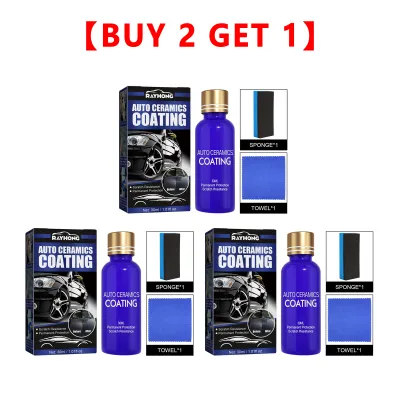
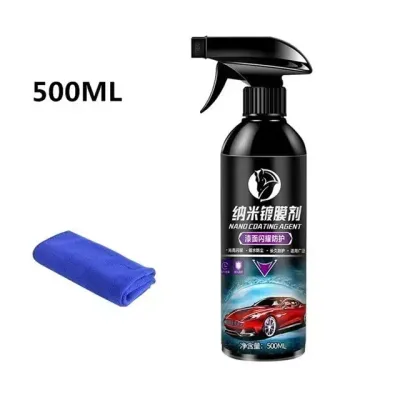
Products mentioned in this guide
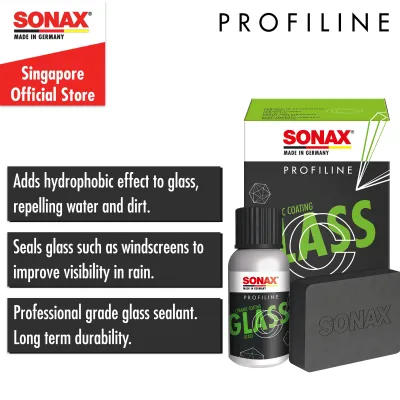
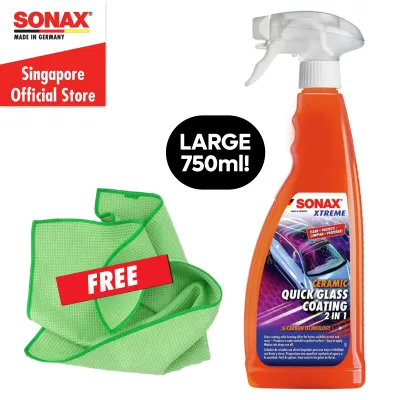
6 Lazada user ratings
I have received this ceramic quick glass coating 2 in 1750ml for my newly installed tempered glass doors. I hope will help to reduce mainten…Read full reviewShow less
I have received this ceramic quick glass coating 2 in 1750ml for my newly installed tempered glass doors. I hope will help to reduce maintenance.
Fast delivery. Yet to use. But should be good and trustable for this brand. :)
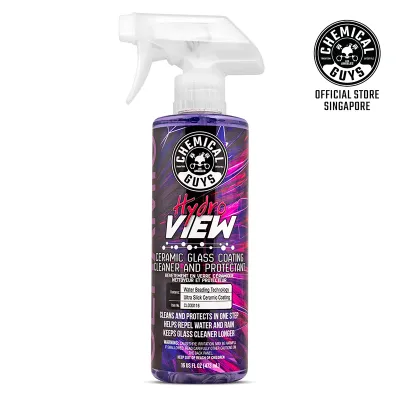
8 Lazada user ratings
Good and effective product. Returned customer and will continue to use it.
Well packaged and fast delivery. Effective. High recommend.
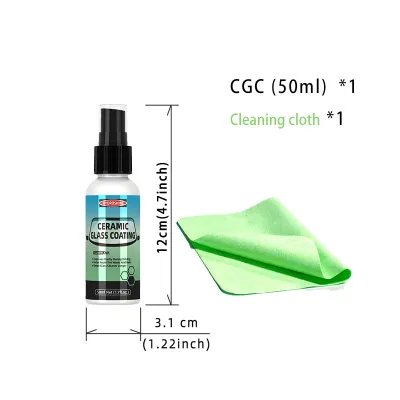
16 Lazada user ratings
The only way I could be a better player in my opinion was by playing the best of the two games in my life so that the team would have a bett…Read full reviewShow less
The only way I could be a better player in my opinion was by playing the best of the two games in my life so that the team would have a better shot at winning the league again if we had won a title or not so that I would not get hurt by a player like this in a championship match
Easy to use n comes with applicator n microfiber cloth. Re-application may be needed periodically to ensure full water shedding effect
Easy spray application, Clear visibility after use,
8 Lazada user ratings
👌Ease of Use:excellent \n 🛡️Safety:excellent \n ✅Effectiveness:excellent Long-lasting durability, Nano material quality, \n thanks lazada and…Read full reviewShow less
👌Ease of Use:excellent \n 🛡️Safety:excellent \n ✅Effectiveness:excellent Long-lasting durability, Nano material quality, \n thanks lazada and seller for the excelent product and very affordable price pah
i received the item good, safe and secure. I don't even try yet...
Long delivery time. Hope it works well.
Very small volume. It’s yet to try.
19 Lazada user ratings
🖐️Ease of Application: easy spray and wipe down 🛠️Durability: based on previous experience, should be months before the next application Bette…Read full reviewShow less
🖐️Ease of Application: easy spray and wipe down 🛠️Durability: based on previous experience, should be months before the next application Better to clean the surfaces properly before applying the coating Effective but not as what you see on promo videos as the surfaces now comes with age Simple application method,
item arrived early. nicely protected and no leak. delivery timing acceptable.
All good. Received in a week time. Love it. More please. Thanks seller!!
Prices are valid at publication and may change. Please refer to the product page for the latest price.
In contrast, traditional water repellents rely on silicone, fluoropolymers, or Teflon-based active ingredients. Instead of forming a chemical bond, these products physically adhere to the glass surface. They work by filling in the microscopic pores, valleys, and imperfections inherent in automotive glass, creating a smooth, low-friction surface. Because this bond is purely physical rather than chemical, the resulting hydrophobic layer is much softer and more susceptible to mechanical wear.
Before purchasing any product, you should check the product labels and manufacturer safety data sheets (SDS) for specific active ingredients, as formulations vary widely across brands. Some hybrid products attempt to bridge the gap by mixing silicone polymers with silica additives, but true ceramic coatings will require a distinct curing process to establish their chemical bonds.
This underlying chemical difference dictates how each product interacts with wiper friction, environmental contaminants, and cleaning chemicals. The rigid, chemically bonded structure of a ceramic coating is highly resistant to chemical degradation, meaning it can withstand harsh windshield washer fluids and alkaline car wash soaps. Traditional repellents, being physically bonded, are easily degraded by these same chemicals and can be stripped away rapidly by the mechanical abrasion of windshield wiper blades.
Evaluating Visibility Performance in Heavy Downpours
When driving through a sudden tropical downpour, the immediate performance of your glass treatment is what matters most. To evaluate this performance accurately, you must look at observable water behavior rather than relying on generalized marketing claims. The primary metric of hydrophobic performance is the water contact angle. Ceramic glass coatings typically achieve high contact angles, often exceeding 110 degrees, which causes water to form exceptionally tight, round beads. These beads roll off the glass with minimal wind resistance, often clearing the windshield at speeds as low as 50 to 60 km/h.

Traditional water repellents also deliver excellent water beading initially, but some formulations are designed to promote water sheeting instead. Sheeting products allow water to run off in larger, cohesive sheets rather than individual droplets. In low-speed driving or stop-and-go traffic, some drivers prefer sheeting because tight, tiny beads can sometimes linger on the glass and scatter light from streetlights or oncoming traffic, creating a distracting visual pattern.
Nighttime visibility is another critical area where performance can diverge significantly. If either product is applied improperly or has begun to degrade unevenly, it can cause severe visual artifacts. A common issue is “smearing” or “hazing,” where the motion of the wiper blades leaves a temporary white mist across the glass. This haze can catch the glare of oncoming headlights, momentarily blinding the driver. Because ceramic coatings cure into a hard, glass-like layer, they are less prone to this type of mechanical smearing once fully cured, provided the glass was perfectly clean beforehand. Degraded traditional silicone repellents, however, frequently suffer from wiper-induced smearing as the soft polymer layer breaks down and migrates across the glass.
It is vital to remember that vehicle speed plays a decisive role in how these treatments perform. Hydrophobic coatings rely heavily on wind force to clear water from the windshield. If you are idling in heavy traffic or driving at low speeds in residential areas, the wind force will not be sufficient to clear the beads, meaning your windshield wipers remain absolutely essential. When evaluating products, look for manufacturer-provided specifications regarding contact angles and optical clarity, and always verify real-world performance through observable water runoff during your initial drives in light and heavy rain.
Durability, Maintenance, and Reapplication Requirements
The long-term value of your glass protection depends heavily on the maintenance routine you are willing to follow. When interpreting manufacturer claims regarding product lifespan—which can range from a few weeks for traditional repellents to several years for professional-grade ceramics—you must factor in real-world driving conditions. In regions with high UV exposure, frequent heavy rain, and high humidity, any glass coating will degrade faster than it would in a mild, dry climate. Frequent wiper usage is the primary driver of mechanical wear, gradually wearing down the coating in the wiper sweep path.
Maintaining a ceramic glass coating requires a specific, careful routine to preserve its hydrophobic properties. You should wash your vehicle using pH-neutral car wash soaps, as highly acidic or highly alkaline cleaners can slowly degrade the coating. Additionally, many ceramic systems benefit from the periodic application of specialized glass toppers or booster sprays. These maintenance products help replenish the top hydrophobic layer, ensuring that water continues to bead and roll off effectively over time.
Traditional water repellents have a much simpler maintenance profile, though they require far more frequent attention. While a traditional silicone spray or liquid repellent may only last between four to eight weeks under regular wiper use, the reapplication process is straightforward. You do not need to perform intensive chemical decontamination or machine polishing every time you want to refresh the coating. A simple wash, dry, and quick wipe-on application is usually sufficient to restore full performance.
Regardless of which option you choose, you must avoid using harsh alkaline cleaners, heavy degreasers, or abrasive glass polishes during routine maintenance. These products will prematurely strip away both traditional repellents and ceramic coatings, forcing you to start the application process from scratch.
Application Process and Surface Preparation
The success of any glass treatment—and your safety on the road—hinges entirely on the quality of your surface preparation. Applying any hydrophobic product over a contaminated windshield is a recipe for poor adhesion, optical distortion, and severe wiper chatter. Before applying either a ceramic coating or a traditional repellent, you must perform a thorough, multi-step glass preparation process.
First, wash the glass thoroughly to remove loose dirt and grime. Next, perform a chemical decontamination using a clay bar to pull out embedded contaminants like industrial fallout, tree sap, and overspray. The final, and most crucial, preparation step is mechanical oil-film removal, often referred to as glass stripping. Using a dedicated glass polish containing cerium oxide or specialized abrasives, you must polish the glass until it is completely “hydrophilic”—meaning water no longer beads on it at all, but rather clings to it in a flat, unbroken sheet. This state indicates that all old waxes, silicone residues, road oils, and mineral deposits have been completely removed, leaving a bare, pristine silica surface ready for bonding.
The application complexity differs sharply between the two categories. Traditional repellents are highly forgiving; you typically wipe the liquid onto the glass in a circular motion, let it dry to a light haze, and then buff it off with a clean microfiber towel. Ceramic coatings, however, require a much higher level of precision. They must be applied in structured, overlapping passes to ensure even coverage. You must monitor the “flashing” time—the brief window where the solvents evaporate and the coating begins to bond—before carefully leveling and buffing away the excess. Leaving a ceramic coating on too long before wiping can result in “high spots,” which appear as dark, oily-looking smudges that impair vision and can only be removed through mechanical machine polishing. Furthermore, ceramic coatings require a strict curing window, often needing to remain completely dry and sheltered for 12 to 24 hours after application.
This brings us to an important safety boundary. If your windshield has deep wiper scratches, heavy pitting from road debris, or stubborn mineral deposits (water spots) that do not budge after manual polishing, you should halt the DIY process. Attempting to coat over damaged or heavily pitted glass can trap light-distorting imperfections, making nighttime glare significantly worse. In such cases, consult a qualified automotive glass or detailing professional to assess whether the glass can be safely restored or if it requires replacement.
Decision Framework: Which Solution Fits Your Driving Profile?
To determine which glass protection method is right for your vehicle, consider how your driving habits, budget, and willingness to perform maintenance align with the characteristics of each option.
Choose Ceramic Glass Coating if:
- You want a long-term, durable solution that can withstand months of frequent wiper use and tropical weather without degrading.
- You are willing to invest the necessary time, effort, and budget into meticulous surface preparation, or you plan to pay for professional installation.
- You frequently drive on highways at speeds where wind force can actively clear water beads from your field of vision.
- You prefer a highly chemical-resistant barrier that protects the glass from etching caused by acid rain or mineral deposits.
Choose Traditional Water Repellents if:
- You prefer a low-commitment, budget-friendly product that you can easily apply in your own driveway in under twenty minutes.
- You do not mind reapplying the treatment every few weeks or months as part of your regular car washing routine.
- Your vehicle is parked in a sheltered garage most of the time, reducing the rate of UV-induced degradation.
- You are treating older glass with minor surface wear where a softer, temporary polymer layer is more forgiving and easier to manage.
Verify first if:
- Your windshield has any pre-existing damage, deep scratches, or unknown dealer-applied coatings. Always inspect the glass under direct light and run your fingernail over any suspect spots. If you detect deep grooves or structural pitting, seek professional advice before applying any chemical treatments, as improper application over damaged glass can compromise your driving safety.
Frequently Asked Questions (FAQ)
Can I apply a ceramic coating over an existing traditional water repellent?
No, you cannot apply a ceramic coating directly over an existing traditional water repellent. Ceramic coatings require direct contact with the bare silica of the glass to establish their chemical covalent bonds. If a layer of silicone, Teflon, or polymer repellent is present, the ceramic coating will not be able to bond properly. This will result in uneven curing, poor durability, and severe visual smearing when you use your wipers. To transition from a traditional repellent to a ceramic coating, you must completely strip the old product using an abrasive glass polish or a dedicated glass stripper until the glass is fully hydrophilic.
Do these coatings eliminate the need for windshield wipers in heavy rain?
No, hydrophobic glass coatings do not eliminate the need for windshield wipers, especially during heavy rain or low-speed driving. While these treatments significantly improve water runoff at highway speeds by allowing wind to sweep the beads away, they rely entirely on airflow to function. When you are driving at low speeds, idling in traffic, or navigating heavy downpours, the wind force is insufficient to clear the water. In these situations, you must use your windshield wipers to maintain a clear view. Additionally, you should regularly clean and inspect your wiper blades; dirty or worn blades can chatter across coated glass and mechanically degrade the protective layer prematurely.

Community discussion
Share your experience or ask a question. Comments are reviewed before publication.