
Quick Answer: Which Gtechniq Protection Method Fits Your Needs?
Selecting the ideal paint care method depends on your specific goals for vehicle longevity, gloss enhancement, and the amount of application effort you are willing to invest. If your vehicle’s paint is marred by fine scratches and swirl marks, a polish is required to physically correct the surface, though it offers no protective qualities on its own. For car owners seeking a traditional, warm gloss with an easy, forgiving application process that can be completed in a standard driveway, a high-quality wax serves as an excellent temporary sacrificial barrier. Conversely, if your priority is long-term chemical resistance, intense water-beading, and a semi-permanent shield that reduces washing effort over several years, a ceramic coating is the appropriate choice. Because each product line features distinct formulations, always check the specific Gtechniq product labels and technical data sheets to verify the intended use and compatibility before making a purchase.
Core Differences: Coating vs Wax vs Polish
To maintain your vehicle’s exterior finish effectively, you must first understand that polish, wax, and ceramic coatings serve entirely different chemical and functional purposes. Car polish is not a protective sealant; instead, it is a corrective compound containing microscopic abrasives. When applied to the paintwork, these abrasives gently level the outermost layer of the clear coat, smoothing out microscopic ridges, swirl marks, and light oxidation to restore a flat, highly reflective surface. Using a polish without following up with a protective layer leaves the raw clear coat completely exposed to environmental damage.

Wax acts as a temporary, sacrificial barrier that sits physically on top of the clear coat rather than bonding with it. Traditional waxes often utilize natural ingredients like carnauba, while modern synthetic variants leverage polymers to improve durability and ease of application. This layer fills minor paint imperfections to create a deep, warm shine and provides basic hydrophobic properties, causing water to bead and roll off. However, because wax merely rests on the surface, it is highly susceptible to heat, road grime, and detergents, meaning it gradually wears away and requires regular reapplication.
Products mentioned in this guide
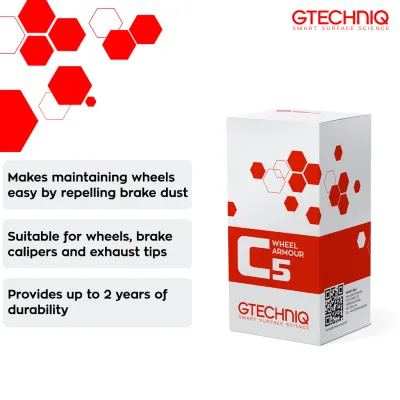
Prices are valid at publication and may change. Please refer to the product page for the latest price.
Ceramic coatings represent an advanced chemical approach to paint protection, utilizing silica-based technology to form a semi-permanent bond with the vehicle’s clear coat. Instead of simply sitting on the surface, the liquid coating cures and chemically cross-links with the paint, creating an ultra-thin, extremely hard glass-like layer. This integrated barrier is highly resistant to environmental contaminants, UV radiation, and harsh cleaning chemicals. Because of this chemical bond, a ceramic coating cannot be washed off like a wax and must be physically polished away if removal is ever required.
Comparing Durability and Protection Levels
The primary differentiator between these three paint care categories is how long they remain active on the vehicle and the level of environmental defense they provide. A standard car wax offers relatively short-lived protection, typically lasting anywhere from a few weeks to a couple of months depending on local weather conditions, parking environments, and washing habits. It provides a basic level of defense against light road grime and water spots, but its low melting point means it can degrade rapidly under intense sunlight or when exposed to alkaline car wash soaps.
In contrast, a professionally formulated ceramic coating is engineered for multi-year durability, resisting degradation from environmental factors that would easily strip a wax. This hardened silica barrier provides robust protection against ultraviolet rays, which prevents the underlying paint from fading or oxidizing over time. Additionally, the chemical resistance of a cured ceramic coating helps shield the clear coat from acidic contaminants like bird droppings, bug splatter, and acid rain, giving you a wider window of time to wash off these hazards before they cause permanent etching. To understand the exact limits of a product’s chemical resistance, always consult the manufacturer’s technical data sheets.
It is critical to remember that polish offers absolutely zero ongoing protection once the residue is wiped away from the panel. While polishing is a necessary step to achieve maximum gloss and clarity by removing defects, the freshly corrected clear coat is highly vulnerable to immediate environmental damage. Applying a polish without immediately sealing the surface with either a wax, a synthetic sealant, or a ceramic coating will result in rapid oxidation and a quick return of dull, faded paint.
Maintenance and Upkeep Requirements
The long-term success of any paint protection method relies heavily on the maintenance routine you establish after the initial application. For vehicles treated with a ceramic coating, maintenance requires a specific, careful washing technique to preserve the hydrophobic top layer and prevent premature degradation. You must use pH-neutral car shampoos that do not contain added waxes, gloss enhancers, or heavy surfactants, as these additives can leave a film over the coating and temporarily mask its self-cleaning properties. Regular washing with clean microfiber wash mitts and the two-bucket method is essential to prevent dirt from dragging across the hardened surface and creating fine scratches.
Maintaining a waxed vehicle involves a simpler but far more frequent cycle of care. Because wax degrades quickly under normal driving conditions, you will need to wash the vehicle regularly with mild soap and plan to reapply a fresh layer of wax every few months to maintain consistent protection and gloss. While the washing process is less sensitive to shampoo types compared to ceramic coatings, using harsh, high-pH traffic film removers or automatic car washes will strip the wax layer almost instantly, requiring immediate reapplication to restore protection.
For polished surfaces, the maintenance requirement is immediate and non-negotiable: you must apply a protective sealant right after the polishing process is complete. Leaving a polished panel bare exposes the freshly leveled clear coat to moisture, oxygen, and UV light, which accelerates oxidation and ruins the corrected finish. Once the protective layer is applied over the polished paint, your maintenance routine shifts to matching the specific requirements of that chosen top coat, whether it is a traditional wax or a ceramic sealant.
Surface Preparation and Application Conditions
The effort and precision required during the application phase vary dramatically between these three paint care methods, with ceramic coatings demanding the most rigorous preparation. Before applying a ceramic coating, the paint surface must be completely free of defects, contamination, and oils. This requires a thorough wash, clay bar decontamination, full paint correction to remove swirls, and a final wipe-down with an isopropyl alcohol-based panel preparation spray. Furthermore, ceramic coatings must be applied in a controlled environment, away from direct sunlight, wind, and moisture, with strict adherence to the manufacturer’s specified temperature and humidity ranges to ensure proper curing and prevent high spots.
Applying a car wax is significantly more forgiving and can be successfully completed in a wider range of outdoor conditions, though a clean, dry surface remains mandatory. While paint correction is highly recommended to achieve the optimal shine under the wax, it is not strictly necessary for the wax to adhere to the paint. You can apply wax in a standard garage or a shaded driveway, working panel by panel with a simple foam applicator pad and buffing off the residue with a clean microfiber towel once it hazes over, making it an ideal choice for casual DIY enthusiasts.
Polishing requires a deep understanding of mechanical abrasion, pad aggressiveness, and clear coat thickness to avoid causing permanent damage to the vehicle’s finish. Because polishing physically removes a microscopic layer of the clear coat to level out defects, using an overly aggressive pad or compound, or staying in one spot too long with a dual-action or rotary polisher, can burn through the paint down to the primer. It is highly recommended to use a paint depth gauge to measure the clear coat thickness before undertaking heavy correction work, ensuring there is enough material to safely polish.
Decision Framework: How to Choose the Right Product
To determine the most suitable path forward for your vehicle’s paint care, consider your budget, available time, application environment, and long-term maintenance expectations. Use the following guidelines to select the right method for your needs:
Choose Ceramic Coating if:
- You want long-term, multi-year protection and are willing to invest the time or money into extensive surface preparation.
- You have access to a clean, indoor garage space where the vehicle can remain dry and undisturbed during the critical curing phase.
- You prefer a highly hydrophobic surface that makes routine washing faster and easier, and you are committed to using pH-neutral maintenance products.
Choose Wax if:
- You enjoy the hands-on process of detailing your car every few months and prefer a warm, deep, traditional gloss over a glassy, reflective look.
- You do not have a controlled indoor environment for application and need a user-friendly product that is highly forgiving of minor application errors.
- You want a cost-effective, immediate boost in shine and water-beading without committing to intensive paint correction beforehand.
Choose Polish if:
- Your vehicle's paint exhibits visible swirl marks, light scratches, oxidation, or water spot etching that dulls the overall finish.
- You are preparing the paint surface for the application of a new wax, sealant, or ceramic coating to ensure maximum bonding and optical clarity.
Verify first if:
- You suspect your vehicle has thin or compromised clear coat, in which case you should measure the paint thickness with a digital gauge before attempting any polishing.
- The paint defects are deep enough to catch a fingernail, which typically indicates they have penetrated past the clear coat and require professional paint repair rather than standard polishing.
Frequently Asked Questions (FAQ)
Can I apply wax over a Gtechniq ceramic coating?
While you can physically apply a traditional wax over a cured Gtechniq ceramic coating, doing so is generally not recommended. The wax layer will sit on top of the ceramic coating, effectively masking the advanced hydrophobic, dirt-repellent, and self-cleaning properties engineered into the ceramic layer. Instead of experiencing the easy-maintenance benefits of the coating, you will be left with the performance characteristics of the wax. To safely boost the gloss and slickness of your ceramic coating without degrading its performance, use dedicated, coating-compatible maintenance sprays or quick detailers recommended by the manufacturer.
How often should I reapply Gtechniq polish?
Car polish should never be used as a routine or scheduled maintenance product because it is an abrasive compound designed to physically remove a microscopic layer of your vehicle’s clear coat. You should only reapply a polish when active paint defects, such as swirl marks, fine scratches, or severe oxidation, become visible and require correction. Repeatedly polishing a vehicle on a set schedule will eventually thin the clear coat to the point of failure, leading to clear coat peeling or strike-through. If you are unsure whether your paint can safely withstand another polishing session, consult a professional detailer to measure the remaining clear coat thickness.
Community discussion
Share your experience or ask a question. Comments are reviewed before publication.