
To choose the right paint care method, you must first understand that car polish, car wax, and a ceramic coating car product serve entirely different purposes. Car polish is not a protective layer; instead, it is an abrasive treatment designed to restore paint by removing a microscopic layer of damaged clear coat. For actual protection, you must choose between car wax and a ceramic coating. Car wax offers a traditional, budget-friendly, and easily applied sacrificial barrier that yields a warm, deep gloss but requires frequent reapplication. Conversely, a ceramic coating provides a semi-permanent, highly durable chemical shield that bonds with your factory paint, delivering superior hydrophobic properties and long-term resistance to environmental hazards.
In Singapore’s demanding tropical climate, your vehicle is constantly exposed to intense ultraviolet radiation, high humidity, and sudden, heavy downpours. This makes the choice of paint protection particularly critical. Car wax is ideal for budget-conscious car owners and DIY enthusiasts who enjoy regular hands-on maintenance and have access to sheltered parking. A ceramic coating is the superior option for drivers seeking maximum protection, reduced washing effort, and a long-lasting gloss that can withstand the local elements for years without needing monthly reapplications.
The following table provides a quick-scan comparison of these three paint care methods across key decision dimensions:
Products mentioned in this guide
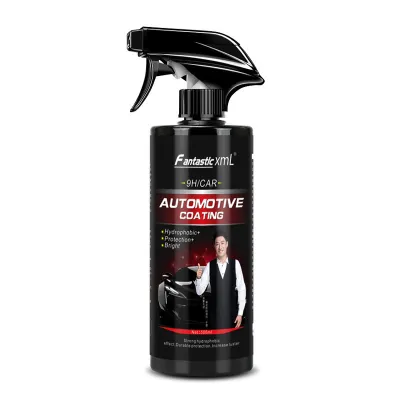
![🇸🇬[Ready Stock] 500ml Car Ceramic Coating/ Nano Ceramic Coating Spray/ Automotive Coating Nano Car Care Polish](https://img.lazcdn.com/g/p/8402606e26c8ebca5ebe2713e17ad7a2.jpg_400x400q80.jpg_.webp)
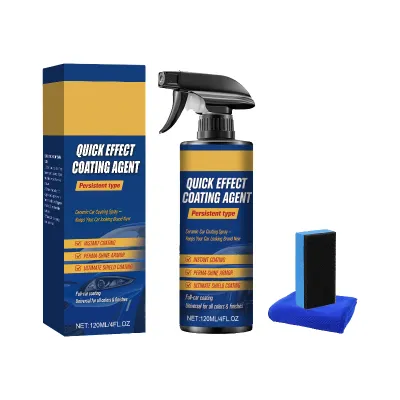
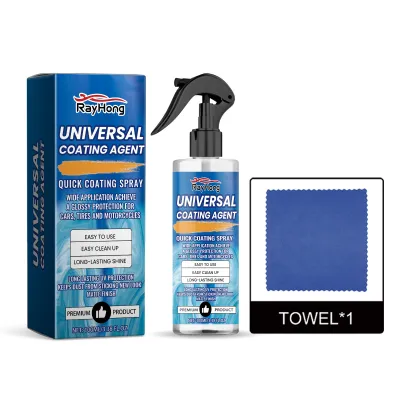
![[SG] Car Coating Spray 🚘 Car Nano Coating Spray Car Wash Car Cloth Ceramic Coating Spray Car Wax Spray](https://img.lazcdn.com/g/ff/kf/S09cf9d0b23bf45fb862bd618558aa2ad0.jpg_400x400q80.jpg_.webp)
![[SG] Car Coating Spray 🚘 Car Nano Coating Spray Car Wash Car Cloth Ceramic Coating Spray Car Wax Spray](https://img.lazcdn.com/g/p/8656a2dcc6e09e873138cdfa16f57dc8.jpg_400x400q80.jpg_.webp)
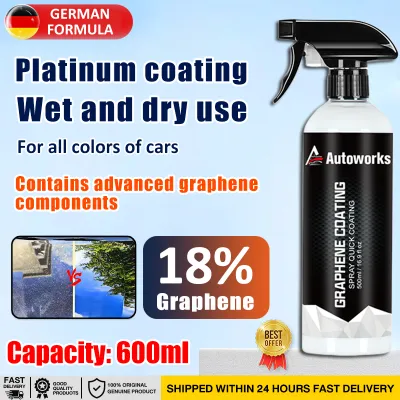
Prices are valid at publication and may change. Please refer to the product page for the latest price.
| Dimension | Car Polish | Car Wax | Ceramic Coating |
|---|---|---|---|
| Primary Function | Paint correction and defect removal | Temporary sacrificial protection | Semi-permanent chemical protection |
| Protection Level | None (leaves paint bare) | Low to Moderate | High |
| Durability / Lifespan | N/A (corrective process) | 1 to 3 months | 2 to 5 years (with proper care) |
| Application Effort | High (requires precise machine or hand work) | Low (straightforward DIY process) | Very High (demands meticulous prep and curing) |
| Upfront Cost | Moderate (depends on paint condition) | Low (budget-friendly) | High (significant initial investment) |
| Maintenance Required | None (requires immediate protection afterward) | Frequent reapplication | Periodic washing and occasional boosters |
Defining the Contenders: Polish, Wax, and Ceramic Coating Car Products
Understanding the precise chemical and physical differences between these three treatments is essential to avoid damaging your vehicle’s exterior. Many car owners mistakenly purchase polish expecting it to shield their paint from rain and sun, or apply ceramic coatings over contaminated surfaces, leading to disappointing results. Let us define each contender to establish a clear foundation for your paint care strategy.
Car Polish: Paint Correction, Not Protection
Car polish is a liquid compound containing microscopic abrasives designed to mechanically level your vehicle’s clear coat. When applied with a dual-action polisher or a manual applicator pad, these abrasives gently shave away a microscopic layer of the clear coat. This process removes surface imperfections such as swirl marks, fine scratches, oxidation, water spots, and haze, thereby restoring a perfectly flat surface that reflects light evenly to produce a high-gloss finish.
Because polish is an abrasive corrective agent, it does not leave behind any protective layer. Polishing actually strips away any existing wax, sealant, or contaminants, leaving the clear coat completely bare and vulnerable to environmental degradation. Consequently, you must always follow a polishing step with a dedicated protective product, such as a high-quality wax or a ceramic coating car treatment, to seal the newly corrected paint.
Car Wax: The Traditional Sacrificial Barrier
Car wax is a protective substance that sits on top of the clear coat, acting as a temporary sacrificial barrier against the elements. Traditional waxes are formulated using natural carnauba wax, which is harvested from the leaves of the Brazilian palm tree. Natural carnauba is highly prized by automotive enthusiasts for its ability to produce a warm, deep, and wet-looking gloss, though it has a relatively low melting point and degrades quickly under high temperatures.
Modern synthetic waxes, often referred to as paint sealants, utilize man-made polymers to deliver enhanced durability and easier application. Unlike natural waxes, synthetic sealants form a tighter cross-linked network over the paint, extending their lifespan and providing better resistance to heat and detergents. Both natural and synthetic waxes do not bond chemically with the clear coat; they simply fill in microscopic pores on the surface and eventually wash away over time due to weather exposure and routine washing.
Ceramic Coating: A Semi-Permanent Chemical Shield
A ceramic coating car solution is a liquid polymer that typically utilizes silicon dioxide (SiO2) or silicon carbide (SiC) derived from quartz or sand. When applied to a clean, decontaminated paint surface, the liquid coating undergoes a chemical bonding process with the factory clear coat. Instead of merely sitting on top of the paint like a wax, it cures to form a semi-permanent, glass-like crystalline layer that becomes an extension of the vehicle’s paintwork.
This nanostructured chemical shield is exceptionally hard, smooth, and hydrophobic. The tight molecular structure prevents water, dirt, road grime, and environmental contaminants from adhering to the surface, causing water to bead up and roll off effortlessly. Furthermore, ceramic coatings are highly resistant to heat, chemical degradation, and UV rays, providing a level of durability and protection that traditional waxes cannot match.
Head-to-Head Comparison: Durability, Effort, and Cost
When deciding on the best option for your vehicle, you must weigh several practical factors. The performance of each paint care method varies significantly when subjected to environmental stress, application demands, and long-term financial budgeting.

Protection Level and Lifespan
The primary difference between these methods lies in how they withstand environmental degradation. Car wax provides basic protection against light road grime, dust, and minor water spots, but its organic structure breaks down rapidly when exposed to heat and chemicals. In contrast, a ceramic coating offers exceptional resistance to chemical etching from highly acidic substances like bird droppings and tree sap, while also providing robust UV protection that prevents paint oxidation and fading.
This performance gap is especially pronounced in Singapore’s tropical climate. The intense, year-round UV radiation, coupled with high humidity and frequent, heavy rainfall, accelerates the thermal degradation of traditional waxes, often reducing their lifespan to just four to six weeks. Ceramic coatings, however, possess excellent chemical stability and thermal resistance. They do not degrade under normal ambient heat and can easily withstand Singapore’s harsh weather conditions, maintaining their protective properties and high gloss for two to five years depending on the product grade and maintenance.
Application Effort and Ongoing Maintenance
The application processes for wax and ceramic coatings represent opposite ends of the difficulty spectrum. Applying car wax is a highly accessible, DIY-friendly task that requires minimal preparation and low technical skill. You simply apply the wax in thin, even circular motions, let it haze over for a few minutes, and buff it off with a clean microfiber towel. If you make a mistake, such as applying too much product, it is easily corrected with a quick detailer spray or a gentle wash.
Conversely, applying a ceramic coating car product demands meticulous surface preparation, a highly controlled environment, and precise technique. Any paint defects, dust, or oils left on the surface will be permanently sealed beneath the cured glass layer. The application requires applying the liquid coating in small sections, watching for it to “flash” (rainbow-like appearance), and buffing it flat immediately to prevent high spots—uneven, dark patches of cured coating that can only be removed via machine polishing. Once applied, the vehicle must remain dry and sheltered for at least 12 to 24 hours to allow the chemical bonding process to complete.
Maintenance routines also differ. Waxed vehicles require regular reapplication every one to three months to maintain protection. Ceramic-coated vehicles do not need reapplication but require specific maintenance to keep the hydrophobic layer active. This includes washing with a pH-neutral, wax-free car shampoo and applying a dedicated ceramic booster spray every few months to clear any microscopic road film that may clog the coating’s pores.
Relative Cost and Long-Term Value
Analyzing the financial and time investment of each option reveals distinct trade-offs between upfront expenses and long-term value.
- Car Wax: This option has the lowest upfront cost. A single tub of high-quality wax or bottle of liquid sealant is highly affordable and can last for dozens of applications. However, because it must be reapplied frequently, it demands a continuous investment of your personal time or recurring professional detailing fees over the course of ownership.
- Car Polish: Polishing costs are highly variable and depend entirely on the condition of your paint. If your vehicle has minor swirl marks, a single-stage light polish may be sufficient. Heavily weathered or scratched paint may require a multi-stage compound and polish process. While polishing adds to the initial cost of a detailing job, it is a necessary prerequisite for maximizing the bond and gloss of a ceramic coating.
- Ceramic Coating: This option represents the highest upfront cost. Professional ceramic coating services in Singapore are premium investments due to the extensive labor required for paint correction and multi-stage application. Even DIY ceramic kits are more expensive than traditional waxes and require purchasing specialized prep sprays and microfiber cloths. Despite this, ceramic coatings offer excellent long-term value by eliminating the need for frequent waxing, reducing washing time, and preserving the vehicle's resale value over several years.
The Decision Framework: Match the Method to Your Needs
To determine the best path forward for your vehicle, you should evaluate your budget, your willingness to perform DIY maintenance, and the current condition of your paintwork. Use the following guidelines to match the right method to your specific situation.
- Choose Car Polish if: Your vehicle's paint appears dull, hazy, or exhibits visible swirl marks and light scratches under direct sunlight. This is a restorative process that must be followed by a protective layer.
- Choose Car Wax if: You prefer a highly budget-friendly paint care routine with low initial expenses, enjoy spending time on weekends washing and detailing your car by hand, and your vehicle is primarily parked in a sheltered garage.
- Choose a Ceramic Coating if: You want the highest level of protection against environmental contaminants, UV rays, and chemical etching, your car is frequently parked outdoors, and you want to minimize the time and effort required to wash your car.
- Verify first if: Your car's clear coat is failing, peeling, or exhibiting deep scratches that penetrate through to the primer. Applying wax or a ceramic coating over damaged paint will not fix these issues and will seal in the flaws. In such cases, professional paint correction or localized respraying is required before any protective product can be applied. Always verify the detailer's reputation and warranty terms if opting for professional application.
Crucial Preparation and Safety Boundaries Before Application
Before undertaking any paint correction or protection work, you must understand that the quality of your preparation directly determines the durability and appearance of the final finish. Skipping essential preparation steps or ignoring safety guidelines can result in poor product adhesion, unsightly paint defects, or permanent damage to your vehicle’s clear coat.
First, thorough surface decontamination is mandatory before applying any wax or ceramic coating car product. A standard car wash is insufficient. You must perform a multi-stage decontamination process:
- Chemical Decontamination: Use an iron remover spray to dissolve embedded metallic fallout from brake dust, followed by a tar remover to clear road grime.
- Mechanical Decontamination: Use a clay bar with a dedicated clay lubricant to gently glide over the paint, pulling out remaining microscopic contaminants until the surface feels as smooth as glass.
- Isopropyl Alcohol Wipe: After washing and drying, wipe down the paint with an IPA prep spray to remove any polishing oils, leftover waxes, or soap residues, ensuring a completely bare surface for optimal bonding.
Second, always observe environmental and safety boundaries during application. Never apply ceramic coatings, polishes, or waxes in direct sunlight or onto hot body panels. High temperatures cause the solvents in these products to evaporate prematurely. For waxes, this makes buffing extremely difficult and can cause streaking. For ceramic coatings, premature flashing leads to sticky high spots that are incredibly difficult to level and may require mechanical polishing to correct. Always work in a shaded, well-ventilated garage or indoor detailing bay.
Third, recognize your technical limits. While applying wax is safe for beginners, machine polishing and applying professional-grade ceramic coatings carry real risks. Using a rotary polisher incorrectly can quickly burn through the thin clear coat, especially on sharp body lines and plastic bumpers, leading to costly respray bills. If you are unsure about your ability to safely polish your paint or apply a semi-permanent coating, consult a qualified professional detailer who possesses the specialized equipment, controlled environment, and experience to execute the job safely.
Frequently Asked Questions (FAQ)
Can I apply ceramic coating over existing wax?
No, you cannot apply a ceramic coating over an existing layer of wax or paint sealant. Ceramic coatings require direct chemical bonding with the vehicle’s bare clear coat to cure and adhere properly. If applied over wax, the coating will bond to the temporary wax layer instead of the paint, and it will quickly wash away as the wax degrades. You must completely strip any existing wax using a dedicated prep shampoo, a clay bar, or a light polish followed by an isopropyl alcohol wipe before applying a ceramic coating.
Does ceramic coating prevent rock chips and deep scratches?
No, ceramic coatings do not provide protection against physical impacts such as rock chips, road debris, or deep key scratches. While a cured ceramic coating adds a microscopic, hardened layer that can help reduce very fine wash-induced swirl marks, it is far too thin to absorb the energy of a flying stone. If you require robust protection against physical road hazards and rock chips, you should invest in Paint Protection Film (PPF), which is a thick, urethane-based physical barrier applied directly to the vehicle’s body panels.
How often should I polish my car?
You should polish your car only when absolutely necessary to correct visible paint defects, rather than as a routine maintenance step. Because polishing works by abrasively removing a microscopic layer of your clear coat, doing it too frequently will eventually thin out the clear coat to the point of failure, leading to peeling and oxidation that can only be fixed with a complete paint respray. For a well-maintained vehicle that is washed carefully using proper two-bucket methods, a light polish once every one to two years is typically more than enough to maintain a high-gloss finish.
Community discussion
Share your experience or ask a question. Comments are reviewed before publication.