
For most DIY car enthusiasts, a ceramic coating spray offers the most practical balance of ease, speed, and forgiving application. Traditional liquid ceramic coatings provide longer-lasting protection but demand rigorous paint preparation, precise timing, and a controlled environment to avoid permanent surface defects. Choosing between them depends on your experience level, available workspace, and willingness to perform intensive paint correction.
While both product types leverage silicon dioxide (SiO2) to create a hydrophobic barrier, their chemical concentrations and application methods differ significantly. Understanding these differences is essential to achieving a high-gloss, durable finish without damaging your vehicle’s clear coat.
Core Differences Between Spray and Liquid Ceramic Coatings
Traditional liquid ceramic coatings are highly concentrated formulations consisting of silicon dioxide (SiO2) or silicon carbide (SiC) suspended in volatile solvent carriers. When applied to a vehicle’s paint, these solvents evaporate in a process known as “flashing,” leaving behind a thick, hard crystalline layer that chemically bonds to the clear coat. This chemical reaction requires precise leveling and strict flash-time monitoring, as leaving the product on the surface for even a minute too long can result in unsightly, hardened high spots.
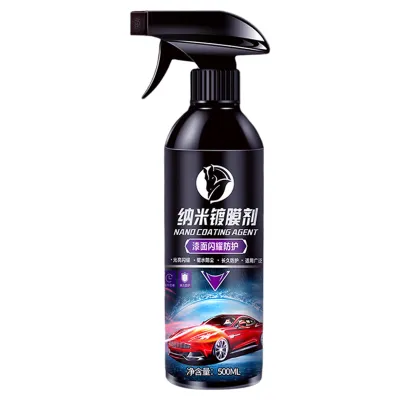
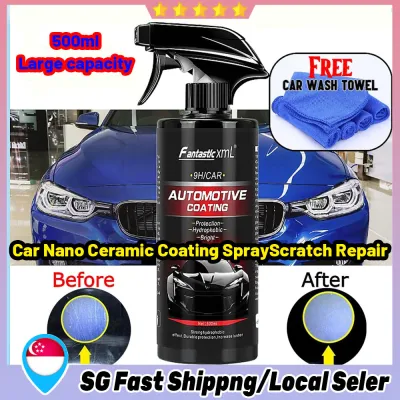
Products mentioned in this guide
![[SG] Car Coating Spray 🚘 Car Nano Coating Spray Car Wash Car Cloth Ceramic Coating Spray Car Wax Spray](https://img.lazcdn.com/g/ff/kf/S09cf9d0b23bf45fb862bd618558aa2ad0.jpg_400x400q80.jpg_.webp)
![[SG In Stock]Car Ceramic Coating Automotive Coating Nano Car Care Polish 500ML Nano Ceramic Coating Spray/Automotive Care](https://img.lazcdn.com/g/p/83567248d0f46fa4511871a48952c5d4.jpg_400x400q80.jpg_.webp)
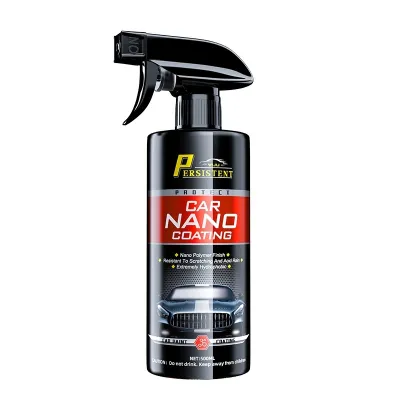
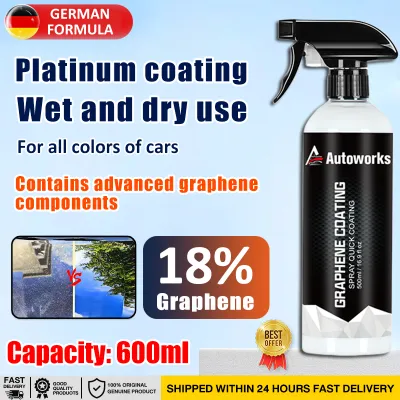
Prices are valid at publication and may change. Please refer to the product page for the latest price.
Ceramic coating sprays are engineered with a different formulation philosophy, prioritizing user-friendliness and a forgiving application window. These products feature a lower concentration of active SiO2 suspended in water-based or mild solvent carriers, allowing for a simple wipe-on, wipe-off process. The lower concentration means the coating cures into a thinner protective layer, which significantly reduces the risk of application errors while still delivering impressive hydrophobic properties.
Because marketing terms like “ceramic,” “graphene,” or “nano-coating” are frequently used loosely across the car care industry, you should always look past front-label claims. Before purchasing, check the product’s technical data sheets or label instructions to verify the active ingredient specifications and recommended surface compatibility. A product labeled as a ceramic spray may range from a light detailer with trace amounts of SiO2 to a heavy-duty sealant, and each requires a different level of care during application.
Application Process and DIY Friendliness
Thorough surface preparation is the absolute foundation of a successful ceramic application, regardless of whether you choose a spray or a traditional liquid. Any dirt, road grime, or old wax left on the paint will prevent the coating from bonding properly, leading to premature failure. The preparation process must begin with a deep clean using a dedicated strip shampoo, followed by chemical decontamination with an iron remover and mechanical decontamination using a clay bar to pull embedded contaminants from the pores of the clear coat.

The divergence in DIY friendliness becomes highly apparent once the preparation is complete and the application begins. Applying a traditional liquid coating requires a meticulous, section-by-section approach using a specialized applicator block wrapped in a suede microfiber cloth. You must apply the liquid in a precise cross-hatch pattern over a small area, watch closely for the product to flash—which often looks like oil-slick sweating on the paint—and immediately buff it flat with multiple clean microfiber towels.
In contrast, ceramic coating sprays offer a highly streamlined and forgiving workflow that is accessible to beginners. Most spray formulations allow you to treat larger panels, such as an entire door or half of a hood, at one time. You simply mist the product onto a microfiber towel or directly onto the paint, spread it evenly across the surface, and immediately buff it dry with a secondary clean towel. The risk of creating permanent high spots is virtually non-existent, making the process much faster and less stressful.
Environmental constraints also dictate which format is suitable for your workspace. Traditional liquid coatings are highly sensitive to temperature and humidity; for instance, in warm and humid tropical climates like Singapore, the flashing process occurs rapidly, leaving a very narrow window for error. Working in a closed, dust-free, and well-ventilated garage is highly recommended for liquids, along with wearing safety gear such as nitrile gloves and a respirator if specified by the manufacturer. Sprays are far more tolerant of outdoor conditions, though they should still be applied on a cool surface out of direct sunlight.
Durability, Protection, and Maintenance
When evaluating the longevity of these products, it is important to interpret manufacturer durability claims with a realistic perspective. Traditional liquid coatings often advertise lifespans ranging from two to five years. While these coatings do form a semi-permanent bond that resists chemical degradation and light wash marring, achieving the maximum stated lifespan depends heavily on the quality of the initial paint preparation and how well the vehicle is maintained over time.
The primary trade-off for the ease of a ceramic spray is its shorter protective lifespan. Most high-quality ceramic sprays provide reliable protection lasting anywhere from three to twelve months. Because the cured layer is thinner than that of a traditional liquid, it gradually wears away under the influence of road friction, UV exposure, and routine washing. However, because reapplication is as simple as a quick spray-and-wipe during a routine wash, maintaining continuous protection requires minimal extra effort.
Both formats require a dedicated maintenance routine to preserve their hydrophobic properties and prevent premature degradation. You must wash the vehicle using a pH-neutral car shampoo and high-quality microfiber wash mitts, preferably employing the two-bucket method to minimize wash swirls. Avoid automatic drive-through car washes that use harsh, highly alkaline chemicals or abrasive brushes, as these aggressive cleaning agents will rapidly strip both spray and liquid coatings.
Cost and Value Evaluation
A comprehensive cost comparison must look beyond the initial price tag of the bottle to evaluate the true cost of ownership. Traditional liquid ceramic coating kits generally carry a higher upfront cost. However, because a single application can protect your vehicle for several years, the long-term cost per year can be highly competitive, provided you maintain the coating properly and do not need to reapply it prematurely due to application errors.
Ceramic sprays offer a much lower barrier to entry, with bottles priced affordably for casual DIYers. A single bottle of spray can often coat a vehicle multiple times, making the cost per application incredibly low. However, because you must reapply the spray several times a year to maintain continuous protection, the cumulative cost of product and your personal labor over several years should be factored into your decision.
Hidden costs often catch DIYers off guard, particularly when preparing for a traditional liquid application. To achieve the gloss and bonding required for a liquid coating, you must invest in paint correction tools, such as a dual-action polisher, compounding pads, polishing compounds, and an isopropyl alcohol (IPA) panel prep spray to strip polishing oils. Applying a liquid coating over unpolished paint will permanently lock in swirls and scratches. For a ceramic spray, while polishing is still recommended for the best visual results, it is not strictly mandatory for adhesion, allowing budget-conscious DIYers to save on expensive machine polishing equipment.
Decision Framework: Choosing Your DIY Coating
To select the right format for your detailing project, evaluate your workspace, tools, and patience against a clear set of conditions.
Choose a ceramic coating spray if you prioritize speed, do not have access to an enclosed garage, or want a straightforward maintenance routine. It is the ideal choice if you prefer to wash and detail your car frequently and do not want to spend hours performing multi-stage paint correction.
Choose a traditional liquid coating if you have a dedicated, dust-free indoor workspace, own or are willing to rent paint correction equipment, and want the longest possible protection. This path requires a high level of patience and attention to detail, as you must carefully monitor flash times and systematically level the coating panel by panel.
Before purchasing any product, verify its compatibility with your vehicle’s current paint condition. If your paint has thin clear coat or existing damage, aggressive preparation or solvent-heavy liquid coatings may not be suitable. Always check the manufacturer’s instructions to ensure the product is safe for all the surfaces you intend to coat, including plastic trim, glass, and wheels, as a “ceramic” label does not guarantee universal safety across different materials.
Frequently Asked Questions (FAQ)
Can I apply a ceramic spray over an existing liquid coating?
Yes, many ceramic sprays are specifically formulated to act as maintenance toppers or hydrophobic boosters for existing liquid coatings. Applying a spray over a cured liquid base layer can help refresh the surface’s water-beading properties and protect the underlying coating from premature wear. However, you must verify compatibility by checking the manufacturer’s guidelines, as some solvent-heavy sprays might conflict with or temporarily mask the characteristics of the base coating.
What happens if it rains shortly after applying a DIY ceramic coating?
Moisture exposure during the critical curing phase can ruin the bonding process of both spray and liquid coatings. Traditional liquid coatings typically require a dry environment for at least 12 to 24 hours to complete their initial cure, and up to a week for a full cure. If rain hits the surface before the initial cure is complete, it can cause water spotting, streaking, or premature failure of the coating. Always consult the product label for specific water-exposure restrictions and ensure you have a dry, sheltered space for the recommended curing window.
Do I need to polish my car before using a ceramic spray?
While machine polishing is not strictly mandatory for a ceramic spray to bond, it is highly recommended if you want to achieve maximum gloss and clarity. Applying any protective coating—whether spray or liquid—over unpolished paint will seal in existing swirl marks, light scratches, and oxidation, making them more visible. At a minimum, you must perform thorough decontamination, including a wash and clay bar treatment, to ensure the spray can adhere directly to the clear coat rather than sitting on top of road grime.

Community discussion
Share your experience or ask a question. Comments are reviewed before publication.