
Selecting the ideal Cardo intercom for your motorcycle helmet is a decision that directly shapes your riding experience, whether you are navigating daily city commutes or embarking on long-distance group tours. The choice between the premium Cardo Packtalk series and the streamlined Freecom series hinges on how you ride, who you ride with, and your budget. While both lines deliver high-quality audio and reliable wireless connectivity, they are built on fundamentally different communication technologies designed for distinct scenarios.
The Packtalk family is engineered for riders who frequently travel in groups and require a robust, self-healing network that can handle dynamic changes on the road. On the other hand, the Freecom family serves as a highly efficient, cost-effective solution tailored for solo riders, rider-to-pillion communication, or small, close-knit groups. By understanding the core technological differences and physical features of each series, you can select a device that integrates seamlessly with your helmet and riding habits without paying for advanced features you may never use.
Core Differences: Understanding the Packtalk and Freecom Lines
The primary distinction between the Cardo Packtalk and Freecom product lines lies in their underlying communication architecture. The Packtalk series utilizes Cardo’s proprietary Dynamic Mesh Communication (DMC) technology, while the Freecom series relies on standard point-to-point Bluetooth technology. This technological divide dictates how the units connect with other riders, how stable those connections remain over distances, and how easily the network adapts when riders change positions or drop out of range.
Products mentioned in this guide
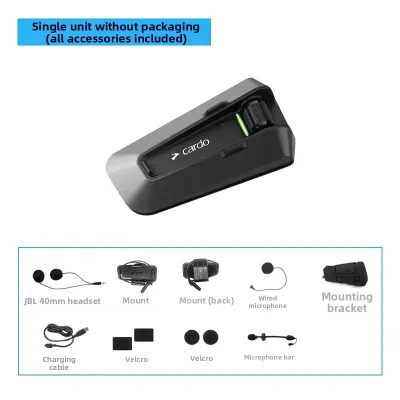
2 Lazada user ratings
Customer service is great, the products are excellent, and the experience is enjoyable. I've been buying gear here for nearly twenty years a…Read full reviewShow less
Customer service is great, the products are excellent, and the experience is enjoyable. I've been buying gear here for nearly twenty years and I always support it.
There was a little mix-up, but it got sorted out quickly, and the boss is doing great business!
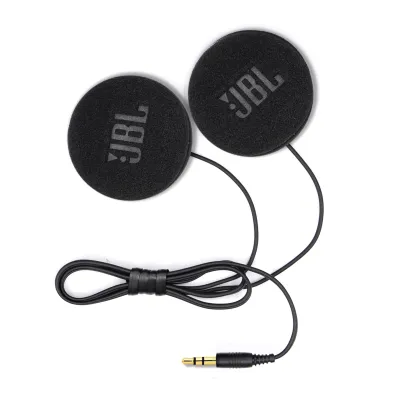
3 Lazada user ratings
great. it works . sound quality is surprisingly good. cardo attaches and works seamlessly.. Came well packed and did not take too long. Item…Read full reviewShow less
great. it works . sound quality is surprisingly good. cardo attaches and works seamlessly.. Came well packed and did not take too long. Item seems of the right quality for the price and will try it before really knowing the application process and suitability
Prices are valid at publication and may change. Please refer to the product page for the latest price.
Dynamic Mesh Communication operates as a decentralized, fluid network where every active device acts as a hub. If one rider falls behind or takes a wrong turn, the remaining riders stay connected seamlessly, and the disconnected rider is automatically re-integrated into the group the moment they return within range. In contrast, the Bluetooth technology used in the Freecom series connects riders in a linear, daisy-chain fashion. If a single rider in the middle of the chain drops out, the entire connection breaks, requiring manual intervention or tedious re-pairing processes to restore communication.
These technical differences align with distinct user profiles. The Packtalk series is the go-to choice for touring clubs, adventure riders, and large groups who tackle complex routes where separation is common. The Freecom series is optimized for daily commuters, weekend solo riders, and couples riding two-up (rider and pillion) who prioritize a compact, straightforward device for music, navigation prompts, and localized communication.
Physical design and mounting mechanisms also vary between the two lines. Packtalk units often feature a more robust chassis with integrated roller wheels or tactile buttons designed for heavy-duty use, alongside specialized mounting cradles. Freecom units generally sport a slimmer, more aerodynamic profile that sits flush against the helmet shell. When choosing between them, riders must evaluate how each unit’s physical footprint and mounting bracket will interface with their specific helmet model, ensuring that the installation does not interfere with sun visor sliders, aerodynamic spoilers, or neck rolls.
Key Decision Factors for Your Riding Needs
To determine which Cardo intercom aligns with your riding style, you must evaluate how you spend your time on two wheels. Rather than simply choosing the model with the highest specifications or the most expensive price tag, a practical approach involves assessing your needs across three main pillars: connectivity scale, audio performance, and physical usability.

Prioritizing features based on your most frequent riding scenarios—rather than rare, best-case events—prevents overspending and ensures a better daily user experience. For instance, if ninety percent of your rides consist of solo commutes through high-density urban traffic, the advanced multi-rider mesh capabilities of a Packtalk unit may remain entirely unused, making a streamlined Freecom model a more logical and economical choice. Conversely, if you regularly lead weekend group rides, investing in mesh technology is essential for maintaining group cohesion and safety.
Group Size and Network Technology
When evaluating group size, the difference between Mesh and Bluetooth technologies becomes highly apparent on the road. A standard Bluetooth intercom system requires riders to maintain a strict riding order to preserve the daisy-chain connection. If the third rider in a five-person group falls behind, the link between the second and fourth riders is severed. This limitation requires constant attention and can distract riders from the road as they attempt to re-establish the connection.
Cardo’s Dynamic Mesh Communication bypasses this linear limitation entirely. Because the network constantly recalculates the most efficient routing paths between all active units, the group’s physical order does not affect connection stability. Riders can swap positions, overtake safely, or stop at traffic lights without disrupting the communication of the rest of the group. To make an informed decision, riders should consult the official manufacturer specifications for the exact number of supported nodes and the maximum claimed intercom range for both the Packtalk and Freecom models they are considering.
Environmental factors also play a critical role in signal performance. In high-density urban environments, such as the central business districts or built-up residential areas of Singapore, concrete structures, overhead bridges, and wireless interference can significantly degrade communication range. While open highways allow signals to travel further, city riding demands a highly resilient network. Mesh technology generally handles signal obstructions and urban interference more effectively than standard Bluetooth, keeping riders connected even when separated by buildings or heavy traffic.
Audio Quality and Helmet Compatibility
Clear audio is vital for hearing navigation cues, receiving traffic alerts, and communicating with other riders without distraction. Both the Packtalk and Freecom lines offer high-quality audio solutions, but the speaker specifications and premium audio partnerships vary across specific models. Many mid-to-high-tier units in both families feature speakers developed in collaboration with premium audio brands like JBL. When comparing models, check the product packaging and technical spec sheets for speaker dimensions—typically ranging from 40mm high-definition speakers to standard 32mm options—to ensure they fit into your helmet’s dedicated speaker pockets.
Helmet compatibility is another critical factor that requires physical verification before purchase. Different helmet styles—such as full-face, modular (flip-up), and open-face (three-quarter) helmets—require specific microphone configurations. Full-face helmets typically utilize a low-profile, corded microphone that adheres directly to the chin bar. Modular and open-face helmets require a boom microphone with a flexible arm to position the mic correctly in front of the mouth. Ensure the Cardo kit you select includes both microphone options or matches your helmet style, and verify that the installation does not compress the helmet’s protective EPS liner, which could compromise safety.
Additionally, consider your typical riding speeds and the resulting ambient noise. High-speed highway touring generates significant wind noise, requiring advanced digital signal processing (DSP) and active wind noise cancellation to maintain clear communication. While premium Packtalk models often feature advanced noise-filtering algorithms, Freecom models also offer robust noise reduction suitable for city speeds and moderate highway cruising. Riders should assess whether their helmet’s natural soundproofing requires the extra audio boost and advanced filtering found in the higher-end product lines.
On-Road Controls and Durability
Operating an electronic device while riding requires intuitive controls that can be managed safely without taking your eyes off the road. Cardo addresses this through physical interfaces and voice command systems. Packtalk models frequently feature a tactile roller wheel or large, raised buttons that are easy to locate and operate even when wearing thick, padded riding gloves. Freecom units typically utilize a flatter button layout that offers a sleeker look but may require more practice to operate by feel while riding.
Natural voice operation is another key differentiator. Higher-end models in both the Packtalk and Freecom lines support always-on voice commands, allowing you to control volume, change music tracks, or check battery status simply by speaking. This hands-free operation is a significant safety benefit, as it allows you to keep both hands firmly on the handlebars. Before purchasing, verify whether the specific model you are considering supports full natural voice operation or relies on manual button presses for key functions.
Durability and environmental resistance are paramount, especially in tropical climates prone to sudden, heavy downpours. Singapore’s frequent rainstorms demand a fully waterproof device. Riders must check the official IP (Ingress Protection) rating label on the specific Cardo unit. Many modern Cardo devices carry a certified waterproof rating, meaning they are designed to withstand riding in heavy rain, mud, and dust. Ensure that the charging port cover is securely sealed before heading out into wet weather.
Battery life and charging options also dictate the usability of your intercom on long journeys. While both series offer generous battery life suitable for a full day of riding, touring riders should look into the device’s charging capabilities. Some models support charging while in use, allowing you to run a cable from a tank-bag-mounted external power bank to your helmet unit during long highway stretches. Always verify the manufacturer’s guidelines regarding charging parameters to prevent damaging the internal battery.
Price Positioning and Long-Term Value
When balancing your budget against the available features, it is helpful to understand the relative price positioning of the two product families. The Freecom series serves as the entry-to-mid-tier offering, with prices typically ranging from approximately S$200 to S$350, depending on the specific model and whether you purchase a single unit or a dual pack. The Packtalk series represents the premium tier, with prices generally starting around S$400 and extending upwards for flagship models. Riders should check with authorized local retailers in Singapore to obtain current, exact pricing and warranty details.
Evaluating long-term value involves looking beyond the initial purchase price. Consider the availability of firmware updates and ongoing software support. Cardo regularly releases firmware updates via the Cardo Connect app to improve device stability, patch bugs, and sometimes introduce new features. Both series benefit from this support, but premium models often receive priority updates and longer support lifecycles.
Accessory cross-compatibility is another factor that influences long-term ownership costs. If you own multiple helmets, you can purchase additional mounting kits, speakers, and microphones to easily transfer a single intercom unit between helmets. Verify the compatibility of these accessories, as some mounting cradles and speaker connections are shared across specific generations of both the Packtalk and Freecom lines, while others are proprietary to a single model.
Ultimately, the premium cost of a Packtalk unit is highly justified if you regularly ride in groups, as the convenience and safety of Dynamic Mesh Communication cannot be replicated by Bluetooth. However, if your group rides are rare occurrences, a Freecom unit offers exceptional value, providing premium audio and reliable core features at a fraction of the cost.
Final Verdict: Which Cardo Intercom Fits You?
To make your final decision, match your primary riding habits to the specific strengths of each product line.
Choose Packtalk if:
- You regularly ride in groups of four or more people where maintaining a stable connection is a priority.
- You frequently travel on winding roads, hilly terrain, or dense urban environments where riders are likely to lose line-of-sight and drop out of range.
- You want the convenience of a self-healing mesh network that automatically manages connections without manual intervention.
- You prefer robust, glove-friendly physical controls like a tactile roller wheel and advanced voice activation.
Choose Freecom if:
- You primarily ride solo, commute daily, or ride with a pillion passenger.
- Your group communication needs are limited to small, consistent groups of two to four riders who stay in close proximity.
- You prefer a slim, lightweight, and aerodynamic device that sits flush against your helmet.
- You want high-quality audio and smartphone integration for navigation and music without paying a premium for mesh networking technology.
Verify first if:
- You are upgrading from an older intercom or planning to connect with riding buddies who use different brands. Always consult the manufacturer's official cross-generation compatibility charts and universal pairing instructions to ensure seamless connectivity with your group's existing devices before making your purchase.
Frequently Asked Questions (FAQ)
Can I connect a Packtalk unit to a Freecom unit?
Yes, you can connect a Packtalk unit to a Freecom unit, but the connection will operate under specific technical limitations. Because the Freecom series does not feature Dynamic Mesh Communication (DMC) hardware, the connection must be established using standard Bluetooth pairing. This means the Packtalk unit will act as a Bluetooth bridge, linking the Freecom rider into the network. While this allows for clear communication, the Freecom rider will not benefit from the self-healing properties of the mesh network, and if they drop out of range, the connection must be manually re-established. Always consult the official Cardo compatibility matrix for your specific device generations to verify connection limits.
Do both series support smartphone app integration and updates?
Yes, both the Packtalk and Freecom series are fully compatible with the Cardo Connect smartphone application, which is available for both iOS and Android devices. The app serves as a centralized control hub, allowing riders to configure device settings, customize speed dials, adjust audio equalizer profiles, and manage group pairings. Furthermore, modern generations of both product lines support over-the-air firmware updates directly through the app via a Bluetooth connection, eliminating the need to connect the unit to a computer with a USB cable. Be sure to check the app store listings and official Cardo support pages to confirm that your specific smartphone operating system version is fully supported.
Community discussion
Share your experience or ask a question. Comments are reviewed before publication.