
Choosing between the Cardo Packtalk and Freecom series comes down to how you ride, who you ride with, and how much you want to invest in wireless communication. The primary distinction lies in their underlying network technology: the Packtalk series utilizes advanced mesh networking designed for larger, dynamic groups, while the Freecom series relies on traditional Bluetooth connectivity optimized for solo riders, passengers, and small, fixed groups. By evaluating your typical riding scenarios, group sizes, and feature requirements, you can select the specific model tier that delivers the right balance of functionality and value for your journeys.
Core Connectivity: Understanding Mesh vs. Bluetooth Networks
To understand which Cardo intercom fits your needs, you must first look at how these devices transmit audio signals between riders. The Packtalk series is built around Dynamic Mesh Communication (DMC), a proprietary network technology that operates differently from standard Bluetooth. In a mesh network, every intercom acts as an independent hub that constantly searches for and connects to every other unit in the group. This creates a web-like topology where the connection does not depend on a rigid chain. If one rider drops out of range due to traffic or terrain, the remaining riders stay seamlessly connected, and the disconnected rider is automatically re-integrated into the network the moment they ride back into range.
In contrast, the Freecom series utilizes standard Bluetooth connectivity as its primary networking protocol. Bluetooth connections are linear and point-to-point, often described as a daisy chain. In this setup, Unit A connects to Unit B, which connects to Unit C, and so on. While this is highly effective for direct communication between two riders, it introduces vulnerabilities in larger groups. If Unit B drops out of the chain, the connection between Unit A and Unit C is severed until the chain is manually or automatically re-established.
Products mentioned in this guide
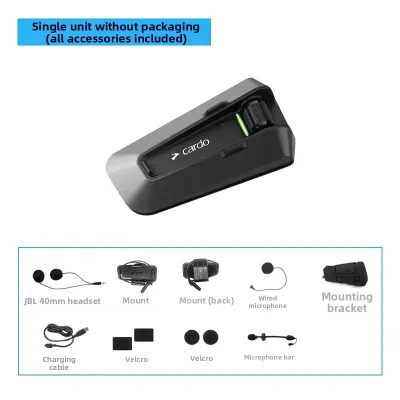
2 Lazada user ratings
Customer service is great, the products are excellent, and the experience is enjoyable. I've been buying gear here for nearly twenty years a…Read full reviewShow less
Customer service is great, the products are excellent, and the experience is enjoyable. I've been buying gear here for nearly twenty years and I always support it.
There was a little mix-up, but it got sorted out quickly, and the boss is doing great business!
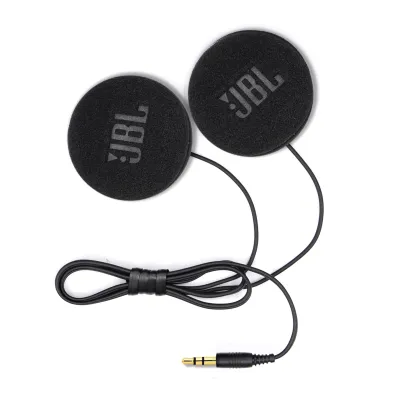
3 Lazada user ratings
great. it works . sound quality is surprisingly good. cardo attaches and works seamlessly.. Came well packed and did not take too long. Item…Read full reviewShow less
great. it works . sound quality is surprisingly good. cardo attaches and works seamlessly.. Came well packed and did not take too long. Item seems of the right quality for the price and will try it before really knowing the application process and suitability
Prices are valid at publication and may change. Please refer to the product page for the latest price.
This fundamental difference in network topology directly impacts real-world range and reconnection behavior. While Bluetooth requires active pairing sequences and strict order preservation, a mesh network dynamically adjusts its routing paths in real time. This makes mesh communication highly resilient in environments where riders frequently change positions or spread out across long stretches of road, whereas Bluetooth is better suited for stable, close-proximity configurations.
Matching the Intercom to Your Riding Scenario
Your typical riding habits should dictate which communication platform you choose. For solo riders or those who primarily travel with a pillion passenger, the Freecom series offers an exceptionally practical and cost-effective solution. When you only need to communicate with a passenger sitting directly behind you, or if you simply want to listen to GPS navigation prompts and stream music from your smartphone, the advanced multi-rider capabilities of a mesh network are largely unnecessary. A direct, point-to-point Bluetooth connection provides clear, reliable audio without the added cost of premium mesh hardware.

When transitioning to small groups of two to four riders, the decision becomes more nuanced. A Bluetooth-based Freecom unit can handle small groups, but it requires careful management of the pairing order to prevent frequent dropouts. If your small group rides in tight formation and rarely separates, a high-tier Bluetooth intercom can suffice. However, if your small group prefers the freedom to overtake, spread out, or take different turns at intersections, even a small-group mesh system will provide a much more seamless and frustration-free experience.
For large packs, touring clubs, and organized group rides exceeding four riders, the Packtalk series is practically essential. Trying to maintain a daisy-chained Bluetooth connection with five or more riders is notoriously difficult, as a single rider stopping at a traffic light or taking a wrong turn will disrupt the entire group’s communication. Packtalk’s mesh network allows dozens of riders to communicate simultaneously, with the network automatically healing itself as riders shift positions within the pack.
Environmental factors also play a significant role in your choice. If you are commuting through dense urban environments—such as navigating the concrete canyons, high-rise areas, and heavy traffic of Singapore—signal interference from buildings, electronic road pricing gantries, and other wireless devices can challenge any wireless signal. A robust mesh network is generally better equipped to maintain a stable connection through these obstacles than a standard Bluetooth link. For long-distance touring across varied terrain, where riders are highly likely to be separated by hills, bends, or slow-moving traffic, the self-healing nature of mesh communication ensures you spend your time riding rather than troubleshooting connection issues on the shoulder of the road.
Essential Features and Specification Checklist
Before finalizing your purchase, it is crucial to verify the specific hardware and software features of the model you are considering. Audio quality is a primary consideration for any rider. When comparing units, look closely at the speaker specifications. Many premium models feature larger speaker drivers, such as 40mm units, and collaboration with high-end audio brands to deliver clearer sound at highway speeds. Additionally, check the manufacturer’s specifications for advanced digital signal processing or active noise suppression, which helps filter out wind and engine noise so your voice remains intelligible.
Battery life and charging convenience are equally vital, especially for long day trips or multi-day tours. Review the official manufacturer ratings for active talk time and standby duration. Modern intercoms increasingly feature USB-C charging ports, which allow for faster charging times and compatibility with the same cables you use for your smartphone or power bank. Always verify if the unit supports charging while in use, which can be a lifesaver if you need to run a cable from a handlebar-mounted USB port during a long ride.
Given the unpredictable nature of tropical weather, robust weather resistance is non-negotiable. Look for official Ingress Protection (IP) ratings on the product packaging or manufacturer’s documentation. A high IP rating, such as IP67, indicates that the unit is highly resistant to dust and can withstand heavy rain or temporary immersion in water. This is particularly important for riders in regions prone to sudden, intense downpours, where a non-waterproof unit can quickly short-circuit and fail.
Finally, ensure the physical unit is fully compatible with your specific helmet. Most intercom packages include both clamp-on mounts and adhesive mounting plates to accommodate different shell shapes. You must also check whether the kit includes both a hybrid boom microphone (ideal for open-face or modular helmets) and a low-profile wired microphone (designed for full-face helmets). Verify that the internal speaker pockets of your helmet are deep enough to accommodate the intercom’s speakers without pressing uncomfortably against your ears.
Budgeting and Long-Term Value Considerations
When planning your purchase, you must weigh the upfront cost against the long-term utility of the device. The Freecom series generally occupies the entry-to-mid-level pricing tier, typically ranging from approximately S$150 to S$300 depending on the specific model and whether you purchase a single unit or a dual-pack. The Packtalk series represents the premium tier, with prices often starting around S$350 and extending upwards of S$500 or more for flagship models. While the initial investment for a Packtalk is higher, the long-term value lies in its advanced features, superior group connectivity, and overall durability.
Future-proofing is another critical factor. Look for units that support over-the-air software updates via a companion smartphone app. This feature allows you to update the intercom’s firmware wirelessly, ensuring you receive the latest performance improvements, bug fixes, and compatibility updates without needing to connect the device to a computer via a physical cable.
Do not forget to budget for potential accessories and replacement parts. Over years of daily use, items like microphone sponges, adhesive mounts, and speaker velcro pads can wear out. Check the availability and cost of official replacement parts before making your decision.
Lastly, for riders in Singapore, it is highly recommended to purchase your intercom from local authorized dealers. While importing a unit from overseas online marketplaces might offer a slight upfront discount, it often leaves you without local warranty coverage. An authorized local dealer can provide immediate after-sales support, handle warranty claims efficiently, and ensure you receive a genuine product compliant with local telecommunications standards.
Final Decision Framework
To make your final decision, apply a simple, condition-based framework. You should choose a Cardo Packtalk unit if you frequently ride in groups of four or more, regularly participate in organized club tours, or ride in environments where physical separation is common. The seamless reconnection, self-healing mesh network, and premium audio features of the Packtalk series justify the higher price point by eliminating the hassle of manual pairing and connection dropouts.
Conversely, you should choose a Cardo Freecom unit if you primarily ride alone, travel exclusively with a pillion passenger, or ride in a permanent, small pairing where you do not expect to add more riders to your communication loop. The Freecom series delivers excellent audio quality, reliable point-to-point connectivity, and robust weatherproofing at a much more accessible price point, allowing you to allocate your budget to other essential riding gear.
Before completing your purchase, always perform a physical check of your helmet’s interior and exterior. Ensure the mounting area is clear of integrated sun visor controls or complex aerodynamic ridges that might interfere with the clamp or adhesive mount. If your motorcycle features a complex electrical system or if you plan to use a hardwired power connection, consult the vehicle’s manual or a qualified motorcycle technician to ensure safe installation without compromising your bike’s electrical integrity.
Frequently Asked Questions (FAQ)
Can I connect a Packtalk unit to a Freecom unit?
Yes, you can connect a Packtalk unit to a Freecom unit, but the connection will operate under specific limitations. Because the Freecom series does not possess the hardware required for Dynamic Mesh Communication (DMC), the connection must be established using standard Bluetooth pairing. In this scenario, the Packtalk unit acts as a bridge, bringing the Freecom rider into the conversation. While this works well for small groups or pairs, the Freecom rider will not benefit from the self-healing properties of the mesh network. If the Freecom rider falls out of range, they must manually reconnect or wait for the Bluetooth link to re-establish, and their departure can potentially affect other Bluetooth-connected units in the chain.
Do I need a smartphone app to use these intercoms?
A smartphone app is not strictly required for the daily operation of either the Packtalk or Freecom series, but it is highly recommended for initial setup and maintenance. Once your intercom is paired with your riding partners or your phone, you can perform basic functions—such as answering calls, adjusting volume, switching music tracks, and initiating intercom conversations—directly using the physical buttons or voice commands on the unit itself. However, the companion smartphone app is essential for performing over-the-air firmware updates, customizing advanced audio equalizer settings, configuring speed dials, and managing complex group pairings easily. Using the app during your initial setup ensures your device is running the most stable software version before you hit the road.
Community discussion
Share your experience or ask a question. Comments are reviewed before publication.