
Choosing between a car wireless charger and a USB-C cable depends entirely on your daily driving habits, phone model, and cabin environment. If you prioritize a clean dashboard and quick phone removal for frequent stops, wireless charging offers added convenience. However, if your commute involves heavy navigation use in hot weather or you need the fastest possible power delivery for long trips, a direct USB-C connection remains the more reliable choice. Both systems have distinct physical and electrical characteristics that affect how efficiently your device receives power while you navigate daily traffic.
Convenience and Cable Management
The primary appeal of a car wireless charger lies in its seamless, drop-and-go functionality. When you step into your vehicle, placing your phone onto a motorized or magnetic mount requires only one hand. This eliminates the minor but repetitive friction of locating a loose cable, aligning the connector, and plugging it in. For drivers who make frequent stops throughout the day—such as delivery runs, school drop-offs, or quick errands—this frictionless interaction saves time and reduces daily driving stress.
Beyond pure convenience, wireless setups significantly reduce physical wear and tear on your smartphone’s charging port. Constantly plugging and unplugging a cable can loosen the internal port over time, leading to intermittent connections or costly repairs. A fixed wireless mount also keeps your center console tidy. Instead of having long, tangled cables draped across your gear selector or cup holders, a wireless mount keeps the power source consolidated to a single point on your dashboard or air vent.
Products mentioned in this guide
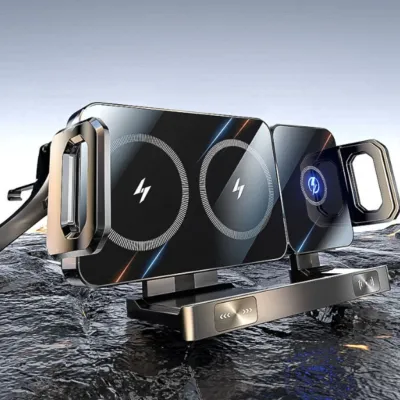
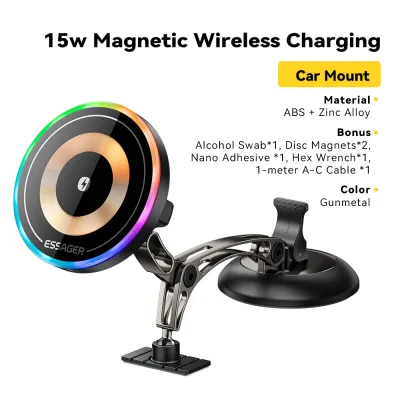
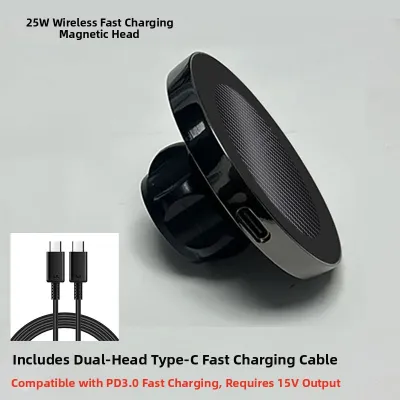
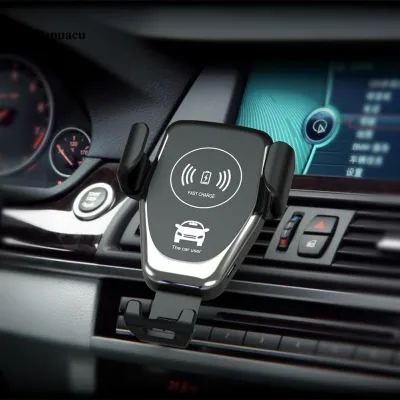
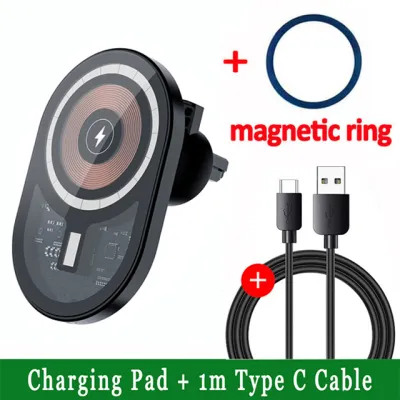
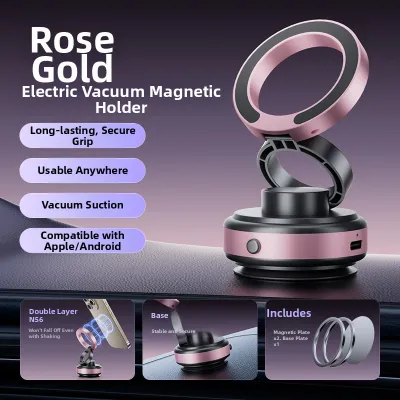


Prices are valid at publication and may change. Please refer to the product page for the latest price.
However, the physical effort of handling your phone during quick stops must be considered. If you frequently need to grab your phone to pay at a drive-through, scan a QR code, or show a digital pass at a security checkpoint, a wireless mount allows you to lift the device instantly. With a wired USB-C setup, you are physically tethered to the dashboard. Pulling the phone away requires either unplugging the cable or dealing with a taut wire that can snag on your steering wheel or gear shifter.
Charging Speed and Heat Management
When comparing charging performance, the physical laws of power transfer favor a direct wired connection. To understand what your device can handle, check your phone’s maximum supported wireless input against its USB-C Power Delivery (PD) limits, which are typically listed in the manufacturer’s technical specifications. While many modern smartphones support wired fast charging up to 25 watts, 45 watts, or even higher, wireless charging is often limited to 7.5 watts, 10 watts, or 15 watts. This means a USB-C cable will almost always replenish your battery significantly faster during a short 20-minute commute.

Heat management is another critical factor, especially in Singapore’s tropical climate. Wireless charging is inherently less efficient than wired charging, with a portion of the electrical energy lost as ambient heat. When you combine this natural heat generation with resource-heavy tasks like running GPS navigation and streaming music, your phone’s internal temperature can rise rapidly. If the device becomes too hot, its operating system will trigger thermal throttling, drastically reducing the charging speed or stopping it entirely to protect the battery.
To combat this issue, some aftermarket wireless mounts feature built-in active cooling fans or semiconductor cooling chips. These active systems help dissipate heat from the back of the phone, allowing it to maintain higher charging speeds for longer periods. In contrast, a high-quality USB-C cable relies on passive heat dissipation. Because wired charging is highly efficient, it generates far less heat at the device level, making it a much more stable option when your car’s cabin is already warm from being parked in the sun.
Device Compatibility and Vehicle Integration
Before purchasing any charging accessory, you must verify the compatibility of your current smartphone and vehicle hardware. For wireless options, check whether your phone supports standard Qi, the newer Qi2 standard, or proprietary magnetic alignment systems. Qi2 and magnetic mounts are particularly beneficial because they use integrated magnets to align the charging coils perfectly, minimizing energy loss and reducing heat buildup. If your phone lacks magnetic alignment, a slight misalignment on a standard wireless pad can slow down charging or prevent it from working altogether.
You must also evaluate your vehicle’s power sources. Many modern cars come equipped with built-in USB-C ports, but these ports do not always deliver high-wattage power. Some factory-installed ports are designed primarily for data transfer (such as wired Apple CarPlay or Android Auto) and may only output a weak 5-watt charge. To get the most out of either a high-speed wireless mount or a fast USB-C cable, you may need to spend S$20 to S$40 on a high-quality 12V accessory socket adapter that explicitly supports USB-C Power Delivery.
Physical phone cases and accessories also play a major role in compatibility. Thick rugged cases, wallet attachments, and metal plates used for magnetic mounts can block the electromagnetic field required for wireless charging. If your case is thicker than 3mm to 5mm, or if it contains metal components, wireless charging may fail entirely or cause dangerous heat buildup. In these scenarios, a USB-C cable is the only viable option unless you are willing to remove your phone case every time you drive.
Mounting, Placement, and Driving Safety
The physical installation of your charging setup directly impacts your safety and visibility on the road. Wireless charging mounts are generally heavier and bulkier than simple cable setups because they contain internal coils, mounting clamps, and sometimes motorized arms or cooling fans. Always verify your vehicle’s dashboard dimensions, mounting positions, and local road legality from your car’s documentation before installing a new mount. Air vent mounts must be compatible with your car’s vent slat design to prevent the heavy assembly from sagging or damaging the vent blades.
Driver visibility is crucial when using your phone for navigation. The mount should position the screen within your peripheral vision so you can glance at maps without taking your eyes off the road, while avoiding glare from direct sunlight. It is vital to check your local road safety regulations regarding phone mount placement to ensure you remain compliant. Never mount a device in a position where it could interfere with your physical control of the vehicle or block your view of the mirrors.
For wired setups, cable routing is the primary safety concern. A loose USB-C cable dangling across the center console can easily become tangled in the gear shifter, handbrake, or steering column. Ensure your cable is routed neatly along the dashboard trim using adhesive cable clips. Most importantly, never route a cable across the steering wheel hub or any trim panels marked with “SRS Airbag” logos, as a dangling wire can interfere with airbag deployment during an emergency.
Decision Framework: Which Charger Fits Your Routine?
To choose the right system, evaluate your daily driving patterns and parking habits. A car wireless charger is highly recommended if your daily commute consists of multiple short trips with frequent stops. The convenience of grabbing your phone instantly without fumbling with wires makes it ideal for running quick errands, dropping off passengers, or making deliveries. It is also the best choice if you prioritize a clean, minimalist dashboard aesthetic and want to keep your center console free of loose cables.
Conversely, a dedicated USB-C cable setup is the more practical choice if you have a long daily commute, frequently take extended road trips, or rely heavily on power-hungry apps like GPS navigation and high-definition music streaming. The faster charging speeds and superior thermal stability of a wired connection ensure your phone actually gains battery life rather than just maintaining its current charge level. It is also the most reliable option if your phone does not support wireless charging or if you prefer using a thick, protective case.
Finally, consider your parking environment. If you consistently park your car in open-air lots exposed to direct sunlight, the cabin temperature can easily exceed 40 degrees Celsius. Placing a phone onto a wireless charger in a hot cabin will almost certainly trigger thermal protection limits immediately. If you cannot park in shaded or underground spaces, keeping a high-quality USB-C cable in your glove box as a backup is a practical way to ensure you can always charge your device safely and efficiently.
Frequently Asked Questions (FAQ)
Can I use a wireless car charger if my phone has a thick protective case?
Most standard wireless car chargers can penetrate plastic or silicone cases up to 3mm to 5mm thick. However, heavy-duty rugged cases, wallet cases containing credit cards, and cases with integrated metal kickstands or magnetic plates will block the wireless signal. Metal objects placed between the phone and the charger can also overheat rapidly, posing a safety hazard. If you use a thick or metal-reinforced case, it is safer and more reliable to use a direct USB-C cable.
Will leaving my phone on a wireless car charger drain my car battery?
Modern vehicles typically cut power to the 12V accessory socket and built-in USB ports shortly after the engine is turned off and the doors are locked. However, in some older vehicle models, the 12V socket remains constantly powered. While a wireless charging mount in standby mode draws very little power, leaving it plugged in for weeks without driving could eventually weaken an older car battery. If your vehicle’s accessory socket stays active when the ignition is off, it is best practice to unplug the charger adapter during long-term parking.

Community discussion
Share your experience or ask a question. Comments are reviewed before publication.