
Deciding whether to install car wheel rim protectors is a common dilemma for vehicle owners looking to safeguard their wheels from unsightly scratches and structural damage. These protective accessories are not a mandatory addition for every vehicle on the road. Instead, the decision to invest in them depends on a combination of your tyre profile, the value of your rims, and your daily driving and parking environments.
Drivers who frequently navigate tight urban spaces, park close to high concrete kerbs, or run low-profile tyres stand to benefit the most from these accessories. Conversely, if your vehicle is equipped with high-profile tyres that have built-in rim guards, or if you primarily drive on open expressways and park in spacious bays, you can safely skip them. Understanding how these protectors function and evaluating your specific driving setup will help you determine if they are a practical investment for your car.
How Car Wheel Rim Protectors Work
Car wheel rim protectors, often referred to as alloy wheel protectors or rim rings, are designed to act as a sacrificial barrier between the tyre bead and the outer edge of the wheel rim. When your wheel comes into contact with a kerb, the protector absorbs the physical impact and scraping force, preventing the underlying metal alloy from being gouged or scratched. They are manufactured from durable, impact-resistant materials such as high-grade polymers, nylon, or semi-rigid plastics that can withstand moderate friction without tearing instantly.
Products mentioned in this guide
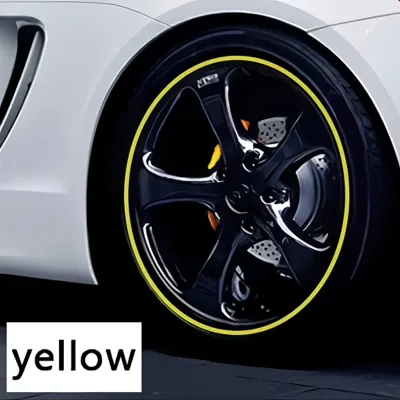
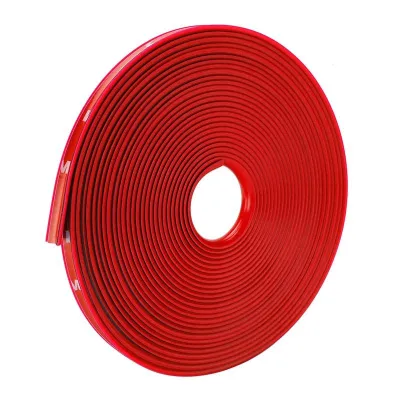


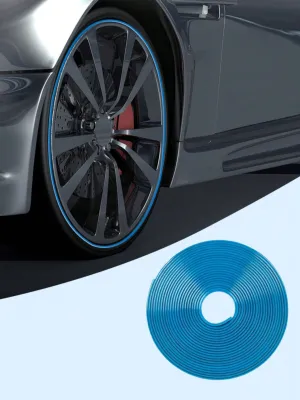
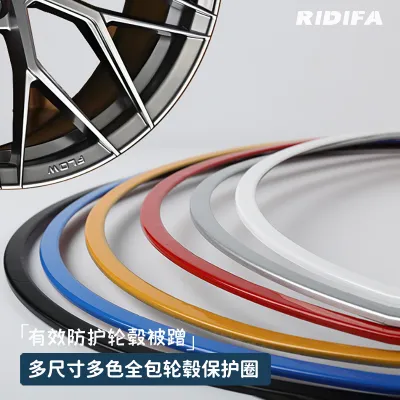
Prices are valid at publication and may change. Please refer to the product page for the latest price.
These accessories are generally divided into two main categories, each with distinct installation requirements and characteristics:
- Insert-Style Protectors: These are heavy-duty rings featuring a locking tab that is slotted and clamped securely between the tyre bead and the wheel rim. Because they rely on the physical pressure of the inflated tyre to stay in place, they offer a highly secure fit.
- Adhesive-Style Protectors: These are flexible plastic or rubber strips that adhere directly to the outer lip of the wheel rim using a high-bond adhesive backing. They are simpler to apply but require meticulous surface preparation to ensure the adhesive bonds correctly.
Safety is a paramount consideration when choosing and installing these accessories. Insert-style protectors require professional tyre-changing equipment to unseat the tyre bead safely before insertion. You should never attempt to pry tyres off or force insert-style rings into place using manual hand tools, as this can easily damage the delicate tyre bead, scratch the alloy wheel, or compromise the tyre’s airtight seal. Always consult a qualified tyre specialist to perform the installation of insert-style systems.
Self-Check 1: Your Driving Habits and Parking Environment
Environmental hazards are the primary cause of cosmetic wheel damage, commonly known as “curb rash.” To determine if you need rim protectors, you must first evaluate where you drive and park during a typical week. The physical layout of your daily routes plays a decisive role in how vulnerable your wheels are to scraping.

Tight Urban Parking and Kerb Contact
If your daily commute involves navigating highly congested urban environments, the risk of wheel damage increases exponentially. In cities like Singapore, drivers regularly face tight multi-storey carpark ramps, narrow parallel parking spaces along historic shophouse streets, and high concrete kerbs designed for heavy rain drainage. The spiral ramps of older housing estates and shopping mall basements are notorious for their tight clearance, where even a minor steering miscalculation can press your wheels against the concrete.
Furthermore, when parallel parking in tight spaces, you are often forced to pull as close to the kerb as possible to avoid obstructing active traffic lanes. If you find yourself frequently adjusting your vehicle in these cramped spaces, or if you regularly navigate narrow drive-thrus and automated parking gantries, rim protectors offer an excellent preventative shield against sudden, costly scrapes.
Highway Cruising and Open-Road Driving
If your driving routine consists primarily of long-distance cruising on wide expressways, such as the Pan Island Expressway (PIE) or East Coast Parkway (ECP), your wheels face minimal risk of kerb contact. Vehicles that are parked in spacious, well-marked commercial bays, private driveways, or modern open-air parking lots rarely come into close proximity with physical concrete barriers.
In these driving scenarios, the physical risk to your alloy rims remains exceptionally low. If you rarely find yourself parallel parking or squeezing through tight concrete ramps, the practical necessity for rim protectors is greatly reduced, and you can comfortably allocate your maintenance budget elsewhere.
Self-Check 2: Your Wheel and Tyre Specifications
Beyond your driving environment, the physical specifications of your vehicle’s wheel and tyre assembly dictate how naturally protected your rims are. You can easily assess this vulnerability by inspecting the tyre sidewall for its aspect ratio, which is the middle number in the standard tyre size marking (for example, the “45” in 225/45 R17).
Low-Profile Tyres and Exposed Alloy Rims
Low-profile tyres are generally defined as those with an aspect ratio of 45, 40, 35, or lower. These tyres feature a very thin rubber sidewall, which provides excellent handling and a sporty aesthetic but leaves the outer lip of the alloy wheel highly exposed to external impacts. Because there is very little rubber protruding past the wheel’s edge, even a minor brush against a low kerb will result in direct metal-on-concrete contact.
This exposure is particularly concerning if your car is fitted with expensive, polished, diamond-cut, or custom-painted alloy wheels. Refurbishing diamond-cut wheels is a highly specialized process that requires a CNC lathe to shave down a layer of the metal, meaning they can only be repaired a limited number of times. For these premium wheel setups, installing a set of rim protectors serves as a highly cost-effective insurance policy to avoid expensive workshop repair bills.
High-Profile Tyres and Standard Steel Wheels
High-profile tyres typically have aspect ratios of 50, 55, 60, or higher. These tyres feature thick, flexible sidewalls that naturally bulge outward past the face of the wheel rim. Many modern high-profile tyres are also designed with a molded rubber ridge near the bead, specifically engineered to act as a built-in rim guard.
If your vehicle is equipped with these thicker tyres, the rubber will almost always absorb minor kerb contacts before the metal rim can touch the concrete. Additionally, if your vehicle uses standard steel wheels with plastic hubcaps or basic painted alloys, the cost of replacing a damaged hubcap or repairing a basic wheel is relatively low. In these cases, the ongoing cost of purchasing and replacing aftermarket rim protectors often outweighs any potential repair savings.
Making the Decision: Buy, Wait, or Skip?
To help you decide on the best path forward, you can synthesize your self-check results into three distinct action plans:
- Buy: You should purchase rim protectors if you drive a vehicle with low-profile tyres (aspect ratio of 45 or lower), own high-value alloy wheels, and frequently park in tight urban environments or multi-storey carparks with narrow ramps.
- Skip: You can safely skip rim protectors if your vehicle uses high-profile tyres (aspect ratio of 50 or higher), standard steel wheels, or basic painted alloys, and you primarily park in spacious, open environments.
- Wait or Look for Alternatives: If your alloy wheels are already heavily scratched or gouged, do not purchase standard rim protectors expecting them to fix the issue. Rim protectors are strictly preventative and cannot repair existing physical damage. In this scenario, you should first seek a professional wheel refurbishment service to restore the structural integrity of the wheel. Once the rims are restored to pristine condition, you can then install protectors to prevent future damage.
Before buying any rim protector product, always verify its compatibility with your exact wheel diameter (e.g., 17-inch, 18-inch) and the specific shape of your wheel’s outer lip. Some wheels with highly convex spokes or non-standard lip profiles may not accept insert-style or adhesive-style protectors securely. Always consult the product manufacturer’s compatibility guidelines or speak with a professional tyre technician before making a purchase.
Frequently Asked Questions (FAQ)
Do rim protectors affect wheel balancing or tyre pressure?
Yes, insert-style rim protectors can affect wheel balancing because they add physical weight directly to the outermost circumference of the wheel assembly. Even a slight weight imbalance at this critical rotation point can lead to noticeable steering wheel vibrations at highway speeds. Therefore, it is highly recommended to have your wheels professionally re-balanced at a tyre workshop immediately after installing insert-style protectors. When installed correctly by a professional, they do not affect tyre pressure, but improper mounting can interfere with the tyre bead seal and lead to slow air leaks.
Can I install rim protectors on my existing tyres without removing them?
It depends entirely on the type of protector you choose. Insert-style protectors cannot be installed on fully inflated, mounted tyres; they require the tyre to be unseated from the rim using a professional tyre-changing machine, making workshop installation mandatory. Adhesive-style protectors, on the other hand, can be applied directly to mounted tyres without removing them. However, for adhesive-style protectors to bond securely, the rim edge must be completely clean, dry, and free of any tyre-shine chemicals, wax, or brake dust. You must also verify that the adhesive is compatible with your specific wheel finish, as some polished, ceramic-coated, or matte finishes may prevent proper adhesion or suffer damage upon removal.
Community discussion
Share your experience or ask a question. Comments are reviewed before publication.