
When you step into a car parked under the Singapore sun, the immediate wave of heat is a stark reminder of how intense the tropical climate can be. For drivers trying to maintain a pleasant cabin environment, this extreme heat and high humidity present a constant challenge. Standard car refreshers that might last for months in cooler climates often lose their scent or dry up within days here. Finding a car refresher that can withstand these conditions requires understanding how different formats interact with heat, moisture, and your vehicle’s ventilation system.
To get the most value and performance, you must look beyond marketing claims and evaluate the physical properties of each format. Solid diffusers and adjustable vent clips generally offer the most controlled scent release in tropical conditions, while gels and hanging cards require more strategic placement to prevent rapid depletion. By matching the right format to your parking habits and driving routines, you can maintain a fresh cabin without constantly replacing your air freshener.
How Heat and Humidity Affect Car Refreshers
Liquid and gel-based air fresheners rely on the gradual evaporation of volatile organic compounds mixed with fragrance oils. When cabin temperatures soar—often exceeding 60 degrees Celsius when parked in an open-air carpark—this evaporation process accelerates exponentially. The heat essentially forces the fragrance molecules out of their carrier medium far too quickly, leading to an overpowering scent initially, followed by rapid depletion of the product.
Products mentioned in this guide
![[Bundle of 3] Ambi pur Car Clip Car Air Freshener Citrus Twist 2.2 ml](https://img.lazcdn.com/g/p/a3144c6007bab581519175e2afc555b1.png_400x400q80.png_.webp)
![[Bundle of 3] Ambi Pur Car Mini Clip Fresh & Minty Car Air Freshener 2.2ml](https://img.lazcdn.com/g/p/ae59d8f5eba54dbda9bc8c0a24ffeb99.jpg_400x400q80.jpg_.webp)
![[Bundle of 6] Ambi Pur Car Mini Clip Lavender Comfort Car Air Freshener 2.2ml x 2](https://img.lazcdn.com/g/p/f600e9bfe96f645b73bee5e6db367b6a.jpg_400x400q80.jpg_.webp)
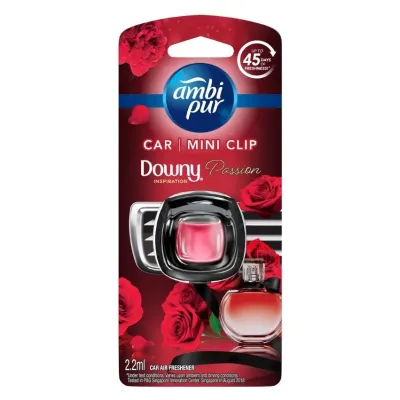



Prices are valid at publication and may change. Please refer to the product page for the latest price.
Singapore’s relative humidity, which frequently hovers around 80% or higher, adds another layer of complexity to scent maintenance. High moisture levels in the air saturate porous materials like cardboard or paper. When these materials absorb atmospheric moisture, their structural integrity degrades, and the fragrance oils bound within them are displaced or diluted. This results in a significantly shortened lifespan and a weaker, less consistent scent throw.
Sealed containers, particularly those holding liquids or pressurized gases, face physical risks when exposed to extreme heat. As the temperature inside the cabin rises, the air and liquid inside a sealed container expand. This thermal expansion can cause plastic housings to warp, seals to fail, or liquid to leak onto sensitive dashboard plastics and leather upholstery, potentially causing permanent chemical damage that is costly to repair.
Comparing Car Refresher Formats for Tropical Climates
To choose the right car refresher, you must evaluate how different delivery mechanisms perform under the dual pressures of intense heat and high humidity. Each format has a distinct physical structure that dictates how it releases scent and how well it survives the tropical climate.

Vent Clips and Hanging Formats
Vent clips are designed to utilize the active airflow from your car’s air conditioning system to distribute fragrance. When the air conditioning is running, the cool air helps regulate the temperature of the clip, allowing for a controlled and pleasant scent release. However, when the car is parked and the system is off, the ambient heat inside the cabin continues to act on the liquid reservoir. This means the fragrance continues to evaporate at an accelerated rate even when you are not there to enjoy it, leading to premature depletion.
Hanging cardboard or paper refreshers are highly susceptible to both heat and humidity. Because they are completely exposed to the cabin air, they have no mechanism to regulate scent release. In high humidity, the paper fibers absorb moisture, which can cause the card to warp, discolor, or bleed oils onto surrounding surfaces. The direct heat from the windshield further bakes the fragrance out of the card, often rendering it ineffective within a week of opening.
Gel Cans and Solid Diffusers
Gel-based car refreshers are popular for their ease of use, but they behave unpredictably in extreme heat. Most gels are water- or oil-based colloids that shrink as the active ingredients evaporate. When subjected to high dashboard temperatures, the gel can melt back into a liquid state, increasing the risk of spills if the container is tilted. Once melted, the surface area increases, causing the remaining fragrance to evaporate even faster and leaving behind a hard, dried residue.
Solid diffusers made from porous wood, ceramic, or volcanic stone represent a much more stable option for tropical climates. These materials do not melt, warp, or expand under typical cabin temperatures. They hold fragrance oils within their microscopic pores and release them slowly over time. While they still experience faster evaporation in high heat, their physical structure remains intact, making them one of the most durable formats available, provided you check the manufacturer’s guidelines for oil compatibility.
Aerosol Sprays and Essential Oil Mists
Aerosol sprays and manual misting bottles offer a completely different approach by providing on-demand fragrance rather than continuous passive diffusion. This format gives you total control over when and how much scent is introduced to the cabin, making it highly efficient since no product is wasted while the car is parked. However, the primary drawback is the lack of longevity; the scent molecules disperse and settle quickly, requiring regular reapplication to maintain a consistent aroma.
Storage safety is a critical consideration for any spray format, particularly pressurized aerosol cans. Leaving a pressurized container in a glove box or door pocket where temperatures can climb rapidly poses a safety hazard. High heat increases the internal pressure of the can, which can lead to structural failure or leakage. Always read the product label carefully to verify the maximum safe storage temperature before keeping any spray in your vehicle.
Key Features to Check on Product Labels
When shopping for a car refresher, reading the product label is essential to ensure you select a formula designed to withstand local conditions. Look for explicit temperature storage limits and warnings regarding direct sunlight exposure. Manufacturers who formulate products for global markets often specify the maximum temperature the packaging can safely endure, which is crucial for preventing leaks and container failures in hot climates.
Another key feature to look for is an adjustable vent or housing mechanism. Many modern vent clips and solid diffusers feature manual sliders or rotating caps that allow you to restrict or open the airflow pathways. In hot weather, keeping these vents partially closed can significantly extend the lifespan of the refresher by physically limiting the surface area exposed to evaporating heat.
Additionally, verify if the product packaging specifies humidity resistance or utilizes leak-proof technology. For liquid and gel formats, look for membranes that permit the passage of fragrance vapor while completely blocking the liquid from escaping, even if the container is inverted or subjected to high temperatures. This feature protects your car’s interior surfaces from accidental chemical damage.
Placement and Usage Strategies for Longevity
Where you place your car refresher is just as important as the format you choose. To maximize longevity, avoid placing gel cans, liquid diffusers, or hanging cards on the dashboard or hanging from the rearview mirror where they are exposed to direct sunlight. The greenhouse effect inside a parked car concentrates heat right behind the glass, which will rapidly deplete the fragrance and can cause materials to melt or warp.
Instead, utilize shaded, cooler areas of the vehicle cabin. Placing solid diffusers or gel cans under the front seats, inside door pockets, or within center console cup holders keeps them out of direct sunlight. These areas remain slightly cooler than the dashboard, which helps slow down heat-induced evaporation and extends the usable life of the product.
It is also important to understand how your air conditioning habits affect your car refresher. Running the air conditioning consistently lowers both the temperature and the humidity inside the cabin, which slows down the natural evaporation rate of passive diffusers. However, if you frequently drive with the windows down or park in unventilated areas, the constant influx of hot, humid air will accelerate scent depletion. Adjusting your usage—such as closing adjustable vents when parking the car for extended periods—can help conserve the fragrance.
Frequently Asked Questions (FAQ)
Can I leave gel air fresheners in a parked car under the sun?
Leaving gel air fresheners on the dashboard or in direct sunlight is not recommended. The extreme heat inside a parked car can cause the gel to melt into a liquid, which increases the risk of spills and rapid evaporation. Always check the manufacturer’s packaging for maximum temperature thresholds and place gel containers in shaded areas like under the seat to prevent damage to your car’s interior.
Do vent clips work well when the air conditioning is turned off?
Vent clips rely on active airflow from your car’s ventilation system to distribute scent effectively throughout the cabin. When the air conditioning is turned off, passive evaporation still occurs due to ambient cabin heat, but the scent throw will be significantly reduced and localized around the vent. Additionally, high ambient heat will continue to deplete the liquid reservoir even when the vehicle is parked and the fan is not running.

Community discussion
Share your experience or ask a question. Comments are reviewed before publication.