
Selecting the right sponge applicator car care tool is a critical step that directly determines the quality of your vehicle’s finish. When detailing a car, there is no single, universal sponge that can handle polishing, waxing, and ceramic coating equally well. The correct applicator choice depends entirely on the viscosity of the product you are applying and the physical action required to bond or level it on the clear coat.
Using the wrong sponge can quickly lead to poor results, wasted product, or even permanent paint damage. For instance, car polish requires a firmer, denser foam to transfer manual pressure for defect correction. Car wax needs a soft, highly porous foam to spread a microscopically thin, even layer. Ceramic coating requires specialized, low-absorption suede or microfiber-wrapped foam blocks to prevent product waste and ensure proper leveling. Understanding these distinctions is the key to achieving a professional-grade finish while protecting your vehicle’s paint.
Key Applicator Traits That Dictate Your Choice
To make an informed decision when purchasing detailing supplies, you must look past marketing labels and evaluate the physical properties of the applicators. The structural characteristics of a sponge dictate how it interacts with both the detailing product and your car’s clear coat. By understanding these traits, you can select the perfect tool for any detailing task.
Products mentioned in this guide
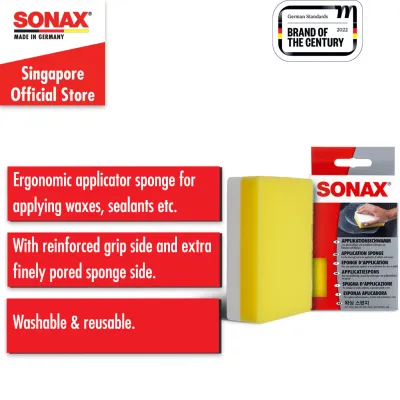
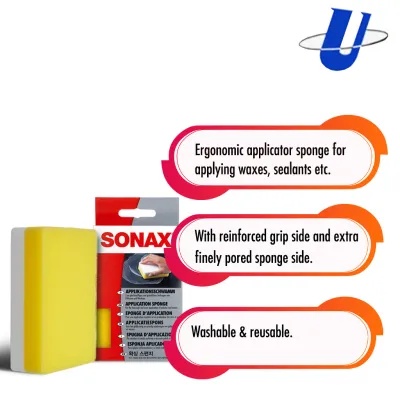
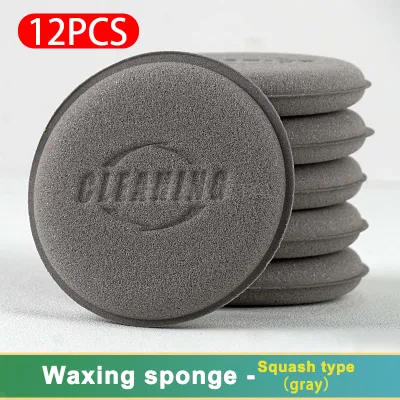
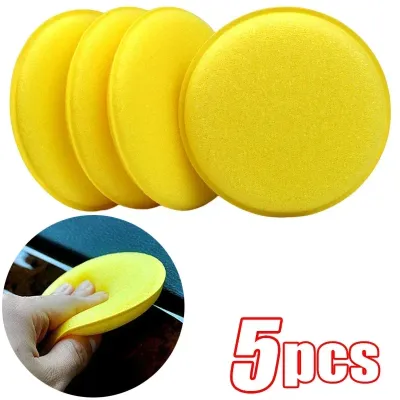
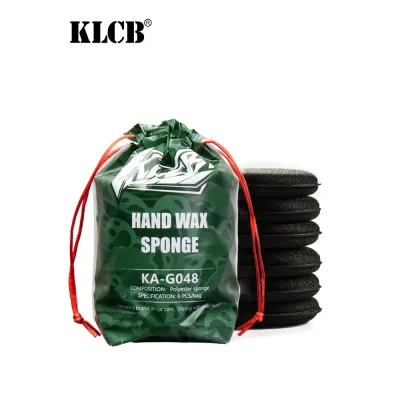
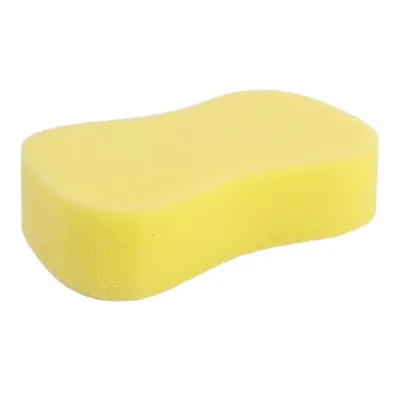
Prices are valid at publication and may change. Please refer to the product page for the latest price.
Foam Density and Firmness
Foam density refers to the weight of the foam per unit volume, while firmness determines how much pressure is required to compress it. Firm, high-density foam acts as a structural bridge between your hand and the vehicle’s paint. This structural integrity allows you to apply controlled, downward pressure without the sponge bottoming out against the panel. Conversely, soft, low-density foam compresses easily under minimal pressure. This flexibility allows the applicator to conform naturally to curves, body lines, and intricate trim pieces without concentrating pressure on a single spot.
Porosity (Open-Cell vs. Closed-Cell)
Porosity describes the cellular structure of the foam, which is categorized as either open-cell or closed-cell. Open-cell foam consists of interconnected pockets that act like a microscopic network of tunnels. This design allows the sponge to absorb liquid products and release them gradually as pressure is applied, making it ideal for spreading liquid waxes or sealants. Closed-cell foam, or foam with extremely low porosity, features sealed pockets that prevent liquids from penetrating the core. This keeps the product entirely on the surface of the applicator, which is essential when working with expensive, fast-curing coatings.
Surface Material
The material that makes contact with your paint affects both product distribution and safety. Bare polyurethane foam is the most common surface material, offering direct contact that is highly effective for mechanical polishing and standard waxing. However, for highly sensitive or expensive coatings, wrapped applicators are the industry standard. These feature a firm foam core wrapped in premium microfiber or ultra-soft suede. The wrap provides a perfectly flat, lint-free surface that glides smoothly over the clear coat, minimizing friction and ensuring an ultra-even application.
Edge Design
Although often overlooked, the edge design of a sponge applicator plays a major role in preventing accidental paint damage. Applicators with sharp, straight-cut edges can concentrate pressure along the perimeter, leading to holograms or light scratching if tilted during use. Rounded, laser-cut, or beveled edges distribute pressure gradually across the entire face of the sponge. This design also prevents excess product from building up along the edges, reducing the risk of leaving heavy lines of wax or polish in panel gaps and style lines.
Choosing the Right Sponge for Car Polish
Polishing is a corrective process designed to level micro-scratches, swirl marks, and oxidation in the clear coat. To achieve this, the polishing compound relies on microscopic abrasives that must be worked firmly against the paint surface. Consequently, hand-polishing requires a firm, dense foam applicator that can transfer the physical force of your hand directly to the paint.

Using a soft, highly porous sponge for polishing is highly inefficient and can ruin the process. A soft sponge collapses completely under pressure, absorbing the polishing compound into its core. Once trapped inside the foam, the abrasive particles cannot make consistent contact with the paint. This not only wastes your product but also causes the remaining polish on the surface to dry out prematurely. When polish dries too quickly, it can become sticky, making it difficult to buff off and increasing the risk of creating new micro-scratches.
Before you begin, always check the specific polish manufacturer’s label and your vehicle’s care instructions. Some heavy-cut compounds are formulated for specific foam densities, while others may require specialized microfiber cutting pads rather than standard sponges. It is also important to recognize the physical limits of hand application. Manual polishing with a sponge applicator is highly effective for light paint enhancement, restoring gloss, or performing localized spot correction, such as removing fingernail scratches behind door handles. For heavy, widespread defect removal across the entire vehicle, professional machine polishing is generally required.
Selecting the Best Sponge for Car Wax
Unlike polishing, waxing is a protective step that does not involve abrading the paint. The goal is to lay down a microscopically thin, uniform layer of wax over the clear coat to seal it from environmental elements. To achieve this, you should use a soft, low-density, open-cell foam sponge.
Soft foam applicators require very little downward pressure to glide smoothly over the paint. This softness is crucial because it allows the sponge to conform easily to complex body curves, plastic bumpers, and side mirror contours. Because the foam is open-cell, it acts as a temporary reservoir. It holds the liquid or paste wax within its outer cells and releases it evenly as you move the sponge across the panel, ensuring complete, streak-free coverage.
Using a soft, highly flexible sponge also helps prevent product buildup in panel gaps, emblems, and rubber seals. When wax is applied too thickly with an stiff applicator, it accumulates in these tight crevices and dries into a stubborn white residue that is exceptionally difficult to clean. A soft sponge allows you to maintain a light touch, keeping the application thin and manageable.
To protect your paint, you must avoid cross-contamination. Never use the same sponge applicator for waxing that you previously used for polishing, even if you have washed it. Microscopic abrasive residues from polishing compounds can remain trapped deep within the foam pores. If you use that same sponge to apply wax, those trapped abrasives will be dragged across your clear coat, creating fresh swirl marks and ruining your hard work. Keep your polishing and waxing sponges strictly separated.
Applying Ceramic Coating: Why Traditional Sponges Fail
Ceramic coatings represent a massive leap in paint protection, utilizing liquid silica or graphene-based formulas that chemically bond with the clear coat. These products are highly concentrated, expensive, and cure rapidly when exposed to air. Because of these unique chemical properties, applying a ceramic coating requires absolute precision and zero product waste, which makes traditional bare foam sponges entirely unsuitable.
If you attempt to apply a ceramic coating with a standard bare foam sponge, the highly porous material will immediately suck up the low-viscosity liquid. This leads to massive product waste, which is highly costly given the premium price of ceramic coatings. More importantly, as the trapped coating begins to cure inside the sponge, it hardens the foam cells. This hardened foam essentially turns into an abrasive block that can severely scratch your paint as you continue the application. Furthermore, bare foam cannot distribute the coating evenly, leading to “high spots”—thick, uneven areas of cured coating that look like dark or rainbow-colored smudges. Once fully cured, these high spots can typically only be removed by machine polishing.
To avoid these issues, the detailing industry relies on a specialized applicator system: a firm, low-porosity foam block wrapped in a premium suede or microfiber cloth. The solid foam block provides a flat, stable backing that allows you to apply light, uniform pressure. The wrapped suede cloth has virtually no loft, keeping the expensive ceramic coating entirely on the surface. This ensures that every drop of product is transferred directly to the paint, allowing you to lay down a perfectly level film and easily observe the product “flashing” (the rainbow effect that signals it is ready to be buffed off).
When undertaking a ceramic application, always strictly follow the specific coating manufacturer’s instructions. Use the applicator block and suede cloths included in the kit, or those officially recommended by the brand. If the instructions conflict with general guidelines, or if you are working with an unfamiliar paint type, consult a professional detailer before proceeding.
Quick Comparison: Polish, Wax, and Ceramic Applicators
To help you quickly verify your choices before starting your detailing session, the table below summarizes the ideal characteristics and risks associated with each applicator type.
| Task | Ideal Material/Texture | Foam Density | Key Function | Risk of Using the Wrong Type |
|---|---|---|---|---|
| Polishing | Firm, flat bare foam | High density | Transfers manual pressure to level clear coat defects | Absorbs compound, lacks cutting power, dries out polish |
| Waxing | Soft, open-cell bare foam | Low density | Spreads a thin, uniform protective layer over curves | Heavy product buildup, difficult buffing, residue in panel gaps |
| Ceramic Coating | Suede or microfiber-wrapped foam block | High-density core with low-absorption wrap | Delivers precise, waste-free leveling and even spreading | Severe product waste, paint scratching from cured foam, high spots |
Cleaning and Storing Your Applicators in Humid Climates
Proper maintenance of your sponge applicators is essential to preserve their structural integrity, prevent paint damage during future uses, and save money. Immediately after completing your detailing work, rinse the applicators thoroughly under warm running water. Use a mild, non-abrasive liquid detergent or a dedicated foam pad cleaner to break down the oils, silicones, and polymers trapped in the foam. Avoid harsh household dish soaps, bleach, or fabric softeners, as these chemical agents can degrade the polyurethane structure and leave a residue that interferes with future product applications.
In Singapore’s highly humid tropical climate, drying and storage require extra care. After washing, gently press the sponges between your palms to squeeze out excess water; never wring, twist, or stretch them, as this tears the delicate foam cells. Place the applicators to air-dry completely in a well-ventilated, shaded indoor area away from direct sunlight, which can dry out and crumble the foam. Storing damp sponges in sealed plastic containers or dark, unventilated cabinets in high humidity will rapidly lead to mildew, mold, and bacterial growth, rendering the applicators unusable.
Once the sponges are completely dry, store them in separate, clearly labeled, breathable mesh bags or clean storage bins. Keeping your polishing, waxing, and coating applicators physically isolated from one another is the most effective way to prevent cross-contamination and ensure your tools are always ready for the next detailing session.
Frequently Asked Questions (FAQ)
Can I use a microfiber towel instead of a sponge applicator for wax?
While a clean, plush microfiber towel can be used to apply liquid or spray waxes in an emergency, it is not the ideal tool for paste or standard liquid waxes. Microfiber towels lack the structured, uniform cushioning of a foam sponge, making it difficult to apply even pressure across curved body panels. Furthermore, towels tend to absorb a significant amount of product into their fibers, leading to unnecessary waste. They are also more likely to accidentally drag any microscopic dust particles across the paint if the surface is not perfectly clean. A soft foam sponge remains the safest and most consistent choice for wax application.
How do I know when it is time to replace a foam applicator?
You should replace your foam applicator immediately if you observe any physical signs of degradation. These signs include the foam losing its elasticity (failing to spring back to its original shape), feeling hard, stiff, or crusty even after a thorough washing, or beginning to crumble and shed tiny foam particles during use. Additionally, if an applicator retains a strong, sour chemical odor that cannot be washed out, it should be discarded. Using a degraded or contaminated applicator can cause uneven product distribution, leave heavy streaks, or introduce micro-scratches to your vehicle’s clear coat.
Community discussion
Share your experience or ask a question. Comments are reviewed before publication.