
The best solution for faded exterior plastic trim depends entirely on the current level of oxidation, the porosity of the surface, and your desired longevity. Plastic restorers penetrate and replenish oils to darken heavily faded trim, while ceramic coatings provide long-term UV protection but require a perfectly restored surface first. Standard polishes and waxes often trap in the pores of unpainted textured plastics, leading to unsightly white residue. This guide compares how each product interacts with automotive plastics to help you choose the right approach for your vehicle’s specific condition.
How Restorers, Waxes, and Coatings React with Faded Plastic
Automotive exterior trim is constantly subjected to harsh environmental elements. In tropical climates with high humidity and intense sunlight, ultraviolet (UV) radiation is particularly damaging. Over time, UV rays break down the chemical bonds within the plastic polymers, leading to photo-oxidation. This degradation causes the plastic to lose its plasticizers—the internal oils that keep the material flexible and richly colored. As these oils dissipate, the plastic dries out, its color fades to a dull gray, and its microscopic surface pores expand, making it highly porous and susceptible to further damage.
Dedicated car plastic restorers are formulated specifically to address this loss of internal oils. These products typically contain deep-penetrating conditioning agents, polymer sealants, and darkening agents. When applied to faded trim, the restorer sinks deep into the expanded microscopic pores of the plastic, replenishing the lost moisture and restoring the original dark pigment. This chemical penetration temporarily seals the pores, preventing water and contaminants from entering while restoring a rich, satin-like appearance.
Products mentioned in this guide
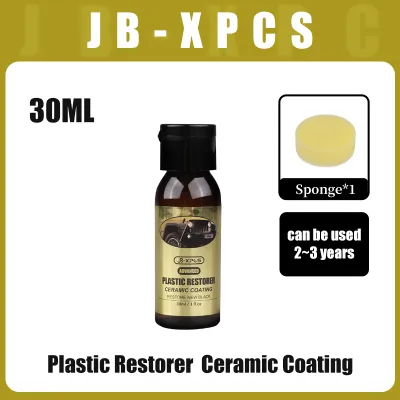
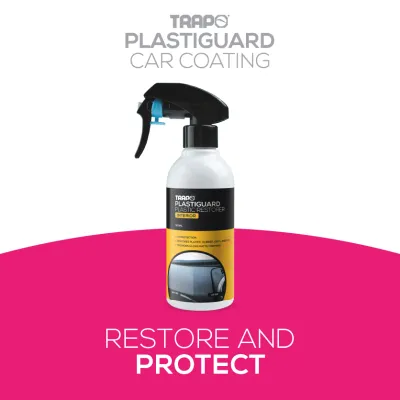
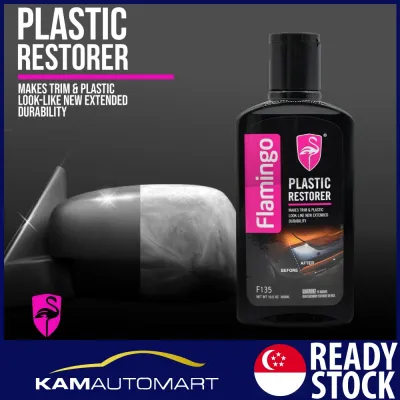
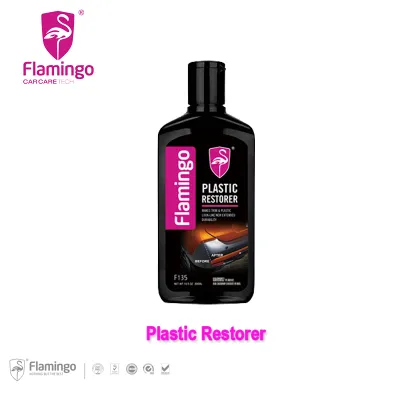
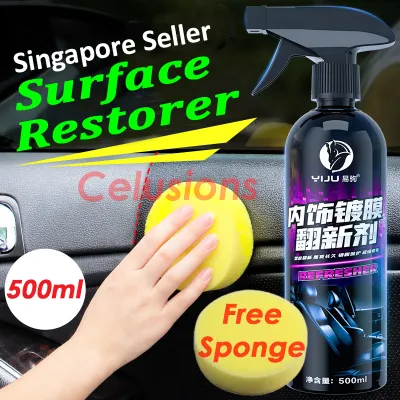
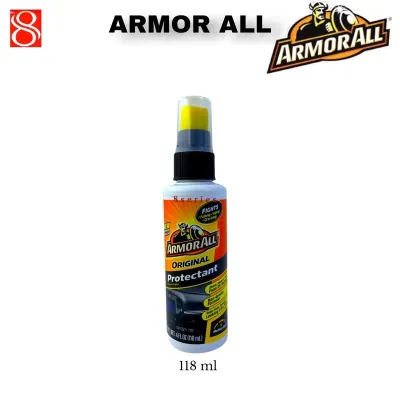
Prices are valid at publication and may change. Please refer to the product page for the latest price.
In contrast, standard car polishes and traditional carnauba waxes are designed for smooth, painted metal surfaces rather than porous, unpainted plastics. Polishes contain micro-abrasives intended to level clear coats, which can permanently scratch or scuff soft plastic trim. Traditional waxes contain heavy binders, solvents, and natural wax solids. When applied to textured plastic, these solids do not melt or bond with the material; instead, they settle into the expanded microscopic pores. As the wax dries, it cures into a stubborn, white, chalky residue that is incredibly difficult to remove, highlighting the faded texture rather than hiding it.
Ceramic coatings operate on a completely different chemical principle. Typically formulated with silicon dioxide (SiO2) or silicon carbide (SiC), these liquid polymers form a semi-permanent bond with the surface. When applied to plastic, the coating undergoes a cross-linking process, curing into a hard, glass-like, hydrophobic barrier. Rather than penetrating deeply to replenish lost oils, a ceramic coating sits primarily on the surface, sealing the pores from the outside. This barrier is highly effective at blocking UV rays, resisting chemical etching, and shedding water, but it requires a stable, clean substrate to bond correctly.
Comparing Visual Results, Durability, and Upkeep
The visual results achieved by these products differ significantly in depth, gloss, and texture. A high-quality car plastic restorer delivers immediate, dramatic color saturation, turning faded gray trim back to a deep, rich black with a natural satin or matte finish. However, because restorers rely on penetrating oils and temporary polymer sealants, their durability is inherently limited. Depending on the specific product formulation and environmental exposure—such as frequent parking in open-air carparks under direct sunlight and heavy tropical downpours—a restorer may begin to wash away after several weeks or months, requiring regular reapplication to maintain the look.

Ceramic coatings offer a different visual aesthetic, often adding a sleek, slightly glossy sheen to the trim alongside deep color restoration. The primary advantage of a ceramic coating is its exceptional durability. Because the cross-linked polymer bond is highly resistant to heat, detergents, and UV radiation, a properly applied coating can protect the trim for a significantly longer period than a standard restorer. However, this longevity comes with a trade-off: the application process is highly sensitive, requiring meticulous surface preparation, and any application errors can result in uneven high spots that are difficult to correct once cured.
The upkeep and physical effort required for each option must also be considered. Restorers are generally easy to apply, requiring a simple wipe-on, wipe-off process with a microfiber applicator, making them highly accessible for DIY car care. However, the need for frequent reapplication means more cumulative effort over the lifespan of the vehicle. Ceramic coatings require a much higher initial investment of time and effort for deep cleaning, degreasing, and precise application, but they drastically reduce the frequency of ongoing maintenance.
| Product Category | Ideal Use Case | Primary Benefits | Inherent Limitations |
|---|---|---|---|
| Car Plastic Restorer | Moderately to heavily faded, porous, unpainted exterior trim. | Deep color restoration, easy application, fills dry pores. | Temporary durability, requires regular reapplication. |
| Ceramic Coating | New, lightly faded, or freshly restored trim requiring long-term protection. | Exceptional durability, high UV resistance, hydrophobic properties. | High initial prep effort, sensitive application, higher cost. |
| Standard Car Wax | Painted metal and smooth, glossy clear-coated surfaces. | High gloss, paint protection, water sheeting. | Leaves white chalky residue in textured plastic pores. |
| Abrasive Polish | Correcting scratches and oxidation on painted clear coats. | Removes surface defects, restores paint clarity. | Can scratch soft plastics and leave white residue. |
Which Product to Choose Based on Your Trim's Condition
Selecting the right product requires an accurate assessment of your vehicle’s trim condition. You can evaluate the state of your plastic trim through a simple visual inspection and a water drop test. Clean a small section of the trim and place a few drops of water on the surface. If the water beads up and rolls off, the plastic still retains some of its natural oils and surface tension. If the water immediately flatlines, spreads out, or appears to soak into the surface, the plastic is highly porous and severely dried out.
If your visual inspection reveals a heavily oxidized, chalky, gray, or rough surface that fails the water drop test, a dedicated car plastic restorer is the correct choice. The dry, porous structure of heavily degraded plastic will readily absorb the conditioning oils of a restorer, bringing back the deep color that a coating alone cannot restore. Attempting to apply a ceramic coating directly to severely oxidized plastic is generally ineffective, as the dry plastic will unevenly absorb the coating, leading to a patchy, streaky finish and premature failure of the protective bond.
If your trim is brand new, lightly faded, or has already been chemically restored and thoroughly degreased, a ceramic coating is the ideal solution. The coating will lock in the healthy appearance of the plastic, creating a robust shield against the intense UV rays that cause fading in the first place. This proactive approach is highly recommended for vehicle owners looking to preserve the factory look of their trim over several years without the hassle of monthly touch-ups.
Under no circumstances should you use standard abrasive polishes or traditional paste waxes on unpainted, textured plastic trim. The micro-abrasives in polish can permanently mar the delicate plastic texture, while the wax binders will dry into a white stain that bonds stubbornly to the grain. If you accidentally get wax or polish on your trim, it must be cleaned immediately using a dedicated wax remover or a soft-bristled brush with an all-purpose cleaner to prevent permanent staining.
Safe Preparation and Application Boundaries
Regardless of the product you choose, proper surface preparation is the most critical factor determining the success and longevity of the treatment. Any leftover dirt, road grime, old wax, or silicone-based dressings will prevent the restorer or ceramic coating from bonding directly to the plastic substrate. Begin by thoroughly washing the trim with a dedicated car wash shampoo. Next, scrub the plastic using a soft-bristled detailing brush and a safe, wax-free degreaser or dedicated trim cleaner to pull embedded dirt out of the textured pores. Finish the preparation by wiping the surface down with an isopropyl alcohol (IPA) prep spray to remove any remaining chemical residues.
Protecting the surrounding areas of your vehicle is equally important. Before applying any restorer, polish, or coating, use high-quality automotive masking tape to cover adjacent painted panels, glass, and rubber weatherstripping. This prevents accidental transfer of the product, which could stain rubber seals or leave hard-to-remove streaks on your clear coat. If a ceramic coating accidentally contacts your vehicle’s paint or glass, wipe it off immediately with a clean microfiber cloth to prevent it from curing into a permanent high spot.
Always consult the manufacturer’s instructions on the product label for specific application guidelines, curing times, and environmental limits. Many coatings and restorers require a dry environment and must not be exposed to moisture or direct sunlight during the initial curing phase, which can range from a few hours to a full day. Additionally, ensure you work in a well-ventilated area and wear appropriate personal protective equipment, such as nitrile gloves, to protect your skin from chemical solvents.
While chemical solutions can work wonders on faded trim, they have physical limits. If your plastic trim exhibits deep structural cracking, severe warping, extreme brittleness, or is a painted plastic part with a peeling clear coat, chemical restorers and coatings will not resolve the issue. In these cases, attempting to mask the damage with chemicals is futile. You should stop DIY efforts and consult a professional automotive detailer or body shop to discuss replacement of the trim piece or professional sanding, priming, and repainting.
Frequently Asked Questions (FAQ)
Can I use standard car wax on unpainted black plastic trim?
No, you should avoid using standard car wax on unpainted, textured black plastic trim. Traditional paste and liquid waxes contain natural carnauba or synthetic binders that dry into a hard, white, chalky solid. When these solids get trapped inside the microscopic pores of textured plastic, they create unsightly white stains that are incredibly difficult to scrub out. The only exception is if you are using a synthetic polymer sealant or spray wax that is explicitly labeled by the manufacturer as safe for use on unpainted exterior plastic trim. Always verify the product label’s compatibility instructions before application.
How do I know if my plastic trim is too degraded for a chemical restorer?
Your plastic trim is too degraded for a chemical restorer if it shows signs of physical structural damage rather than simple surface fading. Inspect the trim closely for deep cracks, crumbling edges, extreme warping, or a rough, flaky texture that sheds plastic particles when touched. For painted plastic trim, look for a peeling clear coat or flaking paint. Chemical restorers are designed to replenish oils and pigments in intact, porous plastic; they cannot repair broken polymer chains, restore structural integrity, or fix peeling paint. If these severe conditions are present, the trim must be professionally repaired, repainted, or completely replaced.

Community discussion
Share your experience or ask a question. Comments are reviewed before publication.