
When parked under the intense Singapore sun, a car cabin can quickly transform into a high-temperature chamber, with interior temperatures frequently climbing past 60°C. In this extreme heat, standard car air fresheners often fail to deliver clean air, instead releasing a heavy wave of synthetic perfume that merely covers up underlying smells. To achieve genuine car odor removal, you must look beyond basic perfumes and select products designed to neutralize, trap, or break down odor molecules at their source.
Understanding how different materials interact with tropical heat is key to keeping your vehicle smelling fresh. While some products degrade or melt when exposed to direct sunlight, others remain highly stable and continue to work silently in the background. By focusing on the science of odor elimination rather than temporary masking, you can maintain a clean, comfortable cabin environment throughout the year.
Masking vs. Neutralizing: How Car Odor Removal Actually Works
To choose the right solution for your vehicle, it is essential to distinguish between masking an odor and neutralizing it. Masking agents rely on highly concentrated fragrance oils to overpower the olfactory senses. They do not alter the chemical structure of the bad odors; they simply compete with them. When the cabin temperature rises, the evaporation rate of these fragrance oils accelerates dramatically. This rapid release often results in an overwhelming, cloying scent that mixes with the existing mustiness, creating an unpleasant and suffocating atmosphere inside the vehicle.
Products mentioned in this guide




Prices are valid at publication and may change. Please refer to the product page for the latest price.
In contrast, true neutralizers work through chemical or physical processes to eliminate the odor-causing compounds entirely. These products typically fall into three categories: adsorbents, enzymes, and oxidizers. Adsorbents, such as activated carbon, possess a highly porous surface area that physically traps and holds gas molecules, preventing them from recirculating. Enzymatic formulas use specialized proteins to accelerate the natural breakdown of organic matter, such as spilled food or pet dander, turning them into odorless byproducts. Oxidizers chemically react with odor molecules, altering their molecular structure to render them completely neutral.
When shopping for interior care products in Singapore, it is crucial to read the packaging carefully. Look for explicit terms such as “odor eliminator,” “neutralizer,” or “adsorbent” rather than generic labels like “air freshener” or “perfume.” Checking the active ingredient list can help you verify whether the product contains functional compounds designed to destroy odors or if it relies solely on synthetic fragrance oils.
Evaluating Air Freshener Types for Tropical Heat
Not all odor-control products perform reliably when subjected to the thermal stress of a vehicle parked outdoors. Evaluating different formats requires looking closely at their primary mechanism of action, their physical stability under high temperatures, and their overall maintenance requirements.

Activated Charcoal and Bamboo Bags (Adsorption)
Activated charcoal and bamboo charcoal bags represent one of the most stable and effective passive methods for car odor removal. The manufacturing process of activated charcoal creates millions of microscopic pores, giving it an incredibly large surface area relative to its size. This structure allows the charcoal to act like a silent sponge, physically pulling volatile organic compounds, moisture, and musty smells out of the air and trapping them within its internal network.
One of the greatest advantages of charcoal bags in a tropical climate is their exceptional heat stability. Unlike liquid or gel-based products, charcoal does not contain volatile solvents or water-based carriers that evaporate rapidly or melt under intense heat. There is zero risk of the product leaking, warping, or releasing harmful chemical vapors when your car is parked in direct sunlight. This makes them an incredibly safe, set-and-forget option for any area of the cabin, including the dashboard, under the seats, or in the boot.
Maintenance for these passive adsorbents is straightforward but necessary. Over time, the microscopic pores become saturated with trapped molecules, reducing the bag’s effectiveness. To restore its adsorption capacity, you must periodically place the charcoal bag in direct sunlight for a few hours. The solar heat helps to release the trapped moisture and odor molecules, effectively reactivating the charcoal. However, while charcoal is excellent for ongoing maintenance and moisture control, it has limitations when dealing with sudden, highly concentrated, or active odor sources, which may require more immediate chemical intervention.
Gel and Solid Canisters (Evaporation and Masking)
Gel and solid canister air fresheners are widely available, but they present distinct challenges in hot climates. These products typically consist of fragrance oils suspended in a water-based or polymer gel matrix. As air flows over the gel, the carrier substance evaporates, carrying the fragrance molecules into the cabin.
Under the intense heat of a vehicle parked outdoors in Singapore, this evaporation process is accelerated to an extreme degree. A gel canister that is rated to last for several weeks in a temperate climate may dry up and shrink to a fraction of its size within a matter of days. This rapid evaporation not only reduces the product’s lifespan, making it an uneconomical choice, but it also floods the cabin with an excessively strong, concentrated scent upon entry.
Furthermore, high temperatures pose a physical risk to gel-based products. Some formulations can liquefy or melt when exposed to extreme heat, creating a significant risk of spills. If the liquefied gel leaks onto your dashboard, console, or leather upholstery, it can cause permanent staining, peeling, or chemical damage to plastic and leather surfaces. Most standard gel canisters rely almost entirely on fragrance oils to mask odors rather than neutralizing them, meaning they will do little to resolve persistent issues like mold or deep-seated spills.
Vent Clips and Sprays (Active Dispersion)
Vent clips and liquid sprays offer a more active approach to managing cabin air quality, but their effectiveness depends heavily on their chemical formulation and how they are used. Vent clips attach directly to the air conditioning louvers, utilizing the vehicle’s blower fan to disperse their contents throughout the cabin. While convenient, you must verify whether the specific vent clip formulation contains active neutralizing agents or if it is simply a concentrated perfume. Additionally, ensure the clip mechanism is compatible with your specific vehicle model’s vent design to prevent scratching the plastic trim or blocking airflow.
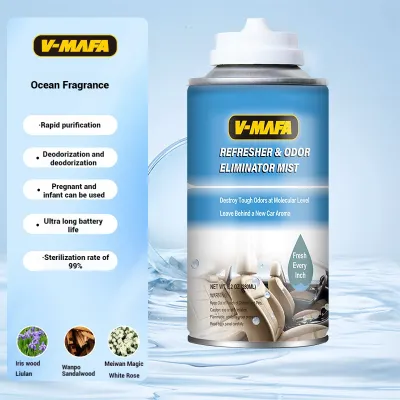
Liquid sprays provide immediate, targeted treatment for sudden odors. High-quality odor-eliminating sprays contain active enzymatic or oxidizing agents that bind directly to odor molecules in the air or on fabric surfaces, neutralizing them on contact. When using any spray on interior surfaces, always consult the product label for authorized uses. A generic material name does not guarantee safety for delicate cabin materials; always test the spray on an inconspicuous area first to ensure it does not stain or degrade your paint, leather, plastics, or electronic sensors.
Storage is a critical safety consideration for any spray, particularly aerosol cans. Aerosol containers are pressurized and must never be stored inside a vehicle parked in the sun, as extreme heat can cause the internal pressure to rise beyond safe limits, leading to a risk of rupture or explosion. Always check the manufacturer’s safety warnings regarding maximum storage temperatures and keep these products in a cool, shaded environment outside the vehicle when not in use.
Choosing the Right Product for Your Cabin Environment
Selecting the most effective car odor removal strategy requires matching the product to your specific cabin conditions and the nature of the smell. Different odors stem from different chemical compounds, meaning a one-size-fits-all approach rarely succeeds. For instance, organic odors like spilled food, milk, or pet messes are best treated with enzymatic cleaners that actively digest the organic proteins. Musty smells originating from the air conditioning system or damp carpets are often caused by mold and mildew, which require targeted anti-microbial or oxidizing treatments rather than simple passive adsorption.
Your typical parking conditions should also dictate your choice of product. If you regularly park your vehicle in open-air car parks under direct sunlight, heat-stable formats like activated charcoal bags are highly recommended. They will not degrade, melt, or release overwhelming fumes under thermal stress. Conversely, if you primarily park in shaded or basement car parks, you may have more flexibility to use vent clips or specialized neutralizers, provided you monitor their evaporation rates and ensure they are securely mounted.
Before purchasing any odor-control product, establish a clear decision checklist. First, verify the product’s intended use case on the packaging to ensure it matches your specific odor type. Second, check the manufacturer’s safety warnings, particularly regarding temperature limits and surface compatibility. Third, inspect the mounting or placement instructions to ensure the product can be safely secured without interfering with your vehicle’s controls, airbags, or passenger space.
Maintenance and Source Elimination Before Using Fresheners
It is important to recognize that no air freshener or neutralizer can permanently resolve a cabin odor if the physical source of the smell remains in the vehicle. Attempting to eliminate odors without thorough cleaning is a temporary fix that will ultimately fail as the source continues to decay or off-gas. The first step in any successful car odor removal process is a comprehensive cabin cleaning. Begin by removing all trash, discarded food packaging, and damp items from the interior. Vacuum the carpets, floor mats, and upholstery thoroughly to remove loose dirt, crumbs, and pet hair that can harbor bacteria.
Wipe down all hard surfaces, including the dashboard, door panels, and center console, using a mild cleaner authorized for your specific interior materials. Pay close attention to cup holders and crevices where spilled liquids can accumulate and ferment. Additionally, the vehicle’s cabin air filter plays a vital role in maintaining air quality by trapping dust, pollen, and airborne particulates before they enter the ventilation system. Over time, this filter can become clogged and develop a musty smell of its own. Consult your vehicle manual to locate the cabin air filter and check the recommended replacement intervals, as installing a fresh filter can dramatically improve cabin air quality.
While routine maintenance can resolve most common odors, some situations require professional intervention. If you experience a persistent, deep-seated musty smell that worsens when the air conditioning is turned on, it may indicate mold growth deep within the AC evaporator core. Similarly, strong chemical smells, fuel odors, or persistent dampness under the carpets from an unresolved water leak should not be ignored. In these cases, stop DIY efforts and consult a qualified professional detailer or mechanic to diagnose and resolve the underlying issue safely, ensuring your vehicle remains clean, safe, and pleasant to drive.
Frequently Asked Questions (FAQ)
Can I leave gel air fresheners in my car parked under the sun?
Leaving gel air fresheners in a car parked under direct sunlight is not recommended. The extreme heat inside a closed cabin accelerates the evaporation of the gel’s water or solvent base, causing the product to dry out and lose its effectiveness very quickly. More importantly, high temperatures can cause some gel formulations to melt or liquefy, creating a high risk of spills that can permanently stain or damage your dashboard, plastics, or leather upholstery. If you must park in the sun, it is safer to use heat-stable alternatives like activated charcoal bags, which do not melt or release concentrated chemical vapors under thermal stress.
How often should I replace or reactivate charcoal odor absorbers?
Activated charcoal bags should typically be reactivated once a month to maintain their odor-trapping efficiency. You can do this by placing the bag in direct sunlight for two to three hours, which helps release the trapped moisture and volatile compounds from the charcoal’s pores. While reactivation can extend the life of a charcoal bag for up to one to two years, you should replace it entirely if it no longer seems to reduce odors even after being exposed to sunlight, or if the outer fabric bag becomes torn, heavily soiled, or physically damaged. Always refer to the specific manufacturer’s instructions on the packaging for the recommended lifespan of your product.
Community discussion
Share your experience or ask a question. Comments are reviewed before publication.