
Protecting your vehicle while it is parked requires understanding the distinct capabilities of a standard car dashcam with parking mode and a dedicated multi-camera car security system. For most daily commuters parking in well-lit multi-storey carparks or secure office lots, a high-quality car dashcam equipped with a reliable parking mode provides sufficient coverage by capturing front and rear incidents. However, if you regularly park in high-risk, unmonitored open-air lots, or require complete 360-degree surveillance to deter vandalism, a dedicated car security camera system offers a more comprehensive shield. The right choice depends on your parking environment, how often you drive, and your vehicle’s electrical capacity.
While both systems aim to secure your vehicle when you are away, they go about it in fundamentally different ways. A standard dashcam is primarily an driving-incident recorder that adapts to parking duty, whereas a dedicated security system is a stationary surveillance network built specifically for long-term monitoring. Choosing between them involves balancing your need for side-impact coverage, the complexity of the installation, and the electrical load your vehicle can safely handle.
Core Differences in Parking Surveillance
The fundamental difference between a standard car dashcam and a dedicated car security system lies in their primary design purpose and coverage area. A standard car dashcam is engineered to record high-resolution video while the vehicle is in motion, focusing on the road ahead and directly behind. When switched to parking mode, it continues to monitor these same angles. This setup leaves significant blind spots along the sides of the vehicle, making it difficult to capture side-door dings, keying, or side-impact scrapes.
Products mentioned in this guide
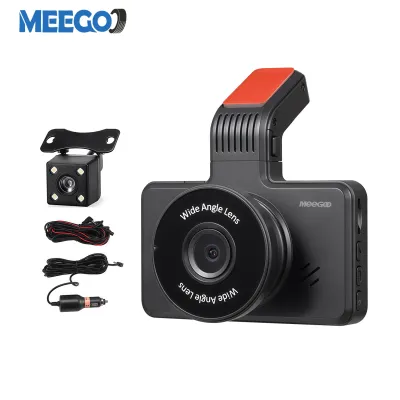
![[2026 NEW] 70mai A810 Lite Dashcam 4K Resolution + HDR | 4G Connectivity | Supercapacitor | Built-in GPS | Dual Recording](https://img.lazcdn.com/g/p/aebc7e2d8ca43161b8425a21aa213024.jpg_400x400q80.jpg_.webp)
5 Lazada user ratings
🔧Ease of Installation:I had to employ the services of 70mai so it's not the easiest.
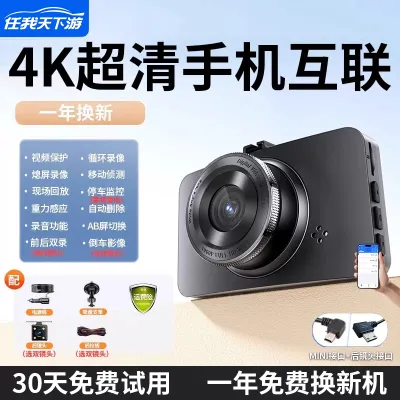
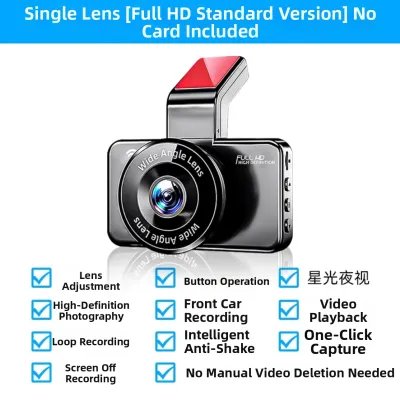
4 Lazada user ratings
The product has a unique character, and the customer support is truly excellent with very quick responses. The overall quality definitely sh…Read full reviewShow less
The product has a unique character, and the customer support is truly excellent with very quick responses. The overall quality definitely shines through.
item received in good condition and securely packaged 🌙Night Vision:very good 📺Video Quality:not bad for price offer 🔧Ease of Installation:v…Read full reviewShow less
item received in good condition and securely packaged 🌙Night Vision:very good 📺Video Quality:not bad for price offer 🔧Ease of Installation:very easy
The quality is great, and the overall product is nice. It was easy to install, and this is my second time buying it.
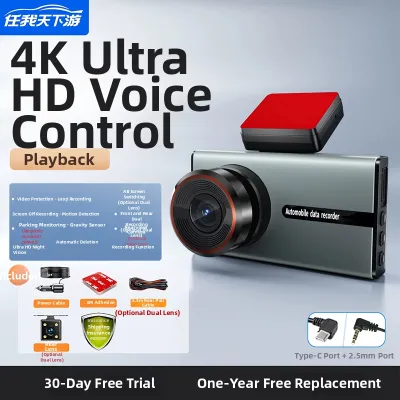
22 Lazada user ratings
delivery was very fast, within 3 days from order However item had multiple problems. 1. WiFi could not be connected, tried more than 5 times…Read full reviewShow less
delivery was very fast, within 3 days from order However item had multiple problems. 1. WiFi could not be connected, tried more than 5 times repeat, reset, different device etc. finally had to go down to sellers warehouse to exchange. needed to test and only 2nd exchanged unit worked. 2. mount screw was bent and could not secure the mounting hinge. only discovered after got working WiFi replacement unit. good price and features but defective rate quite high
Image quality is good, and function/control is easy to manage. No user manual, but can be figured out with time. Uses USB-C to deliver power…Read full reviewShow less
Image quality is good, and function/control is easy to manage. No user manual, but can be figured out with time. Uses USB-C to deliver power.
🔧Ease of Installation: ok Please note that the max SD card support is only 32GB, a bit small for a 3 camera car cam
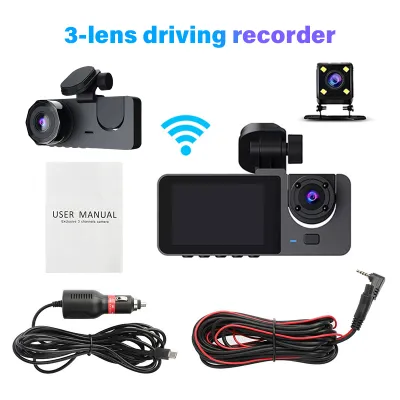
Triple lens full coverage, Three-angle incident proof,
🔧Ease of Installation:easy to install
Prices are valid at publication and may change. Please refer to the product page for the latest price.
Dedicated car security systems are designed specifically for stationary surveillance. These systems often utilize multiple cameras—sometimes four or more—strategically positioned around the vehicle to provide a complete 360-degree view. Some configurations include cabin-inclusive setups that monitor the interior, which can be highly beneficial for ride-share drivers or to capture forced entry through the side windows. This comprehensive coverage ensures that no matter where an incident occurs, the camera is likely to record the perpetrator.
Video resolution and night vision capabilities also differ based on these design focuses. Dashcams prioritize high frame rates and sharp resolutions, such as 2K or 4K, to read license plates on fast-moving vehicles. Dedicated security cameras often prioritize low-light sensitivity and wide dynamic range over extreme resolutions. They are optimized to capture clear facial features and ambient details in dark parking lots, using advanced image sensors that can pull usable footage out of near-total darkness without overexposing bright spots like streetlights.
Power and Installation Requirements
Powering surveillance equipment while the engine is off is the most critical challenge of parking protection. A standard car dashcam typically relies on one of three power sources for parking mode: a hardwiring kit connected directly to the vehicle’s fuse box, an OBD-II power cable, or a dedicated external battery pack. The hardwiring kit and OBD-II cable draw power directly from the vehicle’s main starter battery, which can lead to premature battery wear if the vehicle is left parked for extended periods.

For drivers in tropical climates like Singapore, where high cabin temperatures accelerate battery degradation, a dedicated external lithium-iron-phosphate (LiFePO4) battery pack is highly recommended. These battery packs charge quickly while you drive and power the dashcam independently when the engine is off, completely isolating your vehicle’s starter battery from any constant electrical draw. This setup prevents the risk of returning to a dead battery after a long weekend.
Dedicated multi-camera security systems demand significantly more power because they run multiple sensors, processors, and sometimes cellular modems simultaneously. This high power demand makes them unsuitable for direct connection to a standard vehicle battery without a robust power management system. They almost always require a dedicated auxiliary battery system to ensure continuous operation without draining the vehicle’s primary electrical system.
Before adding any constant-draw electrical accessory, it is essential to check your vehicle’s alternator capacity and overall battery health. Modern vehicles with complex electrical architectures, such as mild hybrids or cars equipped with start-stop technology, have strict battery management systems. Adding aftermarket wiring can trigger error codes or void manufacturer warranties if not done correctly. Always consult your vehicle’s manual and consider professional installation to ensure safety and compatibility.
Trigger Mechanisms and Evidence Capture
How a system detects threats determines how effectively it saves storage space and battery power. Most car dashcams with parking mode use a combination of impact detection and motion detection. Impact detection relies on an internal G-sensor (accelerometer) that measures physical forces. If another vehicle bumps into your car, the G-sensor detects the vibration and triggers the camera to save a locked recording that will not be overwritten by loop recording.
Motion detection analyzes the camera’s visual feed for changes in pixels, such as a person walking past the windshield. While effective, visual motion detection can be highly inefficient in busy areas, as passing cars, swaying trees, or heavy rain can trigger constant recording, quickly filling up the memory card and draining the battery. To solve this, some premium systems use radar or microwave sensors, which emit high-frequency radio waves to detect actual physical objects approaching the vehicle, waking the camera up only when a real threat is near.
Pre-event buffering is a crucial feature to look for in any parking surveillance system. Without buffering, a camera only starts recording after a trigger occurs, which means you might only capture the back of a car driving away or miss the culprit entirely. Buffered parking mode continuously saves a temporary video loop in the system’s temporary memory. When an impact or motion is detected, the system permanently saves the footage starting 10 to 15 seconds before the event, capturing the entire sequence of the incident.
Storage management is equally vital for unattended operation. Both dashcams and dedicated security systems use loop recording, which automatically overwrites the oldest unprotected files when the storage card is full. However, because dedicated security systems record multiple video channels simultaneously, they require high-endurance, high-capacity memory cards or solid-state drives. Ensuring your storage media is rated for continuous write cycles is essential to prevent file corruption and data loss.
Decision Framework: Which System Fits Your Needs?
Choosing the right system comes down to evaluating your daily routine, parking environments, and budget. There is no single option that fits every driver, but assessing your specific circumstances will point you toward the most practical solution.
Choose a car dashcam with parking mode if:
- You primarily park in secure, well-lit residential multi-storey carparks or monitored office basements.
- Your main concern is capturing front or rear collision evidence during your daily commute.
- You prefer a simpler, less invasive installation process that can be easily reverted.
- Your budget for parking protection is moderate, with quality dual-channel setups and hardwiring kits generally ranging from S$200 to S$600.
Choose a dedicated car security camera system if:
- You regularly park in high-risk, unmonitored, or poorly lit open-air lots where vandalism or theft is a concern.
- You require complete 360-degree coverage to protect against side-door dings, keying, or side-impact scrapes.
- You want active deterrence features, such as flashing warning lights or instant mobile alerts, to stop vandals before they act.
- You are prepared to invest in a professional installation and a dedicated auxiliary battery system to support the high power demands.
Regardless of which system you choose, always verify your vehicle’s owner manual regarding aftermarket electrical modifications. Some modern vehicles have highly sensitive electrical systems that can detect minor voltage drops, leading to warning lights on your dashboard. Ensuring your installation complies with your vehicle’s specifications is the best way to guarantee reliable parking protection without compromising your car’s electrical integrity.
Frequently Asked Questions (FAQ)
Will a parking mode dashcam drain my car battery?
A parking mode dashcam can drain your car battery if it is hardwired directly without a low-voltage cutoff device. Most modern hardwiring kits include a built-in voltage regulator that automatically cuts power to the dashcam if the vehicle’s battery voltage drops below a safe threshold (typically 11.8V to 12.4V), ensuring you always have enough power to start the engine. However, relying on this cutoff means your parking protection will stop once the threshold is reached. To achieve extended parking coverage without risking battery drain, using a dedicated external LiFePO4 battery pack is the safest and most reliable solution.
Do I need professional installation for a dedicated car security camera?
Yes, professional installation is highly recommended for dedicated car security camera systems. These systems involve routing multiple video cables through the vehicle’s pillars, door sills, and headliners to connect the various cameras. Improper routing can block or interfere with the deployment of side-curtain airbags, creating a severe safety hazard. Furthermore, integrating these systems with constant power sources and auxiliary batteries requires a precise understanding of your vehicle’s electrical schematics. If you encounter conflicting wiring diagrams or feel unsure about accessing your vehicle’s fuse box, always stop and consult a qualified automotive electrician.
Community discussion
Share your experience or ask a question. Comments are reviewed before publication.