
Car cup holders that double as phone mounts are highly practical, space-saving accessories designed to secure your smartphone directly within an existing console cup holder while minimizing dashboard clutter. By utilizing the pre-existing circular compartments in your vehicle’s center console, these dual-purpose mounts eliminate the need for multiple single-purpose accessories, keeping your windshield and dashboard completely clear of obstructions. They provide a stable, highly accessible mounting point that keeps your device within easy reach for GPS navigation, hands-free calls, and music control without blocking your forward view of the road.
Modern center consoles are increasingly crowded with electronic parking brake switches, rotary infotainment controllers, and storage compartments, leaving very little room for traditional dashboard or windshield mounts. In right-hand drive (RHD) vehicles, such as those driven in Singapore, the center console is positioned to the driver’s left, creating unique physical constraints. An accessory placed in this area must feature a highly optimized footprint to prevent your left hand or forearm from accidentally striking the phone or the mount arm while operating the gear selector or handbrake. Utilizing a cup holder mount consolidates these accessories into a single, compact footprint, preserving the clean lines of your cabin and keeping essential driving controls entirely unobstructed.
Choosing a 2-in-1 accessory also addresses several common pain points associated with alternative mounting solutions, such as suction cups or air vent clips. Suction cups can leave unsightly rings on your windshield, lose adhesion under intense tropical heat, or block a portion of your forward line of sight. Air vent clips, on the other hand, can restrict crucial air conditioning airflow—a significant drawback in warm climates—and risk cracking or warping delicate plastic vent slats over time. A console-based cup holder mount bypasses these risks entirely, securing your device lower in the cabin where it is shielded from direct sunlight and kept cool by the vehicle’s climate control system.
Products mentioned in this guide
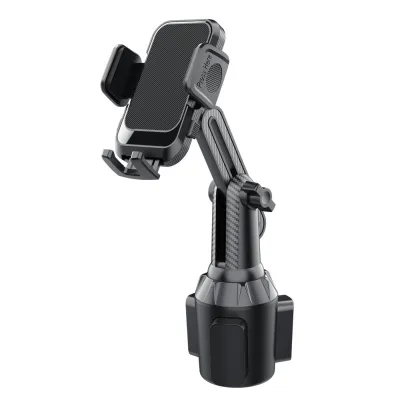
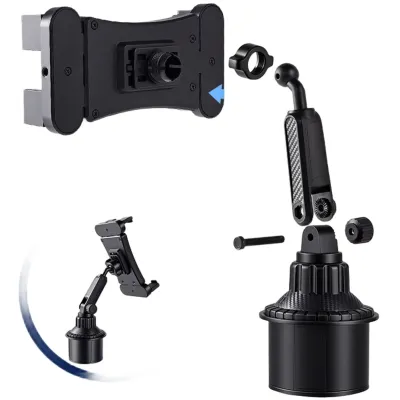
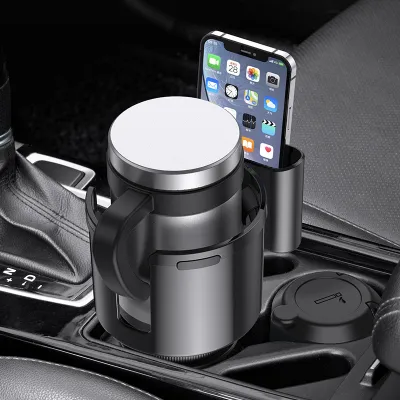
Prices are valid at publication and may change. Please refer to the product page for the latest price.
Furthermore, these mounts help keep your cabin organized by preventing loose items, such as charging cables and smartphones, from sliding around the console or falling into the footwells during sudden stops. Many models feature integrated cable management clips and secondary storage compartments, allowing you to route your charging cables neatly from the console’s USB ports to your phone. This consolidated design ensures that your device remains stable, secure, and fully visible for navigation, enhancing both driving comfort and overall road safety.
Key Features to Evaluate in a 2-in-1 Console Mount
Selecting the right cup holder phone mount requires looking beyond basic aesthetics to evaluate how the unit interacts with your vehicle’s interior geometry and your specific smartphone. Because center console designs and cup holder dimensions vary significantly between car manufacturers and models, verifying compatibility and key specifications before purchasing is essential for ensuring a stable and safe installation.
Base Fit and Stability
The foundation of any cup holder mount is its base, which must fit snugly within your console’s existing beverage compartment to prevent tipping or wobbling. Before purchasing, use a standard ruler or caliper to measure the internal diameter and depth of your car’s cup holder. Standard circular cup holders typically range from 65 mm to 100 mm in diameter, but some vehicles feature tapered, shallow, or oversized compartments that require specific base designs.
Fixed-diameter bases rely on simple friction, foam sleeves, or rubber fins to stay in place, which can wear down over time or fail to provide a tight fit in slightly larger compartments. In contrast, twist-to-expand bases feature an internal screw mechanism that drives segmented outer wedges or stabilizers outward when you rotate the top collar of the base. This expanding mechanism allows you to customize the base’s diameter to match your cup holder precisely, creating a rock-solid, mechanical lock that resists movement.
To prevent damage to your vehicle’s interior, look for expandable bases equipped with thick silicone or soft rubber pads on the outer wedges. These pads provide a high-friction grip against the plastic walls of the cup holder, preventing the mount from twisting or slipping when you take sharp turns or drive over speed bumps. Additionally, the soft padding dampens high-frequency road vibrations and prevents the plastic components of the mount from scratching or scuffing your console’s interior surfaces.
Phone Mounting Mechanism
The mechanism that secures your phone to the mount determines how easy it is to dock and undock your device, as well as how securely the phone is held during transit. Mechanical clamps use spring-loaded or ratcheting side arms to grip the phone tightly along its edges. These clamps offer excellent physical security and can accommodate a wide range of phone sizes and heavy protective cases, though they typically require you to use both hands to press the release button and remove the device.
Gravity-fed mounts offer a highly convenient, one-handed docking experience by using the physical weight of your phone to pull the side clamping arms inward. When you slide your phone into the cradle, the bottom foot moves downward, automatically locking the side grips around your device. While extremely user-friendly, gravity mounts generally require your phone to remain in a vertical, portrait orientation to maintain their grip, making them less suitable if you prefer a horizontal, landscape layout for GPS navigation.
Magnetic mounts provide a sleek, low-profile aesthetic and allow you to attach or detach your phone instantly with a single hand. These mounts are highly compatible with magnetic charging systems like MagSafe, but they may require you to stick a metal plate to the back of non-compatible phones or cases. If you choose a magnetic mount, ensure the magnets are strong enough to hold your phone’s weight over rough road surfaces, and verify that the placement does not block your phone’s internal wireless charging coils.
Arm Adjustability
The arm connecting the expandable base to the phone cradle determines the height and viewing angle of your device, directly impacting your comfort and safety. An adjustable arm allows you to position the screen within your natural line of sight, reducing the need to look down away from the road or strain your neck while following navigation prompts. Depending on your dashboard layout, you can choose between flexible goosenecks, rigid pillars, or multi-jointed articulated arms.
Flexible goosenecks offer infinite adjustment possibilities, allowing you to bend and curve the arm around physical obstacles like gear shifters, climate control knobs, or armrests. However, because goosenecks rely on a flexible metal core, longer arms can act as a cantilever, amplifying road vibrations and causing the phone to shake at highway speeds. Articulated arms with mechanical locking joints provide superior stability and can be locked firmly into a fixed position, though adjusting them requires loosening and tightening individual knobs.
Regardless of the design, the arm should feature a 360-degree rotating ball joint at the back of the phone cradle. This joint allows you to switch effortlessly between portrait and landscape modes, depending on the requirements of your navigation software or personal preference. Ensure the locking collar on the ball joint is robust and made of high-quality materials to prevent the phone from sagging or tilting downward under its own weight over time.
Material and Build Quality
The overall durability and performance of a cup holder mount depend heavily on the materials used in its construction. Cheap, thin plastics are highly susceptible to warping, cracking, or becoming brittle when exposed to the intense greenhouse heat that accumulates inside a parked car, especially under direct tropical sunlight. High-density ABS plastic, polycarbonate, and reinforced aluminum alloys are the preferred materials for ensuring long-term structural integrity.
Examine the contact points on the phone cradle to ensure they are lined up with thick, non-slip rubber or silicone padding. This padding protects your smartphone’s chassis from scratches, prevents the device from sliding out of the clamp, and helps absorb vibrations from the road. A well-constructed mount with high-quality dampening materials will significantly reduce annoying rattling noises, ensuring a quiet and distraction-free cabin environment.
Center Console Mount Designs: Which Type Fits Your Car?
To choose the most effective 2-in-1 mount for your vehicle, you must understand the different design configurations available on the market. Each design offers a distinct balance of adjustability, stability, and space preservation, making certain types better suited for specific console layouts and driving habits.

Gooseneck Arms With Expandable Bases
Gooseneck mounts are the most common and versatile option available, consisting of a flexible, heavy-duty metal core wrapped in a protective silicone or plastic sleeve. The primary advantage of this design is its exceptional adjustability, which allows you to bend, twist, and position your phone precisely where you need it. This flexibility is particularly useful in vehicles where the cup holders are positioned low down in the console or partially recessed under the dashboard overhang.
The expandable base of a gooseneck mount typically features a top-mounted dial or collar. Rotating this collar expands the base’s diameter outward, locking it securely into standard circular cup holders. Because the gooseneck arm can be bent in any direction, you can position your phone to clear physical obstacles like your gear selector, handbrake, or climate control buttons, ensuring that your vital driving controls remain fully accessible.
However, gooseneck mounts have distinct limitations that you must consider before purchasing. Because the flexible arm lacks rigid support, longer necks—especially those exceeding 20 cm in length—are highly susceptible to movement. When driving over uneven asphalt, expansion joints, or speed humps, the arm can wobble or vibrate, making the navigation screen difficult to read and placing stress on your phone’s internal camera stabilization components. To minimize this, choose a model with a thicker, heavy-duty gooseneck core, and keep the arm bent in a compact, low-profile shape close to the base.
Rigid Arms With Side-Mounted Cradles
For drivers who prioritize absolute stability and minimal screen vibration, rigid-arm mounts offer a highly effective alternative. Instead of a flexible gooseneck, these mounts utilize a solid, non-flexible plastic or aluminum pillar to support the phone cradle. The height of the pillar is typically fixed or adjustable via a telescoping mechanism, and angular adjustments are handled by a heavy-duty ball-and-socket joint located directly behind the phone clamp.
Because the main support pillar is completely rigid, these mounts do not suffer from the leverage-induced wobbling associated with gooseneck designs. Your phone remains steady and legible even when traveling over rough road textures or taking sharp corners. This high level of stability makes rigid-arm mounts ideal for supporting larger, heavier smartphones or devices equipped with bulky protective cases.
Many rigid-arm designs feature an offset, side-mounted cradle that sits to one side of the main base. This clever layout allows you to insert the mount into one of your console’s cup holders while still leaving enough room to place a beverage cup in the adjacent slot or even within a secondary cup holder built into the mount itself. By keeping the phone closer to the console base, this design maintains a low center of gravity, preventing the entire assembly from tipping over when carrying a full drink. The primary trade-off is limited height adjustability, meaning your phone will sit lower in the cabin, requiring a slightly larger downward glance to view navigation maps.
Clip-On and Edge-Mounted Alternatives
If your vehicle features irregular, oversized, square, or poorly positioned center console compartments, a traditional cup holder insert may not be a viable option. Many modern car models utilize open-concept storage trays with sliding partitions instead of dedicated circular cup holders. In these scenarios, clip-on or edge-mounted alternatives provide a practical solution for securing your phone without sacrificing your limited storage space.
These alternative mounts utilize heavy-duty mechanical clamps or spring-loaded clips to attach directly to the plastic lip, partition wall, or edge of your center console. By mounting to the console’s exterior frame, they preserve your existing cup holders entirely for actual beverages, keeping your drinks completely separated from your electronic devices. This physical separation is a major safety advantage, as it eliminates the risk of a spilled drink coming into contact with your phone’s charging ports or sensitive console electronics.
Before choosing an edge-mounted clamp, you must carefully verify that the clamp’s maximum jaw opening matches the thickness of your console’s plastic trim or leather-wrapped panels. Additionally, ensure the clamp’s jaws are lined with soft, high-friction rubber padding. This padding is critical for preventing the mount from slipping under the weight of your phone and protecting your car’s interior from permanent indentations, scratches, or scuff marks on soft-touch plastics and delicate leather upholstery.
Safety Boundaries and Compatibility Checks for Drivers
While a 2-in-1 cup holder phone mount offers excellent convenience, driving safety and vehicle compatibility must always remain your top priorities. Installing any aftermarket accessory in your vehicle’s cabin introduces potential hazards if it is positioned incorrectly or interferes with the vehicle’s standard safety systems and physical controls.
Airbag Clearance
The most critical safety boundary when installing any interior accessory is ensuring complete clearance from your vehicle’s airbag deployment zones. Airbags deploy with extreme force in milliseconds during a collision, and any object placed in their path can block their deployment or become a dangerous high-velocity projectile inside the cabin. Never position your phone, the mount arm, or any charging cables across or near the deployment paths of the steering wheel airbag, passenger dashboard airbag, knee airbags, or side curtain airbags.
Consult your vehicle’s owner manual to locate the exact positions of all interior airbags before deciding where to route your mount’s arm or place your phone. If your cup holder is located close to a dashboard-mounted airbag or side seat bolster, adjust the mount’s arm to keep the phone well clear of these safety zones. Ensuring an unobstructed path for your vehicle’s passive safety systems is essential for protecting yourself and your passengers in an emergency.
Control Interference
Before driving with a newly installed cup holder mount, you must verify that the accessory does not interfere with your ability to operate the vehicle’s physical controls safely. Sit in the driver’s seat and run through a complete range of motion with your left hand (or right hand, depending on your vehicle’s configuration). Ensure that you can grip and move the gear selector through all gears or modes without your hand, wrist, or forearm striking the phone or the mount’s arm.
Similarly, check that the mount does not obstruct your access to the mechanical handbrake lever or the electronic parking brake switch. You must also maintain a clear, unobstructed line of sight and physical access to secondary controls, such as the hazard light button, climate control dials, windshield defroster switches, and the infotainment system’s primary control knobs. If the mount blocks any of these essential controls, adjust the arm’s angle or relocate the base to a different cup holder slot immediately.
Line of Sight
Achieving the correct height and viewing angle for your mounted phone is vital for maintaining situational awareness on the road. The phone screen should be positioned high enough that you can glance at GPS navigation maps with minimal eye deviation from the road ahead, allowing you to keep your peripheral vision focused on traffic. However, the phone must be kept low enough that it does not block your direct view through the windshield, side windows, or rearview mirrors.
Avoid bending a flexible gooseneck arm so high that the phone extends above the top of the dashboard line, as this can create a blind spot in your forward field of vision. Conversely, positioning the phone too low in the console can force you to look down away from the road for extended periods, significantly increasing your reaction time and the risk of a collision. Experiment with different arm angles and heights while parked to find a balanced position that offers clear legibility without compromising your forward line of sight.
Spill and Electronics Protection
Combining a cup holder and an electronic device holder in close proximity requires extra caution to prevent liquid damage to your phone and your vehicle’s electrical systems. Modern center consoles often house sensitive electronic components, including electronic parking brake switches, drive-mode selectors, USB charging ports, and auxiliary inputs. A spilled beverage can easily seep into these switches, causing immediate electrical short circuits, corrosion, or sticky, malfunctioning physical buttons.
To minimize these risks, check the manufacturer instructions for both the mount and your vehicle’s console care. It is highly recommended to use the cup holder mount primarily for securing your phone, while keeping actual beverages in separate, deeper console bins located away from the device. If you must carry a drink in the same area, always use a sealed, leak-proof travel mug or a bottle with a secure cap rather than an open cup or can. This simple precaution dramatically reduces the risk of accidental spills, protecting your phone’s charging ports and your vehicle’s expensive console electronics from liquid damage.
If you are planning any modifications, disassembly of console panels, or integration with your vehicle’s electrical system to route power lines to your mount, always consult a qualified professional or your vehicle manufacturer before proceeding. Improper disassembly can damage delicate interior clips, scratch trim panels, or interfere with internal wiring harnesses, potentially voiding your vehicle’s warranty or compromising safety systems.
Frequently Asked Questions (FAQ)
Will a cup holder phone mount fit my car's oversized console bin?
Many modern vehicles feature oversized, square, rectangular, or irregular storage compartments instead of standard circular cup holders. To ensure a secure fit, use a standard ruler or caliper to measure the minimum and maximum internal dimensions of your console bin before purchasing an accessory.
If your vehicle has a non-standard compartment, look for specialized cup holder mounts that feature extra-wide expandable bases, modular spacer blocks, or flexible silicone wings. These designs are specifically engineered to adapt to irregular shapes and provide a stable, high-friction grip that prevents the mount from shifting or tipping over while driving.
Are magnetic phone mounts safe for my car's electronic systems?
The neodymium magnets used in high-quality, consumer-grade phone mounts are generally safe for modern smartphones and vehicle infotainment systems. These magnets do not generate a magnetic field strong enough to damage solid-state storage drives, LCD screens, or the vehicle’s internal computer modules.
However, you should always check your specific smartphone manufacturer’s guidelines regarding magnetic accessories. In some cases, external magnets can temporarily interfere with your phone’s internal digital compass, optical image stabilization (OIS) sensors, or wireless charging coils if the magnetic plate is positioned incorrectly on the back of the device.
How do I clean a sticky cup holder mount base?
Over time, exposure to cabin heat, dust, and minor beverage spills can leave a sticky residue on your mount’s expandable base and the interior of your car’s cup holder. To clean these components safely, first remove the mount from your vehicle entirely to prevent any liquids from contacting your console’s electronic switches.
Check the manufacturer’s care instructions for both the accessory and your vehicle’s interior materials before applying any cleaning agents. Use a mild interior cleaner or warm water mixed with a drop of gentle dish soap on a clean, damp microfiber cloth to wipe down the rubber or silicone grip pads and the plastic base.
Avoid using harsh chemical solvents, isopropyl alcohol, or abrasive scrubbing brushes, as these can permanently degrade the rubber grip pads, strip protective coatings, or scratch the vehicle’s plastic console trim. If you are unsure of material compatibility, always perform a small spot test in an inconspicuous area first, and allow all components to dry completely before reinstalling the mount.
Community discussion
Share your experience or ask a question. Comments are reviewed before publication.