
In Singapore’s demanding tropical climate, finding the right car cover is not merely a matter of keeping dust off your vehicle. The combination of intense, year-round solar radiation and sudden, torrential monsoon downpours creates a highly destructive environment for automotive paint, rubber seals, and interior plastics. To provide genuine protection, a car cover must do more than just drape over the vehicle; it requires specific material properties and construction features designed to reflect extreme heat, shed heavy rain, and manage high ambient humidity.
Choosing an inadequate cover can actually cause more harm than leaving the vehicle completely exposed. Cheap, single-layer plastic covers often trap moisture underneath, creating a humid greenhouse effect that accelerates paint oxidation, clear coat clouding, and interior mold growth. To safeguard your investment, you must look for key engineering features: a highly reflective outer layer, multi-layer UV-blocking fabrics, heat-sealed or taped seams, a soft non-abrasive inner lining, and built-in ventilation. Understanding how these features interact with Singapore’s unique weather patterns is the key to selecting a cover that truly protects.
How Singapore's Tropical Climate Tests Car Covers
Singapore’s geographical location near the equator subjects outdoor-parked vehicles to some of the harshest environmental conditions in the world. The primary threat during the day is intense, year-round ultraviolet (UV) radiation. With the UV Index regularly climbing into the “very high” and “extreme” categories, solar energy rapidly breaks down the chemical bonds in unprotected automotive clear coats. This constant exposure causes paint to fade, plastic trim to become brittle, and rubber window seals to dry out, crack, and lose their flexibility. Standard fabrics that lack specialized UV inhibitors will quickly degrade under this relentless exposure, becoming paper-thin and tearing easily within a few months of outdoor use.
Products mentioned in this guide
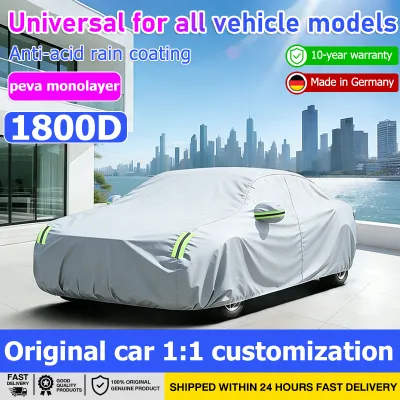
![[24 hours delivery] Upgraded and thickened universal car cover size:M/L/XL/XXL/3XL car cover outdoor protection sunscreen car cover waterproof car shade car cover sun protection car cover outdoor sunscreen](https://img.lazcdn.com/g/p/64e2d9dbc77f3447b24f93e4a3696f41.jpg_400x400q80.jpg_.webp)
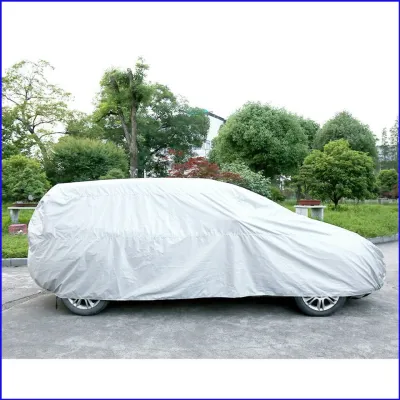
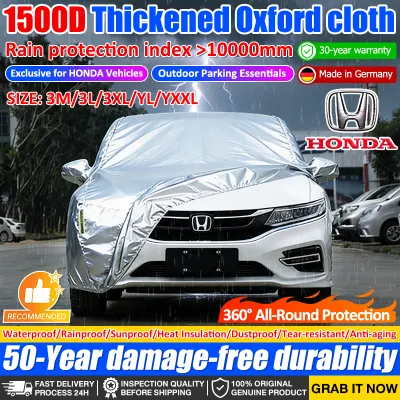
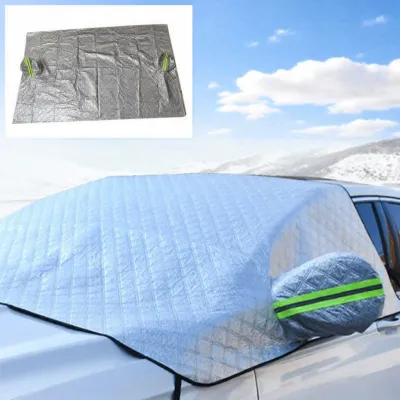
Prices are valid at publication and may change. Please refer to the product page for the latest price.
In addition to the sun, the region is characterized by sudden, heavy monsoon downpours. During monsoon seasons, torrential rain can fall for hours, putting immense physical pressure on a car cover’s fabric and seams. If a cover is poorly constructed, water will eventually saturate the material or seep through stitched seams, pooling on flat surfaces. This standing water can slowly degrade the car’s wax or ceramic coating and seep into tight body panel gaps where it can initiate rust.
The third, and perhaps most insidious, climate challenge in Singapore is the high ambient humidity, which consistently averages over 80%. When a car is parked in an open-air carpark, ground moisture evaporates rapidly from the warm asphalt. If the vehicle is covered with a completely non-breathable material, this evaporating moisture is trapped beneath the cover. The resulting high-humidity microclimate can cause moisture to penetrate clear coat imperfections, leading to a milky, clouded appearance known as paint blistering or osmosis. It also creates an ideal breeding ground for mold inside the cabin. Therefore, any effective car cover must be selected based on its ability to counter these three specific stressors: UV degradation, heavy water ingress, and trapped humidity.
Material and Structure Features for UV and Heat Protection
To shield a vehicle from intense tropical heat and solar radiation, the cover’s outer material must possess high reflectivity. Dark-colored fabrics absorb solar energy, transferring heat directly to the vehicle’s body and raising cabin temperatures. Instead, look for covers featuring light-colored or metallic-finish outer layers, such as aluminum-coated fabrics or silver polyurethane (PU). These reflective surfaces bounce solar radiation away, significantly reducing the thermal load on the metal panels and keeping cabin temperatures manageable. This heat reduction is crucial for preserving delicate dashboard plastics, leather upholstery, and electronic components from heat-induced warping or cracking.

A single layer of fabric is rarely sufficient to handle both heat reflection and structural durability. High-performance outdoor covers utilize a multi-layer construction (typically three to five layers). The outer layer handles solar reflection and water shedding, while the middle layers block UV radiation and incorporate microscopic pores for air circulation, preventing the fabric from becoming brittle over time.
The material that directly contacts your vehicle’s paintwork is just as important. High-quality covers feature a soft, non-abrasive inner lining made of cotton fleece, brushed polyester, or soft non-woven microfiber. Under the intense Singapore sun, the vehicle’s clear coat, protective waxes, and ceramic coatings can soften slightly due to high surface temperatures. If the inner lining of the cover is rough, any slight movement caused by the wind can act like mild sandpaper, leaving micro-scratches and swirl marks. A soft, plush inner lining cushions the paintwork and prevents this friction damage.
When shopping, do not rely on vague marketing claims like “sun-proof” or “heat-resistant.” Instead, verify the manufacturer’s technical specifications. Look for products that explicitly state a UPF (Ultraviolet Protection Factor) rating, ideally UPF 50+, or specify a UV block percentage of 95% or higher. These ratings indicate that the fabric has been laboratory-tested to block a specific, high percentage of harmful UVA and UVB rays, ensuring long-term protection for your vehicle.
Waterproofing vs. Water Resistance for Heavy Monsoon Rain
Understanding the distinction between waterproof and water-resistant materials is critical when selecting a cover to survive Singapore’s heavy monsoon downpours. Fully waterproof materials, such as heavy-duty polyvinyl chloride (PVC) or polyethylene vinyl acetate (PEVA), are completely impervious to liquid water. Rainwater will bead and roll off these materials indefinitely. However, the trade-off is that these materials are entirely non-breathable. They block water from entering, but they also trap any moisture that rises from the ground or remains on the car’s surface, leading to severe paint damage.
Water-resistant materials, such as high-denier polyester or nylon treated with a Durable Water Repellent (DWR) coating, offer a highly practical alternative. These fabrics are woven tightly to shed water, causing rain to bead up and run off. While they can eventually wet out under prolonged, torrential rain, they possess microscopic pores that allow moisture vapor to escape. For most outdoor parking scenarios in Singapore, a high-quality water-resistant cover with excellent breathability is safer for your paintwork than a completely impermeable waterproof cover that traps humidity.
A cover is only as protective as its seams. Standard stitched seams create tiny needle holes through which water can wick during a heavy downpour. To prevent this, look for covers featuring heat-sealed (welded) seams or double-stitched seams reinforced with waterproof seam-sealing tape on the underside, keeping the vehicle dry even during intense tropical storms.
Water pooling on flat surfaces like the roof or hood can stretch the fabric and degrade protective coatings. To mitigate this, choose a contoured cover that encourages water to flow downward. For extended parking, place a soft, water-resistant support block under the center of the cover to create a gentle slope. Additionally, ensure any access zippers are shielded by heavy-duty storm flaps to prevent wind-driven rain from bypassing the zipper teeth.
Why Breathability is Critical in High Humidity
In a high-humidity environment like Singapore, breathability is perhaps the most critical and frequently overlooked feature of a car cover. When a vehicle is parked over damp ground or concrete after a rainstorm, moisture evaporates upward. If the car is covered with a non-breathable material, this rising water vapor is trapped directly against the vehicle’s body. As the temperature fluctuates between the hot day and cooler night, this trapped vapor condenses back into liquid water, forming a constant layer of moisture on the paint. This continuous exposure can cause water spots, accelerate clear coat degradation, and encourage rust in hidden crevices.
To combat this moisture trap, high-quality covers utilize breathable fabrics or physical ventilation systems. Breathable fabrics contain microscopic pores that block liquid water while allowing vapor to escape. Alternatively, heavy-duty covers incorporate physical vent flaps near the side mirrors or lower panels, which must face downward to prevent wind-driven rain from blowing inside while promoting cross-ventilation.
A highly effective compromise is a hybrid cover, which combines a highly waterproof, UV-reflective top panel to shield the roof, hood, and trunk with highly breathable side panels. This configuration provides maximum protection where weather hits hardest while facilitating rapid air exchange from the sides to prevent the greenhouse effect.
However, regardless of how breathable your car cover is, you must follow one absolute usage rule: never apply a car cover to a wet, damp, or dirty vehicle. If you cover a car that has just been driven through the rain or has morning dew on it, you will trap a significant volume of liquid water against the paint. In Singapore’s high relative humidity, even a highly breathable cover cannot evaporate this moisture quickly enough to prevent damage. Always dry the vehicle’s surface completely with a clean microfiber towel, and ensure the body is free of abrasive dirt and dust, before fitting the cover.
Secure Fit and Wind Resistance for Outdoor Parking
A car cover can only protect your vehicle if it stays securely in place. In Singapore’s open-air carparks, sudden wind squalls—such as those associated with Sumatra squalls—can easily dislodge a loose cover. When a cover fits poorly, the excess fabric acts like a sail, catching the wind and flapping violently against the vehicle’s body. This constant movement, combined with any fine dust or grit trapped underneath, acts like sandpaper on your clear coat, causing severe paint marring, scratches, and swirl marks. A custom-fit cover tailored to your vehicle’s exact make, model, and year is highly recommended because it hugs the contours tightly, minimizing wind resistance and fabric movement. Always check the cover’s product documentation and your vehicle manufacturer’s guidelines to verify compatibility with specific dimensions and external components before purchasing.
If a custom-fit cover is outside your budget, a semi-custom cover designed for your specific body style (such as sedan or SUV) provides a reasonable alternative, provided it includes robust tie-downs. Look for covers with elasticized front and rear hems, adjustable under-carriage straps, and reinforced central grommets that allow the use of a cable lock to prevent wind displacement and theft.
The cover must also accommodate physical projections. Integrated side mirror pockets are crucial to anchor the cover and prevent stretching or tearing. If your vehicle has a fixed external antenna, look for a cover with pre-installed antenna patches or grommet kits that allow the antenna to pass through without compromising waterproof integrity.
Routine Care to Preserve Protective Coatings
To maintain the effectiveness of UV-reflective and waterproof coatings, regular cleaning is essential. Environmental contaminants like bird droppings and tree sap can chemically degrade these treatments. Clean the cover periodically by hosing it down with clean water while fitted on the vehicle, or hand wash with a mild, pH-neutral soap and soft sponge. Never machine wash or use harsh household detergents, bleach, or fabric softeners, as these will strip away protective coatings. Always check the applied product’s label and the treated item’s manufacturer instructions. If instructions conflict, the item is unidentified, or the use is not covered, stop and consult the manufacturer or a qualified professional.
After cleaning or heavy rain, dry the cover completely before folding and storing it. Storing a damp cover leads to mold and mildew, which can permanently damage the fabric and transfer to your vehicle’s paint. Always hang the cover in a shaded, well-ventilated area to air-dry. Avoid drying it in direct, intense sunlight for extended periods when not on the car, as excessive heat can cause synthetic materials to shrink.
Regularly inspect the cover for signs of wear, such as thinning fabric, peeling inner linings, or lifting seam tape. Once these protective layers fail, the cover has reached the end of its useful life and should be replaced to ensure your vehicle remains fully protected.
Frequently Asked Questions (FAQ)
Is it safe to put a car cover on a wet car?
No, it is not safe to put a car cover on a wet car. Covering a wet vehicle traps liquid water directly against the paintwork and glass. In Singapore’s high relative humidity and warm temperatures, this trapped moisture cannot evaporate efficiently, even if you are using a highly breathable cover. The prolonged contact with water can cause moisture to penetrate the clear coat, leading to permanent clouding, paint blistering, or water spotting. Additionally, trapped moisture can seep into window seals and door frames, creating an ideal environment for mold and mildew to grow inside the cabin. Always dry your vehicle completely with a clean microfiber towel before applying the cover.
Do I need a soft inner lining for my car cover?
Yes, a soft inner lining is highly recommended for any car cover used outdoors. When a vehicle is parked outside, wind will inevitably cause the cover to shift and rub against the paintwork. If the cover’s inner surface is rough or made of hard, unlined plastic, this constant friction will act like an abrasive, creating micro-scratches, swirl marks, and paint marring. This risk is amplified if fine dust or grit has settled on the car’s surface. A soft inner lining, such as cotton fleece, brushed polyester, or soft non-woven microfiber, cushions the paint and minimizes friction, protecting your clear coat from abrasion while the cover is in motion.
Community discussion
Share your experience or ask a question. Comments are reviewed before publication.