
Maintaining your vehicle’s paintwork is essential for preserving its appearance and resale value, but choosing the right protective product can be challenging. Traditional paste and liquid waxes have been the standard for decades, offering a deep, warm gloss that car enthusiasts love. However, the rise of synthetic chemistry has introduced car coating sprays, which promise rapid application and modern durability. Understanding the differences in protection, application effort, and long-term value will help you decide which product fits your detailing routine.
Choosing between these two options is not just about the final shine; it involves evaluating how much time you want to spend detailing, the physical effort required, and how well the product stands up to environmental elements. Both options serve as a sacrificial barrier over your clear coat, but they achieve this through very different chemical compositions and application methods.
Understanding Protection Levels and Durability Expectations
Traditional car waxes typically rely on natural ingredients like carnauba wax, which is harvested from Brazilian palm trees and blended with oils and solvents to make it spreadable. When applied to your car, it forms a physical barrier that sits on top of the clear coat, filling in microscopic imperfections to create a deep, reflective shine. However, because natural wax does not chemically bond with the paint, it is highly sensitive to heat, detergents, and environmental contaminants, which can degrade the layer relatively quickly.
Products mentioned in this guide
![[SG Stock]🇺🇸NO.1 Car Coating Spray Nano✅Ceramic Coating Spray Paint / Automotive Care Scratch Remover Repair Polish Wax Waterless Wash Waterproof Hydrophobic Spray汽车抛光镀膜剂](https://img.lazcdn.com/g/p/2bba12901b2bb2d755549c6a6f6bd75f.jpg_400x400q80.jpg_.webp)
![[SG]500ml Car coating Spray Nanometer Ceramic Coating Scratch Repair Oxidation Refresher Car Maintenance Polishing Paint汽车镀膜蜡](https://img.lazcdn.com/g/p/1d25dec4e05e27f2848e49ab3eaf7f35.jpg_400x400q80.jpg_.webp)
![[SG] Car Coating Spray 🚘 Car Nano Coating Spray Car Wash Car Cloth Ceramic Coating Spray Car Wax Spray](https://img.lazcdn.com/g/p/8656a2dcc6e09e873138cdfa16f57dc8.jpg_400x400q80.jpg_.webp)
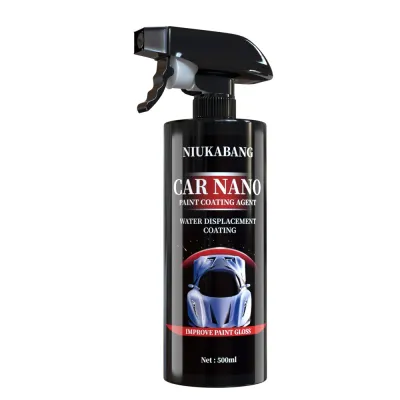
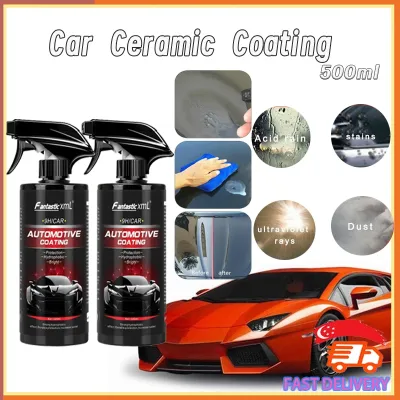
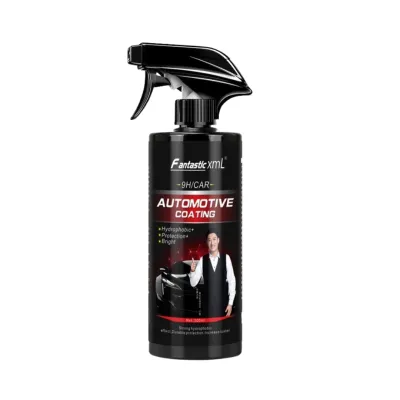
Prices are valid at publication and may change. Please refer to the product page for the latest price.
In contrast, modern car coating sprays utilize synthetic polymers, silicon dioxide (SiO2), or ceramic resins to protect the surface. When sprayed onto the paint, these active ingredients form a chemical bond with the clear coat, creating a microscopic, highly structured protective layer. This synthetic bond is significantly more resilient than natural wax, offering better resistance to chemical cleaners, road grime, and environmental pollutants.
To verify how long a specific product will last, you should always check the manufacturer’s label for stated durability guidelines rather than relying on generic category assumptions. Durability is often expressed in months or a specific number of wash cycles, but these figures are tested under controlled conditions. Real-world longevity will depend heavily on how the vehicle is stored, washed, and driven.
In Singapore, environmental factors play a massive role in how quickly paint protection degrades. The combination of intense tropical ultraviolet (UV) radiation, high humidity, and frequent heavy downpours accelerates the breakdown of both natural and synthetic protective layers. Because of these harsh conditions, regular visual inspections are necessary to ensure your vehicle’s paint remains adequately shielded from the elements.
Comparing Application Effort and Preparation Requirements
Regardless of whether you choose a spray coating or a traditional wax, thorough surface preparation is mandatory to ensure proper bonding. You must begin by washing the vehicle with a dedicated car shampoo to remove loose dirt and road film. Following the wash, using a clay bar or iron decontaminator helps remove embedded contaminants from the clear coat, and the surface must be dried completely, as trapped moisture will prevent both waxes and sprays from adhering correctly.

Applying a traditional paste or liquid wax is a labor-intensive, multi-step process that requires physical stamina. You must apply a thin, even layer using a foam applicator pad, work in small sections, and wait for the product to dry to a hazy, matte finish. Once hazed, you must physically buff the residue off using a clean microfiber towel, which requires significant effort and carries the risk of leaving white, chalky residue on black plastic trim if applied carelessly.
Car coating sprays simplify this process significantly, offering a much faster wipe-on, wipe-off application method. You typically spray a fine mist of the product directly onto a clean paint panel or a microfiber cloth, spread it evenly across the surface, and immediately buff it dry with a second clean microfiber towel. There is no waiting for the product to haze, and because these formulas are clear, they rarely leave unsightly white residue on plastic trim or rubber seals.
However, curing times must be verified on the product labels before exposing the vehicle to moisture. While traditional waxes are usually ready for the road immediately after buffing, many synthetic spray coatings require several hours of dry conditions to cure and bond fully. In Singapore’s unpredictable tropical climate, you must plan your application carefully to ensure the vehicle remains dry during this critical curing window.
Evaluating Cost and Long-Term Value
When evaluating the financial aspect of car care in Singapore, upfront prices can vary based on the brand and formulation. A standard bottle of consumer-grade car coating spray typically costs between S$20 and S$50. In comparison, a tin of high-quality traditional paste wax or a bottle of liquid wax can range from S$25 to S$70, depending on the concentration of natural carnauba and the brand’s reputation.
To find the true long-term value, you should calculate the cost per application rather than just comparing the shelf price. A single bottle of spray coating may provide 10 to 15 full vehicle applications, whereas a single tin of paste wax, when applied thinly, can easily last for dozens of applications. By dividing the product price by the number of applications and factoring in the manufacturer’s stated durability, you can estimate your annual maintenance cost.
It is also important to clarify that consumer-grade DIY spray coatings are a separate category from professional-grade ceramic coatings applied by detailing shops. Professional coatings involve multi-stage paint correction, specialized chemical applications, and infrared curing lamps, costing hundreds or thousands of dollars. These professional services offer multi-year durability and should not be directly compared to the lower cost and shorter lifespan of DIY consumer sprays.
Decision Framework: Which Product Fits Your Car Care Routine?
You should choose a car coating spray if you prioritize fast application, minimal physical effort, and prefer a quick detailing routine. It is the ideal option for car owners who want to protect their vehicle in under an hour and do not mind performing frequent, easy top-ups after every few washes to maintain high levels of hydrophobic protection.
You should choose a traditional wax if you genuinely enjoy the hands-on detailing process and find the physical application and buffing therapeutic. Traditional wax is perfect for those who prefer the warm, deep, organic gloss associated with carnauba blends and do not mind spending several hours working on their vehicle’s finish.
Neither product may fit your needs if your vehicle’s paint requires heavy correction, oxidation removal, or deep scratch repair. If the clear coat is already heavily damaged, applying a wax or spray will only highlight the imperfections; in this scenario, you must perform mechanical polishing or seek professional paint correction before applying any protective layer.
Always verify your paint’s condition before applying any new product, as previous coatings or waxes can interfere with bonding. If you are unsure whether previous products are still present on the surface, use a dedicated wax-stripping shampoo or an isopropyl alcohol panel wipe to clean the clear coat down to a bare surface, ensuring your new protection can bond correctly.
Frequently Asked Questions (FAQ)
Can I apply a car coating spray over traditional wax?
Generally, applying a synthetic car coating spray directly over a traditional natural wax is not recommended because synthetic polymers and SiO2 formulas require a clean, bare paint surface to establish a strong chemical bond. If applied over a wax layer, the spray cannot bond properly and will quickly wash away, reducing its durability. Always check the specific manufacturer instructions regarding layering, as some brands design specific quick-detailer sprays to be compatible with their own waxes.
How do I know when it is time to reapply the protection?
The most reliable way to check if your paint protection has degraded is by performing a water beading and sheeting test. Spray clean water onto the clean paintwork; if the water beads into tight, round droplets or sheets off the panels rapidly, the protective layer is still active. If the water pools flat on the surface, the protection has worn off, and it is time to reapply. Rely on these visual inspections and product label guidelines rather than a strict calendar schedule, especially during seasons with heavy rainfall.

Community discussion
Share your experience or ask a question. Comments are reviewed before publication.