
Quick Answer: Which Car Clip Refresher Formats Survive Tropical Climates?
When choosing a car clip refresher to withstand the intense tropical climate of Singapore, the physical format and material construction of the product dictate how long it will perform. While specific brand performance varies, solid ceramic tablets and enclosed gel formats generally outperform open liquid wicks in high ambient heat.
The true differentiators for longevity in a tropical climate are structural integrity and user control. Look for housings made of UV-stabilized plastics that resist becoming brittle, and prioritize models featuring adjustable physical dials. These mechanisms allow you to regulate airflow and slow down fragrance evaporation when cabin temperatures soar, protecting your investment from premature depletion.
How Heat and Humidity Degrade Car Clip Refreshers
Singapore’s tropical environment presents a unique set of challenges for any interior car accessory, particularly those relying on volatile fragrance compounds. Understanding how these environmental forces interact with your air freshener can help you make more informed purchasing decisions.
Products mentioned in this guide
![[Bundle of 3] Ambi Pur Car Mini Clip Vanilla Bliss Air Freshener 2.2ml](https://img.lazcdn.com/g/p/e831660c67570ec2c3ca92df5f9fdd0b.jpg_400x400q80.jpg_.webp)
![[Bundle of 3] Ambi Pur Car Mini Clip Sky Breeze Car Air Freshener 2.2ml x 2](https://img.lazcdn.com/g/p/2c3e11c463c4bfb4c1cd7682db9a33c8.png_400x400q80.png_.webp)
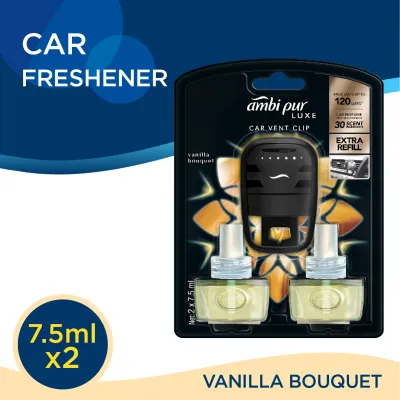
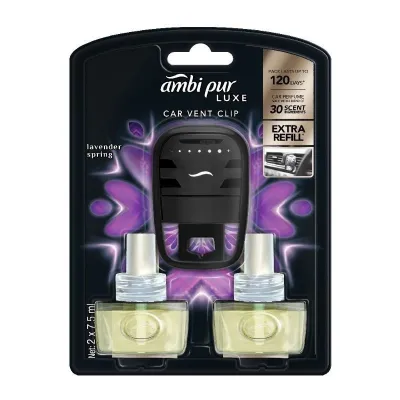

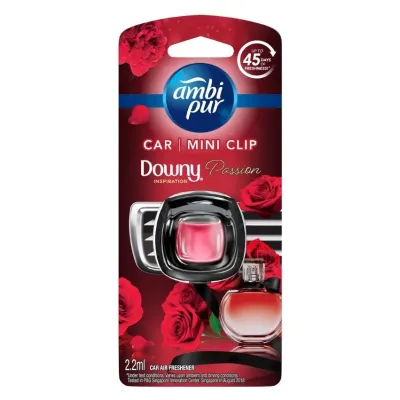
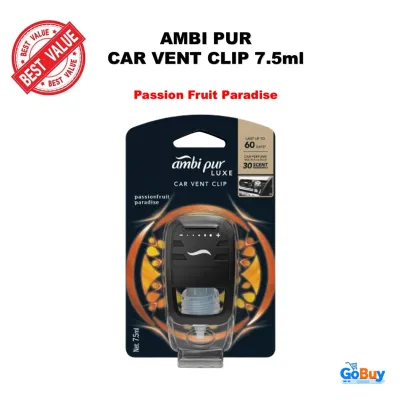
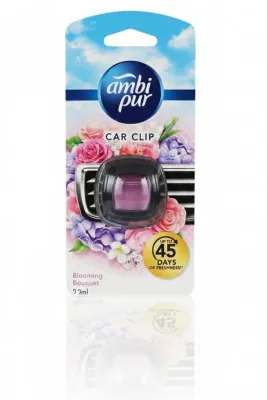
Prices are valid at publication and may change. Please refer to the product page for the latest price.

Extreme Cabin Heat Accelerates Evaporation
When your vehicle is parked outdoors under the direct sun, the greenhouse effect can quickly push cabin temperatures past 60°C. This extreme heat rapidly increases the kinetic energy of fragrance molecules, causing liquid-based systems to evaporate at an unsustainable rate. Instead of a steady release, high heat can cause a sudden, overpowering burst of scent that exhausts the product’s reservoir in a matter of days rather than weeks. Furthermore, intense thermal exposure can break down the delicate chemical bonds of the fragrance oil, altering the scent profile and causing it to smell harsh or synthetic.
High Humidity Dampens Fragrance Dispersion
Singapore’s relative humidity regularly exceeds 80%, saturating the air with water vapor. This heavy moisture content physically interferes with how scent molecules disperse throughout the cabin. Water molecules in the air can trap or weigh down volatile organic compounds, reducing the “throw” or perceived strength of the air freshener. Additionally, damp and warm conditions are highly conducive to microbial growth. If a freshener utilizes natural carrier oils or organic substrates, high humidity can cause these elements to turn sour, moldy, or musty over time.
Intense UV Exposure Weakens Materials
Solar radiation passing through your car’s windshield acts as a constant stressor on both the fragrance and its housing. Ultraviolet (UV) rays degrade the chemical dyes in liquid fresheners, causing them to fade or discolor. More importantly, UV exposure causes photodegradation in cheap, non-stabilized plastics. Over time, the plastic clip holding the freshener to your vent loses its flexibility, becoming highly brittle. This increases the risk of the clip snapping off during adjustment, potentially damaging your air conditioning vent blades.
What to Look for in a Tropical-Ready Clip Refresher
To ensure your air freshener survives the local climate, you should carefully evaluate its physical specifications, design features, and material quality before making a purchase.
Fragrance Format and Containment
To prevent rapid boiling off or leaking when your vehicle is parked in the sun, look for sealed or semi-sealed fragrance formats. Solid ceramic inserts, infused polymer blocks, and membrane-enclosed gels are excellent choices because they physically restrict the rate of evaporation. In contrast, fully exposed liquid wicks rely on continuous capillary action, making them highly vulnerable to rapid depletion in high-heat environments.
Housing Material and Clip Mechanism
The interface between the refresher and your air conditioning vent must withstand constant thermal expansion and contraction. When you drive, the AC blows cold air directly onto the clip, but when parked, the cabin heats up rapidly. Check the product packaging or manufacturer documentation for mentions of high-temperature-rated or UV-stabilized plastics. Always verify compatibility with your vehicle’s specific vent blade design (such as horizontal, vertical, or circular vents) by checking your vehicle’s manual and the product documentation to prevent physical strain on the mounting mechanism. Be sure to check the manufacturer’s stated temperature limits before installation.
Adjustable Scent Dials
A physical dial or sliding vent-cover mechanism is crucial for extending the life of your air freshener in a tropical climate. This feature allows you to manually restrict the airflow passing through the fragrance medium. During the hottest parts of the day or when parking outdoors, you can close the dial completely to halt evaporation. When you return to the vehicle and activate the air conditioning, you can open it slightly to release a controlled, fresh scent.
Comparing Formats: Solid, Gel, and Liquid in High Heat
Different fragrance formats react uniquely to thermal stress and humidity. The table below outlines how the three primary formats compare based on material science principles.
| Format Type | Heat Resistance & Leak Risk | Scent Longevity in Heat | Best Use Case |
|---|---|---|---|
| Solid / Ceramic | High heat resistance; zero risk of leaking or spilling. | Steady, moderate release; does not deplete rapidly. | Vehicles frequently parked outdoors in direct sunlight. |
| Enclosed Gel | Moderate heat resistance; low leak risk if sealed properly. | Moderate longevity; may shrink quickly in extreme heat. | Mixed parking conditions (shaded carparks and outdoor lots). |
| Open Liquid / Wick | Low heat resistance; high risk of leaking or boiling over. | Rapid depletion; scent can become overpowering. | Shaded or indoor parking only; requires upright mounting. |
While solid and gel formats offer superior resistance to Singapore’s climate, you should always verify the maximum operating temperature printed on the product label. Additionally, check your vehicle manufacturer’s interior care instructions before mounting any accessory, as leaked fragrance oils can cause permanent chemical damage to dashboard materials and soft-touch plastics.
Daily Habits to Extend Freshener Lifespan in Hot Weather
A few simple adjustments to your daily routine can dramatically extend the life of your car clip refresher and protect your vehicle’s interior.
Strategic Vent Placement
Avoid clipping your air freshener to vents that receive direct, unfiltered sunlight, such as those closest to the side windows or the top of the dashboard. The greenhouse effect is most intense near the glass, which accelerates both fragrance evaporation and plastic degradation. Instead, choose central or lower vents that remain naturally shaded by the geometry of your dashboard.
Active Vent Management
When parking your vehicle for extended periods, especially in open-air parking lots, make it a habit to close the manual airflow control on the vent holding the refresher. If your clip refresher features an adjustable dial, turn it to the closed position. This simple step traps the fragrance within the housing and prevents the ambient cabin heat from drying out the scent medium.
Utilize Windshield Sunshades
Placing a reflective sunshade across your front windshield when parking outdoors can lower your car’s interior temperature by up to 15°C. By reducing the overall thermal load inside the cabin, you directly protect the clip’s plastic housing from becoming brittle and slow down the evaporation rate of the fragrance, ensuring it lasts much longer.
Frequently Asked Questions (FAQ)
Is it safe to leave a liquid car clip refresher in a parked car under the sun?
Leaving an open liquid car clip refresher in a car parked under direct sunlight is not recommended. Extreme heat causes the liquid fragrance oil to expand, which can lead to boiling over or leaking. Because these oils often contain strong chemical solvents, any spill can permanently dissolve dashboard plastics, peel leather finishes, or damage electronic screens. If you must use a liquid refresher, check the product label for temperature warnings, ensure it is mounted perfectly upright, and consider removing it when parking outdoors for long periods.
Why does my car air freshener smell sour or musty in humid weather?
High relative humidity causes water vapor to settle on the porous elements of your air freshener. If the product uses natural essential oils, organic carrier materials, or wood and cardboard components, this moisture can trigger oxidation or foster the growth of microscopic mold and mildew. This biological activity alters the fragrance’s chemical composition, turning a clean scent sour or musty. To avoid this issue in humid climates, opt for synthetic fragrance formulations or solid, non-porous ceramic and polymer formats.
Community discussion
Share your experience or ask a question. Comments are reviewed before publication.