
Quick Guide to Choosing a Car Blind Spot Mirror
A car blind spot mirror is a small, auxiliary mirror designed to reveal vehicles, cyclists, or obstacles that linger just outside your standard side mirror’s field of view. Navigating busy multi-lane expressways or squeezing into tight parallel parking spaces requires a clear understanding of your surroundings. Adding one of these simple accessories can significantly enhance your spatial awareness on the road.
Choosing the right mirror involves balancing a wider field of view against accurate distance perception. While some designs stretch the reflection to show more lanes, they can make approaching vehicles seem deceptively far away. Your final choice should align with your driving experience, your vehicle’s existing mirror size, and your typical driving environment.
Mirror Surface Types: Convex vs. Flat vs. Aspherical
The optical design of an auxiliary mirror dictates how it bends and reflects light to your eyes. By altering the shape of the glass, manufacturers can either expand your field of view or preserve the true proportions of the traffic behind you. Understanding these three primary categories will help you select the optical profile that matches your comfort level.
Products mentioned in this guide
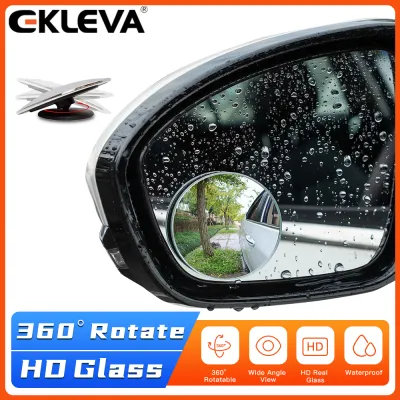
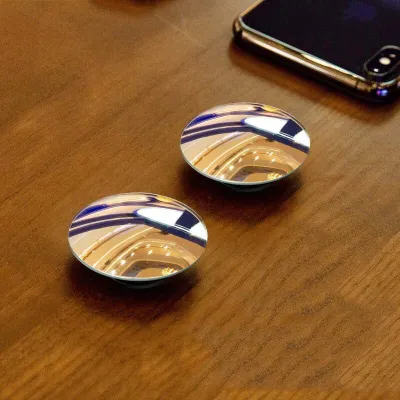
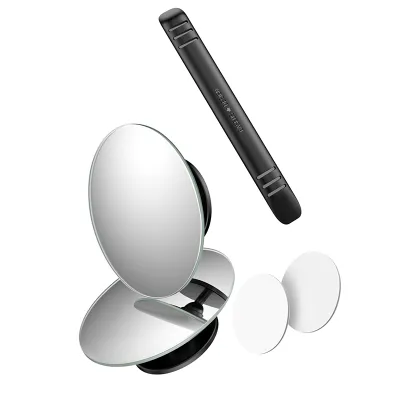
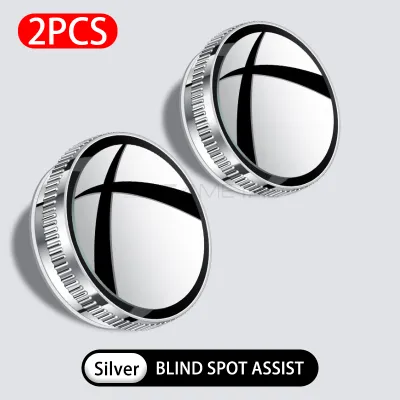
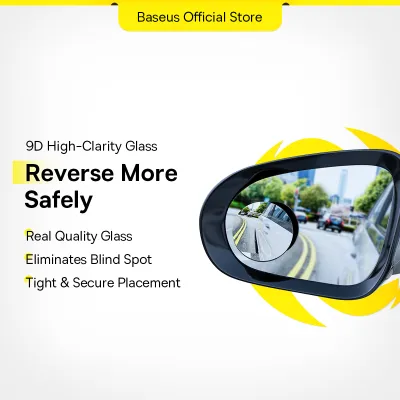
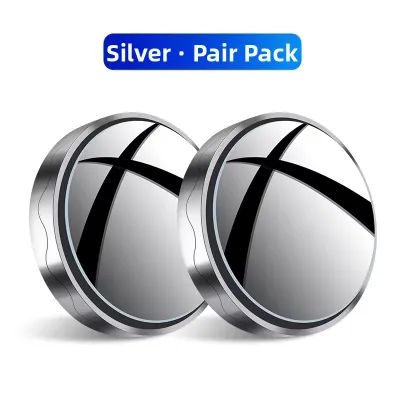
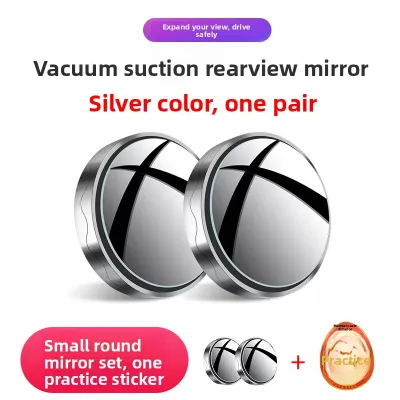
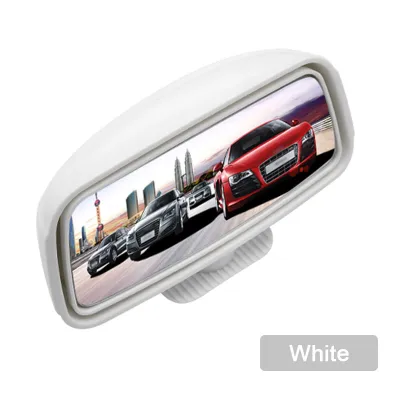
Prices are valid at publication and may change. Please refer to the product page for the latest price.

Convex Mirrors
Convex mirrors feature an outward-curving glass surface that disperses light outward, significantly widening your viewing angle. This curvature allows you to see multiple lanes of traffic at a single glance, making them highly effective for identifying vehicles hiding in your blind spots.
However, this expanded view comes with a distinct optical trade-off. Because the light rays diverge, objects in a convex mirror appear smaller and much further away than they actually are. Drivers must learn to interpret this distorted perspective to avoid cutting off other road users during lane changes.
This type is highly recommended for drivers who frequently navigate wide, multi-lane highways or those who want maximum coverage of adjacent lanes. It is also an excellent choice for newer drivers who require an obvious visual cue that a vehicle is nearby, even if the exact distance is slightly distorted.
Flat Mirrors
Flat mirrors utilize a completely flat glass surface, reflecting light directly back without any curvature or distortion. This design provides a true-to-life representation of both the size of trailing vehicles and their actual distance from your rear bumper.
The primary limitation of a flat auxiliary mirror is its narrow field of view. Because it does not bend light, it cannot show you a wider angle than what your standard side mirror already provides; it simply redirects a small portion of that same perspective.
Drivers typically prefer flat options for highly precise maneuvers, such as aligning wheels with the curb in tight parking spaces. If you are an experienced driver who is already comfortable with your vehicle’s natural blind spots and only need a slight, undistorted angle adjustment, a flat mirror is a reliable tool.
Aspherical Mirrors
Aspherical mirrors offer a hybrid solution by combining two distinct optical zones on a single piece of glass. The inner portion of the mirror is flat to provide accurate distance perception, while the outer edge curves outward like a convex mirror to catch vehicles entering your blind spot.
A subtle vertical line or transition zone on the glass helps drivers distinguish between these two areas. This design allows you to monitor distant traffic in the flat section and seamlessly transition to the curved section as a vehicle moves closer to your side.
While highly versatile, aspherical mirrors require a brief adjustment period. Your eyes must adapt to interpreting two different scales of reflection on the same small surface, making it essential to practice using them in low-stress driving environments first.
Frame Design: Framed vs. Frameless Options
Beyond the glass itself, the physical housing of a car blind spot mirror plays a major role in its durability, ease of installation, and overall look on your vehicle.
Framed Mirrors Framed mirrors feature a protective plastic or metal border surrounding the glass edge. This outer casing shields the mirror from minor impacts, prevents moisture from easily seeping behind the glass, and provides a secure grip during the installation process. However, the frame adds physical bulk, which can take up valuable surface area on smaller side mirrors and slightly reduce your primary viewing space.
Frameless Mirrors Frameless mirrors offer a sleek, modern aesthetic that blends seamlessly with your vehicle’s original equipment. Because there is no outer border, they maximize the usable reflective surface area while minimizing visual clutter. The main trade-off is that the exposed glass edges are more vulnerable to chipping during washing or manual mirror adjustments, requiring careful handling.
To help you decide, consider this quick comparison based on your vehicle’s mirror size and your personal preferences:
- Small Side Mirrors: Frameless options are generally preferred here, as they maximize the limited reflective surface without adding bulky borders.
- Large SUV or Van Mirrors: Framed options work well, as these larger vehicles have plenty of mirror surface area to accommodate a protective border.
- Aesthetic Integration: Frameless mirrors provide a clean, factory-installed look, whereas framed mirrors are highly visible and easier to adjust manually.
Installation Positioning and Safety Checks
Proper placement of your auxiliary mirror is critical to ensuring it serves its purpose without creating new visual hazards.
The most common mounting position is the outer lower corner of your side mirror, which provides the best coverage of adjacent lanes. Alternatively, placing the auxiliary mirror in the inner upper corner can help you keep an eye on the rear wheels and curbs during parking maneuvers.
Before peeling off the adhesive backing, thoroughly clean the host mirror surface with an appropriate glass cleaner to remove road grime, wax, and oil. Any residue left on the glass can weaken the adhesive bond, potentially causing the auxiliary mirror to fall off while driving or during a car wash.
Once installed, perform a comprehensive safety check before hitting the road. Verify that the new mirror does not obstruct your primary rearview sightlines or block any integrated turn signal indicators built into the side mirror housing. Additionally, gently fold your side mirrors inward to ensure the added accessory does not interfere with your vehicle’s automatic or manual folding mechanisms.
Frequently Asked Questions (FAQ)
Do I need blind spot mirrors if my car has electronic blind spot monitoring?
While electronic blind spot monitoring systems are excellent safety aids, they rely on sensors, cameras, and radar that can occasionally experience lag, system errors, or environmental interference from heavy rain. A physical car blind spot mirror provides a continuous, analog visual confirmation that does not depend on electrical power. Before applying a stick-on mirror, consult your vehicle’s owner’s manual to ensure the adhesive backing does not cover or interfere with any active sensor zones embedded in the glass.
Are stick-on blind spot mirrors safe for heated or auto-dimming side mirrors?
You should exercise caution when applying adhesive accessories to heated or auto-dimming side mirrors. Always verify compatibility with your vehicle manufacturer’s specifications before installation. The heat generated by defogging elements can sometimes soften the adhesive, while the chemical compounds in strong adhesives or improper removal techniques risk permanently damaging specialized anti-glare coatings or delicate heating grids.
Community discussion
Share your experience or ask a question. Comments are reviewed before publication.