
Deciding between a budget and a premium KYT helmet comes down to how and where you ride, as the price difference is primarily justified by advanced shell materials, refined aerodynamics, and enhanced rider comfort rather than a baseline difference in safety. For daily commuters navigating Singapore’s urban traffic at moderate speeds, a certified entry-level helmet provides excellent protection and practical value. However, riders who frequently travel on expressways, participate in track days, or spend long hours in the saddle will find that the weight reduction, superior ventilation, and high-speed stability of premium models directly translate to reduced physical fatigue and improved focus.
Core Safety Certifications and Shell Materials
To understand what you are paying for, start by examining the safety certifications and the structural composition of the helmet shell. In Singapore, any motorcycle helmet used on public roads must comply with local safety standards, specifically the SS 9:2014 certification. When shopping for a KYT helmet, look for the blue PSB test sticker affixed to the back of the shell or check the manufacturer documentation to ensure compliance. Beyond local requirements, premium helmets often carry international certifications such as ECE 22.06 (the European standard) or even FIM homologation, which is required for professional racing. These standards subject the helmet to rigorous impact, penetration, and rotational force testing, providing a clear benchmark of structural integrity.
The material of the outer shell is one of the most significant cost drivers in helmet manufacturing. Entry-level KYT helmets typically utilize injected thermoplastic or polycarbonate resins. While these materials are highly impact-resistant and cost-effective to produce, they require a thicker shell to achieve the necessary strength, which increases the overall weight of the helmet. In contrast, premium models feature composite fiber shells, often blending fiberglass, carbon fiber, and aramid materials. These advanced composites offer exceptional tensile strength and energy absorption while remaining significantly lighter than thermoplastic alternatives.
Products mentioned in this guide
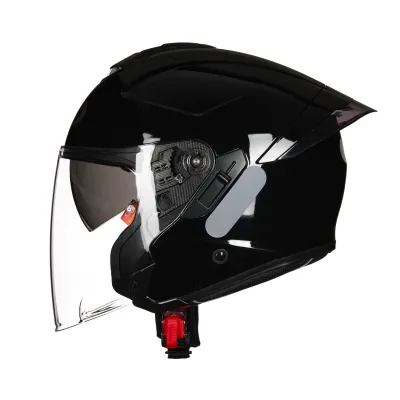
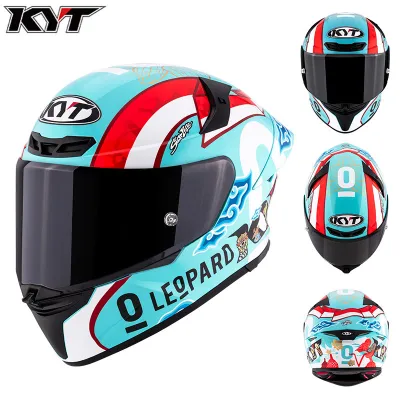
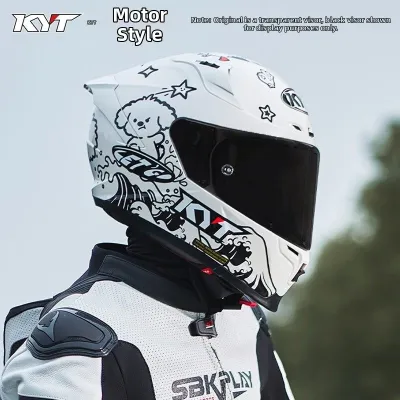
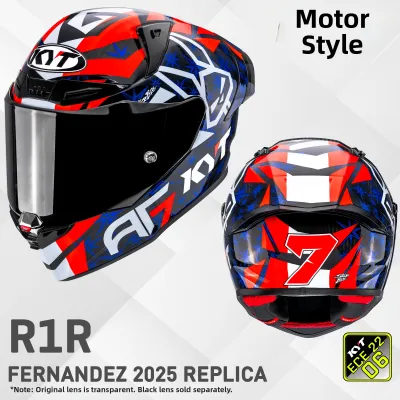
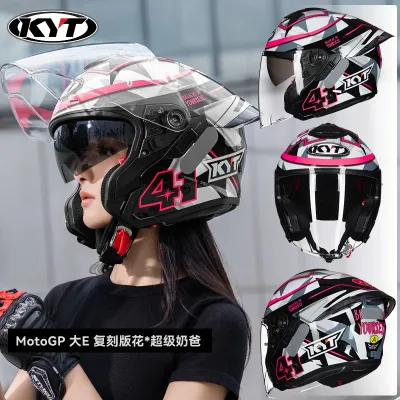
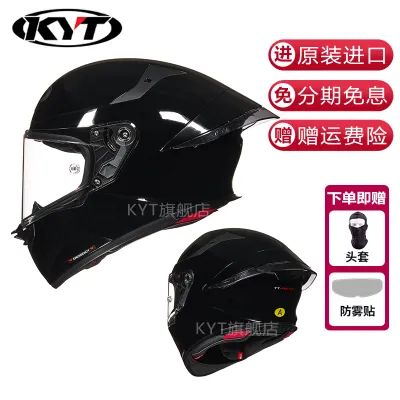
Prices are valid at publication and may change. Please refer to the product page for the latest price.
When evaluating product specifications, compare the listed weight of the models you are considering. A lighter helmet reduces the strain on your neck muscles during long rides, particularly when resisting wind blast at highway speeds. Additionally, premium helmets are designed with multi-density Expanded Polystyrene (EPS) liners. This inner foam layer features varying densities in strategic zones to absorb and disperse impact energy more efficiently. While both budget and premium certified helmets meet strict safety thresholds, the premium composite shell achieves this protection with less bulk and weight, which is a primary justification for the higher price tag.
Visor Mechanisms and Aerodynamic Add-ons
The visor system and aerodynamic profile of a helmet significantly influence your daily riding experience, especially in Singapore’s variable weather conditions. Budget helmets often feature straightforward pivot mechanisms that allow the visor to open and close in fixed detents. While functional, these systems may lack a tight seal against the eyeport gasket, potentially leading to wind noise or water ingress during sudden tropical downpours. Premium KYT models, on the other hand, utilize precision-engineered visor mechanisms with dual-stage pivot systems that pull the visor tightly against the rubber seal when fully closed. They also feature robust central or lateral locking mechanisms to prevent the visor from accidentally lifting at high speeds.

Another key differentiator is the inclusion of anti-fog solutions. Premium models typically come ready to accept Pinlock insert lenses, and some packages may even include the insert. This double-glazed system is essential for maintaining clear vision when riding in heavy rain or high humidity, as it prevents breath condensation from clouding the visor. When inspecting a helmet in-store, check the visor for optical clarity ratings (such as Class 1 optics) to ensure there is no visual distortion, and verify whether the visor offers built-in UV protection and scratch-resistant coatings by reading the manufacturer’s product labels.
Aerodynamic enhancements, such as rear spoilers and side winglets, are prominent features on premium KYT helmets. These components are designed to manage airflow around the helmet, reducing drag, lift, and buffeting at higher speeds. While these spoilers contribute to a sporty aesthetic, their primary function is to stabilize the rider’s head on open roads or racetracks. Before purchasing a helmet with prominent external aerodynamic modifications, verify its street legality and compliance with local regulations, ensuring that any aftermarket or factory-fitted spoilers do not compromise the structural integrity or safety certification of the helmet.
Interior Comfort, Ventilation, and Noise Control
Singapore’s hot and humid climate makes interior comfort and ventilation critical factors when choosing a helmet. The interior liner of a budget helmet is often made from standard synthetic fabrics that, while durable, may have limited moisture-wicking capabilities. Premium KYT helmets utilize advanced technical fabrics designed to actively pull sweat away from your skin, dry quickly, and resist odor-causing bacteria. These liners are typically fully removable and washable, allowing you to maintain hygiene over years of daily use. Furthermore, premium models often incorporate emergency cheek pad release systems, which allow medical personnel to safely remove the helmet in the event of an accident without putting unnecessary strain on the rider’s neck.
Ventilation design is another area where premium engineering justifies its cost. While budget helmets may feature basic intake and exhaust vents, premium models utilize complex internal EPS channeling. These deep grooves molded into the inner foam liner allow air to flow freely across the entire scalp, drawing heat and moisture out through rear exhaust vents. When fitting a helmet at an authorized dealer, inspect the ventilation ports to see if they can be easily opened and closed with gloved hands, and ask about the internal airflow design to ensure it suits your riding habits.
Acoustic comfort is closely tied to the design of the helmet’s neck roll and chin curtain. Premium helmets are engineered to minimize wind noise, which can cause hearing fatigue over time. They achieve this through plush, contoured neck rolls that seal the gap around the base of the skull and thick chin curtains that block turbulent air from entering the helmet from below. While no helmet is completely silent, the refined fit and acoustic insulation of a premium interior provide a much quieter and more focused riding environment compared to budget alternatives.
Decision Framework: Choosing the Right Tier for Your Ride
To make an informed purchase, you must align the helmet’s features with your specific riding patterns, physical comfort requirements, and budget. Use the following guidelines to determine which tier of KYT helmet best suits your needs.
Choose the budget tier if:
- Your riding consists primarily of short urban commutes, such as traveling to the local MRT station, running errands, or navigating low-speed city streets.
- You operate a low-displacement scooter or underbone motorcycle where average speeds rarely exceed 60 km/h, reducing the need for advanced aerodynamic stabilization.
- You are working within a strict budget and want to maximize value, as certified budget helmets offer excellent impact protection at a lower price point in S$.
Choose the premium tier if:
- You frequently commute on major expressways like the PIE, AYE, or TPE, where high-speed stability and wind noise reduction are essential for comfort.
- You participate in track days or long-distance touring, where a lightweight composite shell is necessary to prevent neck fatigue and shoulder strain over hours of continuous riding.
- You highly value premium convenience features, such as advanced optical clarity, integrated anti-fog systems, and highly efficient ventilation channels to combat tropical heat.
Verify first if:
- The helmet matches your specific head shape (intermediate oval, round oval, etc.), as even the most expensive helmet will not protect you effectively or feel comfortable if it does not fit correctly.
- You are purchasing from an authorized dealer in Singapore to ensure the product is genuine, carries a valid local warranty, and features the necessary safety certification markings.
- Replacement parts, such as visors, base plates, and replacement inner liners, are readily available for the specific model you choose, ensuring long-term serviceability.
Frequently Asked Questions (FAQ)
Are budget KYT helmets safe for highway riding in Singapore?
Yes, budget KYT helmets are safe for highway riding provided they carry the mandatory Singapore SS 9:2014 certification or recognized international standards like ECE 22.06. Safety is determined by rigorous testing compliance and a proper, snug fit rather than the price tag alone. While a budget helmet will protect your head in an impact just as a certified premium model would, you may experience more wind noise, buffeting, and weight-related neck fatigue at highway speeds compared to a premium model designed specifically for high-speed aerodynamics.
How often should I replace my KYT helmet regardless of the price tier?
As a general industry standard, you should replace your helmet every five years from the date of first use, or seven years from the date of manufacture, as the protective EPS liner and outer shell materials degrade over time due to UV exposure, sweat, and environmental factors. However, you must replace your helmet immediately after any significant impact or drop, even if there is no visible damage on the outer shell. Regularly inspect your helmet for signs of degradation, such as cracking EPS foam, a loose-fitting interior liner, or a compromised chin strap buckle.
Community discussion
Share your experience or ask a question. Comments are reviewed before publication.