
Selecting the right motorcycle tyres for daily commuting in Singapore involves balancing wet-weather safety, durability under constant stop-and-go conditions, and overall ride comfort. While both Bridgestone and Michelin are premium manufacturers with highly regarded commuter lineups, neither brand offers a single, universally superior tyre for every rider. The ideal choice depends heavily on your specific motorcycle model, your daily route, and whether you prioritize agile handling or plush ride comfort. By understanding how to evaluate tread designs, rubber compounds, and manufacturer specifications, you can select a tyre that ensures a safe, reliable, and cost-effective daily commute.
Understanding Your Commuting Needs in Singapore
Daily commuting on Singaporean roads presents a unique set of challenges that place high demands on motorcycle tyres. The urban landscape is characterized by dense, stop-and-go traffic, especially during peak hours on major expressways like the PIE or CTE, as well as throughout the Central Business District. This constant acceleration and braking cycle generates significant heat within the tyre carcass, accelerating tread wear and demanding a compound that can withstand high operating temperatures without degrading prematurely.
Weather is another critical factor. Singapore experiences sudden, torrential tropical downpours that can instantly flood road surfaces, creating a high risk of hydroplaning. Commuters require tyres with highly efficient water evacuation channels to maintain a stable contact patch with the asphalt. Furthermore, urban roads feature various surface hazards, including smooth painted lane markings, metal construction plates, and expansion joints on flyovers. These surfaces become exceptionally slick when wet, meaning your tyres must offer consistent, predictable grip at low to medium speeds to prevent sudden slides during sudden stops or tight maneuvers.
Products mentioned in this guide
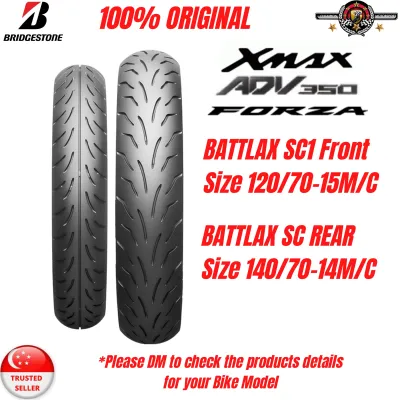
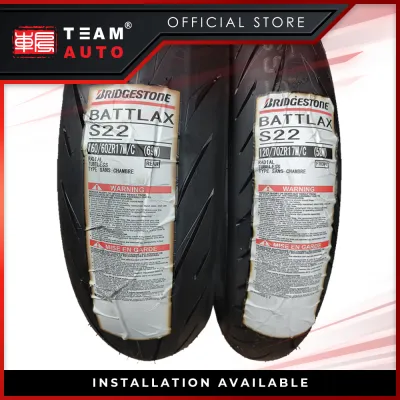
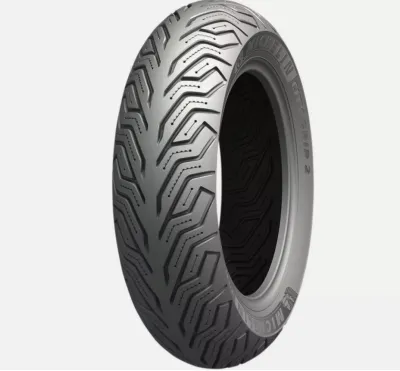
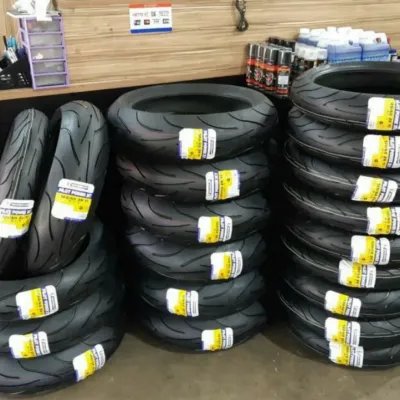
Prices are valid at publication and may change. Please refer to the product page for the latest price.
Bridgestone Tyres: Core Characteristics for Urban Riding
Bridgestone tyres designed for commuter motorcycles and scooters typically emphasize structural rigidity, precise handling, and stable cornering performance. When examining Bridgestone’s urban and commuter product lines, riders will often notice a design philosophy that prioritizes a highly responsive feel. This characteristic is particularly beneficial for navigating tight traffic lanes, filtering safely at low speeds, and maintaining stability when carrying cargo or riding through winding urban streets.

To evaluate a specific Bridgestone model’s suitability for your commute, you should inspect the manufacturer’s technical specifications for compound details. Many of their commuter options utilize specialized silica-rich compounds or multi-compound technology, which are engineered to provide reliable grip on wet roads while maintaining tread stiffness for dry handling. When reviewing the tread pattern on a Bridgestone tyre, look for continuous center ribs that enhance straight-line stability and angled grooves designed to channel water away from the contact patch.
Riders should consult the official Bridgestone motorcycle tyre catalog to identify the correct series for their specific machine. For instance, smaller displacement scooters and underbone motorcycles often use dedicated commuter series designed specifically for high-mileage urban use, while larger maxi-scooters or light motorcycles may require sport-touring patterns adapted for daily commuting. Always verify that the specific series matches your riding environment by checking the manufacturer’s product labels for wet-grip and durability ratings.
Michelin Motorcycle Tyres: Core Characteristics for Urban Riding
Michelin’s approach to commuter and urban motorcycle tyres frequently centers on ride comfort, long-lasting tread life, and versatile performance across changing weather conditions. Many riders choose Michelin for their daily commute because of the brand’s focus on casing flexibility, which helps absorb road vibrations, minor bumps, and uneven tarmac common in urban environments. This emphasis on shock absorption can significantly reduce rider fatigue during long daily commutes.
A key feature to inspect on Michelin urban tyres is their proprietary siping technology. Sipes are small, thin cuts across the tread blocks that act as water-clearing channels, breaking the surface tension of water on wet roads to improve mechanical grip. When examining a Michelin tyre, look for deep tread grooves and high-density siping patterns, which are indicative of a tyre optimized for wet-weather safety. Additionally, Michelin often designs its commuter tyres with progressive tread depths to ensure consistent water evacuation even as the tyre wears down over time.
To find the appropriate Michelin tyre for your daily ride, refer to the manufacturer’s official fitment guides. Michelin offers distinct product families tailored for city scooters, lightweight commuter bikes, and heavier touring motorcycles. Checking the manufacturer’s specifications will help you identify which models feature dual-compound technology—where harder rubber is used in the center for longevity and softer rubber on the shoulders for cornering grip—allowing you to match the tyre’s design directly to your commuting route.
Key Comparison Dimensions for Daily Commuting
When comparing specific models from Bridgestone and Michelin side-by-side, focusing on key performance dimensions will help you make an objective decision based on your personal commuting requirements.
Wet Grip and Safety: Wet-weather performance is paramount for daily riders in Singapore. To compare wet grip, do not rely on brand reputation alone; instead, examine the physical tread design and compound specifications of the exact models you are considering. Look for tyres that explicitly feature high silica content, as silica enhances rubber flexibility at lower temperatures and improves adhesion on wet asphalt. Compare the groove-to-rubber ratio (void ratio) of both tyres; a higher void ratio generally indicates better water displacement, which is crucial for resisting hydroplaning during heavy downpours.
Durability and Mileage: The longevity of a commuter tyre directly impacts your running costs. To assess durability, inspect the treadwear indicators (TWI) built into the tyre grooves and review the manufacturer’s estimated mileage or compound descriptions. Tyres featuring a harder center compound are typically more resistant to the “squaring off” effect caused by prolonged upright riding on straight expressways. Keep in mind that softer, high-grip compounds may wear out faster under the high-heat conditions of stop-and-go urban traffic.
Ride Comfort and Stability: Your daily commute may involve carrying a pillion passenger, riding with heavy delivery boxes, or navigating uneven road surfaces. Evaluate the sidewall construction of the tyres; stiffer sidewalls (often found in sportier commuter designs) offer excellent stability and precise steering feedback under load, but may transmit more road vibration. Conversely, more flexible sidewalls provide superior shock absorption and a smoother ride over bumps, which can be highly beneficial for comfort during long hours on the road.
How to Verify Compatibility and Safety Before Buying
Before purchasing any motorcycle tyre, you must verify that it is fully compatible with your vehicle’s mechanical specifications and complies with local road safety regulations. Never assume compatibility based solely on a tyre’s marketing category or brand name.
First, consult your motorcycle’s owner’s manual or the manufacturer’s placard on the swingarm to find the exact tyre dimensions required. This includes the width, aspect ratio, wheel diameter, load index, and speed rating (for example, 120/70-17 58W). Installing a tyre with an incorrect load index or speed rating can severely compromise your motorcycle’s handling, braking distance, and overall safety, and may void your insurance coverage.
Second, check the Department of Transportation (DOT) safety code stamped on the tyre’s sidewall to determine its manufacturing date. This four-digit code indicates the week and year of manufacture (for example, “2426” represents the 24th week of 2026). Avoid purchasing tyres that have been stored improperly or are excessively old, as rubber compounds naturally degrade, harden, and lose grip over time, even if they have never been mounted on a wheel.
Finally, always prioritize professional installation. Motorcycle tyres must be mounted correctly using specialized equipment to avoid damaging the bead or the wheel rim. Professional installation should always include wheel balancing to prevent high-speed vibrations, as well as the replacement of the tyre valves (especially rubber valves, which degrade at a similar rate to the tyres) to prevent slow pressure leaks that could lead to sudden tyre failure.
Decision Framework: Which Brand Fits Your Ride?
To finalize your choice between Bridgestone and Michelin for your daily commute, use a structured decision framework based on your verified riding priorities and vehicle requirements.
- Choose Bridgestone if: Your daily commute involves active riding where you prioritize sharp, responsive steering, high high-speed stability on expressways, and a firmer road feel. This brand is often highly suitable for riders who prefer a sporty handling characteristic and want a tyre that feels planted during quick lane changes and cornering.
- Choose Michelin if: Your primary goals are maximum ride comfort, excellent shock absorption over uneven urban roads, and long-lasting tread life. This brand is highly suitable for riders who spend long hours in the saddle, frequently carry pillion passengers, and prioritize a highly siped tread pattern designed for maximum water evacuation during sudden tropical storms.
- Verify Local Availability and Pricing: Before making a final decision, contact authorized local dealers to check the current S$ pricing and stock availability for your exact tyre sizes. Ensure that the model you select is approved by your motorcycle's original equipment manufacturer (OEM) if your bike is still under warranty, and confirm that the dealer provides professional mounting, balancing, and disposal of your old tyres as part of their service package.
Frequently Asked Questions (FAQ)
How often should I replace my motorcycle tyres for daily commuting?
For a daily commuter, tyre replacement intervals depend on physical wear, age, and observable damage rather than a fixed mileage schedule. You must regularly inspect the tread wear indicators (TWI)—small raised bumps located inside the tread grooves. Once the tread wears down to the level of these indicators, or reaches the legal minimum depth of 1.0mm, the tyres must be replaced immediately to maintain wet-weather safety and road legality.
Additionally, inspect your tyres weekly for physical signs of deterioration. Look for dry rot, cracking along the sidewalls or within the tread grooves, cuts, punctures, or unusual bulges. Uneven wear patterns, such as cupping or flat spots, can occur due to frequent urban braking or incorrect tyre pressure, and these also warrant professional inspection or replacement. Even if a tyre has ample tread remaining, manufacturers generally recommend replacing any motorcycle tyre that is more than five to ten years old due to the natural hardening and degradation of the rubber compound.
Community discussion
Share your experience or ask a question. Comments are reviewed before publication.