
Navigating the premium car market in Singapore is highly capital-intensive, and choosing between the BMW X1 xLine and M Sport variants often leaves buyers wondering if the sportier trim justifies its higher price tag. The decision ultimately hinges on whether you prioritize a rugged, comfort-oriented cruiser (xLine) or an aggressive, dynamically firm driving experience (M Sport), as both variants share the same core engine and drivetrain configurations but differ significantly in styling, suspension tuning, and interior appointments. In a market where high Certificate of Entitlement (COE) prices and tiered Additional Registration Fee (ARF) rates amplify every price gap, understanding these distinctions is essential to ensure you do not overpay for features you do not need, or conversely, miss out on the classic BMW driving dynamics.
What exterior and interior design cues distinguish the xLine from the M Sport?
The BMW X1 xLine emphasizes a rugged, off-road-inspired aesthetic with satin aluminum accents and protective cladding, whereas the M Sport variant adopts an aggressive, track-inspired look characterized by aerodynamic body styling, high-gloss black trim, and distinctive M branding. These visual philosophies create two entirely different road presences for the same vehicle platform, allowing buyers to align the car’s appearance with their personal style.
On the exterior, the xLine trim utilizes silver or satin-finish aluminum on the kidney grille surrounds, side sills, and underbody protection elements, giving the SUV a robust, adventurous character. The wheel arches and lower body panels are typically finished in contrasting matte black cladding, which helps mask road debris and highlights the vehicle’s ground clearance. In contrast, the M Sport replaces these elements with the M Aerodynamics package, featuring larger front air intakes, a more sculpted rear apron with a dark diffuser insert, and body-colored wheel arches that give the car a lower, wider stance. The satin aluminum window surrounds are swapped for high-gloss Shadowline black trim, creating a more cohesive, stealthy profile.
Products mentioned in this guide
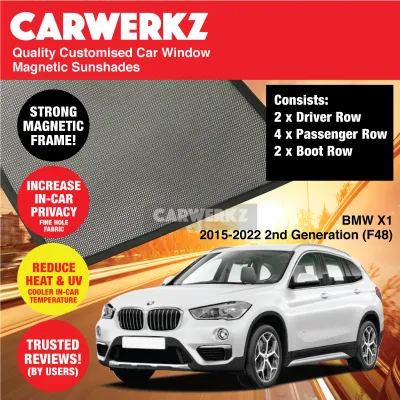
Prices are valid at publication and may change. Please refer to the product page for the latest price.
To confirm the exact wheel sizes, spoke designs, and paint finishes available for your specific model year, you should consult the official BMW Singapore configurator or review the latest dealership brochures. Standard wheel packages can vary between 18-inch and 19-inch configurations depending on local stock, and certain paint colors may be restricted to the M Sport trim.
Inside, the design divergence continues across the dashboard, seats, and steering wheel. The xLine typically features elegant trim inserts, such as fine-wood or textured metallic finishes, paired with standard comfort seats upholstered in synthetic leather. The M Sport cabin shifts toward a performance-focused environment, introducing an M leather steering wheel with a thicker grip, sport seats that offer more pronounced lateral support, and aluminum or carbon-style interior trim. When visiting the local showroom, take the time to sit in both cabins to verify how the seat bolstering feels against your posture and whether the tactile feedback of the M Sport steering wheel aligns with your driving preferences.
Do the xLine and M Sport offer different standard equipment and technology features?
While both the xLine and M Sport variants share the same core BMW Live Cockpit curved display and fundamental safety systems, the M Sport often bundles additional premium comfort features and upgraded driver assistance packages as standard equipment. The exact technology gap depends heavily on the specific model year and local dealer packaging.

BMW typically structures its equipment lines so that essential infotainment, navigation, and basic safety features—such as active lane keeping and parking assistants—are standard across the entire X1 range. However, the M Sport trim frequently justifies its premium by standardizing features that might be optional or unavailable on the xLine, such as a premium surround-sound system, a head-up display, or advanced adaptive LED headlights. These additions can significantly enhance the daily driving experience, especially during night driving or long commutes.
Because vehicle specifications in Singapore can undergo mid-year updates or feature adjustments due to global supply chains, it is critical to request a detailed, printed specification sheet from the authorized dealer. Pay close attention to the standard inclusions for comfort access, ambient lighting configurations, and the specific level of Driving Assistant packages included in each trim. Verifying these details on the actual showroom vehicles prevents any surprises regarding missing convenience features once your car is delivered.
Additionally, the digital interface itself can exhibit minor differences. While the physical screens are identical, the M Sport variant may feature exclusive digital instrument cluster themes and sport-oriented telemetry displays that are not active in the xLine. If these digital customization options are important to you, ask the sales consultant to demonstrate the screen menus in both vehicles during your showroom visit.
Are there mechanical, suspension, or performance differences between the two variants?
Mechanically, both variants generally utilize the identical engine and transmission setup for a given model designation, but the M Sport trim often features a lowered M Sport suspension or adaptive dampers that deliver a firmer, more agile ride compared to the comfort-tuned standard suspension of the xLine. This suspension variance directly alters how the vehicle handles Singapore’s urban roads and expressways.
Under the hood, an X1 sDrive16i or sDrive18i will produce the exact same horsepower and torque regardless of whether you select the xLine or M Sport trim. The performance differences lie entirely in the chassis tuning and steering calibration. The M Sport variant typically rides on a suspension system that is lowered by approximately 15 millimeters, featuring firmer spring and damper settings designed to reduce body roll during cornering. Some M Sport packages also include adaptive M suspension, which allows you to toggle between comfort and sportier damping modes via the drive settings.
Furthermore, the M Sport variant often comes equipped with a variable sport steering system. This setup requires fewer steering wheel turns to navigate tight corners, making the vehicle feel more agile and responsive when parking or maneuvering through tight multi-story carparks. The xLine, by comparison, retains a more linear, traditional steering feel that prioritizes ease of use and relaxed highway cruising.
Because a firmer suspension can transmit more road imperfections into the cabin, scheduling a back-to-back test drive of both variants at the local dealership is highly recommended. Test both cars over varied surfaces—such as speed humps in residential estates and expansion joints on the Central Expressway (CTE)—to evaluate whether the sharper steering response and flatter cornering of the M Sport are worth the trade-off in ride compliance, or if the xLine’s softer setup is better suited for your daily commute.
How can you determine if the M Sport price premium is justified for your needs?
Deciding if the M Sport trim is worth the extra cost requires weighing the price premium against your aesthetic preferences, driving style, and the long-term resale value of sportier trims in the Singapore market. A structured comparison of the cost of individual upgrades versus the bundled trim price will clarify the financial logic of your choice.
To build a practical decision matrix, start by obtaining the exact on-the-road prices for both variants, including the prevailing COE and any dealer promotions. In Singapore, the tiered ARF system means that any increase in the Open Market Value (OMV) of the M Sport variant also increases the registration taxes, compounding the retail price gap. If you find yourself wanting to upgrade the xLine with larger wheels, sportier seats, or upgraded trim pieces, calculate the cost of these individual options; in most cases, buying the M Sport outright is more cost-effective than retrofitting an xLine with aftermarket or official accessories.
Additionally, sportier trims like the M Sport historically command stronger demand and slightly better residual value in the Singapore pre-owned market. While this can help offset a portion of the initial premium when it comes time to sell or trade in the vehicle, it rarely covers the entire upfront cost difference. Therefore, the primary justification for the M Sport should remain your personal enjoyment of its styling and driving dynamics.
Ultimately, the xLine represents the logical choice if you prefer a classic, understated luxury appearance, value a more compliant and comfortable ride over rougher road surfaces, and wish to keep your upfront capital outlay lower. Choose the M Sport if you highly value aggressive styling, prefer a more connected and firmer driving dynamic, and want a comprehensive bundle of premium interior and technology features standard from the factory. Use the following comparison checklist to guide your final showroom evaluation:
| Feature / Dimension | BMW X1 xLine | BMW X1 M Sport |
|---|---|---|
| Exterior Styling | Rugged, satin aluminum accents, protective cladding | Aggressive M Aerodynamics package, high-gloss black trim |
| Suspension Tuning | Standard comfort-oriented suspension | Firmer M Sport suspension (often lowered by 15mm) or adaptive dampers |
| Steering Wheel | Standard leather sport steering wheel | M leather steering wheel with thicker grip |
| Seating | Standard comfort seats | Sport seats with enhanced lateral bolstering |
| Target Driver | Drivers prioritizing ride comfort and classic SUV styling | Drivers seeking dynamic handling and aggressive aesthetics |
Community discussion
Share your experience or ask a question. Comments are reviewed before publication.