
Selecting the right BMW interior accessories is about finding a balance between daily driving utility and the vehicle’s original engineering. A well-chosen accessory enhances comfort during long commutes, keeps essential items organized, and integrates seamlessly with the cabin’s premium materials. However, because modern BMWs are equipped with sophisticated safety systems, sensitive electronic sensors, and high-end upholstery, choosing aftermarket additions requires careful evaluation. By focusing on precise fitment, non-destructive installation, and material compatibility, you can significantly improve your daily driving experience while preserving the safety and aesthetic value of your vehicle.
How to Choose Interior Accessories That Fit Your BMW
Every BMW model is designed with a distinct cabin geometry, meaning that generic, one-size-fits-all accessories rarely provide a satisfactory fit. When browsing for interior upgrades, your first step should always be to verify compatibility with your specific BMW series, model year, and chassis code. For example, accessories designed for a 3 Series (G20) will have completely different dimensions and mounting points compared to those built for an older 3 Series (F30) or a larger 5 Series. Checking the manufacturer’s compatibility database or measuring your vehicle’s interior dimensions directly is essential to avoid loose fits, rattles, or misaligned components.
Preserving the original condition of your BMW’s cabin is crucial for maintaining its long-term value and aesthetic appeal. Many modern BMW interiors feature delicate materials such as Sensatec synthetic leather, genuine Vernasca or Merino leather, open-pore wood veneers, and soft-touch plastics. To protect these surfaces, prioritize accessories that utilize non-destructive installation methods. Avoid items that require permanent drilling, rigid metal clips that can scratch plastic panels, or harsh adhesives that can strip the dye from leather-wrapped dashboards. Instead, look for accessories that use tension fits, soft silicone contact points, or high-quality straps that can be easily removed without leaving a trace.
Products mentioned in this guide
Prices are valid at publication and may change. Please refer to the product page for the latest price.
Material quality is another critical factor, especially when considering the local climate. In regions with intense sunlight and high humidity, cabin temperatures can rise dramatically when the vehicle is parked outdoors. Low-grade plastics and cheap adhesives can warp, melt, or emit unpleasant chemical odors under these conditions. Opt for accessories made from UV-resistant materials, high-grade silicone, or breathable fabrics that can withstand temperature fluctuations. Choosing materials that match the texture and color palette of your BMW’s interior—such as matte black finishes, brushed aluminum accents, or high-quality stitching—ensures that the additions look like factory-installed options rather than aftermarket afterthoughts.
Essential Accessory Categories for Everyday Comfort
To build a highly functional and comfortable cabin, it helps to categorize your upgrades based on the specific daily driving challenges they address. The three primary areas where aftermarket accessories can make the most significant impact are seating comfort, tech integration, and cabin organization. Each of these categories addresses distinct commuting pain points, from physical fatigue during heavy traffic to the clutter of daily personal items.

By systematically evaluating accessories within these categories, you can target your specific comfort needs without overwhelming the cabin’s design. The goal is to introduce functional utility while maintaining the clean, driver-focused layout that defines the modern BMW driving experience.
Seat Covers and Cushions
Enhancing seating comfort is often a top priority for daily commuters, but it requires strict adherence to safety guidelines. The most critical safety boundary when selecting seat covers or cushions is side-airbag compatibility. Modern BMW front seats are equipped with side airbags embedded within the outer bolsters. Installing a seat cover that does not feature certified, open-sided designs or specialized breakaway stitching can delay or completely block airbag deployment during a collision. Always verify that the accessory manufacturer explicitly states that the product is compatible with seat-mounted side airbags before making a purchase.
Beyond safety, you must consider how seat covers and cushions interact with your vehicle’s built-in climate features. Many BMW models are equipped with multi-stage seat heating or active seat ventilation. Thick, non-porous seat covers can act as an insulating barrier, rendering these premium comfort features ineffective or causing the heating elements to work harder, which may lead to premature wear. If your vehicle has heated or ventilated seats, look for cushions made from highly breathable, perforated materials or specialized mesh designs that allow heat and airflow to pass through unimpeded.
Finally, the stability of the cushion or cover is essential for both comfort and driving safety. A seat cushion that slides or shifts when you enter the vehicle or round a sharp corner is a constant distraction and can compromise your driving posture. Look for cushions that feature high-friction, anti-slip silicone backings and robust anchoring systems. Secure anchoring typically involves chucks that tuck deeply into the seat crease and adjustable straps that wrap around the seat base, ensuring the cushion remains firmly in place without interfering with the power-adjustable seat motors or seatbelt buckles.
Phone Mounts and Tech Integration
Keeping your smartphone secure and visible for navigation is a common daily driving requirement, but finding the right mounting location in a BMW requires careful planning. Air vent mounts are a popular, low-profile option, but they must be evaluated against the design of your BMW’s dashboard. Many modern BMW models feature slim, delicate air vent slats that can be easily damaged by heavy devices or overly tight spring-loaded clips. If you choose a vent mount, ensure it features a supportive leg or brace to distribute the weight of the phone and prevent excessive stress on the plastic slats.
Another critical consideration is avoiding the obstruction of vital vehicle displays and driver assistance sensors. A poorly positioned phone mount can block your line of sight to the iDrive infotainment screen, the digital instrument cluster, or the Head-Up Display (HUD) projection area. Furthermore, many newer BMWs feature a driver monitoring camera integrated into the top of the instrument cluster. If your phone mount blocks this camera’s field of view, it can trigger system errors or disable advanced driver assistance features. Position your mount in a location that keeps your phone within your peripheral vision without blocking any factory screens or sensors.
To protect your dashboard’s premium finishes, avoid using strong adhesive mounts on soft-touch plastics, leather-wrapped panels, or delicate wood trims. The intense heat inside a parked vehicle can cause these adhesives to liquefy, leaving behind a sticky residue that is incredibly difficult to clean and may permanently stain or peel the underlying material. Instead, look for custom-fit mounting brackets designed specifically for your BMW model. These brackets often clip securely into existing panel gaps around the center console or hazard light button, providing a rock-solid mount without the need for glues or suction cups.
Cabin Organizers and Storage Solutions
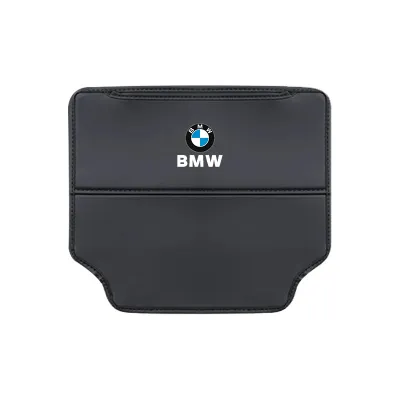
Maintaining a clutter-free cabin is essential for a relaxing daily drive, and targeted storage solutions can help keep daily essentials within easy reach. Drop-in pocket organizers that slide into the gap between the front seats and the center console are highly effective for catching loose change, parking cards, and charging cables. However, you must measure this gap carefully before purchasing. If the organizer is too wide, it can press tightly against the leather seats, causing friction wear over time, or restrict the forward and backward movement of power-adjustable seats.
For larger items, trunk organizers are invaluable for preventing groceries, sports gear, or emergency supplies from sliding around during transit. When selecting a trunk organizer, look for models with high-friction rubber bases or heavy-duty hook-and-loop fasteners that grip the trunk carpet securely. It is also important to ensure that the organizer does not block access to critical vehicle components. In many BMW models, the battery, fuse box, and emergency puncture repair kit are located beneath the trunk floor panel; your organizer should be easy to move or fold away in the event of an emergency.
Safety should always be your primary concern when adding storage accessories to the passenger cabin. Any loose, heavy, or rigid object can become a dangerous projectile during sudden braking or a collision. Avoid placing bulky, unsecured plastic or metal organizers on the passenger seat or dashboard. Instead, opt for soft-sided, secure organizers that attach to the back of the front headrests or fit snugly inside the door pockets. Keeping your storage solutions low, secure, and soft-sided minimizes safety risks while keeping your cabin tidy.
Safety and Installation Checks Before You Buy
Before purchasing any interior accessory, your first step should always be to consult your BMW’s owner’s manual. The manual contains crucial information regarding the location of all airbags, interior sensors, and electronic modules. It will also outline specific restrictions on accessory placement, such as avoiding the passenger-side dashboard where the front airbag deploys, or the roof pillars where side-curtain airbags are housed. Adhering to these manufacturer guidelines is essential to ensure that your aftermarket additions do not compromise the vehicle’s safety systems.
Modern BMWs rely heavily on advanced driver assistance systems (ADAS) that utilize a variety of interior cameras and sensors. For instance, the gesture control sensor is typically located near the overhead console, while interior cameras monitor driver attentiveness. When planning the installation of phone mounts, toll transponders, or dash cams, verify that they do not block the line of sight for these sensors. A blocked sensor can cause system malfunctions, warning lights on your dashboard, or the unexpected disabling of safety features.
Finally, always plan for a completely reversible installation. If you lease your vehicle or plan to sell it in the future, being able to return the cabin to its exact factory condition is highly beneficial. Avoid any modification that requires permanent alterations, such as cutting trim panels or splicing into the vehicle’s electrical wiring. If you replace any factory components—such as the floor mats or cargo nets—store the original parts in a clean, dry, and climate-controlled environment so they can be easily reinstalled when it comes time to transition the vehicle.
Frequently Asked Questions (FAQ)
Will aftermarket seat covers void my BMW warranty?
In general, installing cosmetic aftermarket accessories like seat covers will not void your overall BMW vehicle warranty. Under consumer protection laws in many regions, a manufacturer cannot void a warranty simply because aftermarket parts are installed. However, if an aftermarket accessory directly causes damage to the vehicle, that specific repair will not be covered under warranty. For example, if a tight seat cover damages the internal seat heating elements or restricts the deployment of a side airbag during an accident, BMW will not cover the resulting damages. To minimize risk, always choose high-quality, airbag-compatible covers and ensure they are installed correctly without straining any internal seat components.
How do I clean BMW interior accessories without damaging the surfaces?
To clean your aftermarket accessories safely, always start by checking the care label or instruction manual provided by the accessory manufacturer. For the underlying BMW surfaces, use only mild, pH-neutral cleaners specifically formulated for automotive leather, vinyl, or plastics. Avoid using household glass cleaners, dish soaps, or harsh chemical solvents, as these can strip the protective coatings from leather and cause soft-touch plastics to become sticky or discolored. Always apply the cleaner directly to a clean microfiber cloth rather than spraying it onto the dashboard or console; this prevents liquid from seeping into sensitive electronic switches, climate control buttons, or digital screens.
Community discussion
Share your experience or ask a question. Comments are reviewed before publication.