
Driving safely requires continuous, uninterrupted spatial awareness, yet every vehicle has inherent blind spots where adjacent vehicles can easily disappear from view. To solve this, drivers often turn to blind spot mirrors—small, convex auxiliary mirrors attached to the vehicle’s factory side mirrors. These simple accessories come in various designs, shapes, and sizes, ranging from classic round stick-on options to adjustable frameless models. Choosing the right one depends on your car’s mirror size, your typical driving environment, and your daily parking challenges. By selecting a mirror that balances a wide field of view with minimal distance distortion, you can significantly improve your situational awareness on busy roads.
Understanding Blind Spot Mirror Designs and Mounting Styles
When choosing blind spot mirrors, the physical design and mounting style play a major role in how the mirror looks, how long it lasts, and how easily it can be adjusted. Understanding these options helps you select a mirror that fits your vehicle’s aesthetics while providing reliable, long-term performance.
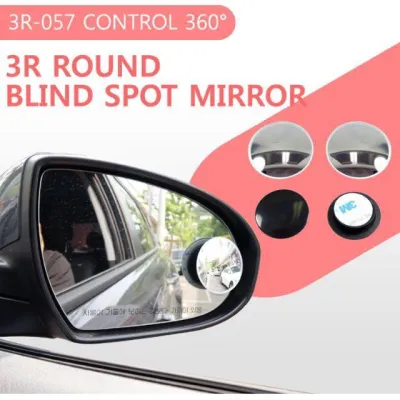
Stick-on (Adhesive) Mirrors The most common and permanent option is the stick-on mirror, which attaches directly to your factory glass using a double-sided adhesive pad. In tropical climates like Singapore, where intense sun exposure, high humidity, and heavy afternoon downpours are common, the quality of this adhesive is critical. Low-grade adhesives can degrade quickly under constant heat, causing the mirror to peel or fall off during a car wash or highway drive. Look for products that utilize high-quality, weather-resistant automotive adhesives, such as acrylic-based foam tapes, to ensure a secure and lasting bond.
Products mentioned in this guide
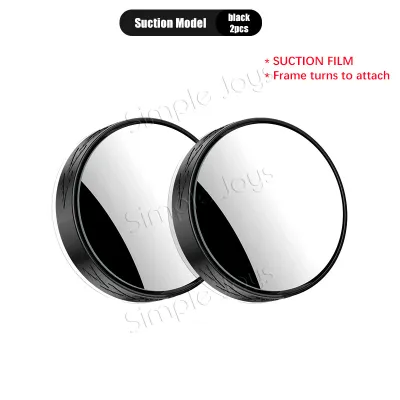
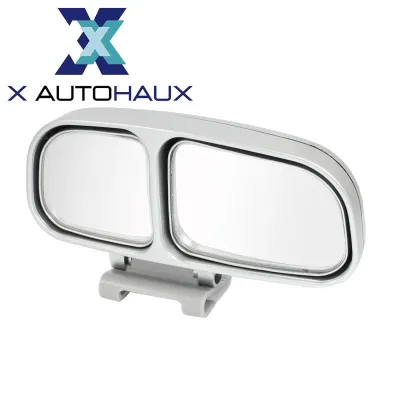
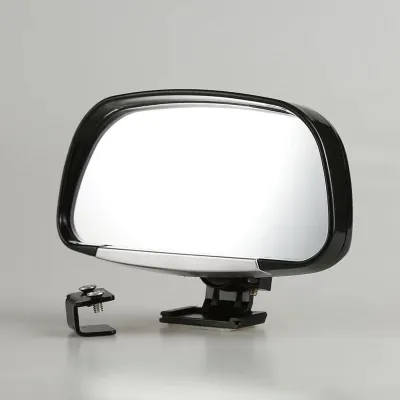
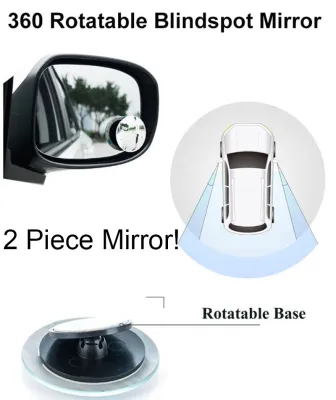
Prices are valid at publication and may change. Please refer to the product page for the latest price.
Frameless vs. Framed Designs Frameless mirrors offer a modern, minimalist look that blends seamlessly with your factory glass, reducing visual clutter and making the side mirror look like a single, cohesive unit. However, because the glass edges are exposed, they are slightly more vulnerable to chipping if bumped during cleaning. Framed mirrors feature a plastic or metal border around the convex glass. This border protects the edges from damage and provides a clear visual boundary, helping your eyes instantly differentiate the wide-angle view of the blind spot mirror from the flat, true-distance view of the main side mirror.
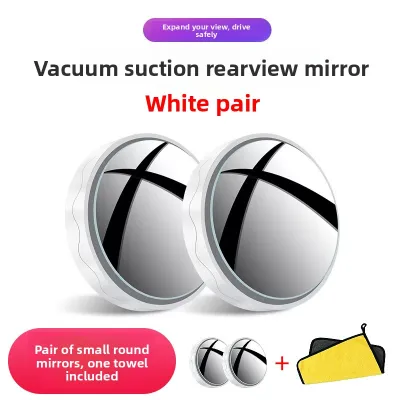
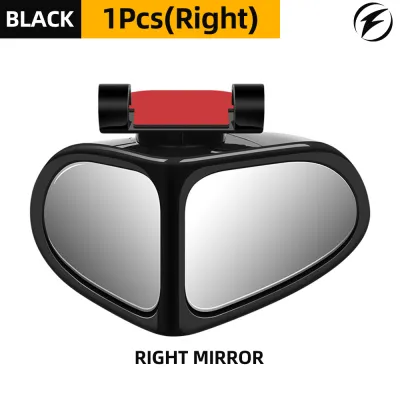
Temporary vs. Permanent Mounts While adhesive mirrors are designed to stay in place permanently, some models use suction cups or clip-on brackets that attach to the outer frame of your side mirror. These temporary mounts are ideal for drivers who use rental cars, share vehicles, or want to experiment with different placements before committing to an adhesive. However, temporary mounts are generally bulkier, can affect the aerodynamics of the mirror housing, and may suffer from vibration or stability issues at higher speeds, such as when cruising on the expressway.
Key Specs Decoded: Shape, Size, and Curvature of Blind Spot Mirrors
To find the right blind spot mirrors for your car, you need to understand how technical specifications like shape, size, and curvature translate into real-world visibility and depth perception.

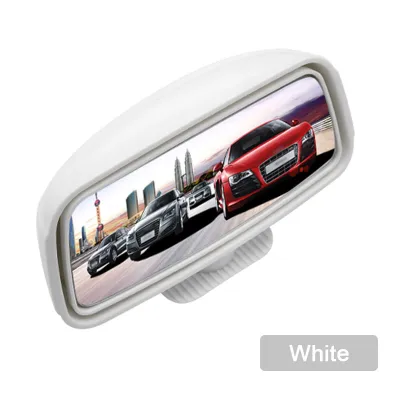
Shape (Round vs. Rectangular or Fan-shaped) Round mirrors are the traditional choice and are highly versatile, fitting neatly into the corner of almost any side mirror. However, because they are symmetrical, they can block a uniform portion of your main mirror. Rectangular or fan-shaped (wedge) mirrors are specifically designed to hug the outer or lower edges of the side mirror frame. This shape maximizes horizontal visibility along the lane line while minimizing the vertical space taken up on the main glass, making them highly popular for wider SUV or commercial vehicle mirrors.
Size Dimensions Blind spot mirrors typically range from 2 inches (approx. 5 cm) to 3 inches or more in diameter. The trade-off is straightforward: a larger mirror offers a broader, clearer view of the adjacent lane, but it physically blocks more of your factory side mirror. Your primary side mirror is vital for judging the exact distance of vehicles behind you. Blocking too much of it can compromise your overall depth perception, so it is critical to verify your vehicle’s side mirror dimensions and choose an auxiliary mirror size that complements, rather than dominates, your factory glass.
Curvature and Convex Angles The wide-angle effect of these mirrors is created by convex glass, which curves outward to compress a wider field of view into a small surface area. A higher curvature (a more pronounced bulge) captures a wider angle, helping you spot vehicles multiple lanes over. However, extreme curvature introduces significant distance distortion, making vehicles appear much further away than they actually are. When selecting a mirror, look for a moderate convex curvature that expands your field of view without distorting the size and speed of approaching vehicles to a dangerous degree.
Matching the Mirror to Your Vehicle and Driving Environment
Selecting the perfect blind spot mirror requires matching the accessory to your specific vehicle type and the driving conditions you encounter most frequently.
Matching OEM Mirror Shape and Size Before purchasing, visually assess your car’s factory side mirrors and consult your vehicle’s documentation regarding any specialized mirror features, such as auto-dimming glass or heated elements. Compact hatchbacks and sedans with smaller mirror housings require small, unobtrusive blind spot mirrors (such as 2-inch round or slim rectangular models) to preserve the main viewing area. Larger vehicles, like SUVs or multi-purpose vehicles (MPVs), have larger mirror faces that can easily accommodate 3-inch or adjustable fan-shaped mirrors without sacrificing essential rearward visibility.
Urban vs. Highway Driving Needs Your daily commute plays a significant role in your choice. If you primarily navigate tight urban streets, narrow lanes, and multi-storey carparks, you will benefit from a mirror with slightly higher curvature. This helps you spot low-profile curbs, concrete pillars, and lane-splitting motorcycles that frequently navigate tight spaces. Conversely, if your commute consists mainly of high-speed expressway driving, you need excellent depth perception to make safe lane changes. In this scenario, a mirror with moderate curvature placed on the outer edge is ideal, as it helps you monitor fast-approaching vehicles in adjacent lanes with minimal distance distortion.
Placement Strategy Where you intend to place the mirror dictates its optimal shape. Placing the mirror in the outer top corner is best for monitoring high-speed traffic in adjacent lanes. Placing it in the inner bottom corner is ideal for parking, as it allows you to see the rear tire and curb. If you prefer the bottom corner, a fan-shaped or wedge mirror is often the most space-efficient choice, as it aligns perfectly with the lower outer corner of the factory mirror frame.
Installation and Adjustment for Safe Lane Changes
Proper installation and adjustment are critical to ensuring your blind spot mirrors function safely without damaging your vehicle’s original equipment.
Surface Preparation To ensure a secure, long-lasting bond, you must clean the factory mirror glass thoroughly before application. Use a mild glass cleaner or isopropyl alcohol to remove oil, road grime, and wax buildup. Always check your vehicle manufacturer’s instructions and the cleaner’s product label first, as some side mirrors feature specialized anti-glare coatings or heated elements that can be damaged by harsh chemical solvents. Ensure the surface is completely dry and warm to the touch before pressing the adhesive backing firmly in place.
Adjustment Sequence Start by adjusting your factory side mirrors from the driver’s seat. Set them according to standard safe driving practices where you can just barely see the side of your own car. Once the main mirrors are positioned, sit in your natural driving posture and adjust the blind spot mirror. If you have an adjustable, swivel-mount blind spot mirror, tilt it until the blind spot—the area just outside your peripheral vision and main mirror view—is fully visible.
Safety Boundary and Limitations It is vital to recognize that blind spot mirrors are strictly supplementary driving aids. They are designed to enhance your situational awareness, but they cannot completely eliminate physical blind spots. Convex glass inherently distorts distance and size, meaning a fast-moving motorcycle or bicycle can easily be misjudged or overlooked. Always perform a physical shoulder check before changing lanes, especially in dense traffic where low-profile vehicles or cyclists can quickly change positions.
Frequently Asked Questions (FAQ)
Do blind spot mirrors eliminate the need for shoulder checks?
No, blind spot mirrors do not eliminate the need for physical shoulder checks. While they significantly expand your field of view and help you spot vehicles entering your blind zones, the convex glass distorts depth perception. This distortion can make an approaching vehicle or motorcycle appear much further away than it actually is, or make smaller vehicles hard to distinguish. A quick physical shoulder check remains the most reliable way to confirm that a lane is clear before executing a maneuver.
Will removing a stick-on blind spot mirror damage my car's side mirror?
If removed correctly, a stick-on blind spot mirror will not damage your factory side mirror. Avoid prying the mirror off with hard tools, which can scratch or crack the glass. Instead, use a piece of dental floss or high-strength fishing line. Slide the line behind the blind spot mirror and use a gentle sawing motion to slice through the foam adhesive backing. Once the mirror is removed, apply an automotive-safe adhesive remover to dissolve any remaining residue. Always check the adhesive remover’s product label to ensure it is safe for automotive glass and plastic mirror housings, and gently wipe the area clean with a microfiber cloth.
Community discussion
Share your experience or ask a question. Comments are reviewed before publication.