
Selecting the ideal blind spot mirror for your vehicle depends primarily on two factors: the physical dimensions of your existing side mirrors and your specific driving environment. In high-density traffic environments like Singapore, where motorcycles frequently filter between lanes on busy expressways such as the PIE or CTE, having an expanded field of view is a critical safety advantage. However, a poorly matched blind spot mirror can obstruct your primary rearward vision, creating more hazards than it solves.
For most modern passenger cars equipped with relatively large, flat side mirrors, a frameless, stick-on convex mirror offers the most seamless aesthetic and the widest unobstructed field of view. These mirrors blend cleanly with the vehicle’s design while providing edge-to-edge reflection. Conversely, if you drive an older vehicle, a car with heavily curved side mirror glass, or share your vehicle with multiple drivers who require frequent adjustments, a framed or clip-on option is highly recommended. These designs provide a clear visual border that helps separate the wide-angle perspective from the standard flat reflection, and they often allow for mechanical repositioning without damaging the glass or adhesive.
Frameless vs. Framed Designs: Aesthetics and Visibility
When choosing between frameless and framed blind spot mirrors, you must weigh the visual benefits of an unobstructed reflection against the practical advantages of a protected, clearly defined border. Both designs serve the same fundamental purpose of expanding your field of view, but they interact differently with your eyes and the surrounding environment.
Products mentioned in this guide
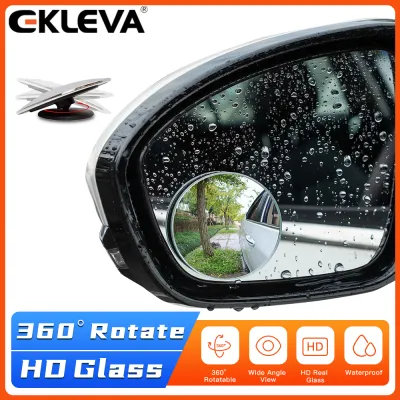
![[SG STOCK]2PCS Blind Spot Mirror Set | Wide Angle Round Convex Rearview Auxiliary Mirrors for Car Reversing & Safety](https://img.lazcdn.com/g/p/b645ffc682f7c80ff3a364723c3a30df.jpg_400x400q80.jpg_.webp)
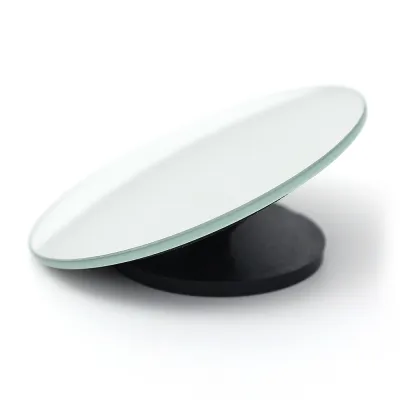
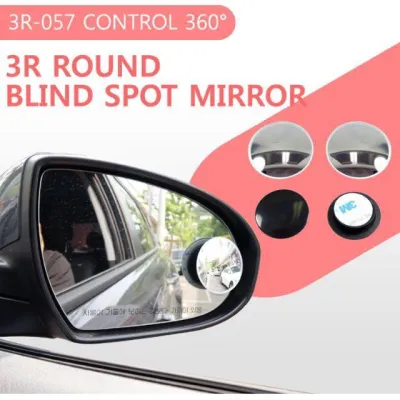
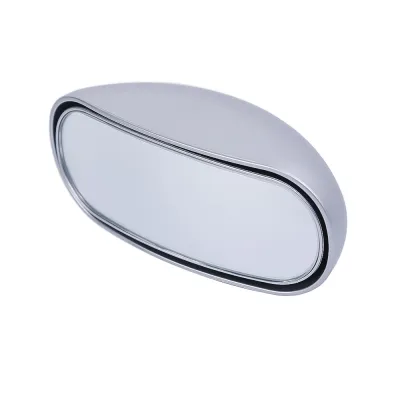
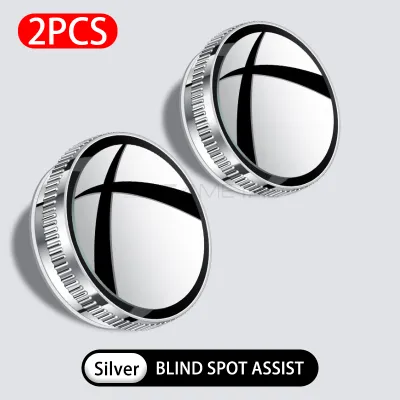
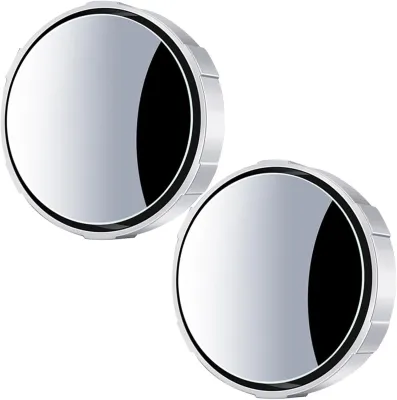
Prices are valid at publication and may change. Please refer to the product page for the latest price.
Frameless Mirrors
Frameless blind spot mirrors feature a borderless glass construction, where the reflective surface extends completely to the outer edge of the accessory. This design maximizes the active reflective surface area within a compact physical footprint, making them highly efficient for smaller side mirrors. Visually, they offer a sleek, integrated appearance that mimics factory-installed equipment, blending smoothly with the clean lines of modern vehicles.
However, the lack of a protective outer bezel introduces specific trade-offs. Without a frame, the polished edges of the glass are directly exposed to environmental elements. In highly humid tropical climates, moisture and airborne contaminants can slowly penetrate the edge of the glass, leading to silvering degradation—a process where the reflective backing delaminates and turns cloudy. Additionally, the very edge of a frameless convex mirror can sometimes exhibit minor optical distortion, and the lack of a border makes it difficult to adjust the mirror’s angle manually without leaving oily fingerprints on the reflective surface.
Framed Mirrors
Framed blind spot mirrors are encased in a physical bezel, typically constructed from UV-resistant ABS plastic or lightweight aluminum. This frame serves multiple functional purposes beyond simple aesthetics. First, it provides a distinct visual boundary. When you glance at your side mirror, the frame helps your brain instantly distinguish between the flat, 1:1 scale perspective of your main mirror and the highly compressed, wide-angle view of the blind spot accessory. This clear separation reduces cognitive load and helps you make quicker, safer decisions during rapid lane changes.
Furthermore, the physical frame protects the glass edges from chipping, cracking, or delaminating over time. It also provides a convenient grip point, allowing you or other drivers to adjust the angle of the mirror without touching the glass. The primary disadvantage of framed mirrors is that the bezel occupies physical space, slightly reducing the active reflective area compared to a frameless mirror of the exact same outer dimensions. On smaller side mirrors, this frame can make the accessory feel bulky and overly intrusive.
Mounting Types: Stick-On Adhesive vs. Clip-On and Suction
The method you use to secure a blind spot mirror to your vehicle affects its stability, durability, and compatibility with your existing mirror glass. Choosing the wrong mounting type can lead to excessive vibration, damage to your vehicle’s components, or the accessory falling off entirely while driving.

Stick-On (Adhesive): The vast majority of blind spot mirrors utilize high-strength, double-sided automotive acrylic foam tape to bond directly to the surface of your existing side mirror glass. This mounting method is highly favored because it is incredibly low-profile, lightweight, and exceptionally secure when applied correctly. Once the adhesive cures, it resists extreme vibrations, high speeds, and intense weather conditions. However, adhesive mounting is semi-permanent. It requires meticulous surface preparation, and once the mirror is pressed into place, it cannot be easily repositioned or transferred to another vehicle without destroying the adhesive pad and requiring a replacement adhesive strip.
Clip-On and Suction Cups: Alternative mounting options include mechanical clip-on brackets and vacuum suction cups. Clip-on models typically attach to the outer plastic housing of the side mirror assembly using small tension screws, brackets, or spring-loaded clips. Suction cup models attach directly to the mirror glass using a small vacuum lever. These options are highly adjustable, easily removable, and can be transferred between different vehicles in seconds. This makes them ideal for drivers of rental cars, commercial fleet vehicles, or shared family cars where different drivers have vastly different seating positions.
The trade-offs for these removable mounts are significant. Clip-on brackets add physical bulk to the exterior of your mirror housing, which can increase wind noise and aerodynamic drag. Because they rely on mechanical tension, they are highly susceptible to engine and road vibrations, which can cause the reflected image to blur at highway speeds. Suction cups, while convenient, are prone to losing vacuum pressure over time. In hot tropical climates, the air trapped inside the suction cup expands under direct sunlight, which can cause the suction to fail suddenly, dropping the mirror.
Curvature and Mechanical Verification: Before purchasing a clip-on or suction cup mirror, you must verify the physical characteristics of your vehicle’s side mirrors. Suction cups require a perfectly flat, non-porous glass surface to maintain a secure vacuum seal. If your vehicle’s side mirror has an outer convex curve (common on many European models to expand the standard field of view), a suction cup will fail to adhere. For clip-on models, you must inspect the clearance gap between the mirror glass and the outer plastic housing. If the gap is too narrow, the mounting bracket can jam the motorized mirror adjustment mechanism, strip the internal gears, or even crack the glass when the motorized mirror is operated.
Convex Angles: Balancing Field of View and Distance Perception
Blind spot mirrors rely on a convex design, meaning the glass curves outward toward the center. This curvature diverges light rays before they reach your eyes, compressing a much larger physical area into a smaller reflection. While this geometry is highly effective at revealing hidden vehicles, it fundamentally alters how you perceive distance and speed.
The optical behavior of a convex mirror is governed by its radius of curvature, often designated as an “R” value (measured in millimeters). A larger radius of curvature (such as 300R) is relatively flat, whereas a smaller radius of curvature (such as 100R) represents a much tighter, more aggressive curve. Understanding this relationship is crucial for selecting a mirror that matches your driving environment:
- Standard Wide-Angle Curvature (150R to 200R): These mirrors provide a moderate, controlled expansion of your field of view. They successfully eliminate the immediate blind spot next to your rear quarter panel while maintaining a relatively realistic representation of distance. Overtaking vehicles will appear slightly smaller than they actually are, but their speed and distance are still easy to estimate. This balance makes standard wide-angle mirrors highly suited for high-speed highway driving, where accurate distance perception is critical for safe lane merging.
- Extreme Wide-Angle or "Fisheye" Curvature (100R or lower): These mirrors feature an aggressive, highly curved surface that provides an ultra-wide field of view. They allow you to see almost the entire side of your vehicle, the adjacent lane, and the ground simultaneously. However, this extreme compression causes severe optical distortion. Vehicles in the reflection will appear incredibly small and deceptively far away, making it dangerous to rely on this mirror alone for high-speed lane changes. Instead, extreme wide-angle mirrors are highly beneficial for low-speed maneuvers, such as parallel parking in tight HDB carparks, navigating narrow multi-storey ramps, or spotting low concrete curbs and obstacles that are completely hidden from normal view.
When using any convex mirror, you must remember that its primary purpose is presence detection rather than distance measurement. Use the blind spot mirror to quickly verify if a vehicle or motorcycle is occupying the space next to you, but always rely on your main side mirror and a physical shoulder check to accurately judge distance and speed before executing a maneuver.
Matching Shapes and Sizes to Your Vehicle's Side Mirrors
Selecting the right shape and size for your blind spot mirror is not just an aesthetic choice; it directly impacts your safety. If the accessory is too large, it will block too much of your main mirror’s reflection, compromising your standard rearward vision. If it is too small, the compressed image will be difficult to see at a glance, forcing you to squint and take your eyes off the road for too long.
Round Mirrors
Round blind spot mirrors are the most traditional and widely compatible option. Because they are symmetrical, they provide a uniform, radial expansion of your field of view in all directions. They are highly effective when placed in the outer corners of standard rectangular or square side mirrors. However, on highly tapered or aerodynamic side mirrors, a round shape can be inefficient, leaving empty, unused corners while still occupying a significant portion of the main mirror’s flat glass surface.
Square and Rectangular Mirrors
Square and rectangular blind spot mirrors are designed to maximize reflective surface area along specific horizontal or vertical axes. These shapes are highly suited for larger, flatter side mirrors commonly found on sports utility vehicles (SUVs), commercial vans, and larger executive sedans. A rectangular mirror placed along the bottom edge of a large side mirror provides an exceptional horizontal panoramic view of the adjacent lanes, capturing overtaking traffic early without cutting off the vertical perspective needed to see the road surface.
Fan-Shaped or Half-Moon Mirrors
Fan-shaped (or half-moon) mirrors feature a curved outer edge and straight inner edges, specifically engineered to nestle perfectly into the outer top or bottom corners of modern, aerodynamic side mirrors. By matching the natural contour of your vehicle’s mirror housing, these shapes minimize wasted space and preserve as much of the main mirror’s flat reflective surface as possible. They provide a highly integrated, custom-fit look that looks like an OEM safety feature.
Measurement and Placement Guidelines
Before purchasing any blind spot mirror, you should physically measure the usable glass area of your vehicle’s side mirrors. As a general safety rule, a blind spot mirror should not occupy more than 10% to 15% of your main mirror’s surface area. To visualize the fit, you can cut out a piece of paper matching the dimensions of the product you are considering and temporarily tape it to your side mirror.
During this visualization, consider your primary driving needs to determine the best placement:
- Outer Bottom Corner: This is the most common placement. It is highly effective for urban driving, parallel parking, and reversing, as it provides a clear view of the rear wheels, lane markings, and curbs.
- Outer Top Corner: This placement is preferred by drivers who prioritize high-speed highway driving. It keeps the blind spot reflection closer to your natural eye level, allowing you to scan both the main mirror and the blind spot mirror in a single, rapid glance without lowering your eyes.
Decision Framework: Choose the Right Mirror for Your Needs
To simplify your selection process, use the following conditional decision framework to match your vehicle type, driving habits, and mirror features to the ideal blind spot mirror:
- Choose a Frameless Stick-On Mirror (Round or Fan-Shaped) if: You drive a modern passenger sedan, hatchback, or crossover with aerodynamic side mirrors, prioritize a clean and minimalist aesthetic, and primarily need to eliminate highway blind spots during lane changes.
- Choose a Framed Stick-On Mirror (Rectangular) if: You drive a larger SUV, pickup truck, or commercial van with spacious side mirrors, and you want a highly durable option with a clear visual border to help you quickly distinguish between flat and wide-angle reflections.
- Choose a Clip-On or Suction Cup Mirror if: You frequently drive different rental cars, operate a shared family vehicle where multiple drivers of varying heights need to adjust the mirror, or if your side mirror glass has a heavy outer curvature that prevents adhesive pads from bonding flat.
- Choose an Extreme Wide-Angle (Fisheye) Mirror if: Your daily commute involves navigating highly congested urban areas, tight multi-storey carparks, narrow back alleys, or if you require maximum visibility of low-lying curbs and obstacles for parking.
Verify Vehicle Features Before Purchase: Before applying any adhesive or mechanical mount, you must inspect your vehicle’s side mirrors for advanced integrated features. If your side mirrors are equipped with heating elements (indicated by a rear defogger icon on the glass), be aware that adding a thick adhesive pad can insulate that portion of the glass, potentially causing uneven heating or localized thermal stress. If your vehicle features auto-dimming (electrochromic) glass, the blind spot mirror will block light from reaching that section of the sensor, and the accessory itself will not dim, which may cause localized glare at night. Most importantly, if your vehicle has built-in blind-spot monitoring (BSM) radar warning lights etched directly into the outer edges of the glass, you must ensure your aftermarket mirror does not cover these indicators, as doing so would disable a critical active safety system.
| Mirror Type | Best Use Case | Mounting Method | Key Limitation |
|---|---|---|---|
| Frameless Stick-On | Modern passenger cars, clean aesthetics, highway merging | Double-sided acrylic adhesive | Permanent placement; risk of edge silvering in humid climates |
| Framed Stick-On | SUVs, vans, drivers wanting clear visual separation | Double-sided acrylic adhesive | Slightly reduced active reflective area due to the bezel |
| Clip-On Adjustable | Shared vehicles, temporary use, highly curved mirror glass | Mechanical housing brackets | Adds physical bulk; susceptible to high-speed road vibrations |
| Suction Cup | Rental cars, temporary positioning, flat mirror glass | Vacuum suction cup on glass | Only adheres to flat glass; can lose suction under direct heat |
| Fan-Shaped (Curved) | Aerodynamic mirrors, maximizing main mirror space | Double-sided acrylic adhesive | Shape-specific; must buy correct left/right orientation |
Installation and Care for Singapore's Tropical Climate
Singapore’s unique tropical climate—characterized by high relative humidity, intense UV radiation, sudden heavy downpours, and high ambient temperatures—presents a challenging environment for aftermarket automotive accessories. To ensure your blind spot mirror remains securely bonded and optically clear for years to come, you must follow a precise installation and maintenance routine.
- Step 1: Thorough Surface Preparation:
The most common cause of adhesive failure is poor surface preparation. Before installing a stick-on mirror, you must strip away all road grime, oil, wax, and water-repellent glass treatments. Clean the side mirror glass thoroughly using a clean microfiber cloth saturated with isopropyl alcohol (IPA). Avoid using household window cleaners or ammonia-based sprays, as these often leave behind a thin silicone or surfactant film that will severely compromise the adhesive bond. - Step 2: Temperature-Controlled Application:
Avoid applying adhesive-backed mirrors under direct, intense sunlight. When a car is parked unsheltered, the side mirror glass can easily exceed 50°C. Applying the double-sided acrylic tape to an overheated surface can cause the volatile solvents in the adhesive to flash off too quickly, leading to a weak, brittle bond that will fail prematurely. Instead, perform the installation in a cool, shaded environment, such as an indoor or multi-storey carpark, where the glass surface temperature is close to the ambient air temperature (around 25°C to 30°C). - Step 3: Applying Firm Pressure:
Position the mirror carefully (using a dry-run test first) and press it firmly onto the glass. Acrylic foam tapes are pressure-sensitive; you must apply steady, firm pressure across the entire surface of the mirror for at least 30 to 60 seconds to activate the adhesive flow and ensure maximum surface contact. - Step 4: Respecting the Curing Window:
Automotive-grade acrylic adhesives require time to cross-link and achieve their full bonding strength. Under typical tropical conditions, the adhesive reaches approximately 50% strength after 20 minutes, 90% strength after 24 hours, and 100% strength after 72 hours. During this critical 24-to-72-hour curing window, do not wash your car, avoid driving through heavy rainstorms, and keep the vehicle parked in a shaded area if possible to prevent thermal expansion from disrupting the curing process. - Step 5: Long-Term Maintenance:
To clean your blind spot mirror, use only mild, pH-neutral car shampoo or dedicated glass cleaners and a clean, soft microfiber cloth. Never use abrasive sponges, steel wool, or harsh chemical degreasers, which can scratch the delicate convex surface (especially if the mirror is made of optical-grade plastic rather than glass) or degrade the exposed adhesive edges. Periodically inspect the physical bond of your blind spot mirrors by gently wiggling them; if you notice any play or peeling at the edges after a period of heavy monsoon rains, remove the mirror, clean the surface, and reapply it using fresh automotive-grade double-sided tape.
Frequently Asked Questions (FAQ)
Are blind spot mirrors legal for use on all vehicles?
Yes, auxiliary blind spot mirrors are generally legal and widely accepted as safety accessories for passenger cars, commercial vehicles, and motorcycles. However, their installation must comply with basic safety standards. Under local transport regulations, such as those monitored by the Land Transport Authority (LTA) in Singapore, any aftermarket modification or accessory must not create a hazard to other road users or significantly obstruct the driver’s primary view. A blind spot mirror must be sized and positioned so that it does not completely block your view of the road behind you through the main side mirror. It must also not cover or interfere with mandatory factory safety equipment, such as integrated turn signal indicators on the mirror housing or built-in blind-spot monitoring warning lights. If an accessory is deemed excessively large or poorly positioned, it could fail periodic vehicle inspections.
Where is the best position to place a blind spot mirror?
The optimal placement of a blind spot mirror depends on your primary driving needs and the physical shape of your side mirror. For most drivers, placing the blind spot mirror in the outer bottom corner of the side mirror glass is the most effective position. This placement is highly beneficial for urban driving, parallel parking, and reversing, as it provides a clear view of your rear tires, lane markings, and low-lying curbs without blocking the central view of the road behind you. Alternatively, if your primary concern is high-speed highway driving and lane merging, placing the mirror in the outer top corner is highly recommended. This position keeps the wide-angle reflection closer to your natural eye level, allowing you to scan both the main mirror and the blind spot mirror in a single, rapid glance. You should avoid placing the mirror on the inner edge (closest to the car door), as this area primarily reflects the side of your own vehicle and does not contribute to eliminating blind spots.
Community discussion
Share your experience or ask a question. Comments are reviewed before publication.