
Choosing how to care for your vehicle’s paintwork can be overwhelming with the sheer volume of products available on the market. To make an informed decision, you must first determine whether your car’s paint requires correction to remove existing defects or a protective layer to shield it from environmental damage. While polish, wax, and bio nano coatings are often grouped together under the umbrella of car detailing, they serve entirely different purposes. Selecting the wrong method can lead to wasted effort, unnecessary expenses, or even damage to your clear coat.
Understanding the distinct roles of these three detailing steps is the key to maintaining a pristine finish. By evaluating your vehicle’s current paint condition, your local climate, and your willingness to perform regular maintenance, you can select a paint care routine that fits your lifestyle and budget.
Understanding the Core Difference: Paint Correction vs. Protection
Many car owners confuse polishing with protecting, but they are fundamentally opposite processes. Polish is a corrective compound, not a protective one. It contains micro-abrasives designed to gently shave down a microscopic layer of your vehicle’s clear coat. This leveling process eliminates light scratches, swirl marks, and oxidation that dull the paint’s appearance. Once polished, the paint is perfectly smooth and highly reflective, but it is also completely bare and vulnerable to environmental hazards.
Products mentioned in this guide
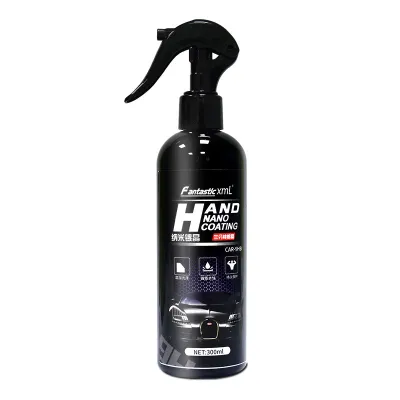
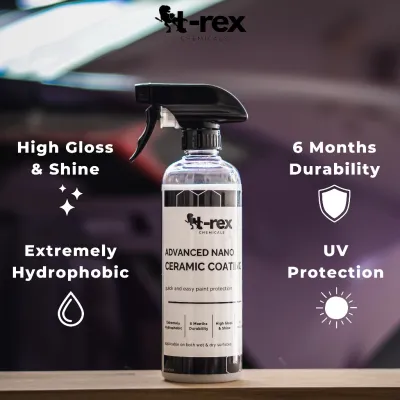
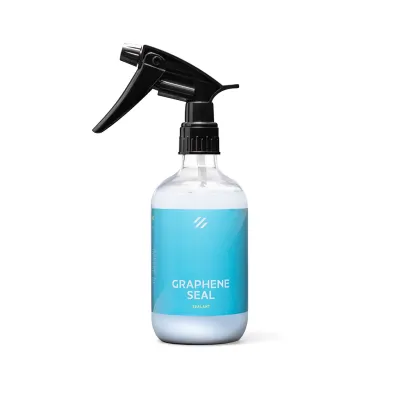
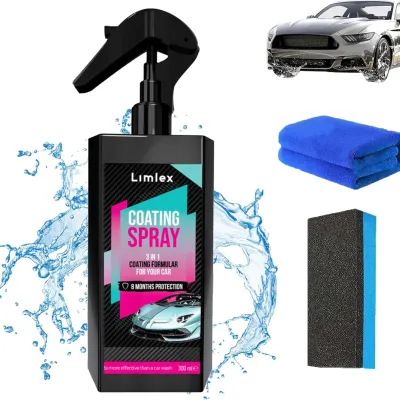
Prices are valid at publication and may change. Please refer to the product page for the latest price.
Wax, on the other hand, is a purely protective, sacrificial barrier. Traditional waxes, often formulated with natural carnauba or synthetic polymers, sit on top of the clear coat. They do not bond chemically with the paint; instead, they fill in microscopic valleys to create a temporary barrier and a warm, deep gloss. Because they merely sit on the surface, they are easily degraded by heat, detergents, and environmental friction.
Bio nano coatings represent a modern advancement in paint protection. These products utilize nanotechnology to penetrate the microscopic pores of the clear coat, forming a covalent chemical bond. This integration creates a semi-permanent, ultra-thin, and highly durable protective layer that does not wash off easily. Unlike wax, a true nano coating becomes an extension of your clear coat, offering superior resistance to environmental contaminants.
To avoid costly mistakes, always check the product labels, technical data sheets, or Safety Data Sheets (SDS) before purchase. Verify whether the product is classified as a corrective compound, a non-abrasive glaze, a sealant, or a true bonding nano coating. Using a product outside of its intended purpose can result in poor durability or an uneven finish.
Comparing Durability, Shine, and Maintenance Requirements
When evaluating how long these protective layers will last, you must look past marketing claims and consult the manufacturer’s specific guidelines. The actual lifespan of any paint protection is highly dependent on environmental exposure and washing habits. For instance, a vehicle parked daily in an open-air lot exposed to intense tropical UV rays and heavy downpours will experience much faster degradation of its protective layer than one kept in a sheltered multi-storey car park. Always check the product packaging for expected reapplication intervals under local conditions.

The aesthetic outcome of these methods is also distinct. Traditional carnauba-based waxes are celebrated for their warm, deep, and organic glow, which tends to make dark paint colors look incredibly rich. However, wax can sometimes attract dust due to its slightly oily nature. In contrast, bio nano coatings deliver a glassy, highly reflective, “candy-like” finish. This finish is characterized by extreme hydrophobicity, causing water to bead up and roll off the surface effortlessly, taking loose dirt with it.
The effort required to maintain your vehicle’s finish varies significantly between these options. Waxing is a high-frequency, low-complexity task; it must be reapplied regularly to maintain protection. Nano coatings require a low-frequency, high-complexity approach. While you do not need to reapply the coating often, you must adhere to strict maintenance protocols. This includes washing the vehicle exclusively with pH-neutral car shampoos, avoiding harsh automatic car washes that use abrasive plastic brushes, and periodically applying compatible maintenance toppers or booster sprays to rejuvenate the coating’s hydrophobic properties.
What to Verify When Choosing a Bio Nano Coating
In the detailing industry, “bio” and “nano” are terms that describe specific material properties. “Bio” generally indicates the integration of organic, sustainable, or bio-derived ingredients (such as bio-based silica or plant-derived resins) rather than relying solely on heavy synthetic petroleum solvents. “Nano” refers to the nanoscale size of the active ingredients, allowing them to bond at a molecular level with the paint. To verify these material claims, always request or download the product’s Safety Data Sheet (SDS) or official technical documentation. For example, when evaluating advanced options like Artdeshine Bio Nano, check the manufacturer’s specifications to confirm the active ingredients, carrier solvents, and environmental safety profiles.
Surface preparation is the most critical factor in the success of any nano coating. Because these coatings form a chemical bond with the clear coat, the paint surface must be completely bare and free of contaminants. Any remaining wax, grease, road grime, or iron particles will prevent the coating from bonding, leading to premature failure. A proper preparation workflow involves a thorough wash, chemical decontamination (using iron removers and tar removers), mechanical decontamination (using a clay bar), paint correction (polishing) to remove defects, and a final wipe-down with an isopropyl alcohol (IPA) panel prep solution.
Additionally, you must verify the specific application conditions required by the manufacturer. Nano coatings are highly sensitive to environmental factors during the application and curing phases. Check the technical data sheet for acceptable ambient temperature ranges and maximum humidity limits—factors that are particularly important in humid, tropical climates. Furthermore, verify the required dry curing time (during which the vehicle must remain dry and sheltered) and wet curing time (before the vehicle can be washed with detergents) to ensure you can accommodate these requirements in your workspace.
How to Decide: A Condition-Based Selection Guide
To choose the right method, evaluate your vehicle’s current paint condition, your budget, and your willingness to maintain the finish. This structured approach ensures you do not waste time or money on incompatible products.
Choose Polish if your vehicle’s paint looks dull, feels rough to the touch, or has visible swirl marks, light scratches, and water spot etching. Polishing is a corrective step that prepares the surface; it must always be followed by a protective layer of wax, sealant, or coating to lock in the results.
Choose Wax if you prefer a traditional, user-friendly application process, enjoy detailing your vehicle on weekends, want a warm, deep gloss, and prefer a temporary layer that can be easily stripped and reapplied without specialized chemical removers.
Choose a Bio Nano Coating if you want long-term, highly hydrophobic protection, want to make routine washing faster and easier, have a garage or sheltered space suitable for application and curing, and are willing to perform or pay for the extensive paint preparation required.
Before proceeding with any DIY application, perform a thorough paint inspection. If you observe deep scratches that catch your fingernail, clear coat peeling or bubbling (delamination), thin paint from excessive previous polishing, or previous unknown coatings, do not attempt to apply a nano coating or aggressive polish. Doing so can worsen the damage or result in an uneven, failing finish. In these scenarios, stop and consult a qualified professional detailer who can measure your paint thickness with a digital gauge and recommend a safe course of action.
Frequently Asked Questions (FAQ)
Can You Apply Wax Over a Bio Nano Coating?
While you can physically apply wax over a bio nano coating, it is generally not recommended. Traditional waxes do not bond well to the highly hydrophobic surface of a nano coating and will quickly wash off. Furthermore, the wax layer will cover the coating, masking its superior water-beading and self-cleaning properties with the less efficient characteristics of the wax. If you want to boost the gloss or slickness of your coating, always check the manufacturer’s guidelines and use a compatible silica-based (SiO2) maintenance spray or dedicated coating topper instead.
Is Polishing Required Before Applying a Nano Coating?
Polishing is highly recommended, and in most cases, essential before applying a nano coating. Because nano coatings are completely transparent and semi-permanent, they act like a magnifying glass over your paint. Any existing swirl marks, scratches, or oxidation will be locked beneath the coating, making them impossible to correct without chemically or mechanically stripping the protective layer. Additionally, polishing ensures that all old waxes, sealants, and oils are completely removed, providing a pristine, bare clear coat for the nano coating to establish a strong chemical bond.

Community discussion
Share your experience or ask a question. Comments are reviewed before publication.