
Finding the right tire pressure is the simplest way to improve your bicycle’s ride quality, speed, and puncture resistance. However, achieving that perfect inflation on the go depends entirely on whether your portable pump can actually deliver the required pressure. While a high-pressure road tire demands precision and significant force, a high-volume mountain bike tire requires a pump that can move a large amount of air quickly. Matching your tire’s specific pressure requirements with the mechanical limits of a portable pump ensures you are never left stranded on a roadside or park connector.
How to Find the Correct PSI for Your Bicycle Tire
Every bicycle tire has its recommended operating pressure molded directly into the rubber sidewall. This is typically expressed as a range, such as 30 to 50 PSI (pounds per square inch) or 2.0 to 3.5 Bar. Before inflating, locate these markings on both the front and rear tires, as different tire models or widths may require entirely different pressure levels.
The molded numbers represent the manufacturer’s safe operating boundaries. The minimum value ensures the tire remains seated securely on the rim and prevents pinch flats, which occur when the inner tube is crushed against the rim during an impact. The maximum value represents the structural limit of the tire casing; exceeding this number risks a sudden blowout or damage to the wheel rim.
Products mentioned in this guide
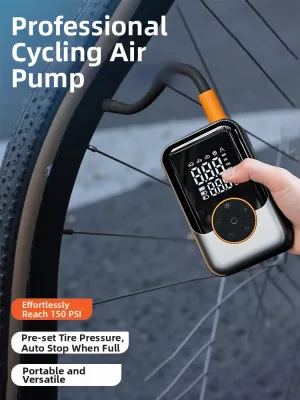
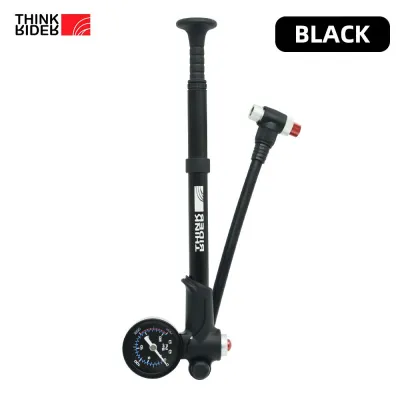
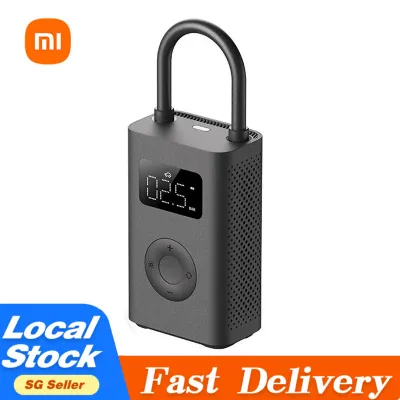
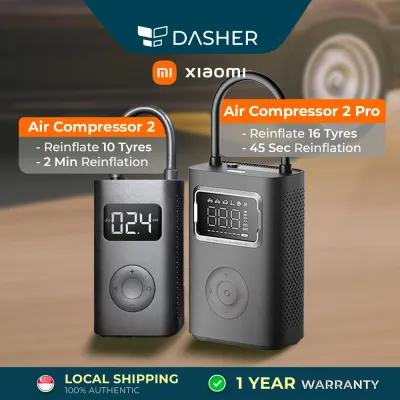
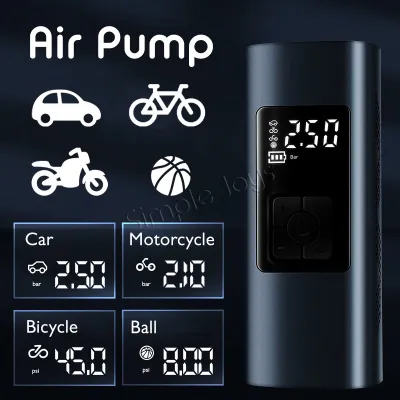
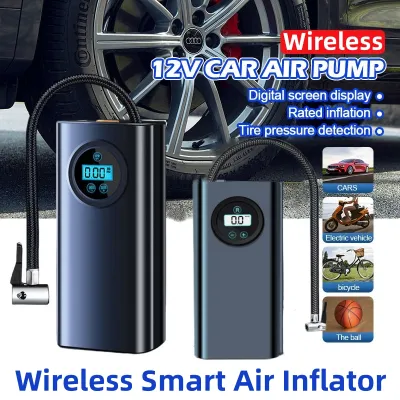
![[SG 24H Ship]12000mAh Nitrogen Cordless Car Air Pump 150PSI Portable Tire Inflator for Car Motorcycle Bike](https://img.lazcdn.com/g/p/db8d65465d4e56efe7ecd2e3046fe2d8.jpg_400x400q80.jpg_.webp)
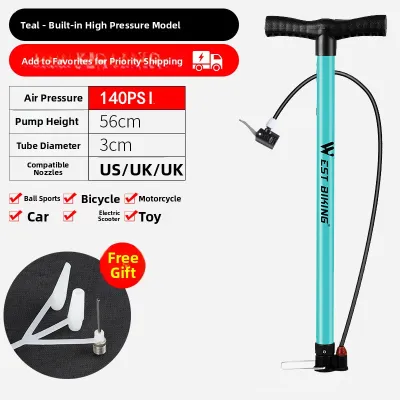
Prices are valid at publication and may change. Please refer to the product page for the latest price.
Within this recommended range, your ideal pressure depends on your total weight, including any cargo or commuting bags. Heavier riders or those carrying heavy panniers should run pressures closer to the maximum limit to support the load. Conversely, lighter riders can safely run lower pressures to improve comfort and traction.
Road conditions also dictate where your pressure should sit within the recommended range. Smooth asphalt allows for higher pressures, which minimize rolling resistance. If your daily route involves rough pavements, gravel paths, or wet weather, lowering the pressure by a few PSI increases the tire’s contact patch, providing better grip and absorbing road vibrations.
Decoding Portable Pump Specifications for Bicycles
When shopping for a portable pump, the specifications listed on the packaging can sometimes be misleading. A pump labeled with a “Max PSI” of 120 may technically be capable of reaching that pressure under laboratory conditions, but achieving it manually on the road is a different story. The sustainable working pressure—what you can realistically pump by hand without extreme physical exhaustion—is often much lower than the advertised maximum.

Portable pumps generally fall into two categories: manual mini-pumps and battery-powered portable inflators. Manual mini-pumps rely entirely on physical effort and are highly reliable because they do not require charging. However, their small chambers mean you must pump hundreds of times to fill a tire, and the resistance increases significantly as the pressure inside the tire rises.
Battery-powered portable inflators use a small electric motor to compress air, eliminating physical strain entirely. These devices allow you to set a target pressure, and they automatically shut off once that level is reached. While highly convenient, they are heavier than manual pumps, require regular battery maintenance, and can run out of charge if not monitored.
The primary trade-off in pump design is between high-pressure delivery and high-volume airflow. High-pressure pumps have narrow barrels, which make it easier to push air into a tire at high pressures but move very little air per stroke. High-volume pumps have wider barrels that fill large tires quickly but become extremely difficult to compress once the pressure rises past a certain point.
Matching Tire Types with Portable Pump Capabilities
To choose the right portable pump, you must align its mechanical strengths with your specific tire type. Narrow road tires, typically measuring 23mm to 28mm in width, require high pressures often ranging from 80 to 110 PSI. For these tires, a dedicated high-pressure manual mini-pump or a robust electric inflator is essential, as a high-volume pump will stall long before reaching the target pressure.
Wide tires, such as those found on mountain bikes, gravel bikes, or utility folding bikes, operate at much lower pressures, usually between 20 and 50 PSI. These tires contain a massive volume of air. Using a high-pressure pump on a wide tire is incredibly tedious, requiring hundreds of strokes; instead, a high-volume portable pump is the correct choice to get you back on the move quickly.
Valve compatibility is another critical factor to verify before purchasing a pump. Bicycle tires use either Presta valves (narrow, with a threaded locking nut, common on road and gravel bikes) or Schrader valves (wider, identical to car tire valves, common on mountain and utility bikes). Many modern portable pumps feature a reversible internal chuck or a dual-head design to accommodate both, but some require separate screw-on adapters.
Finally, consider the practical environment where you will use the pump. For daily commuting along park connectors, a lightweight manual pump that clips directly to your bottle cage mounts offers peace of mind without adding noticeable weight. If you frequently ride in groups or manage multiple bikes, a battery-powered electric pump simplifies maintenance, provided you keep it charged.
Safe Inflation Practices and Pressure Verification
Inflating a bicycle tire on the go requires a systematic approach to prevent damage to the tire, tube, or valve stem. Always inflate in gradual stages rather than rushing to pump as fast as possible. Stop every few strokes or seconds to squeeze the tire sidewalls, ensuring the tire bead is seating evenly inside the rim and not pinching the inner tube.
Many portable pumps feature built-in analog or digital pressure gauges, but these are not always perfectly accurate. The small gauges on mini-pumps are prone to reading errors due to the friction of the pump stroke. To ensure optimal performance and safety, cross-reference your pump’s reading with a standalone, calibrated digital pressure gauge once you return home.
During inflation, pay close attention to the physical feedback from your equipment. If the pump handle becomes excessively hot, or if you hear a faint hissing sound, stop immediately to check for air leaks around the valve connection or pump head. A loose valve core or a poorly sealed pump chuck will prevent the tire from holding pressure and can damage the valve stem under heavy pumping force.
Frequently Asked Questions (FAQ)
Can I use a standard car portable air compressor for bicycle tires?
Using a standard automotive portable air compressor on bicycle tires is generally not recommended unless the compressor has a highly precise, low-pressure auto-shutoff feature. Car compressors are designed to move a high volume of air into large tires. Because bicycle tires have a much smaller volume, an automotive compressor can over-inflate and burst a bicycle tire in a matter of seconds before you can manually stop it.
How often should I check and adjust my bicycle tire pressure?
You should check your bicycle tire pressure before every single ride. Bicycle inner tubes, especially those made of lightweight butyl or latex, naturally lose air over time through microscopic pores in the material. While a daily commuter might only need to top up their tires once or twice a week, letting a bike sit for even a few days can result in a significant drop in pressure, increasing the risk of pinch flats.
Community discussion
Share your experience or ask a question. Comments are reviewed before publication.