
A reliable tyre pressure monitor is one of the most practical upgrades you can add to your vehicle in Singapore. Daily driving in our tropical climate subjects tyres to extreme road surface heat, sudden monsoon downpours, and stop-start urban traffic. To choose the best tyre pressure monitor, you must evaluate how well the system handles high cabin temperatures, its ease of installation, and whether its features align with your specific vehicle type—whether you drive a compact hatchback, a family SUV, or a commercial delivery van.
Maintaining the correct tyre pressure is not just about fuel efficiency; it is a critical safety measure. Underinflated tyres run hotter, wear out faster, and compromise your vehicle’s braking performance on wet roads. A dedicated monitoring system provides real-time visibility into your tyres’ health, alerting you to slow leaks before they develop into dangerous blowouts on the expressway.
What to Look for in a TPMS for Singapore's Climate
Operating temperature range is the most critical technical specification to verify when choosing a tyre pressure monitor for use in Singapore. When your vehicle is parked in an open-air carpark under direct sunlight, interior cabin temperatures can easily exceed 60°C to 70°C. Solar-powered display units, which are typically mounted on top of the dashboard, bear the brunt of this thermal stress. You must check the manufacturer’s specified operating temperature limits rather than relying on generic marketing claims like “heat-resistant”; look for units explicitly rated to withstand storage and operating temperatures of at least 80°C.
Products mentioned in this guide
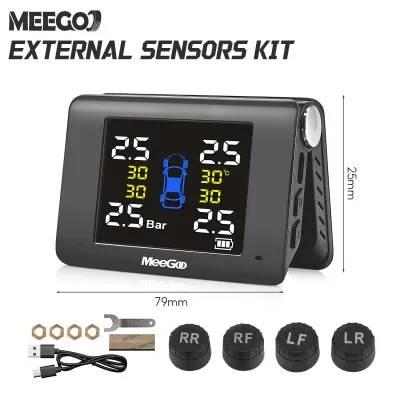
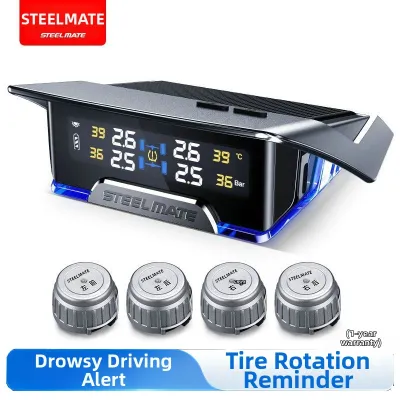
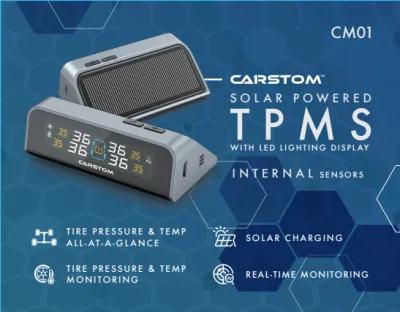
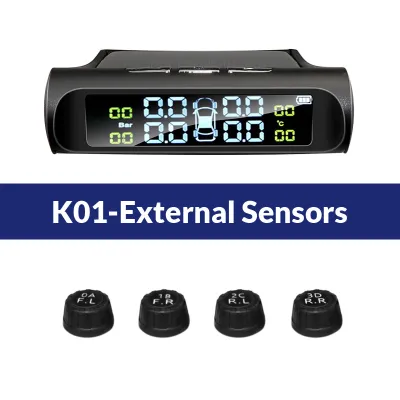
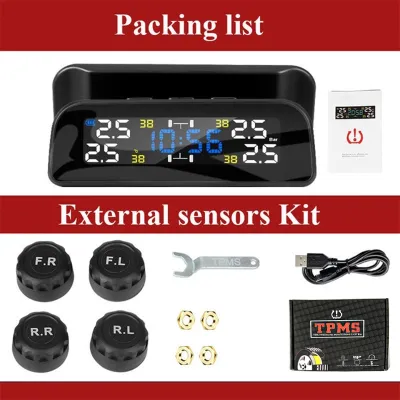
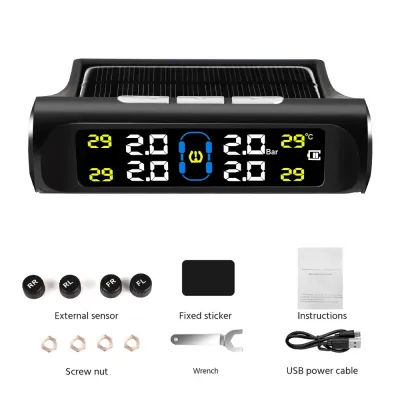
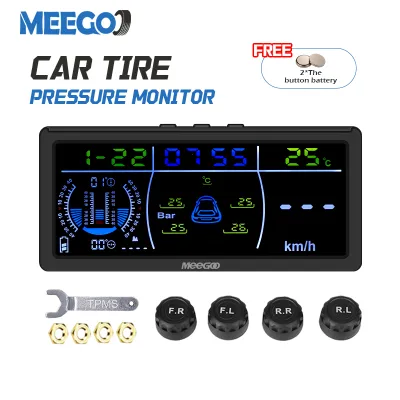
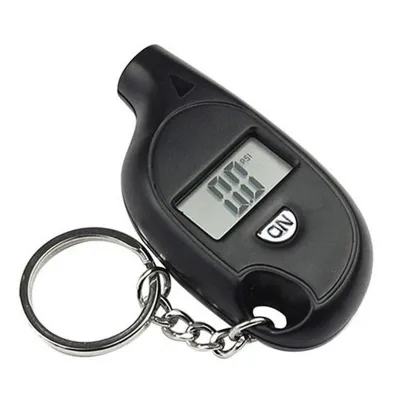
Prices are valid at publication and may change. Please refer to the product page for the latest price.
Display readability under intense tropical sunlight is another key consideration. The bright midday sun can easily wash out low-quality liquid crystal screens, forcing you to squint or strain your eyes to check your readings. Opt for display units that feature anti-glare coatings, high-contrast screens, or automatic brightness adjustment. This ensures the numbers remain clearly visible whether you are driving under direct sunlight or entering a dimly lit underground carpark in the Central Business District.
Sensor durability and physical security are paramount for external units mounted on tyre valve stems. Singapore experiences heavy seasonal downpours that lead to localized ponding, meaning your sensors will regularly be submerged in water, road grime, and brake dust. Always check the product label for an Ingress Protection (IP) rating; look for a minimum of IP67, though IP68 is highly preferred for long-term reliability. Additionally, ensure the kit includes robust anti-theft locking nuts to prevent opportunistic theft or vandalism in public parking areas.
Finally, look for systems that offer customizable alarm thresholds. Ambient heat in Singapore causes tyre pressures to rise naturally by several PSI during a drive, especially during sustained travel on the Pan Island Expressway (PIE). A system with rigid, non-adjustable factory settings may trigger annoying false alarms as your tyres warm up. Custom thresholds allow you to set precise high-pressure, low-pressure, and high-temperature alerts tailored to your vehicle manufacturer’s recommendations.
Top TPMS Features and Selection Guide by Vehicle Type
Different vehicle types demand different monitoring capabilities. Matching your tyre pressure monitor to your specific vehicle and driving routine ensures you get the most practical and reliable performance without paying for unnecessary features.

Sedans and Hatchbacks for City Commuting
For standard passenger cars used primarily for daily commutes, school runs, and navigating Electronic Road Pricing (ERP) gantries, a compact and streamlined TPMS setup is ideal. Space on the dashboard of a hatchback or sedan is limited, so a bulky receiver can create visual obstructions. A compact, solar-powered display that sits flat on the dashboard is highly recommended. These units charge continuously from ambient daylight, keeping your dashboard free of messy charging cables that would otherwise occupy your 12V accessory socket.
For these commuter vehicles, a standard four-wheel external sensor kit is usually the most practical choice. These kits are highly accessible and can be installed at home in under fifteen minutes without any specialized tools. They simply screw onto your existing valve stems in place of your standard valve caps, making them easy to maintain and transfer if you decide to change vehicles.
When choosing a model for city driving, prioritize systems with a quick wake-up or smart vibration-sensing function. When you park your car overnight in a multi-storey carpark, the display unit enters a low-power sleep mode. As soon as you open the car door or start the engine, the internal sensor detects the vibration and instantly wakes up the display. This ensures you can check your tyre pressures before you even drive out onto the main road.
SUVs and 4x4s for Family and Weekend Trips
Larger family vehicles and SUVs present unique monitoring challenges that require a more robust hardware solution. If you use your SUV for weekend road trips across the Causeway or carry heavy loads of family gear, monitoring only the active four tyres is insufficient. A flat spare tyre is a common and frustrating discovery during a roadside emergency. Look for TPMS systems that support five or six sensors, allowing you to mount a dedicated sensor on your spare tyre—whether it is mounted on the rear tailgate or tucked underneath the chassis.
It is also essential to verify that the TPMS pressure range limits are compatible with your vehicle’s requirements. While standard sedans typically run at pressures between 30 and 35 PSI, larger SUVs, off-road vehicles, and light trucks often require much higher inflation pressures, sometimes exceeding 45 or 50 PSI when fully loaded. Ensure the monitor you select can measure and display these higher pressures accurately without triggering false high-pressure alarms.
Signal transmission strength is another critical factor for longer wheelbases. The distance between the rear wheels of a large SUV and the dashboard display is significantly greater than in a compact car. To prevent signal dropouts or delayed readings, choose a system with robust wireless transmission capabilities. Some specialized systems designed for larger vehicles utilize active signal repeaters or boosters that plug into a rear 12V outlet to ensure a stable, continuous data stream from the rear axle to the receiver.
Light Commercial Vehicles for Delivery and Fleet Use
Delivery vans, panel vans, and light commercial trucks operate under demanding high-mileage conditions and carry heavy payloads daily. For fleet managers and business owners, minimizing vehicle downtime is crucial. Consider choosing a TPMS that offers Bluetooth connectivity or integrates with a dedicated smartphone app. This allows drivers or fleet supervisors to perform quick pre-trip inspections by scanning the tyre pressures of multiple vehicles directly on a mobile device, streamlining maintenance workflows.
Commercial vehicles are subjected to harsh daily use, making heavy-duty anti-theft mechanisms and durable construction a top priority. Look for external sensors with reinforced brass or stainless steel threads that resist stripping and corrosion. Additionally, choose systems that utilize widely available, user-replaceable batteries (such as CR1632 or CR2032 coin cells). This allows your maintenance team to swap out dead batteries in seconds, keeping the vehicle on the road without needing to replace the entire sensor unit.
Finally, commercial vehicle cabins are inherently noisier than passenger cars due to diesel engines and minimal cabin sound insulation. A standard, quiet warning beep will easily be drowned out by cabin noise. Ensure the display unit features a highly audible alarm speaker with adjustable volume levels, complemented by bright, flashing visual alerts on the screen to instantly grab the driver’s attention in the event of a sudden pressure loss.
Internal vs. External Sensors: Which Should You Choose?
Deciding between internal and external sensors is one of the most important choices you will make when purchasing a tyre pressure monitor. Both configurations have distinct trade-offs regarding installation effort, maintenance costs, and protection from the elements.
External sensors are highly popular due to their DIY-friendly nature. They screw directly onto the external valve stem, allowing you to install them yourself without any professional help. When the sensor battery dies, you can easily unscrew the sensor cap and replace the standard coin-cell battery in a few minutes. However, because they are exposed to the elements, they are more susceptible to physical damage from curbs, road debris, and potential theft.
Internal sensors, on the other hand, are installed inside the tyre cavity, directly replacing the existing valve stem. This placement completely protects them from environmental hazards, road debris, and theft. They also provide highly accurate temperature readings because they are in direct contact with the air inside the tyre, rather than the external metal of the valve stem. However, installation requires professional tyre equipment; you must visit a tyre workshop to have the tyres demounted from the rims, the sensors installed, and the wheels rebalanced. Furthermore, because internal sensors are sealed to withstand extreme centrifugal forces, their internal batteries are typically non-replaceable. When the battery dies (usually after 3 to 5 years), you must replace the entire sensor unit.
| Feature | External Sensors | Internal Sensors |
|---|---|---|
| Installation Method | Simple DIY (screws onto valve stem) | Professional installation required (tyre demounting) |
| Battery Maintenance | Easy DIY replacement (uses standard coin cells) | Non-replaceable battery (requires full sensor replacement) |
| Theft & Damage Risk | Moderate to high (exposed to elements and theft) | Extremely low (safely sealed inside the tyre) |
| Signal & Temp Accuracy | Good pressure accuracy; moderate temperature accuracy | High pressure accuracy; highly accurate temperature readings |
| Ideal User Profile | Daily commuters seeking convenience and low maintenance costs | High-mileage drivers wanting maximum security and accuracy |
Installation, Calibration, and Safety Checks
Proper setup and calibration are essential to ensure your tyre pressure monitor provides accurate and actionable data. Following a structured installation process helps prevent air leaks and ensures your system functions reliably.
To set up your TPMS correctly, you must first establish your baseline calibration values. Always refer to your vehicle manufacturer’s recommended cold tyre inflation pressure. This information is typically found on a placard located on the driver’s side B-pillar door jamb or in your vehicle’s owner’s manual. Never use the maximum pressure rating printed on the tyre’s sidewall, as this is the absolute limit the tyre can hold under maximum load, not the daily driving recommendation. Once you have inflated your tyres to the correct cold pressure, set your TPMS low-pressure alarm threshold to approximately 10% to 15% below this value, and the high-pressure alarm to 20% to 25% above it.
After installing external sensors, performing a leak test is a critical safety step. Because external sensors depress the valve core to read the pressure, any misalignment or a worn internal rubber seal can cause a slow, continuous air leak. After screwing the sensor tightly onto the valve stem, spray or brush a simple mixture of soapy water around the base of the sensor and the valve stem. Watch closely for several minutes; if you see expanding bubbles forming, it indicates that air is escaping. Immediately remove the sensor, inspect the internal rubber O-ring for damage, clean the valve threads, and reinstall it securely before conducting the test again.
Regular tyre rotation (typically every 10,000 kilometres) is essential for ensuring even tread wear and extending the lifespan of your tyres. However, rotating your physical tyres means their positions will no longer match the layout shown on your TPMS display. To correct this, you must reassign the sensor positions on your display unit. Most modern monitors feature a dedicated “sensor learning” or “rotation” mode. This allows you to electronically swap the positions on the screen without physically unscrewing and swapping the sensors themselves, maintaining accurate tracking of which wheel is experiencing a pressure drop.
It is vital to remember that a tyre pressure monitor is strictly a monitoring and early-warning tool; it is not a preventative safety device or a diagnostic solution. If your TPMS alerts you to a rapid drop in pressure, you must immediately find a safe place to pull over, exit the main traffic lanes, and visually inspect the tyre for punctures or structural damage. Never ignore a warning or attempt to drive to your destination hoping the pressure will stabilize. For internal sensor installation, or if your TPMS consistently fails to pair or displays erratic readings, always consult a professional tyre technician or qualified mechanic to ensure your vehicle’s safety and roadworthiness.
Frequently Asked Questions (FAQ)
Do I need an aftermarket TPMS if my car already has a built-in system?
Many modern vehicles sold in Singapore come equipped with an indirect TPMS. These systems do not use physical pressure sensors inside the tyres; instead, they monitor wheel speed via the Anti-lock Braking System (ABS) sensors. If a tyre loses pressure, its overall diameter decreases slightly, causing it to spin at a different speed than the other wheels, which triggers a warning light on your dashboard. While useful, indirect systems do not show you the actual PSI or temperature of each individual tyre, and they often only alert you after the pressure has already dropped significantly. An aftermarket direct TPMS provides real-time, precise digital readouts for every wheel, allowing you to spot slow leaks and temperature anomalies long before they become dangerous.
How does Singapore's heat affect solar-powered TPMS batteries?
The intense tropical heat in Singapore can pose a challenge for solar-powered display units mounted on the dashboard. When a car is parked in direct sunlight with the windows closed, cabin temperatures can rise rapidly, exposing the display’s internal lithium-ion battery to extreme heat. Over time, prolonged exposure to high temperatures accelerates battery degradation, reducing its capacity to hold a charge and potentially causing the battery to swell. To mitigate this risk, always verify that the TPMS manufacturer specifies a high maximum operating temperature (ideally 80°C or higher). Additionally, whenever possible, park your vehicle in shaded areas, multi-storey carparks, or use a reflective front windscreen sunshade to protect the dashboard and the display unit from direct thermal stress.
Can I use the same TPMS when I change my tyres or rims?
Yes, you can continue using your existing TPMS when upgrading or replacing your tyres and rims, but the process depends on the type of sensors you have. External sensors are highly versatile; you can simply unscrew them from your old wheels and screw them onto the valve stems of your new rims yourself. If you have internal sensors, the transition requires professional assistance. During a tyre change, you must inform the tyre technician that you have internal sensors installed. The technician must carefully demount the old tyres to avoid snapping the sensor body, transfer the sensor and valve assembly to the new rims, and ensure they are securely tightened before mounting and balancing the new tyres.
Community discussion
Share your experience or ask a question. Comments are reviewed before publication.