
Selecting the right tesla model y sunshade requires balancing thermal performance, ease of deployment, and physical compatibility with the vehicle’s unique cabin architecture. The Tesla Model Y features an expansive glass-heavy design, including a massive front windshield and frameless side windows, which maximizes visibility but also creates a significant greenhouse effect. To combat interior heat and protect sensitive electronics, a high-quality custom-fit reflective front windshield sunshade combined with tailored side window shades represents the most effective solution. These accessories physically block solar radiation before it penetrates the cabin, preserving battery range by reducing the load on the vehicle’s active cooling systems.
Why Your Tesla Model Y Needs Dedicated Sunshades
The Tesla Model Y is designed with an aesthetic that emphasizes openness, highlighted by its sweeping front windshield and panoramic glass roof. While this architecture offers an unparalleled view and a spacious cabin feel, it presents severe thermal challenges, particularly in tropical climates like Singapore’s. Under direct sunlight, glass acts as a highly efficient thermal transmitter, allowing shortwave solar radiation to enter the cabin. Once inside, this radiation is absorbed by the dark interior surfaces—such as the dashboard and seats—and re-radiated as longwave infrared heat, which cannot easily escape back through the glass. This process creates a rapid greenhouse effect, raising cabin temperatures far above the ambient outdoor level within minutes of parking in open-air lots or HDB multi-storey car parks.
Prolonged exposure to intense ultraviolet (UV) radiation and extreme heat can cause irreversible damage to the Model Y’s interior materials. The vehicle utilizes premium vegan leather (polyurethane-based) for its seating and cabin trim, which is more susceptible to thermal stress and UV degradation than traditional materials if left unprotected. Over time, unmitigated solar exposure can lead to fading, micro-cracking, and a loss of material elasticity. Furthermore, the minimalist dashboard features a prominent 15-inch central touchscreen containing critical vehicle control systems. Direct, concentrated sunlight baking the screen can degrade the optical adhesive layers, potentially leading to yellowing borders, touch-responsiveness issues, or screen delamination.
Products mentioned in this guide
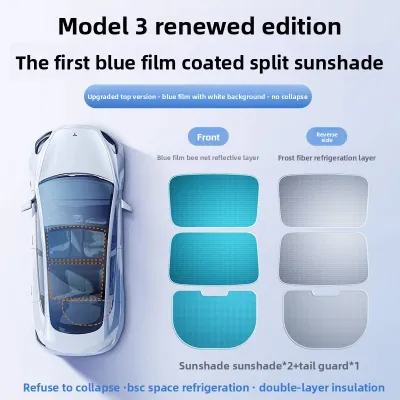
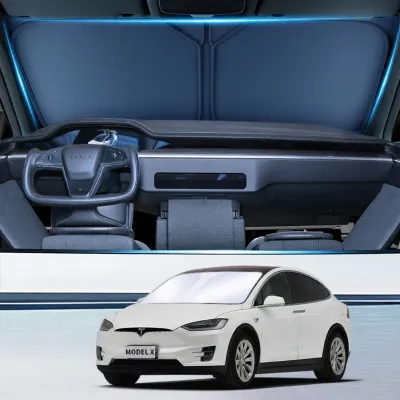
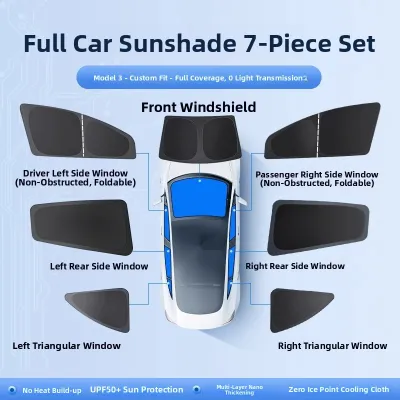
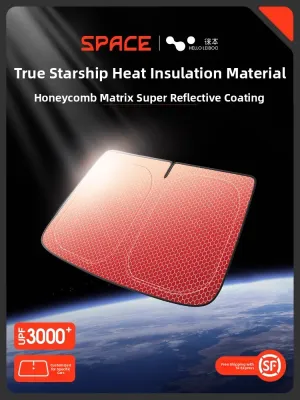
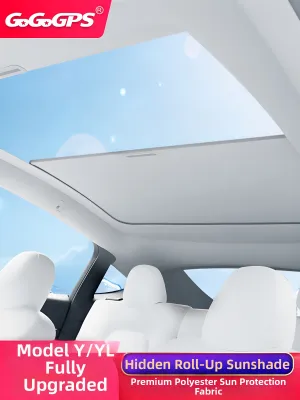
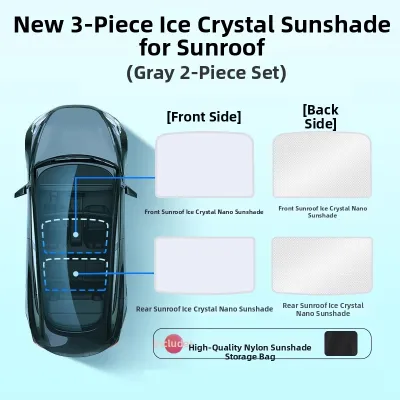
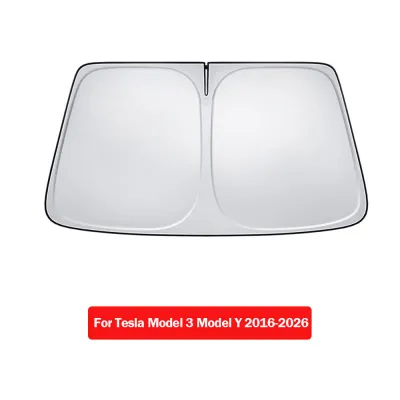
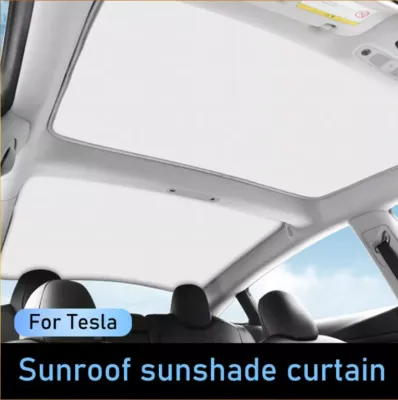
Prices are valid at publication and may change. Please refer to the product page for the latest price.
Beyond material preservation, dedicated sunshades directly influence the vehicle’s energy efficiency and overall range. When parked in high-heat environments, the Model Y’s Cabin Overheat Protection (COP) system automatically activates to keep the interior temperature below a set threshold (typically 40°C or 45°C) by running the climate control fan or air conditioning. While COP is crucial for protecting onboard systems, its continuous operation drains the high-voltage battery pack. By installing high-performance sunshades, you significantly reduce the rate of heat accumulation inside the cabin. This passive heat rejection minimizes the frequency and duration of COP activation, preserving valuable battery state-of-charge (SoC) and ensuring more range is available for driving.
How to Choose the Right Sunshade for Your Model Y
Selecting a sunshade for the Tesla Model Y requires a systematic evaluation of several critical design and performance criteria. Because of the vehicle’s distinct engineering choices, generic off-the-shelf accessories often fail to provide adequate protection or can even damage interior components. To make an informed purchase, you must verify specific product dimensions, material compositions, and mounting mechanisms against the vehicle’s structural layout.

Custom Fit vs. Universal
The Model Y’s front windshield features a steep rake and a highly specific curvature that tapers toward the roofline. Universal sunshades, which are typically designed in basic rectangular shapes, cannot conform to this geometry. This mismatch results in significant perimeter gaps that allow direct sunlight to stream in, creating localized hot spots and rendering the shade far less effective. Furthermore, the Model Y’s side doors feature a frameless window design. Without a metal upper door frame to support standard magnetic or slip-on shades, you must choose custom-fit options specifically engineered to secure within the window channels or adhere directly to the glass.
Material and Construction
To achieve maximum thermal isolation, look for sunshades constructed with multi-layer barrier systems. High-quality options typically feature an outer reflective layer (such as an aluminum foil or silver-coated polyester) to bounce away incoming solar radiation. Beneath this reflective skin, a thermal barrier layer—often composed of non-conductive closed-cell foam or bubble-wrap insulation—slows down the conduction of heat toward the cabin. The innermost layer should consist of a durable, non-abrasive fabric (like felt or soft polyester) to protect the dashboard and prevent heat from radiating inward. Always verify the manufacturer’s technical specifications regarding UV and infrared (IR) rejection rates before purchasing.
Ease of Use and Storage
A sunshade is only useful if it is consistently deployed. Therefore, you must evaluate the mechanical design of the shade to ensure it fits your daily routine. Rigid, multi-panel folding shades offer excellent durability and heat rejection but can be cumbersome to fold and store within the cabin. Conversely, flexible wire-frame shades twist down into compact circles that easily slide into the front trunk (frunk), under-trunk, or seatback pockets. Balance your storage availability against your tolerance for manual folding setups.
Safety and Sensor Clearance
The area behind the Model Y’s rearview mirror houses a complex array of front-facing cameras and sensors critical for Autopilot, Full Self-Driving (FSD), and automatic rain-sensing wipers. A poorly designed sunshade can exert physical pressure on this plastic housing, potentially misaligning the cameras or damaging the delicate mounting brackets. Additionally, Singapore-registered vehicles are equipped with an On-Board Unit (OBU) or In-vehicle Unit (IU) mounted on the windshield for Electronic Road Pricing (ERP). Ensure the sunshade features a deep, velcro-secured neckline cut-out that fits cleanly around the rearview mirror housing and does not dislodge or damage the OBU/IU during installation.
Front Windshield Sunshade Options: Styles and Trade-offs
The front windshield represents the largest single point of solar heat entry in the Tesla Model Y. Because of its massive surface area and distinct curvature, choosing the right style of front shade involves balancing thermal performance, physical safety of the interior, and ease of daily deployment.
Custom-Fit Foldable Shades
Custom-fit foldable shades are typically constructed from rigid, multi-layered panels that fold accordion-style. These shades are engineered specifically to match the exact perimeter of the Model Y windshield, providing complete edge-to-edge coverage with virtually zero light leaks. The rigid core prevents the shade from sagging over time, ensuring the reflective outer layer remains perfectly positioned against the glass to bounce away solar heat.
However, this rigidity comes with a storage trade-off. Accordion-style shades do not twist or compress; they fold into a long, flat rectangular shape that can be awkward to handle inside the cabin, especially when passengers are present. When purchasing a foldable shade, inspect the hinge joints. High-quality models reinforce these seams with fabric binding to prevent the reflective coating from cracking or flaking after repeated folding cycles.
Retractable and Roller Shades
Retractable sunshades are semi-permanently mounted to the sides or bottom of the windshield frame, utilizing a spring-loaded roller mechanism that allows you to pull the shade across the glass and secure it in place within seconds. This design offers convenience for daily commuters who frequently park in open-air lots and want a rapid deployment solution.
Despite their convenience, retractable shades have notable drawbacks. The mounting brackets must be adhered to the A-pillars or windshield glass using high-bond tape or suction cups, which some owners find aesthetically unappealing. Because the roller housing requires structural clearance, these shades often leave noticeable gaps along the edges, allowing thin beams of sunlight to bypass the barrier. Furthermore, you must verify that the retracted housing does not obstruct your forward visibility or interfere with the deployment of the side-curtain airbags located in the A-pillars.
Umbrella-Style Shades
Umbrella-style sunshades utilize a central shaft and a series of collapsible metal or fiberglass ribs to expand a reflective fabric canopy across the windshield. When collapsed, they fold down into a highly compact form factor resembling a standard rain umbrella, allowing them to be stored easily in the door pockets or the glove compartment.
While highly portable, umbrella shades present distinct safety risks to the Model Y’s interior. The metal tips of the expansion ribs can easily scratch the soft-touch dashboard material or the delicate leather steering wheel during deployment. More critically, the central handle and shaft can exert concentrated physical pressure against the 15-inch center touchscreen if not carefully positioned. If you opt for this style, choose a model specifically designed for electric vehicles, featuring flexible fiberglass ribs, rubberized protective tips, and a bendable or offset handle shaft to avoid contact with the center display.
Side Window Sunshade Options: Styles and Trade-offs
Shading the side windows of the Model Y is essential for protecting rear-seat passengers—particularly children—from harsh lateral glare and reducing the thermal load on the side glass. However, the Model Y’s frameless door design introduces unique engineering challenges for side window shades.
Magnetic Mesh Shades
Magnetic mesh shades feature a flexible steel wire frame embedded with small, high-strength magnets. Because the Model Y’s side windows are frameless, there is no upper door frame on the door itself to snap a magnetic shade onto. Instead, these shades are designed to adhere to the exposed steel door frame of the vehicle’s body structure when the door is closed, or they utilize small metal clips that slide into the rubber weatherstripping channels of the window frame.
When selecting magnetic mesh shades, verify that the magnets are securely stitched into the fabric hem to prevent them from sliding out and scratching the vehicle’s paintwork or interior trim. These shades allow you to roll down the glass window slightly for ventilation while keeping the mesh barrier in place to block insects and filter sunlight. However, you must ensure the shade does not interfere with the window’s automatic indexing feature (where the glass drops slightly when the door handle is pulled) to avoid damaging the rubber seals.
Static Cling and Suction Cup Films
Static cling shades utilize thin, flexible PVC sheets that adhere directly to the interior surface of the side glass using static electricity, eliminating the need for adhesives or mechanical fasteners. They provide a very clean, low-profile aesthetic that closely resembles a professional window tint, offering effective UV filtration without obstructing the window’s operation. Suction cup shades offer a similar direct-to-glass attachment but rely on rubber suction cups to hold a mesh or solid fabric panel in place.
While static cling films look sleek, they can be challenging to apply smoothly without trapping unsightly air bubbles. Over time, exposure to extreme cabin heat can cause the static charge to weaken, leading to peeling or falling off. Suction cups are more reliable in terms of staying power but can leave round residue marks on the glass that require regular cleaning. Most importantly, you must never roll down the side windows while static cling or suction cup shades are attached, as they can get dragged into the door cavity, potentially jamming the window regulator mechanism.
Slip-On Fabric Sleeves
Slip-on fabric sleeves, often referred to as “window socks,” are designed to slide over the top of a vehicle’s door frame, covering both the interior and exterior of the glass with a double-layered elastic mesh. This design allows for maximum airflow when the window is rolled down while providing complete shade.
However, slip-on sleeves are physically incompatible with the Tesla Model Y’s frameless doors. Because there is no upper frame around the glass when the door is open, there is no structure to hold the sleeve in place. Attempting to stretch a sleeve over the entire door body will prevent the door from closing properly, compromise the weather seals, and cause severe wind noise and water leaks. Model Y owners should completely avoid this style and focus instead on custom-fit interior options.
Installation, Storage, and Care Guidelines
Proper handling and maintenance of your Tesla Model Y sunshades will extend their operational lifespan and prevent accidental damage to your vehicle’s interior. When installing a front windshield sunshade, always begin by unfolding the shade inside the cabin with the reflective side facing outward. Gently slide the bottom edge of the shade down to the base of the windshield where it meets the dashboard, taking care not to scrape the central touchscreen or the OBU/IU toll reader. Once the bottom is positioned, lift the top of the shade into place against the upper glass. Secure the shade by lowering the driver and passenger sun visors to hold the top edge firmly against the roofline. Avoid pulling or bending the visor hinges forcefully, as this can cause premature wear on the mounting clips.
When folding your sunshades for storage, follow the manufacturer’s specific mechanical instructions to prevent damaging the internal structure. For flexible wire-frame shades, hold the frame on opposite sides, twist your hands in opposite directions to form a figure-eight, and fold the two loops together into a flat circle. For rigid accordion-style shades, fold the panels along the pre-creased seams. Avoid forcing a fold in the wrong direction or compressing the panels under heavy luggage, as permanent creasing can delaminate the reflective outer layer from the inner foam core, drastically reducing its heat-blocking efficiency. Store the folded shades in a dry, cool location such as the sub-trunk or frunk to keep them out of the passenger cabin when not in use.
Regular cleaning is essential to maintain the appearance and performance of your sunshades. For reflective metallic or polyester surfaces, wipe them down periodically with a damp microfiber cloth to remove dust, fingerprints, and condensation residue. Do not use harsh chemical solvents, glass cleaners, or abrasive pads, which can strip away the reflective coatings. For mesh side window shades, gently vacuum the surface using a soft brush attachment to remove trapped dust, or hand-wash them in lukewarm water with a mild detergent if specified by the manufacturer’s care label. Always allow the shades to air-dry completely before folding and storing them to prevent the growth of mold or mildew in the enclosed storage compartments.
Safety Warning: Under no circumstances should you drive the vehicle with the front windshield sunshade or front-row side window shades installed. Doing so severely restricts your field of vision, creating an immediate safety hazard and violating local traffic laws, including Singapore’s Land Transport Authority (LTA) regulations regarding driver visibility. Always stow all front-row shades securely in the trunk or frunk before shifting the vehicle into gear.
Frequently Asked Questions (FAQ)
Do I need a sunshade for the Model Y glass roof as well?
While the Tesla Model Y’s panoramic glass roof comes from the factory with a heavy infrared and ultraviolet protective tint, it can still transfer significant radiant heat into the cabin during prolonged exposure to intense tropical sunlight. Installing a dedicated, custom-fit mesh or reflective roof sunshade is highly recommended if you frequently park outdoors or find the cabin uncomfortably warm from above. A roof shade adds an extra physical barrier that significantly reduces the overhead heat load, keeping the cabin cooler and reducing the energy required by the air conditioning system to maintain a comfortable temperature.
Will aftermarket sunshades trigger the Tesla sentry mode or drain the battery?
Aftermarket sunshades will not directly trigger Tesla’s Sentry Mode or cause unusual battery drain, provided they are installed correctly. Sentry Mode relies on external cameras and internal ultrasonic or cabin camera sensors to detect security threats. A properly fitted sunshade that sits flush against the glass will not block the external cameras. However, you must ensure that loose straps, suction cups, or sagging fabric do not move inside the cabin when the climate control fan runs, as physical movement can trigger the internal cabin alarm. Additionally, by keeping the interior cooler, sunshades actually reduce battery drain by minimizing the workload of the Cabin Overheat Protection system.
How do I prevent a front windshield sunshade from scratching my dashboard?
To protect your Model Y’s soft-touch dashboard and the 15-inch center touchscreen from physical scratches or pressure damage, always handle sunshades with care during installation and removal. Choose shades that feature soft fabric edges, rounded corners, and rubberized or fabric-covered frame tips. When deploying or collapsing the shade, avoid dragging the edges across the dashboard surface. If you are using an umbrella-style shade, ensure the central shaft is fully wrapped in a protective sleeve or features a flexible, non-marring handle, and never rest the weight of the shade directly on the center console or touchscreen housing.
Community discussion
Share your experience or ask a question. Comments are reviewed before publication.