
Quick Selection Guide for Dashboard Phone Pads
Selecting the right non-slip pad for your car dashboard is not as simple as finding the stickiest product on the shelf. There is no single “best” sticky pad for every vehicle; the ideal choice depends heavily on your dashboard’s specific surface texture, material composition, and the extreme thermal conditions inside your cabin. A pad that holds securely on a flat, glossy plastic surface may fail completely on textured leather, while an aggressive adhesive pad might permanently ruin a delicate soft-touch dashboard coating.
To make an informed purchase, you must evaluate three non-negotiable performance criteria: grip strength during sudden deceleration, residue-free removal, and long-term heat resistance. Your pad must be capable of holding a heavy smartphone secure during emergency braking or sharp cornering, yet peel away cleanly when you decide to remove or reposition it. Furthermore, the material must withstand intense thermal stress without melting or releasing chemical plasticizers that can bond with your car’s interior trim.
In tropical environments like Singapore, where parked vehicles are routinely exposed to intense sunlight, cabin temperatures can easily surpass 60°C. Under these conditions, traditional adhesive-based pads are highly prone to chemical degradation, often melting into a sticky residue that permanently stains the dashboard. For these high-heat scenarios, friction-based silicone mats or advanced nano-suction pads offer a much safer, chemically stable alternative. They protect your vehicle’s interior surfaces while maintaining a reliable physical grip on your mobile device.
Products mentioned in this guide
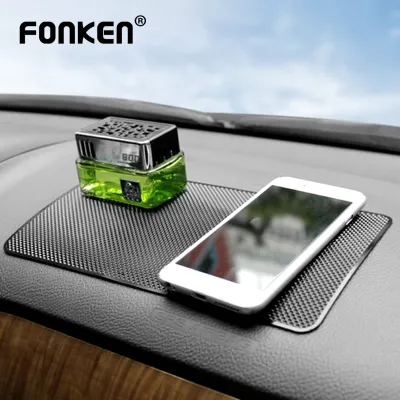
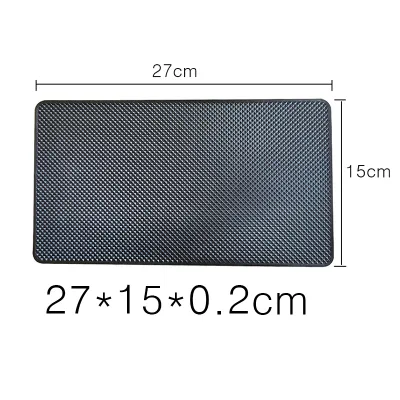
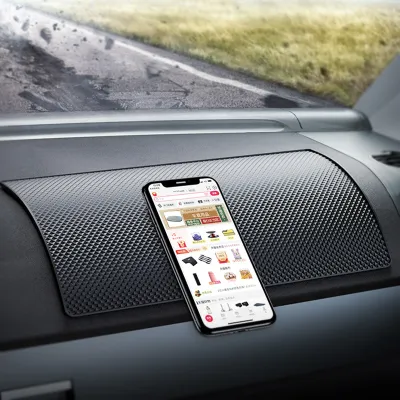
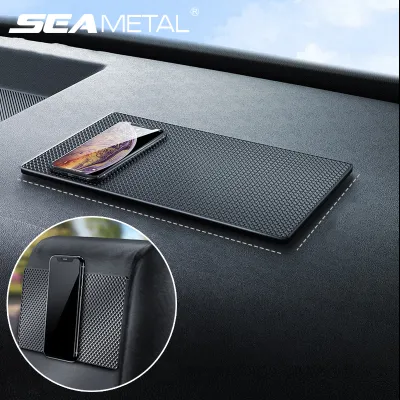
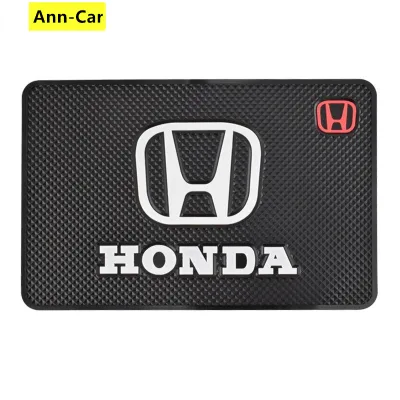
Prices are valid at publication and may change. Please refer to the product page for the latest price.
Best Types of Non-Slip Pads for Car Dashboards
Polyurethane (PU) Gel Pads
Polyurethane (PU) gel pads are popular accessories due to their immediate, highly tactile grip. These pads do not rely on wet chemical glues; instead, they leverage the inherent surface tackiness of polyurethane elastomers. The material is highly flexible on a microscopic level, allowing it to conform closely to the minor surface variations of your phone and dashboard to create a strong, temporary physical bond.

Pros and Ideal Use Cases
- Exceptional Initial Grip: They can hold smartphones at incredibly steep angles, making them highly effective for contoured or sloped dashboard designs.
- Easy Repositioning: You can peel them off and move them to a different location without losing their physical properties.
- Excellent Performance on Smooth Plastics: They perform exceptionally well on flat, non-porous hard plastics commonly found in standard vehicle interiors.
Limitations and Thermal Risks
- Low Heat Tolerance: PU gel is highly susceptible to thermal degradation. When exposed to sustained high temperatures and direct UV rays, the polymer chains can break down, causing the pad to liquefy, warp, or lose its structural integrity.
- Residue and Staining: As the material degrades, it can leave behind a stubborn, sticky residue that is incredibly difficult to clean and can permanently discolor lighter-colored dashboard materials.
- Frequent Maintenance: They attract dust, pet hair, and pocket lint rapidly, which quickly coats the tacky surface and neutralizes the grip.
Before purchasing a PU gel pad, always check the manufacturer’s packaging for rated temperature limits. If your daily routine involves parking in unsheltered, open-air car parks, it is highly advisable to look for alternative materials that offer better thermal stability.
Silicone Non-Slip Mats
Silicone non-slip mats offer a highly durable, friction-based solution for securing items on your dashboard. Unlike PU gel, silicone does not feel sticky or tacky to the touch. Instead, it leverages a high coefficient of static friction inherent to silicone polymers, often combined with molded physical features like raised borders, grids, or integrated cradles to keep your phone physically contained.
Pros and Thermal Stability
- Outstanding Heat Resistance: Silicone is highly stable across a massive temperature range, often tolerating temperatures up to 200°C without melting, off-gassing, or warping.
- Zero Chemical Residue: Because they do not rely on chemical tackifiers, silicone mats will never leave a sticky film or chemically bond with your dashboard, preserving your car's resale value.
- Long Lifespan: Silicone resists UV degradation exceptionally well, meaning it will not harden, crack, or become brittle after years of sun exposure.
Limitations and Surface Requirements
- Dependency on Gravity and Friction: Because there is no active adhesion, these mats rely on a relatively flat or gently sloped surface to function. If your dashboard has a steep, aggressive incline, a simple silicone mat may slide off during spirited driving.
- Phone Case Compatibility: The friction mechanism works best when paired with textured phone cases. If your smartphone has a highly polished metal or glass back, it may slide around within the mat's borders during sharp cornering unless the mat features a physical lip or built-in mounting tabs.
- Bulkier Design: To compensate for the lack of stickiness, many silicone mats are larger and thicker than other pad types, which can take up significant visual space on your dashboard.
Nano-Suction Pads
Nano-suction technology represents a sophisticated, adhesive-free approach to mounting devices. The surface of a nano-suction pad is covered in millions of microscopic craters that act like tiny suction cups. When you press a flat object, such as your smartphone, against the pad, it forces the air out of these micro-cavities, creating a powerful vacuum-like seal.
Pros and Mechanical Performance
- Incredibly Strong Hold: The cumulative force of millions of micro-suction cups creates an exceptionally secure grip, easily holding large, heavy smartphones even during sudden emergency braking.
- Completely Residue-Free: The bond is purely mechanical rather than chemical, ensuring that no adhesive, gel, or oil is transferred to your phone or dashboard.
- Washable and Reusable: When the micro-craters become clogged with dust and lose their suction power, you can restore the pad to like-new performance simply by washing it with clean water and letting it air dry.
Limitations and Surface Sensitivity
- Strict Flatness Requirements: Nano-suction requires a completely non-porous, flat, and smooth surface to establish a vacuum seal. It will fail completely on textured plastics, faux leather, wood grain, or any curved section of the dashboard.
- Sensitivity to Dust: Because even minor dust particles can bridge the microscopic craters and prevent a vacuum from forming, both the dashboard mounting surface and the back of your phone must be kept meticulously clean.
- Rigid Placement: Unlike flexible silicone mats that can drape over slight curves, nano-suction pads must be placed on a perfectly flat plane to maintain their structural seal.
How to Match the Pad to Your Dashboard Material
To prevent permanent cosmetic damage that could cost hundreds of dollars to repair, you must match the physical properties of your chosen sticky pad to the specific material of your car’s dashboard.
Smooth or Soft-Touch Plastics
Many modern vehicles utilize soft-touch plastic coatings on the dashboard to provide a premium, matte aesthetic. While almost any pad will physically adhere to these surfaces, cheap PU gel pads pose a significant chemical risk. Over time, the chemical plasticizers in low-grade polyurethane can migrate into the soft-touch paint, causing it to bubble, soften, peel, or turn into a permanently sticky paste. For these delicate surfaces, prioritize high-quality silicone mats or nano-suction pads that do not rely on aggressive chemical tackifiers.
Textured or Stitched Leather Surfaces
If your vehicle features a leather-wrapped or heavily textured vinyl dashboard, adhesive-based and nano-suction pads are highly unsuitable. The textured grain prevents nano-suction cups from forming a vacuum, while chemical adhesives can seep into the leather pores, stripping away natural oils or pulling up delicate fibers during removal. For textured or leather surfaces, always opt for a weighted, high-friction silicone mat with a non-slip bottom designed to drape over contours, or consider moving your phone mount to an alternative location entirely.
Glossy or Piano Black Trim
Piano black trim is notoriously sensitive to micro-scratches. If you place a sticky pad directly onto a glossy panel, fine airborne dust particles will inevitably settle around and underneath the edges. The constant micro-vibrations of daily driving will grind these abrasive dust particles against the glossy finish, resulting in a dull, scratched patch once the pad is removed. To protect this trim, avoid placing any sticky pads on it, or ensure you use a pad with a soft, non-abrasive microfiber backing if you must mount an accessory nearby.
Consulting the Vehicle Owner’s Manual
Before applying any accessory to your dashboard, always consult your vehicle owner’s manual. Manufacturers often include specific warnings regarding chemical sensitivities of interior plastics or the placement of accessories near passenger airbag deployment zones. Placing a heavy phone and sticky pad directly over an airbag cover can turn the device into a dangerous projectile in the event of a collision.
Safe Installation and Removal to Prevent Dashboard Damage
Proper installation and removal techniques are essential to ensure your dashboard remains pristine and undamaged over years of vehicle ownership.
Surface Preparation
Begin by thoroughly cleaning the target area of your dashboard to remove accumulated dust, interior dressings, and skin oils. Use a clean microfiber cloth dampened with a mild, non-abrasive solution of warm water and a drop of dish soap. Strictly avoid using rubbing alcohol, isopropyl alcohol, ammonia-based glass cleaners, or harsh household degreasers. These aggressive chemicals can strip away the dashboard’s built-in UV-protective clear coat, leading to rapid fading, cracking, or discoloration under the sun. Always refer to your vehicle manufacturer’s care instructions for approved cleaning agents, and allow the surface to dry completely before proceeding.
Application Process
Once the surface is dry, carefully position your pad on the selected flat area, keeping it clear of any airbag deployment zones. Press down firmly across the entire surface of the pad, starting from the center and working your way outward to the edges. This action expels any trapped air bubbles, maximizing the surface contact area and ensuring a reliable mechanical or frictional bond.
Safe Removal Steps
Removing a sticky pad requires patience to avoid lifting or tearing the dashboard’s surface material.
- Peel Slowly: Never yank or pull the pad straight upward. Instead, gently lift one corner and peel it back slowly at a sharp, parallel angle to the dashboard.
- Apply Warm Water: If the pad feels fused to the surface, do not use sharp tools, screwdrivers, or razor blades, which will permanently gouge the plastic or leather. Instead, apply a small amount of warm soapy water around the edges to gradually break the physical bond.
- Use Dashboard-Safe Cleaners: If any tacky residue remains, use a dedicated, dashboard-safe adhesive remover that is explicitly labeled as safe for interior plastics and vinyl. Work the liquid gently with a microfiber cloth, avoiding aggressive scrubbing.
When to Skip Sticky Pads: Safe Mounting Alternatives
While sticky pads offer a low-profile and convenient solution, they are not a universal fit for every vehicle or driver. If you drive on highly uneven roads, have a heavily contoured dashboard, or use a particularly heavy smartphone with a thick rugged case, other mounting options may provide a safer and more stable setup.
Vent Clips
Vent mounts attach directly to your vehicle’s air conditioning vents, keeping your phone within easy reach. They are highly effective at keeping your smartphone cool during resource-heavy tasks like GPS navigation, as the AC airflow directly dissipates heat. However, they do block a portion of your ventilation, and heavy modern phones can put excessive leverage on fragile vent louvers, potentially cracking them over time. Always check the design of your vent blades to ensure they can support the weight of your device.
CD Slot Mounts
If your vehicle’s head unit features an unused CD player slot, a CD slot mount offers a highly secure, vibration-free mounting point. Because they lock mechanically into the slot, they do not rely on adhesives or suction, preserving your dashboard’s condition. They also keep the phone lower down, preventing windshield obstruction, though they may block access to your infotainment screen or climate controls depending on your dashboard layout.
Windshield Suction Cups
Suction mounts attached to the glass provide a very strong hold that is completely independent of dashboard materials. However, you must ensure compliance with local traffic regulations regarding driver visibility. In Singapore, the Land Transport Authority (LTA) and traffic safety guidelines dictate that any device mounted to the windshield must not obstruct the driver’s clear line of sight. Position the mount low down or in the corner of the windshield to maintain full situational awareness on the road.
Frequently Asked Questions (FAQ)
Will a sticky pad ruin my car's dashboard?
High-quality, non-adhesive pads made of premium silicone or nano-suction materials rarely cause damage because they rely on physical friction or vacuum seals rather than chemical glues. However, low-grade polyurethane (PU) gel pads can melt, degrade, or chemically react with soft-touch dashboard coatings under intense heat, leaving permanent stains or causing the plastic to peel. Always verify compatibility and test the pad on an inconspicuous area first.
How do I clean a sticky pad that has lost its grip?
Over time, dust, lint, and skin oils will accumulate on the pad, reducing its effectiveness. To restore its grip, wash the pad gently under warm running water with a drop of mild dish soap. Use your fingers to gently rub away surface debris. Allow the pad to air dry completely on a clean surface; never use paper towels, tissues, or lint-heavy cloths, as their fibers will permanently embed in the pad and ruin its grip.
Can I leave a sticky pad on the dashboard in hot weather?
It depends on the material. High-quality silicone mats and nano-suction pads are highly heat-resistant and can typically withstand the elevated cabin temperatures of a car parked under the tropical sun. However, PU gel pads are highly vulnerable to heat and should be removed or shielded from direct sunlight when parking outdoors for extended periods to prevent melting and messy residue.
Community discussion
Share your experience or ask a question. Comments are reviewed before publication.