
To safely transport your bicycle on a vehicle roof rack, the best tie-down solution is a high-quality small ratchet strap designed specifically for light-duty cargo. Unlike heavy-duty industrial straps that can easily crush delicate bicycle tubing, these specialized, narrow-profile straps provide the precise tension control needed to secure your bike against highway-speed crosswinds without risking structural damage. By choosing a strap with an integrated soft loop or an endless loop design, you can eliminate metal-on-metal contact entirely, protecting both your bicycle’s finish and your vehicle’s paintwork.
When transporting a bicycle on a roof rack, you are dealing with dynamic forces that differ significantly from those experienced in a truck bed or a trailer. The combination of aerodynamic lift, side winds, and continuous road vibration requires a tie-down system that remains absolutely secure without relying on brute, frame-crushing force. Understanding how to select, inspect, and apply these specialized tools is the key to ensuring your bike arrives at its destination in perfect condition.
Why Standard Tie-Downs Are Unsafe for Roof Rack Bikes
Standard tie-down straps found in hardware stores are typically built for securing heavy cargo, such as motorcycles, furniture, or construction materials. These heavy-duty straps usually feature wide polyester webbing—often 2 inches or more—and massive steel ratchets designed to exert thousands of kilograms of clamping force. Utilizing these oversized tools on a bicycle is a recipe for disaster, particularly when dealing with modern high-performance frames.
Products mentioned in this guide
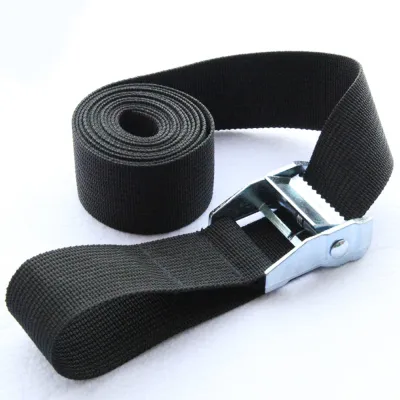
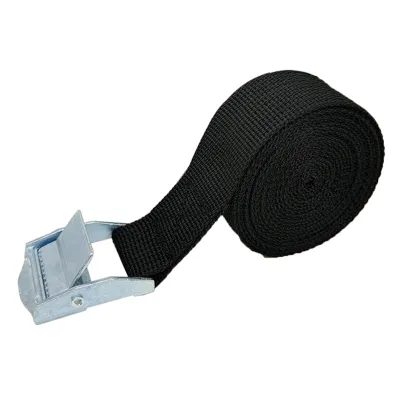
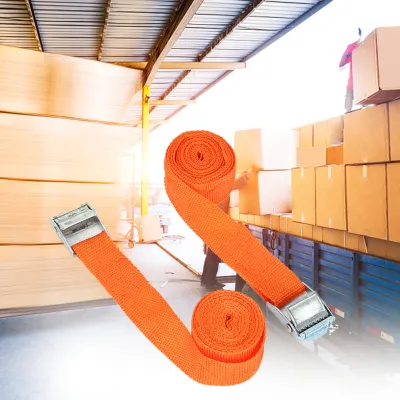
![[SG STOCK] RATCHET TIE DOWN Orange Cargo Strap Luggage Lashing Strong Strap Belt With Metal Buckle Tow Rope](https://img.lazcdn.com/g/p/2166f37f1ddd3049bcd2bcfca4f04daf.png_400x400q80.png_.webp)
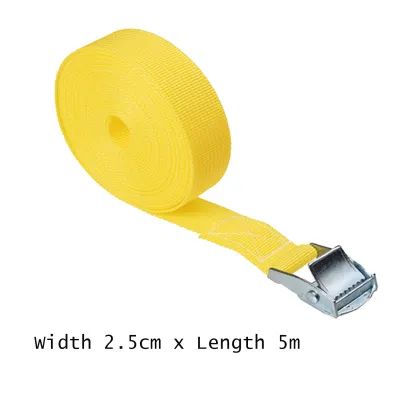
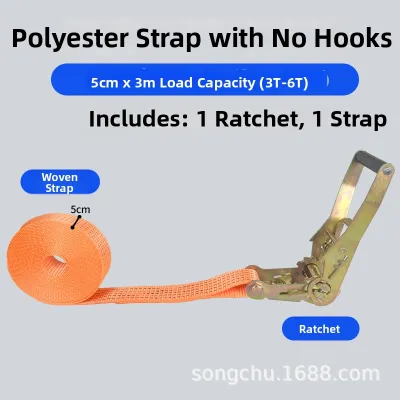
Prices are valid at publication and may change. Please refer to the product page for the latest price.
Modern bicycle frames are engineered to be incredibly lightweight, utilizing thin-walled aluminum or highly specialized carbon fiber layups. While these materials are exceptionally strong under the specific riding forces they are designed to handle, they are highly vulnerable to lateral crushing forces. A large, heavy-duty ratchet mechanism can easily apply enough torque to crack a carbon fiber tube or crimp a thin aluminum frame member long before the operator realizes how much pressure has been exerted.
Furthermore, the physical size of standard tie-down hardware presents a constant hazard to your vehicle and your bicycle. Large steel S-hooks can easily slip during installation, slamming into your car’s roof panel or scratching the delicate paint of your bike frame. The wide webbing is also difficult to thread through the tight clearances of a bicycle’s wheel spokes, fork dropouts, or rear triangle, leading to awkward routing that can bend components or rub off protective frame finishes.
Roof rack transportation exposes your bicycle to intense aerodynamic forces that do not exist when carrying cargo inside a vehicle or on a rear-mounted rack. At highway speeds, wind lift constantly tries to pull the bicycle upward, while crosswinds create lateral forces that rock the bike from side to side. To counteract these dynamic loads, you need a tie-down system that offers high tensile strength and zero-stretch reliability, but with a highly sensitive tensioning mechanism that allows you to feel exactly how much pressure is being applied to the frame.
Essential Specs to Check Before Buying a Small Ratchet Strap
When shopping for a small ratchet strap to secure your bicycle, you must look past generic marketing claims and verify the technical specifications on the product label. The first dimension to analyze is the webbing width and length. For bicycle transport, a webbing width of 1 inch (approximately 25 mm) or even narrower is ideal, as it easily threads through wheel rims, frame triangles, and the compact tie-down points of modern roof racks. The length should ideally fall between 10 and 15 feet (3 to 4.5 meters); this provides ample length to wrap around the frame and crossbars while minimizing the amount of excess, flapping webbing you have to secure before driving.

Understanding the difference between Working Load Limit (WLL) and Break Strength is critical for road safety. Break strength is the absolute force at which the strap assembly will fail under static testing, while the WLL is the maximum load the strap should ever be subjected to during normal operation—typically rated at one-third of the break strength. For a bicycle weighing between 8 and 20 kilograms, a small ratchet strap with a WLL of 100 to 150 kilograms is more than sufficient to handle both the weight of the bike and the additional aerodynamic loads experienced at highway speeds. Choosing a strap with an excessively high WLL usually means dealing with a bulkier, less precise ratchet mechanism that increases the risk of over-tightening.
The design of the hooks and anchor points is another vital specification that determines both safety and ease of use. Traditional metal S-hooks are prone to unhooking if the strap experiences a brief moment of slack due to road bumps, and their bare metal surfaces will quickly scratch paint or anodized finishes. Instead, look for straps that feature rubber-coated hooks, integrated soft loops, or a hookless “endless loop” design. Soft loops allow you to wrap a flexible fabric strap around your bike’s frame or handlebars and then attach the hook to the loop, keeping all metal components far away from your bicycle’s delicate surfaces.
Before purchasing any strap, always consult your bicycle manufacturer’s user manual and your roof rack’s installation guide to verify approved tie-down locations and weight limits. Some carbon fiber frames explicitly forbid the use of clamping or ratcheting straps on the middle of the frame tubes, requiring you to secure the bike solely by the wheels or designated structural points. If the instructions from your bike manufacturer and the strap guidelines conflict, or if you are unsure of your frame’s material limits, consult a qualified professional bicycle mechanic before proceeding.
Best Small Ratchet Strap Designs for Roof Rack Use
Selecting the right design of small ratchet strap depends heavily on your specific roof rack configuration, your bicycle frame geometry, and how frequently you transport your gear. Different designs offer distinct advantages in terms of aerodynamic safety, ease of installation, and frame protection.
Retractable Ratchet Straps
Retractable ratchet straps feature an internal, spring-loaded spool that automatically winds up any unused webbing, functioning similarly to a vehicle seatbelt. This design is highly advantageous for roof rack transportation because it completely eliminates the problem of long, loose strap ends flapping violently in the wind at highway speeds. Flapping webbing not only creates annoying cabin noise but can also fray over time, scratch your vehicle’s roof paint, or even become entangled in your wheels.
The primary trade-off with retractable models is their physical size and cost. The housing containing the spring-loaded spool is naturally bulkier and heavier than a standard manual ratchet mechanism, which can make it more challenging to position in tight spaces around your roof rack crossbars. Additionally, they generally sit at a higher price point, typically ranging from S$30 to S$60 per pair, compared to simpler manual designs. However, for riders who transport their bikes frequently and want to skip the chore of manually tying off excess webbing, the convenience and aerodynamic safety of a retractable system are well worth the investment.
Mini Ratchet Straps with Soft Loop Anchors
Mini ratchet straps with integrated soft loops represent the gold standard for protecting high-end road, gravel, and mountain bikes. These systems utilize a downsized, lightweight aluminum or steel ratchet buckle that fits comfortably in the palm of your hand, allowing for highly precise, incremental tension adjustments. The defining feature of this setup is the soft loop—a short segment of heavy-duty webbing sewn into the strap that wraps around your bike’s frame, fork, or handlebars, creating a secure anchor point without any metal-on-metal contact.
By utilizing soft loops, you ensure that the metal hooks of the ratchet strap remain anchored to the sturdy metal crossbars of your roof rack, while only soft, non-abrasive polyester webbing touches your bicycle. This setup is incredibly effective at preventing the cosmetic scratches, paint chips, and structural dents that can occur when a vehicle hits a bump and causes a standard metal hook to shift. These straps are highly versatile, affordable (usually priced between S$15 and S$30), and easily stored in your vehicle’s glovebox or trunk.
Endless Loop Ratchet Straps
Endless loop ratchet straps, also known as hookless straps, consist of a single continuous piece of webbing threaded directly through the ratchet mechanism. Because they do not feature hooks of any kind, they are exceptionally safe to use around painted surfaces and delicate bicycle components. To use an endless loop strap, you simply wrap the webbing around your roof rack crossbar, thread it through or around your bicycle’s wheel or frame, and feed the free end back into the ratchet spindle before tightening.
This design is highly adaptable and works beautifully with modern aerodynamic wingbars or enclosed roof rack crossbars where traditional hooks cannot easily find a secure anchor point. Endless loop straps are particularly excellent for securing bicycle wheels to the tray of a roof rack, as they can be wrapped tightly around the rim and the tray, distributing pressure evenly across the tire rather than pulling down on the frame. Their simple, hook-free construction also makes them highly durable, lightweight, and economical.
Step-by-Step: Securing Your Bike Without Frame Damage
Properly securing your bicycle to a roof rack requires a methodical approach that balances absolute security with gentle handling. Before you begin, ensure your vehicle is parked on a flat surface, the handbrake is engaged, and you have clear, comfortable access to your roof rack.
First, carefully identify the correct anchor points on both your vehicle’s roof rack and your bicycle. Secure your straps only to structural metal components, such as the main crossbars or dedicated heavy-duty tie-down loops integrated into the rack. Never anchor straps to plastic aerodynamic fairings, thin plastic end caps, or temporary accessories, as these components can easily crack or shear off under the dynamic loads of highway driving. On the bicycle, choose strong, structural areas such as the wheels (wrapped through the rims), the fork dropouts, or the lower portion of the seatpost, avoiding the middle of thin-walled frame tubes.
Next, apply tension gradually and feel the resistance of the ratchet mechanism. If you are securing a carbon fiber or ultra-lightweight aluminum frame, you must exercise extreme caution. Begin ratcheting slowly, checking the stability of the bike after every single click of the mechanism. Stop tightening the instant the bicycle is immobilized and no longer wobbles when you gently shake it; over-tightening past this point does not increase safety, but it does place immense, dangerous crushing stress on your frame.
Once the bike is secure, you must address any excess webbing. Never leave loose strap ends dangling, as they will whip violently at high speeds, leading to rapid webbing wear, paint damage, and a dangerous distraction while driving. Tightly wrap the excess webbing around the roof rack crossbars and tie it off with a series of secure half-hitch knots, or use dedicated hook-and-loop strap keepers to lock the loose ends flat against the rack.
Finally, always implement a secondary safety check. Even the highest-quality ratchet mechanism can occasionally slip if dirt gets lodged in the pawl, or if a strap is subjected to an extreme, unexpected bump. Loop a lightweight, rubber-coated safety cable or a secondary cam-buckle strap through the bicycle frame and lock it directly to the roof rack crossbars. This secondary line should remain slightly slack so it does not add tension to the frame, but it must be positioned to catch the bicycle and prevent it from falling off the vehicle in the unlikely event that your primary ratchet strap fails during transit.
Maintenance and Inspection for Long-Term Reliability
To ensure your small ratchet straps remain safe and reliable over years of outdoor use, you must commit to a regular maintenance and inspection routine. This is especially critical in tropical, humid environments like Singapore, where high humidity, intense UV exposure, and frequent rain can rapidly degrade synthetic webbing and corrode metal moving parts.
After every road trip, particularly those through coastal areas or heavy rain, remove the straps from your roof rack and rinse them thoroughly with clean, fresh water to wash away road grime, salt residue, and dirt. Allow the wet webbing to dry completely in a well-ventilated, shaded area before rolling them up for storage. Storing damp straps in a sealed container or a dark vehicle trunk will quickly lead to mold and mildew growth, which weakens the polyester fibers and significantly reduces the strap’s actual break strength.
The moving parts of your ratchet buckles require periodic lubrication to ensure smooth operation and prevent the release lever from seizing. Apply a very light coat of a non-sticky, dry-film lubricant or a high-quality marine-grade grease directly to the ratchet gears, springs, and pivoting rivets. Avoid using heavy, wet oils or WD-40, as these attract road dust, sand, and grit, which can clog the mechanism and cause the locking pawls to stick in the open position, leading to sudden strap failure.
Before every single trip, perform a quick but thorough pre-trip inspection of your straps. Hold the webbing up to the light and check for signs of UV fading (which indicates fiber degradation), frayed edges, cuts, or burn marks from exhaust pipes. Inspect the metal ratchet buckle for bent frames, rusted springs, or stiff release levers that do not snap back into place automatically. If you discover any fraying, structural rust, or mechanical stiffness that cannot be resolved with cleaning and lubrication, do not attempt to use the strap; replace it immediately to ensure your bicycle remains safely anchored to your vehicle.
Frequently Asked Questions (FAQ)
Can I use heavy-duty motorcycle tie-downs for my bicycle on a roof rack?
No, using heavy-duty motorcycle tie-downs on a bicycle is highly discouraged and dangerous. Motorcycle straps are engineered with massive ratchet mechanisms and wide, thick webbing designed to handle loads of several hundred kilograms. Because these heavy-duty ratchets require significant force just to operate, they completely eliminate the tactile feedback you need to feel how much tension is being applied to your bicycle. It is incredibly easy to accidentally over-tighten a motorcycle strap and crush a delicate bicycle frame, warp a wheel rim, or bend a fork dropout long before you feel any resistance in the heavy-duty handle.
How tight should the ratchet strap be on a carbon fiber bike frame?
When securing a carbon fiber frame, the ratchet strap should only be tightened to the absolute minimum tension required to prevent the bike from shifting or wobbling on the rack. Carbon fiber is exceptionally strong under riding forces but highly vulnerable to localized crushing forces. You should always use soft loops or dedicated foam frame protectors to distribute the strap’s pressure over a wider surface area. Stop ratcheting the moment the bike is stable, and regularly check the tension during long trips, as temperature changes can cause materials to expand or contract.
Do I need to remove the front wheel when using ratchet straps on a roof rack?
Whether you need to remove the front wheel depends entirely on the design of your specific roof rack. Wheel-on roof racks allow you to keep both wheels attached, securing the bike via a ratcheting arm over the front tire and a small strap through the rear wheel. However, if you are using a fork-mount roof rack, you must remove the front wheel and secure the fork dropouts directly to a dedicated axle block on the rack. Removing the front wheel is highly beneficial for long highway drives as it lowers the bicycle’s overall height, significantly reducing wind resistance, aerodynamic lift, and lateral sway.
Community discussion
Share your experience or ask a question. Comments are reviewed before publication.