
When driving through a sudden equatorial downpour in Singapore, maintaining clear lateral visibility is a critical safety priority. Standard windshield wipers do nothing for your side mirrors, and water droplets clinging to the glass can completely obscure your view of adjacent lanes. To solve this, drivers rely on side mirror anti rain solutions. The most effective options fall into three main categories: specialized hydrophobic coatings, hydrophilic adhesive films, and physical rain guards.
Choosing the right solution depends on your vehicle’s features, your willingness to perform regular maintenance, and your typical driving conditions. By understanding how these products function and how they interact with your car’s existing technology, you can ensure a safer drive during the monsoon seasons.
Understanding Side Mirror Visibility Issues in Tropical Rain
Singapore’s tropical climate features frequent, intense downpours, particularly during the northeast and southwest monsoon seasons. During these storms, side mirrors quickly become covered in water droplets, severely limiting your field of view. While a front windshield benefits from high-velocity airflow and mechanical wipers to clear water, side mirrors sit in aerodynamic pockets of turbulent air. Because the airflow around the side mirror housing is relatively slow and chaotic, it lacks the force required to shed water droplets naturally.
Products mentioned in this guide

![[Ready Stock]2pc Car Rearview Mirror Rainproof Film Auto Side Window Anti-fog Waterproof Protective Film Car Rearview Mirror Protective Film](https://img.lazcdn.com/g/p/ef602af03f7336a4e94ead19d02d8efa.jpg_400x400q80.jpg_.webp)
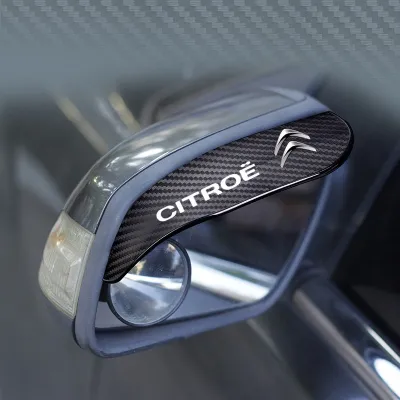
Prices are valid at publication and may change. Please refer to the product page for the latest price.
Furthermore, side mirror glass is often flat or slightly convex. Water droplets tend to sit on the surface, creating hundreds of tiny lenses that refract light and distort your view of trailing vehicles. This optical distortion makes it incredibly difficult to judge distances and speeds, especially when navigating heavy traffic on fast-moving expressways like the PIE, CTE, or KPE.
Some modern vehicles feature built-in mirror heaters. While these are highly effective at clearing morning dew or light fog, they cannot evaporate heavy, continuous rainwater fast enough during a tropical storm. Similarly, standard side window rain repellents designed for high-speed airflow often fail to clear the side mirrors because the mirrors do not experience the same direct wind velocity. Poor lateral visibility significantly increases the risk of side-swipe collisions when changing lanes in low-visibility conditions.
Dedicated side mirror anti rain products are engineered specifically to address these static glass limitations. They modify the surface properties of the mirror glass to either repel water completely or force it to sheet flat, ensuring that light passes through without distortion.
Key Factors When Choosing an Anti-Rain Product
Selecting the right side mirror anti rain product requires balancing several practical dimensions, starting with durability and lifespan. Chemical coatings can last anywhere from a few weeks to several months, depending on exposure to the elements and car washing habits. Adhesive films generally offer longer-term protection but can degrade under Singapore’s intense UV radiation and high humidity. Physical guards are permanent but subject to mechanical wear.

Ease of application is another major consideration. Some products are simple spray-and-wipe solutions, while others require meticulous surface preparation, precise alignment, or even mechanical mounting. If you prefer a quick DIY job, a spray coating is ideal. If you want a longer-lasting solution, a film or physical guard might suit you better, provided you have the patience for a precise installation.
Cost-effectiveness over time should also guide your choice. While a premium coating or high-quality film may have a higher upfront cost, its longevity and performance can save money compared to cheap, short-lived alternatives that require constant reapplication. Broadly speaking, prices for these products range from budget-friendly options under S$10 to premium kits costing up to S$40.
Crucially, you must perform a compatibility check with your vehicle’s existing mirror features. Modern side mirrors often house advanced technology, including auto-dimming glass, integrated blind-spot monitoring (BSM) warning lights, puddle lights, or power-folding mechanisms. Thick adhesive films or physical visors can block sensors, distort camera feeds, or physically obstruct the folding path of the mirror housing. Always check your vehicle’s owner’s manual and product labels to ensure compatibility before making a purchase.
Recommended Types of Side Mirror Anti-Rain Solutions
To help you find the best solution for your car, we have categorized the leading options available on local ecommerce platforms and at automotive specialty shops in Singapore. Each type has distinct operational characteristics, installation requirements, and maintenance profiles.
Hydrophobic Glass Coatings and Sprays
Hydrophobic coatings work by applying a chemical layer that alters the surface energy of the glass, creating a very high water contact angle. This causes water to bead up into tight spheres that roll off easily, even at low speeds. Unlike windshield formulas, specialized side mirror sprays are designed specifically for static glass surfaces and do not require wind speed to clear water; droplets slide off almost instantly upon contact.
Key Characteristics of Hydrophobic Sprays:
- Popular Brands: Soft99 Glaco Mirror Coat Zero, Rain-X Plastic Water Repellent.
- Pros: Extremely effective at shedding water; completely invisible; does not alter the physical appearance of your mirrors.
- Cons: Highly sensitive to physical touch. Because these coatings rely on a delicate microscopic structure, wiping the mirror with a microfiber cloth or touching it with your fingers can immediately ruin the effect.
- Ideal User: Drivers who want maximum clarity without altering their vehicle's aesthetics and are willing to carefully avoid touching the mirror glass during washes.
When applying these sprays, ensure the product does not contact surrounding plastic or painted mirror housings unless the label explicitly states it is safe for those surfaces. Always work in a shaded, wind-free environment to prevent uneven drying and streaking.
Anti-Fog and Anti-Rain Adhesive Films
Adhesive films take the opposite approach to coatings. They are typically hydrophilic, meaning they attract water and cause it to spread out into a flat, uniform sheet instead of forming individual droplets. This elimination of droplets prevents light distortion, maintaining a clear view.
Key Characteristics of Adhesive Films:
- Popular Brands: Generic and branded micro-textured anti-fog/anti-rain films, widely available on online marketplaces.
- Pros: Provides dual protection against both heavy rain and humidity-induced fogging; relatively inexpensive; physically protects the glass from minor scratches.
- Cons: Requires a very precise, dust-free installation to avoid unsightly air bubbles. Over time, exposure to Singapore's intense tropical heat and UV rays can cause the adhesive to yellow, crack, or peel at the edges.
- Ideal User: Commuters who frequently drive in high-humidity areas (such as underground carparks or during early morning hours) and prefer a physical barrier solution.
Avoid using abrasive sponges or harsh chemical cleaners during car washes, as these can scratch the film’s delicate hydrophilic top layer. If the film begins to degrade or peel, it should be removed promptly to prevent adhesive residue from baking onto the glass.
Physical Rain Guards and Mirror Covers
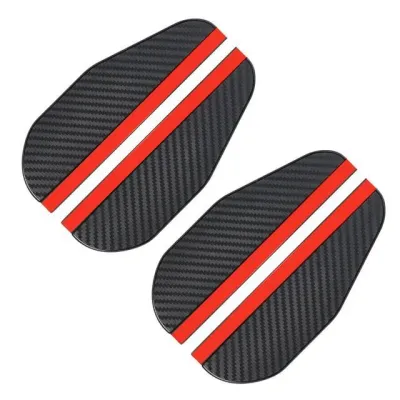
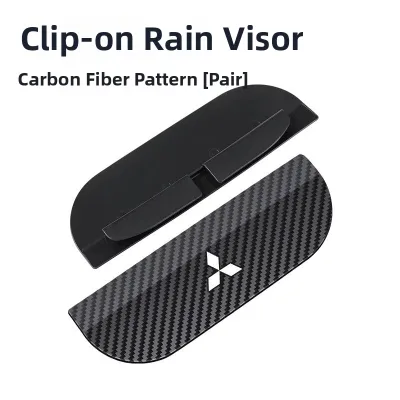
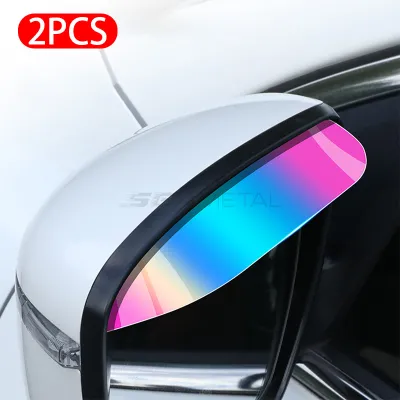
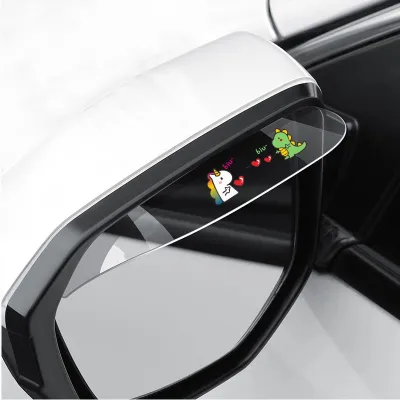
Physical rain guards, often referred to as mirror visors or “eyebrows,” are small plastic shields that adhere to the upper inner edge of the side mirror housing. They act as a mini-roof, blocking rain from falling directly onto the glass.
Key Characteristics of Physical Guards:
- Popular Brands: Flexible PVC or ABS plastic rain visors, which are secured using double-sided automotive tape (such as 3M tape).
- Pros: A permanent, mechanical solution that does not wear off like chemical coatings; highly effective at blocking vertical rain when the vehicle is stationary or moving at low speeds.
- Cons: Can alter the vehicle's aerodynamics, potentially introducing minor wind noise at highway speeds. They also change the look of the side mirrors, which may not appeal to all drivers.
- Ideal User: City drivers who spend a lot of time in slow-moving traffic or parked outdoors, where wind-dependent coatings are less effective.
Before installation, manually fold your side mirrors to ensure the visors do not collide with the window trim or door frame. Ensure they do not block integrated turn signals, puddle lights, or blind-spot cameras located on the underside or edges of the mirror housing.
How to Apply and Maintain Your Anti-Rain Treatment
Proper surface preparation is the single most important factor in determining how well and how long your side mirror anti rain treatment will perform. Even the highest-quality product will fail prematurely if applied over road grime, wax, or water spots.
Step-by-Step Preparation and Application Process:
- Thorough Cleaning: Begin by washing the side mirrors to remove loose dirt and grit. Next, use a dedicated automotive glass cleaner or an isopropyl alcohol (IPA) prep spray to strip away old wax, road grime, and water spots. For adhesive films or long-lasting coatings, using a glass polish or clay bar beforehand ensures a perfectly smooth surface.
- Dry and Prep the Environment: Apply the product in a shaded, well-ventilated area, such as a covered multi-storey carpark. Avoid direct sunlight, which can cause chemical coatings to dry too quickly and streak, or adhesive films to warp. Ensure the mirror glass and surrounding housing are completely dry.
- Application: For sprays, spray evenly from the recommended distance (usually 15 to 20 cm) without wiping, allowing the product to self-level and dry completely. For films, spray a light mist of water (or a mild soap solution, if recommended by the manufacturer) onto the glass, peel the backing, align the film, and use a soft squeegee to push out all air bubbles and excess water from the center outward. For physical guards, clean the mounting area on the mirror housing with alcohol, peel the adhesive backing, press firmly, and hold for at least 30 seconds.
- Curing and Maintenance: Allow the product to cure for the manufacturer's specified time (typically 1 to 2 hours for coatings, and up to 24 hours before exposing to water or folding the mirrors). When washing your car, use a gentle pH-neutral car shampoo. Avoid using abrasive sponges, stiff brushes, or harsh alkaline cleaners on the treated mirrors.
If you notice any damage to the mirror glass or housing, stop the application and consult a professional automotive detailer. Always prioritize original-vehicle instructions and safety boundaries when working near integrated electrical components.
Frequently Asked Questions (FAQ)
Can I use windshield water repellent on my side mirrors?
While some multi-surface glass repellents can be used across all automotive glass, standard windshield formulas are optimized for surfaces with active wiper friction and high-speed airflow. Because side mirrors are shielded from direct wind and lack wipers, windshield formulas may not shed water effectively at low city speeds. For the best results, look for products specifically formulated for side mirrors or static glass, which are engineered to bead and shed water without requiring high wind speeds.
Do anti-rain films affect blind-spot monitoring sensors?
Most modern blind-spot monitoring (BSM) systems use radar sensors located behind the rear bumper, which are unaffected by treatments applied to the side mirror glass. However, if your vehicle has BSM indicator lights etched directly into the mirror glass, or if it utilizes surround-view cameras mounted on the mirror housing, thick adhesive films or physical rain guards can cause issues. A poorly aligned film or a bulky visor can distort camera feeds or obscure warning lights. Always consult your vehicle owner’s manual or a qualified technician before applying physical modifications to sensor-equipped mirrors.
How often should I reapply side mirror rain repellent?
The reapplication interval depends heavily on the product type and your driving environment. Specialized ultra-hydrophobic sprays typically last between 1 to 3 months in Singapore’s humid, rainy climate, provided the glass is not physically wiped. Adhesive hydrophilic films can last from 6 months to a year before UV exposure and environmental grime degrade their performance. You should reapply or replace the product when you observe water droplets clinging to the glass instead of sheeting or sliding off, or when the film begins to show signs of peeling, clouding, or scratching.
Community discussion
Share your experience or ask a question. Comments are reviewed before publication.