
Choosing the ideal motorbike tire tubes for daily commuting in Singapore requires matching the tube’s material properties to your specific motorcycle model, daily travel distance, and typical operating speeds. There is no single universal brand that fits every rider perfectly. Instead, the market is divided into distinct quality tiers designed for different commuting demands.
Premium original equipment manufacturer (OEM) tubes offer the highest level of manufacturing consistency, making them the safest choice for high-speed expressway riding. Reliable mid-range aftermarket tubes provide a highly cost-effective solution for low-speed, short-distance urban commutes on smaller underbone motorcycles or scooters. Understanding these categories, along with key physical quality indicators, allows you to make an informed decision when visiting your local workshop.
How Singapore's Climate and Roads Affect Tire Tube Lifespan
Singapore’s tropical climate presents a challenging environment for elastomeric compounds. With ambient temperatures consistently hovering around 30°C to 34°C, road surface temperatures can easily exceed 50°C under direct sunlight. This constant thermal exposure accelerates the natural degradation of rubber, leading to faster dry rot and a gradual loss of elasticity. Furthermore, high heat increases the rate of air permeation through the tube walls, requiring more frequent pressure checks to prevent under-inflation.
Products mentioned in this guide
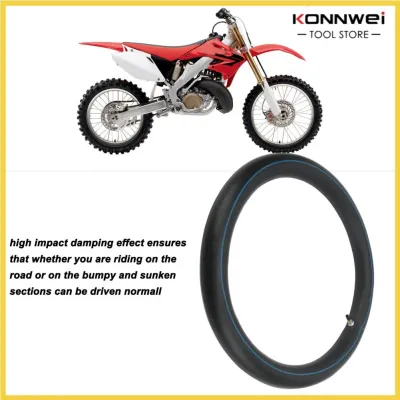
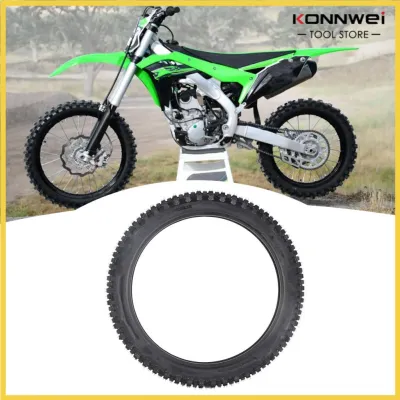
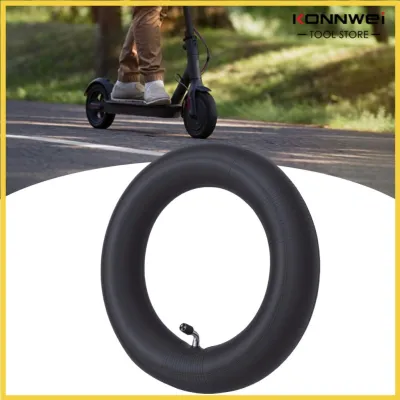
Prices are valid at publication and may change. Please refer to the product page for the latest price.
Urban riding conditions in Singapore add significant mechanical stress to tire tubes. Daily commuting involves constant stop-and-go traffic, sudden braking, and navigating over speed humps, expansion joints, and occasional construction debris. These repetitive forces place localized stress on the tube, particularly at the seams and around the base of the valve stem. Every time you accelerate or brake hard, the forces transfer from the wheel rim through the tube to the outer tire casing.
Because of these intense local conditions, a tire tube that performs adequately in cooler, temperate climates may degrade much faster in Singapore. Standard natural rubber tubes, while highly flexible, are more susceptible to heat-induced pressure loss over time. Selecting a tube with a high-quality synthetic compound, such as butyl rubber, is essential for maintaining stable tire pressure and ensuring structural integrity during long journeys along major expressways like the Pan Island Expressway (PIE) or East Coast Parkway (ECP).
Comparing Motorbike Tire Tube Categories for Daily Commuting
When browsing options at Singaporean motorcycle workshops, you will generally encounter three main categories of tire tubes. Each tier is designed to balance performance, durability, and cost for different types of riders and machinery.

Premium and OEM Brands
Premium and OEM-spec tire tubes, produced by globally recognized manufacturers such as Michelin, Dunlop, or IRC, represent the highest tier of quality and manufacturing precision. These tubes are engineered to meet strict quality control standards, ensuring uniform wall thickness, highly reliable vulcanized seams, and premium brass valve stems. The primary material used is high-purity butyl rubber, which offers exceptional resistance to gas permeability and thermal degradation.
The main advantage of a premium tube is its ability to maintain stable inflation pressure over extended periods, even when subjected to the high temperatures generated by sustained expressway speeds. This reliability reduces the risk of sudden pressure drops, which can compromise handling and safety. These tubes are particularly recommended for larger displacement motorcycles, premium scooters, or commuters who cover long distances daily across the island.
The primary trade-off associated with premium brands is their higher upfront cost, which typically ranges from S$15 to S$30 or more per tube, depending on the size and specification. Before purchasing, riders should consult their vehicle’s owner manual to verify if specific OEM-spec tubes are required to maintain manufacturer warranties or to comply with the motorcycle’s original speed and load ratings.
Mid-Range and Aftermarket Brands
Mid-range aftermarket brands, such as Vee Rubber, Kenda, or Swallow, are widely available across neighborhood workshops in industrial estates like Ubi, Toh Guan, and Geylang. These brands offer a practical balance between cost and functional reliability, making them the default choice for a large portion of daily commuters. They are typically constructed from a blend of natural and synthetic rubber, providing decent flexibility and moderate air retention.
These tubes are highly suitable for standard 100cc to 150cc underbone motorcycles (often called “kapcais”) and small-displacement scooters used for short, low-speed urban commutes. If your daily route consists primarily of short trips to the MRT station, neighborhood markets, or nearby office parks, a well-manufactured mid-range tube will deliver dependable service without unnecessary expense.
When opting for a mid-range tube, it is critical to verify that the replacement matches the exact dimensions of your outer tire. Because these brands are mass-produced with slightly wider manufacturing tolerances, using a tube that is slightly too small will force the rubber to stretch excessively inside the tire casing. This stretching thins the tube walls, significantly increasing the risk of punctures and rapid air loss.
Heavy-Duty and Reinforced Options
Heavy-Duty (HD) and Ultra Heavy-Duty (UHD) tire tubes feature significantly thicker walls than standard options, often measuring between 2.0mm and 3.0mm or more. This reinforced construction is specifically designed to resist pinch flats—which occur when the tube is squeezed between the tire casing and the wheel rim during a sharp impact—and to provide basic protection against small nails, wire, and road debris.
This category is highly beneficial for commercial riders, food delivery couriers, and those who regularly transport heavy pillion passengers or cargo. If your daily commute takes you through industrial zones, port areas, or routes undergoing active roadworks where debris is common, the added physical protection of a heavy-duty tube can prevent costly downtime.
However, heavy-duty tubes come with notable drawbacks. The thicker rubber adds substantial unsprung weight to the wheel assembly, which can slightly reduce fuel efficiency and make the suspension feel stiffer over bumps. Additionally, you must verify that your outer tire casing has sufficient internal clearance to accommodate the thicker tube; forcing a heavy-duty tube into a narrow tire can lead to folding and friction-induced wear.
What to Look For: Key Quality Indicators in Tire Tubes
Regardless of the brand name printed on the packaging, you can evaluate the physical quality of a tire tube by inspecting several key indicators. Knowing what to look for helps you identify a reliable product during your next workshop visit.
- Rubber Compound and Elasticity: High-quality commuter tubes utilize a high concentration of butyl rubber, a synthetic elastomer known for its low gas permeability. When inspecting a tube, look for a smooth, matte finish that is free of oily residues or a sticky texture. A quality butyl tube should feel dense yet elastic, returning to its original shape quickly when lightly stretched.
- Seam and Joint Integrity: Tire tubes are manufactured by extruding rubber into a tube and vulcanizing the ends together. Inspect the joint where the ends meet, as well as the longitudinal molded seams. These areas should be smooth, flat, and flush with the rest of the tube. Any rough edges, overlapping flaps, or uneven thickness along the seams indicate poor quality control and represent potential failure points under pressure.
- Valve Stem Construction: The valve stem is a common point of failure, particularly on spoked wheels. Look for a valve stem that features a wide, heavily reinforced rubber base patch where it joins the tube body. This reinforcement prevents the stem from tearing away during hard braking or acceleration. Brass valve stems are highly preferred over cheap alloy or plastic alternatives, as they resist corrosion and maintain a tighter seal with the valve core.
- Accurate Sizing and Packaging: Avoid tubes marketed with highly generic or "universal" sizing. A quality manufacturer will print a specific, narrow range of compatible tire dimensions directly on the tube body. Ensure this printed size matches your outer tire's exact specifications (e.g., 80/90-17 or 100/80-14) to prevent the dangerous stretching or folding that occurs when using mismatched components.
Decision Framework: Which Tube Type Fits Your Riding Style?
To simplify your selection process, use the following conditional framework to match your commuting profile to the correct tire tube category.
Choose Premium/OEM if:
- You ride a larger displacement motorcycle or a high-performance scooter.
- Your daily commute involves high-speed expressway travel along the PIE, AYE, or TPE.
- You prioritize maximum air pressure retention to minimize weekly tire maintenance.
- Your motorcycle is still under a manufacturer warranty that requires original factory-spec parts.
Choose Mid-Range/Aftermarket if:
- You ride a standard, small-displacement scooter or underbone for short neighborhood trips.
- Your typical operating speeds remain below 70 km/h on local arterial roads.
- You are on a tight budget and want a widely available, cost-effective replacement.
- You have easy access to neighborhood workshops for quick, routine servicing.
*
Choose Heavy-Duty if:
- You use your motorcycle for commercial delivery work or regularly carry heavy loads.
- Your daily routes pass through industrial areas, port zones, or active road construction sites.
- Your outer tire casing has a wide profile with ample internal clearance to accommodate thicker rubber.
- You are willing to accept a slight increase in unsprung weight in exchange for superior pinch-flat resistance.
Verify First if:
- You are unsure of your exact rim width, wheel diameter, or tire profile.
- Your wheel rims are spoked, which requires checking the condition of the internal rim band.
- You notice any signs of uneven wear, cracking, or sidewall damage on your outer tire casing.
Installation Checks and Safety Boundaries for Tube Replacement
A high-quality tire tube can still fail prematurely if it is installed incorrectly. Adhering to strict safety boundaries and proper installation procedures is essential for ensuring a safe ride.
Before placing the new tube inside the wheel, a thorough physical inspection of the entire assembly is mandatory. Run a clean rag along the inner liner of the outer tire to check for embedded wire, glass, or small nails that may have caused the previous puncture. Additionally, inspect the wheel rim for sharp burrs, rust, or debris. For spoked wheels, verify that the rubber rim tape (rim band) is in good condition and completely covers the spoke nipples; a degraded rim tape will quickly puncture a new tube from the inside.
During installation, the tube should be lightly inflated with just enough air to help it hold its shape. This minor inflation prevents the tube from twisting, folding, or becoming trapped between the tire bead and the wheel rim during mounting. Never use sharp screwdrivers or improper tools to pry the tire bead over the rim, as these can easily pinch and ruin a new tube instantly.
Once mounted, inflate the tire to the exact cold inflation pressure specified by your motorcycle’s manufacturer. This specification can typically be found in your owner’s manual or on the swingarm information sticker. Avoid over-inflation, as the heat generated by Singapore’s roads will cause the air inside to expand further, placing excessive stress on the tube’s vulcanized seams.
Finally, respect the safety boundaries of tire maintenance. If your outer tire casing exhibits shallow tread depth, dry rot cracks, or structural sidewall damage, replacing only the inner tube is highly unsafe. A compromised outer tire cannot properly support the tube, leading to an elevated risk of a high-speed blowout. If you do not possess the specialized tools, such as high-quality tire spoons, rim protectors, and a reliable pressure gauge, always have the replacement performed by a qualified professional mechanic at a reputable workshop.
Community discussion
Share your experience or ask a question. Comments are reviewed before publication.