
For owners of the Toyota Wish in Singapore, where daily commutes are met with high humidity and sudden tropical downpours, choosing the correct floor mat is a matter of both interior preservation and driving safety. A poorly fitting mat can slide forward, potentially trapping the accelerator or brake pedal, which presents a severe hazard on the road. To find a brand that fits without gaps or slippage, you must look past marketing labels and evaluate the underlying manufacturing technology.
- Injection-Molded TPE (Thermoplastic Elastomer): Choose this option if your priority is exact contour matching, zero edge curling, and maximum anti-slip safety. Brands utilizing high-pressure injection molding create a rigid, three-dimensional tray that matches every contour of the Wish's footwells. This is the optimal choice if you prioritize safety, easy maintenance, and zero edge curling over time.
- Hot-Pressed XPE or PU Leather (5D/7D): Choose this option if you prefer a luxury aesthetic and softer feel underfoot. These mats use multi-layered synthetic leather and foam, relying on physical clips and Velcro to stay in place. They offer excellent sound dampening and a premium look, but they require strict quality checks to ensure the high sidewalls do not collapse or warp under Singapore's intense cabin heat.
The ultimate decision depends on three critical parameters: pedal clearance on the driver’s side, compatibility with the second-row sliding seat rails, and the accuracy of the edge wrapping along the door sills.
Critical Fit Zones and Safety Checks for the Toyota Wish
The Toyota Wish is a three-row multi-purpose vehicle (MPV) designed for maximum cabin utility, which introduces complex floor pan geometry. Unlike standard sedans, this MPV features an intricate arrangement of seat tracks, transition zones, and vertical sills that a full-surround mat must navigate perfectly to prevent dangerous slippage.
Products mentioned in this guide
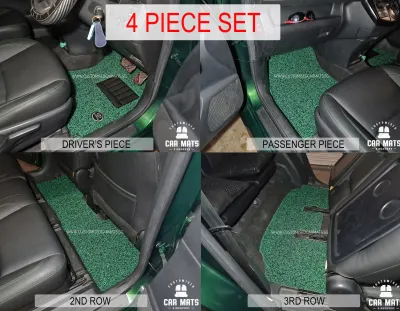
Prices are valid at publication and may change. Please refer to the product page for the latest price.
The driver’s side footwell is the most critical safety zone in the vehicle. The second-generation Toyota Wish (ZGE20 series) features a suspended accelerator pedal and, in many automatic variants, a foot-operated parking brake. The floor mat must feature a precise cutout that allows the accelerator and brake pedals to be depressed fully to the floorboard without catching on the mat’s edge. Any brand that uses a generic “one-size-fits-all” template risks overlapping with these pedals, which can lead to unintended acceleration or restricted braking force.
Moving to the passenger and rear sections, the second-row sliding door tracks and seat rails present a major engineering challenge for full-surround mats. The second-row seats slide forward and backward on low-profile metal rails to allow passengers access to the third row. If a full-surround mat’s sidewalls are too thick or lack precise cutouts, the seat runners will crush the mat material, causing mechanical strain on the seat mechanism and eventually tearing the mat.
Furthermore, the third-row folding seat area requires careful coverage. When the third-row seats are folded flat to expand the boot space, the floor mat must not bunch up or create a bulky barrier. A high-quality mat design will lay completely flat in this transition zone, ensuring that cargo can be loaded smoothly and passengers do not trip when entering or exiting the rear cabin.
Finally, the center console and door sill coverage must be analyzed. The vertical walls of the front footwells rise to meet the center console and the plastic door sills. A true “zero-gap” fit requires the mat to wrap tightly against these vertical surfaces. If the material is too soft or lacks rigid structural support, the sidewalls will sag inward, creating unsightly gaps where dirt, sand, and spilled liquids can accumulate, defeating the purpose of a full-surround design.
Comparing Construction Types: TPE vs. Hot-Pressed Leather
To understand how different brands achieve their fit, we must compare the two dominant manufacturing methods used for full-surround mats.

Injection-Molded TPE (Thermoplastic Elastomer) Mats
Injection-molded TPE mats represent the pinnacle of modern automotive floor protection. This process begins with a highly detailed 3D laser scan of the Toyota Wish interior, capturing every curve, bolt cover, and footrest angle. The digital data is then used to cut a high-precision steel mold, into which molten thermoplastic elastomer is injected under extreme pressure.
The resulting mat is a semi-rigid, highly durable tray that perfectly mirrors the floor pan of the Wish. Because the material is molded under high pressure, it retains its shape indefinitely, resisting the warping and edge curling that often plagues cheaper alternatives. The precise fit means the mat naturally locks into place, utilizing the factory floor retention hooks on the driver’s side without needing aggressive adhesives or clips.
TPE also possesses inherent anti-slip properties. The rubber-like surface provides excellent grip for both your shoes and the underlying carpet, even when wet from Singapore’s frequent rainstorms. Additionally, these mats are completely odorless, non-toxic, and incredibly easy to clean; you can simply remove them from the vehicle and hose them down with water. The primary trade-off is their industrial, utilitarian aesthetic, which some owners feel lacks the warmth of fabric or leather.
Hot-Pressed XPE and PU Leather Mats
Hot-pressed mats, commonly marketed as 5D, 7D, or luxury leather mats, use a multi-layer construction to achieve their shape. The top layer is typically polyurethane (PU) leather, which is stitched over a layer of cross-linked polyethylene (XPE) foam, a stabilizing mesh, and an anti-slip bottom backing. These layers are placed in a mold and subjected to heat and pressure to form the final shape.
This construction allows brands to offer a highly customized, luxury look with intricate stitching patterns that match the premium interior of some MPVs. The soft foam core provides excellent underfoot cushioning and helps dampen road noise entering through the floorboards.
However, hot-pressed leather mats rely heavily on physical clips and Velcro tabs to maintain their shape against the vertical walls of the Toyota Wish. Over time, the intense heat that builds up inside a car parked under the Singapore sun can cause the synthetic leather and foam layers to expand, contract, and degrade. This thermal stress often leads to material deformation, causing the high sidewalls to sag, curl, or pull away from the door sills. Once the structural integrity is compromised, the risk of the mat shifting and interfering with the pedals or seat rails increases significantly, requiring constant adjustment and replacement of the securing clips.
How to Verify Brand Fitment Claims in Singapore
With numerous brands claiming a “perfect custom fit” on local e-commerce platforms and automotive forums, Singaporean buyers must exercise due diligence before making a purchase.
The first step is to verify the “3D laser scanned” claim. Many generic brands use this terminology as a marketing buzzword while actually utilizing a standard, approximate template. To protect yourself, request actual, unedited photos of the mats installed in a Toyota Wish from the seller. Pay close attention to the areas around the driver’s footrest, the fuel lid release lever, and the second-row seat rails. If you see sagging edges, loose fabric, or gaps wider than a few millimeters in the photos, the fit is not truly custom.
It is also vital to confirm the specific generation and model year of your Toyota Wish. The Wish was produced across two main generations: the first generation (ANE10/ZNE10, produced from 2003 to 2009) and the second generation (ZGE20 series, produced from 2009 to 2017). The floor pans, seat rail layouts, and footwell dimensions differ between these generations. A mat designed for a 2006 Wish will not fit a 2014 model correctly. Always specify your car’s chassis code (e.g., ZGE20G or ZGE20W) to the seller to ensure compatibility.
Furthermore, look for reputable local automotive accessory shops in industrial hubs such as Ubi, Toh Guan, Kaki Bukit, or Sin Ming. Purchasing from a local seller who offers an on-site fitment test is highly recommended. This allows you to place the mats in your vehicle before final payment, ensuring there are no gaps or interference with the seat tracks. If buying online, carefully review the seller’s return and refund policies regarding fitment issues. A reliable brand will offer a clear fitment guarantee, promising a full refund or exchange if the mats fail to conform to your Wish’s floor contours.
Installation and Safety Verification Steps
Even the highest-quality custom mat can become a safety hazard if installed incorrectly. Follow these precise steps to ensure your new full-surround mats are secure and safe.
First, prepare the cabin by removing all existing floor mats. Never stack a new full-surround mat on top of old rubber or fabric mats, as this raises the height of the floor, increases the risk of pedal interference, and prevents the anti-slip backing from engaging with the factory carpet. Vacuum the original carpet thoroughly to remove sand, dust, and debris, which can act as a lubricant and cause the new mat to slide.
To install the driver’s side mat, align the heel pad directly under the pedals. Slide the mat forward until it hugs the footrest and the vertical walls of the center console. Locate the factory floor retention hooks near the base of the seat and align them with the corresponding eyelets or locking clips on the mat. Press down firmly until you hear a distinct click, indicating the mat is locked into place. For mats that use Velcro or side clips, slide the plastic clips under the plastic trim panels along the door sill and center console to secure the vertical walls.
Once installed, you must perform a mandatory safety check protocol before starting the engine. Sit in the driver’s seat and manually press the accelerator pedal, brake pedal, and clutch (if applicable) completely to the floorboards. Hold them down and verify that there is at least a 15mm clearance between the pedal arm/pad and the floor mat. Release the pedals slowly and ensure they return to their original positions smoothly without catching on any part of the mat. Slide the front seats and second-row seats through their entire range of motion to confirm they move freely without binding against the mat’s edges.
To maintain the anti-slip performance over time, clean the mats using mild soap and water or a dedicated interior automotive cleaner. Avoid applying silicone-based tire shines, vinyl protectants, or harsh degreasers to the mats, as these chemicals leave a slippery residue that compromises shoe grip and can degrade the rubberized backing. Always allow the mats to dry completely in a shaded, well-ventilated area before reinstalling them in your vehicle.
Frequently Asked Questions (FAQ)
Can I use universal full-surround mats for my Toyota Wish?
We strongly advise against using universal full-surround mats in the Toyota Wish. Universal mats are designed to fit a wide range of vehicles, meaning they lack the precise cutouts required for the Wish’s specific floor pan contours, suspended accelerator pedal, and intricate sliding seat rails. Using a universal mat often results in loose material bunching up under the pedals, which can prevent you from braking fully or cause the accelerator to stick. Additionally, universal mats will block the second-row seat tracks, preventing proper passenger access to the third row and risking damage to the seat mechanisms.
How do I clean full-surround mats without damaging the anti-slip backing?
To clean your mats safely, remove them from the vehicle and shake off loose debris. Wash the surface using a soft brush or microfiber cloth with mild soap and lukewarm water. Avoid using harsh chemical degreasers, bleach, or high-pressure washers directly on the anti-slip backing at close range, as extreme pressure and aggressive chemicals can strip away the rubberized grip layers or degrade the adhesive bonding. Never use high heat or direct sunlight for extended periods to dry the mats, as this can warp the shape of TPE or crack PU leather; instead, let them air-dry completely in a shaded, well-ventilated space.

Community discussion
Share your experience or ask a question. Comments are reviewed before publication.