
Finding the right full-surround floor mats for your Hyundai Ioniq 6 requires understanding the unique architectural demands of this electric vehicle (EV). Because the ioniq6 is built on a dedicated electric platform, its interior layout differs significantly from traditional combustion-engine cars. The “best” brand or type of mat is not a one-size-fits-all choice; instead, it depends heavily on whether you prioritize precision-molded thermoplastic materials or custom-tailored synthetic leather options.
For drivers who prioritize absolute safety, durability, and a perfect structural seal, precision-molded Thermoplastic Elastomer (TPE) mats are the ideal choice. These mats utilize 3D laser-scanning technology to map the footwells, ensuring they do not slide or interfere with the pedals. Alternatively, if your goal is maximum aesthetic coverage of the vertical footwell walls and a plush, luxury-oriented cabin feel, custom-tailored XPE (Cross-linked Polyethylene) foam or synthetic leather mats provide superior coverage.
Before purchasing any aftermarket floor mats, you must verify the specific model year, trim level, and—most importantly for drivers in Singapore—the drive-hand configuration of your vehicle. Because Singapore utilizes Right-Hand Drive (RHD) vehicles, purchasing a mat set designed for Left-Hand Drive (LHD) markets will result in an unusable driver-side mat that poses severe safety hazards. Generic “universal EV” mats should be avoided entirely, as they cannot accommodate the highly specific contours of this vehicle’s cabin.
Products mentioned in this guide
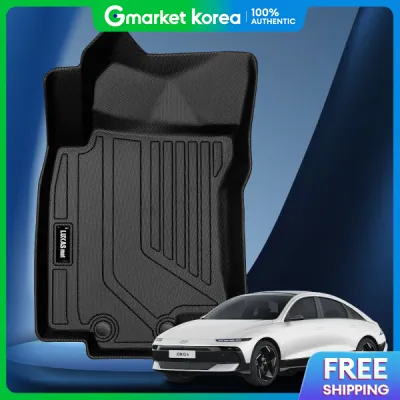
Prices are valid at publication and may change. Please refer to the product page for the latest price.
Why the Ioniq 6 Requires Specialized Full-Surround Mats
The Hyundai Ioniq 6 is built on the Hyundai Motor Group’s dedicated E-GMP (Electric Global Modular Platform). Unlike traditional internal combustion engine vehicles that require a high transmission tunnel running down the center of the cabin, the E-GMP features a completely flat floor. This architectural freedom allowed designers to create an open, spacious interior, but it presents unique challenges for aftermarket floor mat manufacturers.
Without a prominent central transmission tunnel to act as a physical barrier, floor mats in the rear cabin have no central structure to wedge against. A poorly designed rear mat will easily slide forward or backward under passenger foot pressure. Specialized full-surround mats must be engineered as a single, continuous piece across the rear floor or feature highly precise interlocking tabs that anchor the mat firmly against the seat bases and side sills.
Furthermore, the front cabin of the Ioniq 6 features a floating center console with a deep lower storage tray. The base of this console curves outwards, meeting the flat floor at a precise angle. Standard flat mats leave the carpeted vertical walls of this console base exposed to dirt, scuffs, and liquid spills from items stored in the lower tray. Full-surround mats must rise up the sides of this console without bunching or blocking access to the USB ports and storage space.
Another critical area is the front seat rail tracks. The motorized front seats in the Ioniq 6 operate on low-profile metal tracks that are bolted directly to the flat floor. Because these seats have a wide range of travel—including a “relaxation” recline mode in high-spec trims—the rear edge of the front mats and the front edge of the rear mats must clear these tracks perfectly. If a mat is even slightly too thick or wide, the seat rails will catch the material, leading to torn mats, strained electric seat motors, or safety sensor faults.
Critical Comparison Dimensions for Ioniq 6 Floor Mats
When evaluating different brands of full-surround mats for your vehicle, you must look beyond brand names and focus on specific engineering dimensions. The tropical climate of Singapore and the physical layout of the car’s footwells dictate three primary evaluation criteria.

Contour Accuracy and Edge Retention
Contour accuracy refers to how closely a mat mirrors the complex, multi-angled surfaces of the footwells. Precision-molded mats are created using industrial 3D laser scanners that capture every millimeter of the floor pan. This digital model is used to create injection or compression molds, resulting in a semi-rigid mat that drops into the footwell with zero gap tolerances.
Edge retention is the mat’s ability to maintain its vertical shape over years of exposure to heat and physical wear. In Singapore’s hot climate, where cabin temperatures can exceed 60 degrees Celsius when parked in the sun, low-quality plastics tend to soften, warp, and curl inward. When the vertical edges of a full-surround mat curl, they lose their seal, allowing dirt and liquids to slip underneath onto the factory carpet. High-quality TPE mats maintain their structural rigidity under extreme heat, whereas cheap PVC or poorly backed leather mats are highly susceptible to edge collapse.
Pedal Clearance and Safety Boundaries
The most critical safety factor when selecting floor mats is their relationship with the accelerator and brake pedals. The Ioniq 6 utilizes an organ-style accelerator pedal, which is hinged directly to the floor rather than suspended from the firewall. This design means the base of the pedal sits flush with the floor carpet, leaving a very narrow clearance zone.
Any full-surround mat must feature a precise, recessed cutout around the base of the organ pedal. If a mat is too thick or lacks a secure anchoring system, it can slide forward and wedge underneath the pedal hinge, preventing the accelerator from returning to its idle position when you lift your foot. Before driving with any new floor mats installed, you must physically verify that there is a clear, unobstructed gap of at least several centimeters between the fully depressed pedals and the mat’s edges.
Material Suitability for Singapore’s Climate
Singapore’s tropical environment, characterized by high humidity and sudden, heavy monsoon downpours, places unique demands on interior car accessories. When you step into your car with wet shoes or a dripping umbrella, that moisture is transferred directly to the floor mats.
Thermoplastic Elastomer (TPE) and heavy-duty rubber are highly suited to this climate. They are completely non-porous, meaning they do not absorb water, mud, or oils. Cleaning them is as simple as removing them from the vehicle, hosing them down, and wiping them dry. TPE is also highly resistant to UV degradation and does not emit unpleasant chemical odors when heated by the tropical sun.
Conversely, custom-tailored XPE and synthetic leather mats feature a multi-layer construction that often includes a polyurethane (PU) outer layer, an XPE foam core, and a fabric backing. While they offer a premium look, the stitching lines that create the classic diamond pattern can act as pathways for moisture to seep into the foam core. In high-humidity environments, trapped moisture inside a foam mat can lead to mold, mildew, and persistent musty odors that are incredibly difficult to eradicate. If you choose synthetic leather mats, you must commit to regular air-drying and immediate cleanup of any major liquid spills.
Evaluating Common Full-Surround Mat Categories
To find the best fit for your vehicle, it is helpful to categorize aftermarket options into three distinct manufacturing styles. Each category offers a different balance of coverage, aesthetics, and practical utility.
Custom-Molded TPE / Thermoplastic Mats
Custom-molded TPE mats represent the gold standard for utility and safety. Because they are molded from a single sheet of high-grade thermoplastic, they feature seamless, high-lip walls that act as a tray, trapping up to several liters of water, dirt, or spilled drinks.
- Fit and Coverage: These mats cover the entire flat floor area, the dead pedal (footrest), and rise approximately 5 to 8 centimeters up the vertical walls of the footwell. They provide excellent coverage for the high-wear areas directly beneath your feet.
- Anchoring: They utilize the factory floor mat retention hooks. The underside of the driver's mat is engineered to snap securely onto these plastic pegs, preventing any forward or lateral movement.
- Limitations: Because TPE is a semi-rigid material, these mats cannot extend all the way up to the lower dashboard trim or cover the entire side wall of the center console. There may be small, millimeter-level gaps in the sharpest corners of the rear footwell where the rigid material cannot flex to meet a perfect 90-degree joint.
Tailored XPE and Leather Full-Surround Mats
Tailored synthetic leather mats are designed for drivers who want to eliminate the appearance of the factory carpet entirely. These mats are cut from flat sheets of multi-layered material and stitched together to form a deep, three-dimensional bucket that lines the entire footwell.
- Fit and Coverage: This style offers the maximum possible coverage. They extend high up into the footwells, covering the entire dead pedal, the sides of the center console up to the storage bridge, and the vertical kick panels beneath the front seats.
- Aesthetics: They provide a luxury, limousine-like appearance, often matching the seat upholstery color and stitching patterns of high-spec Ioniq 6 trims.
- Limitations: Because the material is flexible, these mats rely on plastic clips or Velcro-like tape tucked under the plastic interior trim panels to stay upright. Over time, these clips can loosen, causing the high side walls of the mat to sag or fold inward. Furthermore, if the backing material does not grip the vehicle's floor carpet effectively, the driver-side mat can shift forward under foot pressure, posing a pedal interference risk.
Hybrid or Multi-Layer Systems
Hybrid mats attempt to combine the waterproof durability of TPE with the premium feel of textile mats. These systems typically consist of a custom-molded TPE or plastic base mat, onto which a secondary layer of coiled vinyl (often called “curly” or “spaghetti” mats) or dense carpet is clipped.
- Utility: The top textile layer traps dry dust and debris, preventing it from swirling around the cabin when the air conditioning is on high. For wet days, the top layer can be unclipped and cleaned, while the waterproof TPE base protects the car's floor.
- Thickness Warning: The primary drawback of hybrid systems is their overall thickness. The combined layers of a TPE base and a thick carpet overlay can easily exceed 2 centimeters in height. In the driver's footwell of the Ioniq 6, this added thickness can severely restrict the travel of the accelerator and brake pedals. If you choose a hybrid system, you must ensure that the driver-side mat does not feature the secondary textile layer around the pedal box area.
How to Verify Fitment and Quality Before Purchase
Because the aftermarket accessory market is flooded with generic listings, you must take a systematic approach to verify that a specific set of full-surround mats will fit your vehicle perfectly before committing to a purchase.
First, confirm the drive-hand configuration. Many international sellers on online marketplaces default to Left-Hand Drive (LHD) patterns. In an LHD mat set, the driver’s mat features a cutout for the footrest on the left side, and the passenger mat is shaped to clear the right-side wheel well. If installed in a Singapore-spec Right-Hand Drive (RHD) vehicle, the driver’s footrest will be completely exposed, and the passenger mat will bunch up dangerously under the pedals. Always look for explicit confirmation of “RHD” or “Right-Hand Drive” in the product listing.
Second, check your vehicle’s specific trim level details. High-spec variants of the Ioniq 6 equipped with premium audio systems often feature a subwoofer or amplifier housing mounted under the front passenger seat or in the rear cargo area. This hardware alters the floor contour slightly. Ensure the mat manufacturer distinguishes between different trim levels, as a rear mat designed for a base trim may not clear the under-seat electronics of a premium trim.
Third, scrutinize the product descriptions for engineering-focused terminology. Avoid listings that use generic phrases like “fits modern electric sedans” or “universal fit for EV models.” Instead, prioritize brands that explicitly state their products are “3D laser scanned specifically for the Hyundai Ioniq 6.” High-quality manufacturers will often display images of the digital CAD (Computer-Aided Design) model used to create the mats.
Finally, verify the return and exchange policies of your local seller or online marketplace. When your mats arrive, perform a dry fitment test before removing any tags or discarding the packaging. Place the mats in the footwells and check the following physical integration points:
- Retention Hooks: Do the holes in the driver's mat align perfectly with the plastic floor hooks? Do they snap into place with a positive click?
- Pedal Travel: Depress both the accelerator and brake pedals fully by hand. Is there any physical contact between the pedal arms, hinges, or pads and the edge of the mat?
- Seat Movement: Move both front seats through their entire range of motorized travel—fully forward, fully back, and fully reclined. Do the seat rails or plastic trim covers catch on the mat edges?
- Console Clearance: Does the mat lay flat against the base of the floating center console without bowing or blocking the lower storage tray?
If the mats fail any of these checks, do not drive the vehicle with them installed. Contact the manufacturer or seller immediately to arrange a return or exchange.
Final Decision Framework: Which Mat Should You Choose?
To make your final decision, align your choice with your driving habits, aesthetic preferences, and willingness to perform regular vehicle maintenance. Use the following decision matrix as a guide:
- Choose Custom-Molded TPE Mats if:
- Your primary concern is driving safety and absolute pedal clearance.
- You frequently drive in heavy rain, visit the beach, or carry wet cargo.
- You want a low-maintenance solution that can be cleaned with a hose in under five minutes.
- You prefer a clean, modern, minimalist interior look that matches the EV aesthetic.
- Choose Tailored XPE / Leather Mats if:
- You want to cover every square inch of the factory floor carpet for maximum protection against scuffs.
- You want a luxurious, premium cabin feel with customized stitching patterns and colors.
- You are willing to use additional clips or adhesive backing to keep the high side walls secure.
- You commit to regular interior vacuuming and immediate air-drying of the mats after exposure to moisture.
- Verify First if:
- Your vehicle is a Right-Hand Drive (RHD) model compatible with Singapore roads.
- Your specific trim level features under-seat subwoofers or unique motorized seat configurations.
- The seller offers a physical fitment guarantee or a hassle-free return policy.
Frequently Asked Questions (FAQ)
Do I need to remove the factory carpet mats before installing full-surround mats?
Yes, you must always remove the factory-installed carpet floor mats before installing any aftermarket full-surround or 3D-molded mats. Layering aftermarket mats on top of factory mats is highly dangerous. It prevents the primary safety retention hooks from securing the new mat, increases the overall floor height, and significantly raises the risk of the mat shifting forward and trapping the accelerator or brake pedals.
Will full-surround mats interfere with the Ioniq 6’s seat adjustment tracks?
They can if they are poorly designed or too thick. The Ioniq 6’s motorized seats slide on low-profile tracks that sit flush with the floor. High-quality, laser-scanned mats are engineered with precise cutouts that stop just short of these tracks. However, low-quality or universal-fit mats often overlap the tracks, which can cause the seat motors to bind, tear the mat material, or trigger safety obstruction sensors in the vehicle’s seat memory system. Always test the full range of seat movement immediately after installation.

Community discussion
Share your experience or ask a question. Comments are reviewed before publication.