
Choosing the best full-surround car mat for your BMW X1 is not a matter of finding a generic brand with a premium logo. Instead, the ideal choice depends on matching the specific material properties and manufacturing standards of the mat to your driving environment, daily lifestyle, and safety requirements.
For drivers who prioritize absolute waterproof durability, effortless cleaning, and a highly precise fit, high-quality Thermoplastic Elastomer (TPE) injection-molded mats are the optimal choice. If your priority is a luxurious cabin aesthetic, enhanced sound dampening, and a cushioned feel underfoot, premium leather or Cross-linked Polyethylene (XPE) foam-wrapped mats offer a more tailored look that complements the BMW interior.
Regardless of the brand or material you select, ensuring proper pedal clearance and utilizing the factory anchoring points are non-negotiable safety requirements. A poorly fitted mat can slide forward and interfere with pedal operation, presenting a severe safety hazard on the road. Before purchasing or installing any aftermarket mat, always consult your BMW owner’s manual and the mat manufacturer’s instructions to verify compatibility with your specific vehicle model and year.
Products mentioned in this guide
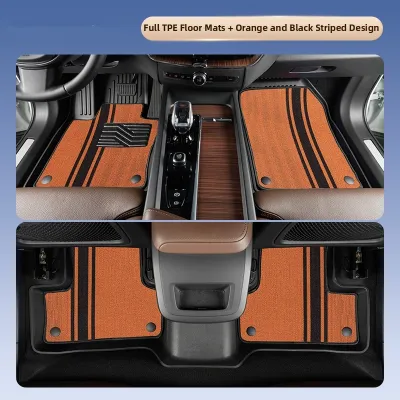
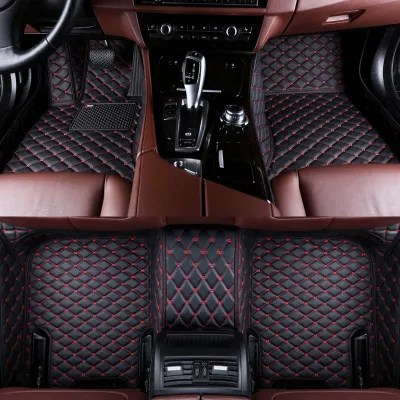
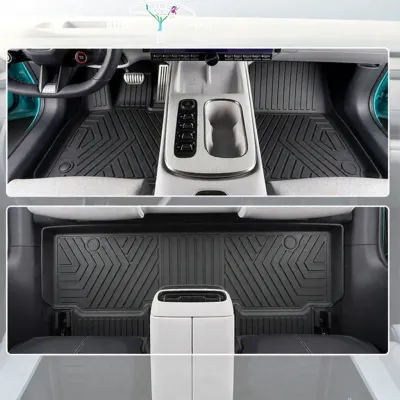
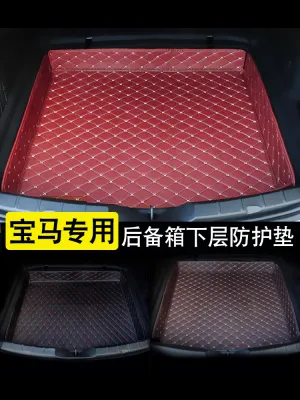
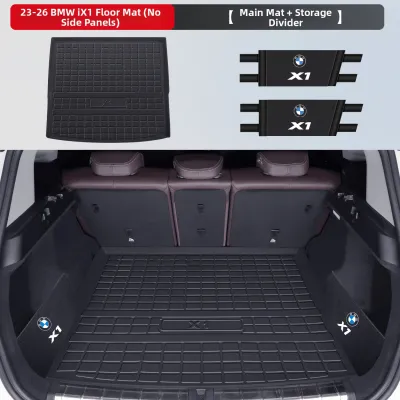
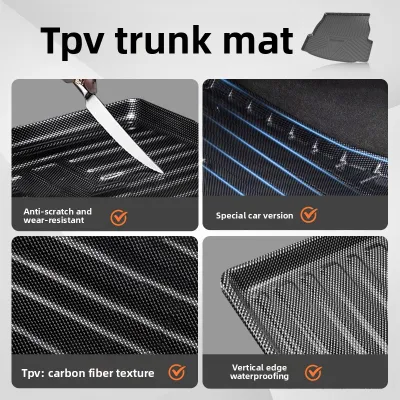
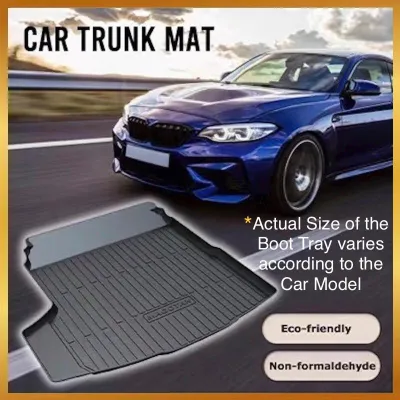
Prices are valid at publication and may change. Please refer to the product page for the latest price.
What Defines Quality and Fit in BMW X1 Full-Surround Mats?
Selecting aftermarket interior accessories for a premium vehicle like the BMW X1 requires an understanding of how floor contours, safety systems, and local environmental conditions interact. A high-quality full-surround mat must address several critical engineering and design challenges to perform effectively over the lifespan of the vehicle.
Precision Fit and 3D Laser Scanning
The footwells of the BMW X1—spanning generations such as the F48 (2015–2022) and the U11 (2022–present)—feature complex floor geometries, varying angles on the dead pedal, and precise seat rail placements. Generic or semi-custom mats often fail to cover these areas accurately, leading to exposed carpeting that accumulates dirt. Quality full-surround mats rely on 3D laser-scanning technology to capture a digital blueprint of the footwell. This ensures the finished product hugs the vertical walls of the footwell, wraps cleanly around the seat tracks, and remains securely in place without warping or shifting during use.
Safety Boundaries and Pedal Clearance
BMW vehicles typically feature precise pedal spacing, and some model years utilize floor-mounted (organ-style) accelerator pedals while others use suspended designs. The safety boundary for any floor mat is its physical relationship with these controls. A full-surround mat must have exact cutouts and a low profile around the accelerator, brake, and dead pedal areas. If a mat is too thick or poorly molded, it can catch the edge of the pedal or prevent it from returning to its neutral position. When installing new mats, always verify that the pedals can be depressed fully to the floorboards and released completely without any physical contact with the mat material.
Material Durability in Tropical Climates
In tropical environments like Singapore, car interiors are subjected to extreme heat, high relative humidity, and sudden, heavy rainstorms. When a car is parked in direct sunlight, cabin temperatures can easily exceed 60°C. Under these conditions, low-grade plastics and cheap adhesives degrade rapidly, causing mats to warp, curl at the edges, or delaminate. High-quality materials must maintain their structural integrity across a wide temperature range, resisting UV degradation while remaining flexible enough to absorb vibrations and foot impact without cracking.
Odor Prevention and Low-VOC Emissions
Many budget full-surround mats utilize cheap synthetic leathers, industrial glues, or recycled plastics that release volatile organic compounds (VOCs) when heated. This off-gassing produces a strong, chemical odor that can cause headaches and pollute the closed cabin air of your BMW X1. Premium manufacturers use virgin, medical-grade TPE or high-quality, solvent-free XPE foam that is certified low-VOC or completely odorless, ensuring the cabin air remains safe and pleasant even after hours of parking in the sun.
Comparing Full-Surround Mat Materials: TPE vs. Leather/XPE vs. Coil
To determine which full-surround mat brand or type is right for your BMW X1, you must evaluate the physical characteristics, advantages, and limitations of the three primary material categories available on the market.

TPE (Thermoplastic Elastomer) Injection-Molded Mats
Thermoplastic Elastomer (TPE) is a rubber-like material that combines the durability of industrial plastics with the flexibility of rubber. High-end TPE mats are manufactured using high-pressure injection molding rather than vacuum forming, resulting in a highly consistent wall thickness and rigid structural walls that do not sag over time.
- Fit and Stability: TPE mats provide a rigid, 1:1 3D-scanned fit. The raised perimeter walls act as a tray, containing spills, mud, and debris within the mat's boundaries.
- Weather and Water Resistance: These mats are completely impervious to water, oil, and dirt. They are highly suited for rainy seasons, beach trips, or carrying wet items, as liquid cannot penetrate the material.
- Maintenance: Cleaning TPE mats is straightforward. They can be removed from the vehicle, hosed down with clean water, wiped dry with a microfiber cloth, and reinstalled immediately. No extended drying time is required.
- Trade-offs: TPE mats have a more utilitarian, modern appearance. They do not offer the soft, plush feel of carpet or the traditional luxury aesthetic of stitched leather, which some BMW owners prefer.
Leather and XPE Foam Soft-Wrapped Mats
Soft-wrapped full-surround mats typically feature a multi-layer construction consisting of a synthetic leather top layer (such as polyurethane or PVC), a dense XPE foam core for cushioning, and an anti-slip bottom backing.
- Aesthetic Integration: These mats often feature elegant diamond-stitching or textured patterns that closely match the premium upholstery and leather trims of the BMW X1 cabin.
- Comfort and Sound Dampening: The thick XPE foam layer provides excellent underfoot cushioning and acts as an additional layer of sound insulation, absorbing road noise and vibrations transmitted through the floorboards.
- Drawbacks: The stitching on these mats can act as a pathway for moisture. If water penetrates the seams, it can become trapped in the foam core, leading to mold growth, musty odors, and potential damage to the vehicle's original carpet. Over time, heavy foot friction can cause the synthetic leather surface to scuff, peel, or crack.
- Maintenance: They require careful, regular vacuuming and wiping with a damp cloth. If they become saturated with water, they must be removed and allowed to dry completely in a well-ventilated, shaded area to prevent bacterial growth.
Hybrid Coil and Leather Mats
Hybrid mats combine a full-coverage leather or XPE base mat with an additional, detachable vinyl (PVC) coil mat positioned directly under the driver and passenger foot areas.
- Dirt Trapping: The dense, looped structure of the PVC coil layer is highly effective at scraping dirt, sand, and mud from shoes and trapping it deep within the coils, keeping the surface looking clean.
- Versatility: The top coil layer can be unclipped and removed for quick cleaning, leaving the protective leather surround intact underneath.
- Drawbacks: The dual-layer design is significantly heavier and bulkier than single-layer options. If mud or liquids dry deep within the coils, they can be difficult to wash out completely. In humid climates, trapped moisture in the dense coil network can take days to dry, potentially harboring odors.
Summary Comparison Table
| Material Type | Fit Precision | Weather Resistance | Maintenance Effort | Aesthetic Appeal |
|---|---|---|---|---|
| TPE Injection-Molded | Excellent (Rigid 3D shape) | Outstanding (100% waterproof) | Very Low (Hose off & dry) | Modern / Industrial |
| Leather / XPE Soft-Wrapped | Very Good (Flexible walls) | Moderate (Stitching can leak) | Moderate (Wipe & air dry) | Luxurious / Traditional |
| Hybrid Coil & Leather | Good (Heavy & thick) | Moderate (Coils retain water) | High (Requires deep washing) | Premium / Textured |
How to Verify Fit, Coverage, and Pedal Safety
Before purchasing any full-surround mat for your BMW X1, and immediately after receiving it, you must perform several verification steps to ensure the product is safe, functional, and fully compatible with your vehicle.
Pre-Purchase Compatibility Checks
Vehicle manufacturers frequently update floor configurations between model generations, and layout differences exist between regional markets.
- Verify the Generation: Ensure the mat is specifically designed for your exact BMW X1 model year. A mat designed for the older F48 generation will not fit the newer U11 generation due to changes in floor dimensions and seat rail placement.
- Confirm Drive Configuration: Always verify that the mats are designed for Right-Hand Drive (RHD) vehicles if your car is registered in Singapore. Left-Hand Drive (LHD) mats have mirrored dimensions and will not align with your footwells, creating a severe safety hazard if placed on the wrong side.
- Check for Factory Anchors: Ensure the aftermarket mat is compatible with the original BMW floor retention system (typically hook-and-loop Velcro pads or twist-lock anchors). The mat must lock securely into these points to prevent sliding.
Post-Installation Safety Test
Once you receive your mats, perform a physical safety check before driving the vehicle. This test should always be conducted while the vehicle is parked, the engine is turned off, and the parking brake is fully engaged.
- Remove Existing Mats: Never stack aftermarket full-surround mats on top of your factory carpet mats. Stacking raises the floor profile, reduces pedal clearance, and prevents the safety anchors from locking correctly.
- Align and Lock: Place the new mat into the footwell, ensuring it sits completely flat against the floor. Securely engage the factory floor anchors.
- Check Pedal Travel: Depress the accelerator pedal slowly through its entire range of motion until it hits the floor stop. Verify that there is at least a few millimeters of clearance between the pedal arm and the edge of the mat. Release the pedal and ensure it returns smoothly without catching.
- Check Brake Operation: Depress the brake pedal firmly. Ensure the mat does not compress, bunch up, or restrict the pedal's travel in any way.
- Inspect Seat Rails: Slide the front seats fully forward and backward. Verify that the seat rails do not bind against the vertical walls of the mat.
Cleaning and Maintenance Guidelines
To extend the life of your mats and protect your BMW’s interior, adopt a regular maintenance routine. For TPE mats, use only mild soap and water; avoid applying silicone-based dressings or tire shines, as these can make the surface dangerously slippery underfoot. For leather and XPE mats, use a dedicated leather cleaner or a damp cloth, and always ensure they are completely dry before reinstalling them. Periodically remove the mats to inspect the original vehicle carpeting underneath for any signs of trapped moisture, salt buildup, or mold, especially after driving through heavy rain.
Frequently Asked Questions (FAQ)
Do full-surround mats block the rear air conditioning vents in the BMW X1?
In many BMW X1 models, the rear passenger passenger-compartment heating and ventilation ducts are located on the floor directly underneath the front driver and passenger seats. Poorly designed or generic full-surround mats that have excessively high vertical walls or lack precise cutouts can block these vents. This restricts airflow, reducing the cooling efficiency of the air conditioning system for rear passengers. When purchasing a full-surround mat, verify that the design includes dedicated cutouts or a lower profile in the under-seat areas to keep these ventilation ducts completely unobstructed.
Are TPE mats better than leather mats for Singapore's weather?
Yes, TPE mats are generally more practical and durable for Singapore’s tropical climate. The region’s frequent heavy downpours mean that wet shoes, umbrellas, and damp gear regularly introduce moisture into the cabin. TPE is completely non-porous, meaning it cannot absorb water, rot, or harbor mold and bacteria. Leather and XPE foam mats, while highly aesthetic, feature stitching and synthetic materials that can trap moisture in high humidity. If you choose leather or hybrid mats in a tropical environment, you must be diligent about removing and drying them whenever they get wet to prevent musty odors and mold growth.
How do I know if a car mat brand uses true 3D laser scanning?
True 3D-scanned mats are characterized by their structural rigidity and highly specific contour matching. A genuine laser-scanned mat will have self-supporting vertical walls that rise up the sides of the footwell and hold their shape without sagging, folding, or requiring clips to stay upright. It will feature exact, molded indentations that match the dead pedal, the specific curves of the transmission tunnel, and the precise shape of the seat mounting brackets. If a mat relies on universal, flat panels with heavy creasing or requires extensive trimming to fit your BMW X1, it is not a true 3D laser-scanned product.

Community discussion
Share your experience or ask a question. Comments are reviewed before publication.