
Why the Nissan Serena Requires a Custom-Fit Front Sun Shade
The Nissan Serena is one of Singapore’s most popular multi-purpose vehicles (MPVs), highly favored by families for its spacious cabin, dual back doors, and highly versatile seating configurations. However, the very design elements that make the Serena’s cabin feel so airy and open—specifically its massive, steeply raked front windshield and expansive side quarter windows—also present a significant thermal challenge. Under the intense, year-round tropical sun of Singapore, this giant glass surface acts like a greenhouse, rapidly trapping heat and elevating cabin temperatures to extreme levels within minutes of parking.
When parked in open-air HDB carparks, industrial estates, or uncovered driveways, your vehicle is subjected to relentless solar radiation. Standard, off-the-shelf universal sun shades almost always fail to protect the Serena’s interior. Because generic shades are manufactured to fit average-sized sedans or compact hatchbacks, they lack both the height and the width required to cover the Serena’s towering windshield. Using a universal shade inevitably leaves massive light gaps along the A-pillars and near the base of the dashboard, allowing solar energy to bypass the barrier and heat up your steering wheel, dashboard, and front seats.
Furthermore, a generic shade lacks the structural rigidity needed to span such a vast expanse of glass. Without precise edge-to-edge support, a universal shade will sag in the middle, slip down from the sun visors, and eventually collapse onto the dashboard. This leaves your vehicle’s interior completely exposed to direct ultraviolet (UV) and infrared (IR) rays. Over time, this constant solar exposure leads to severe UV degradation, causing the dashboard plastics to fade, warp, or crack, and accelerating the wear on premium leather seats and sensitive electronic displays.
Products mentioned in this guide
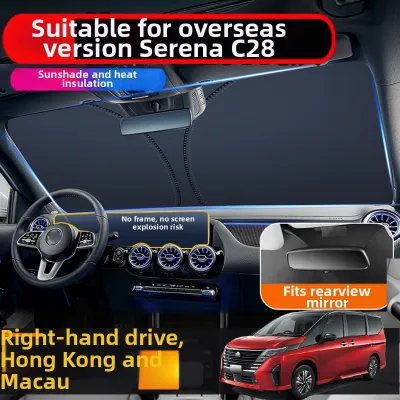
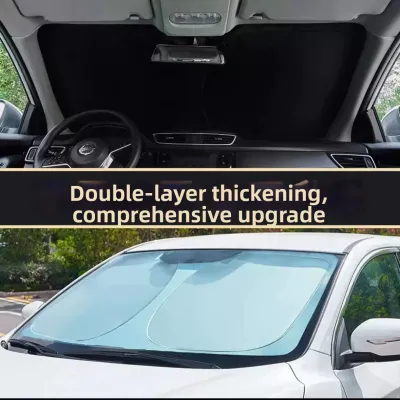
Prices are valid at publication and may change. Please refer to the product page for the latest price.
Investing in a custom-fit front windshield sun shade resolves these issues by providing a tailored barrier that matches the exact contours of your Serena’s glass frame. A perfect fit ensures that virtually 100% of the incoming light is blocked, drastically reducing cabin heat build-up and preserving the integrity of your interior materials. By keeping the cabin cooler while parked, a custom-fit shade also reduces the workload on your air conditioning system when you return to the vehicle, improving overall fuel and energy efficiency.
Essential Features for Maximum Heat Blockage and Secure Fit
Selecting a high-quality custom-fit sun shade for your Nissan Serena requires looking beyond basic aesthetics. To achieve maximum thermal insulation and long-lasting durability, you must evaluate the materials, structural reinforcements, and mounting mechanisms of the shade before making a purchase.

Material Layers and Thermal Performance
Effective heat blockage depends heavily on multi-layer composite construction. A premium custom-fit sun shade typically features an outermost layer composed of a highly reflective material, such as a premium aluminum foil laminate or a specialized reflective polyethylene terephthalate (PET) coating. This reflective surface is designed to bounce harmful UV rays and near-infrared heat radiation away from your vehicle before it can penetrate the glass. Beneath this outer shield, look for an insulating core layer made of closed-cell foam or heavy-duty bubble-pack insulation. This core acts as a thermal barrier, preventing the heat absorbed by the outer layer from radiating into your car’s cabin. Finally, a soft inner backing layer, often made of felt or non-abrasive fabric, protects your dashboard and trim from scratches during daily installation.
Edge Binding and Structural Rigidity
Because the Serena’s windshield is exceptionally tall, structural integrity is paramount. A quality shade features reinforced, double-stitched edge binding and a resilient internal wire frame or thick, rigid backing panels. This structural reinforcement ensures the shade maintains its shape over years of deployment and folding cycles. Without proper edge binding, the intense heat will eventually warp the shade, causing the sides to curl inward and create unwanted gaps. Look for options that offer a stiff, self-supporting structure that does not rely solely on the glass to stay upright.
Rearview Mirror and ADAS Sensor Cutout
Modern Nissan Serena models, particularly the C27 and C28 generations, are equipped with advanced driver assistance systems (ADAS), including front-facing cameras and safety sensors mounted directly behind the rearview mirror. A premium custom-fit shade features a highly precise cutout or a flexible fabric overlap designed to fit snugly around this sensor housing. This specialized design allows the shade to close completely around the mirror mount without placing physical pressure on the delicate camera alignment or leaving a large gap that lets light through. Before purchasing, verify that the shade’s cutout matches your specific sensor housing shape, as forcing an incompatible shade against these sensors can interfere with your vehicle’s safety systems.
Friction Fit vs. Suction Cups
When choosing a mounting style, custom-fit designs that rely on a friction fit are vastly superior to those using suction cups, especially in hot, humid climates. Suction cups degrade rapidly under intense heat and UV exposure, losing their suction and causing the shade to fall repeatedly while your car is parked. A truly custom-fit shade is measured so precisely that it wedges securely between the windshield glass and the interior A-pillars, held in place simply by folding down your Serena’s built-in sun visors. This friction-based mounting is reliable, quick to deploy, and leaves no messy residue on your glass.
Top Types of Custom-Fit Sun Shades to Consider
When shopping for a custom-fit sun shade for your Nissan Serena, you will generally encounter three distinct design types. Each category offers a unique balance of thermal efficiency, storage convenience, and ease of deployment, allowing you to choose the option that best fits your daily driving habits.
Precision-Cut Foldable Reflective Shades
Precision-cut foldable reflective shades, often featuring an accordion-style or roll-up design, are widely considered the gold standard for thermal protection. These shades are constructed from heavy-duty, multi-layered materials that provide excellent structural rigidity and maximum insulation. The primary benefit of this design is its uncompromising, edge-to-edge coverage; because the panels are stiff, they press flat against the glass, eliminating almost all ambient light and heat transfer.
However, these shades are relatively bulky due to their thick, protective layers. Folding them up requires two hands and a bit of maneuvering within the front cabin space. When not in use, they must be stored in the rear footwells, behind the front seats, or in the boot. While they take up more cabin space than other options, the superior heat reduction they offer makes them highly popular among drivers who park in open-air lots for extended periods.
Custom-Fit Umbrella-Style Sun Shades
Umbrella-style sun shades have gained significant popularity due to their rapid, one-person deployment. This design operates similarly to a standard rain umbrella, featuring a central shaft and a collapsible rib structure that pops open to support a reflective fabric canopy. The main advantage is convenience; you can easily open and close the shade from the driver’s seat in seconds, and it folds down into a compact pouch that fits neatly into the Serena’s door pockets or glove compartment.
Despite the convenience, you must exercise caution when selecting this style. Ensure the umbrella edges are equipped with soft, protective rubber caps or thick fabric padding to prevent the metal rib tips from scratching your dashboard or scraping the delicate plastic trim around the A-pillars. Additionally, the central shaft must be flexible or bendable so it does not press hard against your center console screen, climate control panel, or dashcam wiring. Always check the product documentation to confirm that the umbrella frame is designed with soft-touch materials that safeguard your interior.
Retractable Roller Sun Shades
Retractable roller sun shades offer a semi-permanent mounting solution for drivers who want instant sun protection without storing a separate accessory. These shades are typically mounted to the side of the A-pillars or along the top of the windshield housing, rolling out smoothly when needed and retracting automatically via a spring-loaded mechanism. They are ideal for quick stops where you want to block the sun without retrieving a shade from the back of the car.
While they provide unparalleled daily convenience, they come with notable trade-offs. Installation is more complex, often requiring specialized adhesive brackets or clips that attach to the interior trim. Furthermore, the housing brackets can create minor visual obstructions near the A-pillars, which is a critical safety consideration given the Serena’s front-quarter window design. They also tend to have a higher initial cost and may not offer the same absolute edge-to-edge coverage as a dedicated, precision-cut foldable shade due to the mechanical clearance required for the roller mechanism.
How to Verify Exact Fitment for Your Serena Generation
A common mistake when buying interior accessories is assuming that any product labeled for a “Nissan Serena” will fit your vehicle. Nissan has produced several generations of this popular MPV over the years, and each generation features completely different windshield dimensions, glass curvature angles, and rearview mirror configurations. To prevent purchase errors and avoid the hassle of returns, you must verify your specific vehicle generation before ordering.
The most common generations currently operating on roads include:
- Nissan Serena C26 (2010–2016): Features a distinct front profile with a moderately curved windshield and a standard rearview mirror mount.
- Nissan Serena C27 (2016–2022): Highly popular, especially in its e-POWER variants. This generation features a larger, more steeply raked windshield and an updated ADAS sensor housing near the mirror.
- Nissan Serena C28 (2022–Present): The latest generation, featuring a redesigned, futuristic front end, a massive glass area, and a significantly larger camera housing for the updated ProPILOT safety systems.
Before placing an order, check your vehicle’s registration log card, your insurance documents, or the manufacturer’s identification plate located on the passenger-side B-pillar or under the hood. Look for the chassis prefix (such as C26, C27, or C28) to confirm your exact model year and generation.
When browsing product listings, never rely solely on generic titles like “Serena Sun Shade.” Always locate the manufacturer’s compatibility chart and verify that your specific chassis code and model year are explicitly listed. If your vehicle features a facelifted design or an upgraded safety package with a larger camera housing, verify that the shade’s rearview cutout is designed to accommodate those specific sensors to avoid a costly return process.
Installation Tips to Prevent Slipping and Light Gaps
Even the highest-quality custom-fit sun shade will underperform if it is not installed correctly. Proper deployment ensures the shade remains securely in place and blocks out maximum heat. Follow these steps to ensure a flawless fit every time:
- Step-by-Step Deployment: Begin by unfolding the shade inside the cabin. Carefully guide the shade over the dashboard, taking care not to knock your rearview mirror or dashcam out of alignment. Align the rearview mirror cutout first, slipping the hook-and-loop strap or fabric flap around the mirror bracket and securing it.
- Positioning the Bottom Edge: Push the bottom edge of the shade as far forward as possible, tucking it gently into the gap where the dashboard meets the bottom of the windshield. Once the bottom is positioned, push the top corners of the shade flat against the glass, tucking the sides into the soft rubber weatherstripping along the A-pillars.
- Using the Sun Visors: To lock the shade securely in place, flip both the driver and passenger sun visors down, pressing them firmly against the top edge of the sun shade. This step is crucial, as the visors provide the primary downward pressure needed to prevent the shade from sagging or slipping over time.
- Troubleshooting Gaps: If you notice light leaking from the edges, do not force the shade. Instead, check if the internal frame has bent slightly during storage. Gently reshape the wire border or adjust the angle of your sun visors to close any remaining gaps. If a large gap persists, double-check that you have not accidentally purchased a shade designed for a different Serena generation.
Maintenance and Storage for Long-Lasting Performance
A custom-fit sun shade is an investment in your Serena’s interior longevity, and proper care will keep it functioning effectively for years. Over time, dust, sweat, and dashboard outgassing can leave a film on the shade’s reflective surface, reducing its thermal performance.
Cleaning and Care
To clean your sun shade, wipe both sides down periodically with a clean, damp microfiber cloth. For stubborn spots, use a mild solution of water and a gentle dish soap, but always avoid harsh chemical cleaners, window sprays, or abrasive scrubbing pads, which can strip away the delicate reflective coating. Always allow the shade to air-dry completely before folding it for storage to prevent mold or mildew growth. Always refer to the manufacturer’s care label for specific material safety instructions.
Storage Best Practices
When storing your shade, always use the protective sleeve or pouch provided by the manufacturer. This prevents the reflective surface from getting scratched by other items in your car and protects the internal wire frame from being bent out of shape. Avoid jamming the shade into tight spaces under seats where heavy passenger feet might crush the structural panels.
Heat Exposure During Storage
Finally, avoid leaving your folded sun shade in direct sunlight on your seats when not in use. While the shade is designed to withstand extreme heat when deployed against the glass, leaving it folded up in a concentrated hot spot on a leather seat can cause the materials to degrade prematurely. Store it in the boot, under a seat, or in a door pocket to maximize its lifespan.
Frequently Asked Questions (FAQ)
Will a universal sun shade work on a Nissan Serena?
While a universal sun shade can physically rest on your dashboard, it will not provide effective heat protection. The Nissan Serena’s windshield is exceptionally large and steeply angled compared to standard vehicles. A generic shade will leave massive gaps along the sides and bottom, allowing solar heat to enter and heat up your cabin. Additionally, universal shades lack the precise structural support required to stay upright across the Serena’s wide glass expanse, often slipping down and collapsing shortly after installation.
How do I identify my Nissan Serena generation for the correct size?
You can easily identify your Serena’s generation by checking your vehicle registration documents or the manufacturer’s chassis plate, which is typically located on the door jamb or under the hood. Look for chassis codes such as C26, C27, or C28. Additionally, you can consult your owner’s manual or contact your authorized dealer to verify your model year and trim level, ensuring you select a sun shade with the exact matching dimensions and camera cutout.
Can a reflective sun shade damage my windshield or window tint?
A high-quality custom-fit sun shade with smooth, bound edges will not damage your windshield or aftermarket window tint. However, you should avoid poorly manufactured shades with exposed metal wires or sharp edges that can scratch your glass or tear your tint. If you have recently installed a new window tint film, check the manufacturer’s instructions before using a sun shade, as fresh tint requires a curing period (typically 3 to 7 days) during which extreme heat trapping or physical contact should be avoided.
Community discussion
Share your experience or ask a question. Comments are reviewed before publication.