
Selecting the right car seat belt insert is crucial for maintaining passenger comfort while preserving the pristine condition of your vehicle’s cabin. When you add aftermarket seat covers—whether luxurious leather, practical fabric, or highly breathable mesh—you introduce a new contact point where friction occurs. Choosing an incompatible insert material can lead to permanent interior damage, including unsightly dye transfer, fabric pilling, or ruinous snags. Matching your insert materials to your specific seat covers ensures a perfect, damage-free fit while keeping safety as your absolute priority.
Understanding How a Car Seat Belt Insert Interacts with Seat Covers
A car seat belt insert, commonly referred to as a shoulder pad, harness cover, or protective sleeve, wraps around the standard polyester webbing of your seat belt. Its primary purpose is to prevent the edge of the belt from chafing against your neck or collarbone during daily drives. However, because these inserts rest directly against your seat back, they create a constant point of contact that shifts every time you move, buckle up, or release the belt.
This constant movement creates friction against the seat cover beneath. In Singapore’s tropical climate, where high humidity and intense cabin heat are the norm, this friction is amplified by moisture from sweat and ambient humidity. Under these conditions, a poorly matched insert can cause three major types of damage: dye bleeding, physical abrasion, and slipping.
Products mentioned in this guide
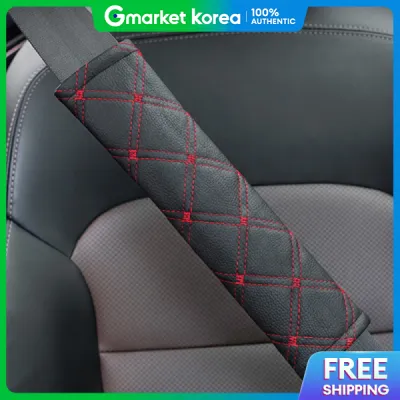
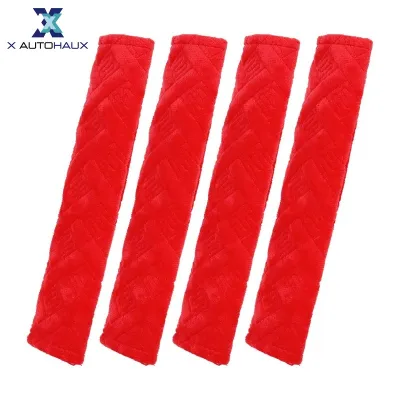
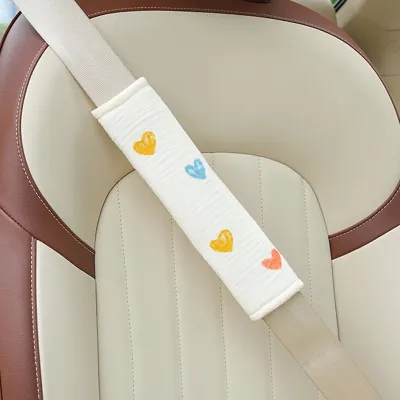
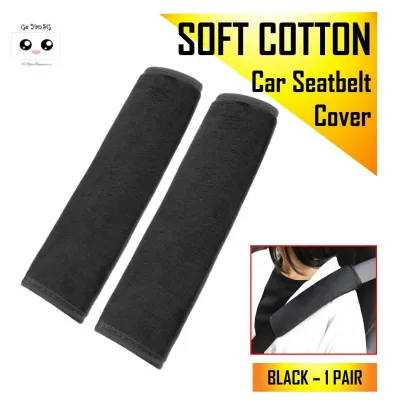
![[MQLITTLESHOP] Kids Car Safety Seatbelt Adjuster Universal Seat Belt Triangle Pad Holder Safety Kids Car Belts Guard](https://img.lazcdn.com/g/p/c6efe7c04ca28f4f881b8c0e4f851c9d.jpg_400x400q80.jpg_.webp)
Prices are valid at publication and may change. Please refer to the product page for the latest price.
While aesthetics and comfort are important, you must never lose sight of safety. A car seat belt insert must never interfere with the mechanical operation of the restraint system. It must allow the belt to slide freely, retract fully, and lock instantly during sudden braking or an emergency stop. Any accessory that compromises these functions poses a severe safety risk.
Best Insert Materials for Leather Seat Covers
Leather seat covers offer a premium look and feel, but they require careful protection to prevent surface degradation. The outer finish of leather, whether natural or synthetic, relies on a delicate topcoat that can wear away under repetitive friction.

Recommended Material Characteristics
To protect leather, look for inserts made from highly polished microfiber, soft neoprene, or plush cotton with a completely smooth, untextured backing. Microfiber is exceptionally gentle because its ultra-fine fibers distribute pressure evenly, minimizing micro-abrasions on the leather’s surface. Neoprene offers a soft, cushioned feel and naturally glides over leather without sticking or grabbing.
If you prefer cotton, ensure the side facing the seat is a flat, tightly woven weave rather than a coarse, textured pattern. Another excellent option is genuine sheepskin, provided it is high-quality and free from harsh chemical dyes. The natural oils and soft fibers of sheepskin provide a gentle barrier that reduces friction against the leather surface.
Key Risks and Verification Steps
The most significant risk when pairing an insert with leather is dye transfer, particularly on light-colored leather covers such as beige, cream, or light grey. In hot climates, parked cars quickly become heat chambers. This elevated temperature, combined with ambient humidity, can cause unstable dark dyes in cheap polyester or dyed leather inserts to bleed directly into your seat covers, leaving permanent stains.
Before installing any dark-colored insert, perform a simple colorfastness test. Dampen a clean white microfiber cloth with water and rub it firmly against the insert’s backing. If any color transfers to the cloth, do not use the insert on your seats. Additionally, completely avoid inserts featuring exposed metal rivets, heavy metallic snaps, or hard plastic edges, as these can easily gouge, scratch, or puncture the leather surface during daily use.
Furthermore, synthetic leathers (like PU or PVC vegan leather) can sometimes react chemically with rubberized anti-slip backings found on cheap inserts. This chemical interaction, known as plasticizer migration, can leave a sticky, ruined residue on the seat cover. Always verify that the backing of your insert is made of a stable, non-reactive fabric.
Best Insert Materials for Fabric Seat Covers
Fabric seat covers, such as woven polyester, jacquard, or canvas, are highly durable but are prone to surface wear when subjected to constant rubbing. Matching the right insert material is essential to prevent the fabric from looking worn and aged prematurely.
Recommended Material Characteristics
For fabric seat covers, soft cotton, fleece, or highly breathable mesh inserts are excellent choices. Cotton and fleece are gentle on woven textiles, providing a soft buffer that does not catch or pull at the seat cover’s underlying threads. These materials absorb minor moisture without becoming abrasive, helping to maintain a comfortable barrier between the seat belt and your shoulder.
If you use heavy-duty canvas seat covers, which are naturally more abrasive, a slightly thicker fleece or padded cotton insert can help absorb the friction. This prevents the seat belt itself from wearing down the canvas fibers over years of use.
Key Risks and Verification Steps
The primary risk with fabric covers is pilling and thread snagging. Avoid inserts that utilize heavy-duty, exposed hook-and-loop (Velcro) fasteners. If the “hook” side of the fastener is exposed or poorly aligned, it will repeatedly grab the woven fibers of your fabric seat cover, causing them to fray, pull loose, and form unsightly pills.
Another critical factor is moisture management. Fabric covers naturally absorb sweat, and when paired with a non-breathable insert (such as cheap solid vinyl or heavy synthetic rubber), moisture can easily become trapped in the contact zone. In a humid environment, this trapped dampness creates an ideal breeding ground for bacteria, mold, and persistent musty odors.
To prevent this, opt for highly breathable, washable inserts. Ensure you wash them regularly according to their care labels and allow them to dry completely before reattaching them to your vehicle’s seat belts.
Best Insert Materials for Mesh Seat Covers
Mesh seat covers are favored for their exceptional ventilation, making them incredibly popular in hot climates. However, their open-weave, honeycomb, or perforated design makes them the most delicate of all cover types when it comes to mechanical wear.
Recommended Material Characteristics
When choosing an insert for mesh seat covers, you must prioritize ultra-smooth, seamless materials. Silk-blends, polished nylon, or high-density, low-pile microfiber are the safest options. These materials have virtually no texture to catch on the open pores of the mesh, allowing the insert to glide effortlessly across the seat back without snagging.
Another option is a specialized spacer-mesh insert that matches the texture of your seat cover. If the two mesh surfaces are of similar density and smoothness, they can slide against each other without causing fiber interlocking or abrasion.
Key Risks and Verification Steps
The open loops of mesh fabric are incredibly vulnerable to unraveling. A single snag can pull a thread that runs through an entire panel, ruining the look and structural integrity of the seat cover. You must strictly avoid any inserts with textured anti-slip rubber backings, coarse decorative stitching, or exposed plastic components.
To protect your mesh covers, establish a routine of regular inspection. Every few weeks, slide the seat belt aside and closely examine the contact area on the mesh cover. If you notice any tiny loops of thread beginning to pull away or any localized fuzziness, it indicates that the insert is causing friction damage. Remove the insert immediately and replace it with a smoother, friction-free alternative.
Insert Materials and Designs to Avoid for All Seat Types
While different seat cover materials have unique vulnerabilities, certain insert designs and materials pose universal risks to both your vehicle’s interior and your safety. Avoid rough canvas, coarse denim, unpadded hard plastics, and inserts featuring heavy metal buckles or sharp decorative elements. These materials can damage any seat cover over time and can cause discomfort or injury to passengers.
More importantly, you must avoid oversized, excessively bulky, or rigid inserts. Thick plush inserts, massive memory foam pads, or rigid plastic buckle sleeves can severely compromise the mechanical function of your seat belt. If an insert is too thick, it can prevent the seat belt from retracting fully when unbuckled. This leaves slack in the belt when worn, which directly impairs the pre-tensioner and emergency locking systems during a collision.
During a sudden impact, the seat belt pre-tensioner uses a small pyrotechnic charge to instantly pull the belt tight against your body. If there is excess slack or bulky padding, the belt cannot restrain you effectively, increasing the risk of contact with the steering wheel or dashboard. Aesthetic appeal or extreme plushness should never take precedence over safety. The seat belt must always maintain its original geometry, routing closely and flatly across your collarbone and pelvis to distribute impact forces safely.
How to Verify Fit and Maintain Seat Belt Safety
To ensure your chosen car seat belt insert is safe and compatible, follow this step-by-step verification checklist after installation:
- Verify Retraction: Pull the seat belt out completely and let it go. The belt must retract smoothly, quickly, and fully into the B-pillar without getting stuck, sagging, or requiring manual assistance.
- Check Latch Clearance: Ensure the insert is positioned high enough on the shoulder strap so that it never interferes with the latch plate sliding or clicking securely into the buckle.
- Confirm Positioning: The insert should rest comfortably on your collarbone and shoulder. It must not slide down to the buckle area or ride up against your neck, which could alter the belt's safety geometry.
- Inspect the Underlay: Lift the insert weekly to check the seat cover underneath for any signs of wear, indentation, or color transfer.
Before installing any aftermarket accessory, always consult your vehicle’s owner’s manual and the seat cover manufacturer’s care instructions. If an insert causes the belt to slip, lock prematurely, fail to retract, or feel loose at any point, remove it immediately. Safety must always come first.
Finally, maintain your inserts to preserve your seat covers. Remove the inserts before washing, follow the care label instructions, and ensure they are 100% dry before reattaching them. Reattaching a damp insert will trap moisture against your seat cover, leading to mold or dye bleeding. For high-quality options, expect to spend within a broad price band of S$10 to S$30 per pair, which typically ensures durable fabrics and secure, non-abrasive fastening systems.
Frequently Asked Questions (FAQ)
Can I use a seat belt shoulder pad with a child car seat?
No, you should generally not use aftermarket seat belt shoulder pads or harness covers with a child car seat or booster seat. Child car seats are engineered and crash-tested as complete systems. Adding unapproved aftermarket padding can introduce dangerous slack into the harness, prevent the chest clip from positioning correctly, and compromise the child’s safety in a collision. Only use pads that are explicitly provided or approved by the child car seat manufacturer.
Will a seat belt insert void my car's warranty or affect insurance?
A simple, non-invasive fabric shoulder pad wrapped around the seat belt webbing typically does not void your vehicle’s warranty. However, if you install an insert or modification that alters the mechanical retraction, structural integrity, or routing of the seat belt, it could lead to warranty disputes regarding the safety restraint system. Furthermore, in the event of an accident, if an unapproved modification is found to have interfered with the seat belt’s proper operation, it could complicate insurance claims. Always prioritize safety and use non-invasive, easily removable accessories.
Community discussion
Share your experience or ask a question. Comments are reviewed before publication.