
A multi-functional car hook hanger with a built-in phone holder is an exceptionally practical, space-saving accessory designed to solve two of the most common cabin organization challenges: securing personal items and keeping your smartphone visible for navigation. By integrating a sturdy hook with an adjustable phone mount, this dual-purpose accessory eliminates the need for multiple separate brackets that can clutter your dashboard and obstruct your view. Whether you are navigating busy city streets or managing a quick commute, this combination keeps your essential items secure, off the floor, and easily accessible.
Selecting the right mount requires balancing convenience with strict safety considerations. Because these accessories are installed on or near the dashboard and center console, understanding how they interact with your vehicle’s interior materials, climate conditions, and safety systems is essential. This guide covers the practical benefits, critical safety boundaries, key product features, and installation techniques to help you choose the ideal setup for your vehicle.
The Benefits of Combining a Car Hook Hanger and Phone Holder
Modern vehicle cabins are increasingly minimalist, often leaving drivers with limited physical space on the center console for loose items. A 2-in-1 car hook hanger addresses this limitation by reclaiming unused vertical space along the dashboard panel or console edge. Instead of letting shopping bags, takeaway containers, or small purses slide around on the passenger seat, you can secure them directly to a dedicated hook. This keeps your immediate console area clear for primary controls, cup holders, and charging cables.
Products mentioned in this guide
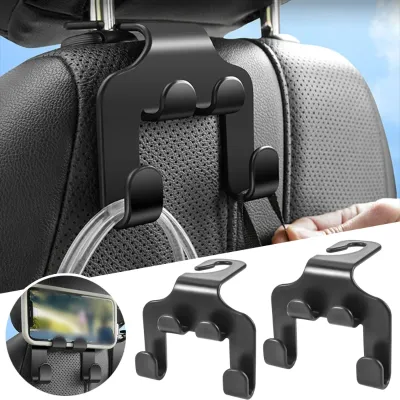
Prices are valid at publication and may change. Please refer to the product page for the latest price.
Keeping your belongings elevated also offers significant hygiene and safety advantages. The floor mats of a car accumulate dirt, moisture, and debris. Placing a handbag, grocery bag, or food container directly onto the floor risks transferring these contaminants to your personal items or home surfaces. Furthermore, loose items on the floor can slide forward under braking, potentially obstructing the foot pedals and creating a severe driving hazard. Elevating these items on a secure hanger ensures they remain stationary throughout your journey.
Integrating the phone holder into the same mounting base keeps your smartphone positioned at an optimal viewing height for GPS navigation. Rather than mounting a separate, bulky phone holder that clips into an air vent or sticks directly to the windshield, a combined accessory utilizes a single footprint. This consolidated design preserves your line of sight through the glass and maintains unrestricted airflow from your air conditioning vents—a crucial factor for passenger comfort in warm climates.
This space-saving configuration is particularly beneficial for high-frequency drivers. Daily commuters, busy parents, and rideshare drivers who constantly manage personal gear, mobile devices, and passenger needs find that a consolidated mount streamlines their daily routine. By keeping navigation clear and personal items secured in one designated spot, you can focus entirely on the road without the distraction of shifting cargo.
Critical Safety and Compatibility Checks for Dashboard Mounting
Before purchasing or installing any dashboard-mounted accessory, you must evaluate several non-negotiable safety boundaries. Automotive interiors are engineered with precise safety systems, and adding aftermarket hardware incorrectly can compromise these protections or lead to severe injury during an accident.

Airbag Deployment Zones
You must never mount a car hook hanger, phone holder, or any other accessory on or near active airbag deployment zones. This includes the passenger-side dashboard panel (marked by “SRS Airbag” lettering), the steering wheel hub, and the side A-pillars where curtain airbags reside. Airbags deploy with immense explosive force—often within milliseconds. If an accessory is positioned in the path of an expanding airbag, it will be launched into the cabin as a high-velocity projectile, presenting an extreme safety risk to all occupants. Consult your vehicle’s owner manual to identify the exact boundaries of all airbag deployment zones.
Driver’s Line of Sight
Any accessory mounted on top of the dashboard must not obstruct your forward view of the road, your side mirrors, or your instrument cluster. In many regions, including Singapore, road transport authorities maintain strict regulations regarding driver visibility. A mount that forces you to peer around your phone or a hanging bag to see traffic is illegal and highly dangerous. Position the accessory low enough on the console or dashboard face so that the phone remains below the hood line of the windshield.
Climate and Material Compatibility
Tropical climates with high humidity and intense sunlight create challenging conditions for interior car accessories. When a vehicle is parked outdoors under direct sunlight, interior cabin temperatures can easily exceed 60°C. This extreme heat can cause standard rubber suction cups to lose suction and low-grade adhesives to melt, slide, or fail entirely. Furthermore, applying strong chemical adhesives to premium interior materials—such as genuine leather, suede, or soft-touch painted plastics—can cause permanent discoloration, bubbling, or peeling when the mount is eventually removed. Always verify your dashboard material before choosing an installation method.
Weight Limits and Projectile Risks
Hanging heavy items on a dashboard-mounted hook alters the mechanical leverage applied to the mount’s base. While a hook might feel secure when holding an empty bag, adding heavy items like laptops, large water bottles, or dense groceries can cause the adhesive or clip to detach suddenly during sharp turns or emergency braking. A detached mount, along with the phone and bag attached to it, instantly becomes a dangerous loose object inside the cabin. Strictly adhere to the manufacturer’s stated weight limits, and reserve dashboard hooks for lightweight items.
Vehicle Manual Verification
Always consult your vehicle’s owner manual before applying any adhesive tapes, suction mounts, or mechanical clips to your dashboard or center console. Manufacturers often outline specific warnings regarding chemical sensitivities of cabin plastics and the structural load limits of console trim panels. If the manual warns against adhesive applications on your specific dashboard type, look for alternative mounting locations, such as the headrest posts or seat-back structures.
Key Features to Evaluate for Space-Saving Console Setups
To find a reliable, durable accessory that fits your driving habits, evaluate the design and material specifications of potential candidates. A well-engineered mount must withstand daily use, support your device securely, and resist environmental wear.
Hook Design and Security
Look for a hook with a deep, curved J-shape or an enclosed carabiner-style latch. Shallow hooks allow bag straps to slide off easily when you drive over speed bumps or take sharp corners. An anti-slip silicone or rubber lining inside the hook curve adds friction, preventing straps from sliding back and forth. If you frequently carry bags with thick handles, ensure the hook opening is wide enough to accommodate them without pinching.
Phone Holder Mechanism
Consider how you prefer to mount and retrieve your phone. There are three primary gripping mechanisms available:
- Gravity-Linkage Mounts: These use the weight of your phone to pull the side arms inward. They offer easy, one-handed drop-and-go operation, but they must remain vertically oriented to function and can sometimes rattle when empty.
- Mechanical Side Clamps: These feature spring-loaded or button-released side arms that lock the phone tightly in place. They provide an exceptionally secure hold and work in both portrait and landscape orientations, though they usually require two hands to secure or release.
- Magnetic Mounts: Utilizing strong neodymium magnets (often compatible with MagSafe standards), these offer the cleanest look and instant, one-handed mounting. However, they require a metal plate attached to your phone or a magnet-compatible case to function effectively.
Adjustability and Ergonomics
Opt for a mount featuring a high-quality, adjustable ball joint or a rotating base. Because the hook needs to hang downward to support weight, the phone holder portion must be able to pivot independently. A 360-degree rotating ball joint allows you to tilt the screen to avoid sun glare and position your phone at the perfect viewing angle for navigation while keeping the hook accessible and functional.
Build Quality and Heat Resistance
Avoid cheap, brittle plastics that degrade quickly under UV exposure. Look for mounts constructed from high-grade, UV-stabilized polycarbonate, ABS plastics, or anodized aluminum alloys. High-grade materials resist warping, cracking, and off-gassing under intense heat, ensuring the mechanical joints and clamps remain tight and functional over years of use.
Footprint and Space Efficiency
Measure the intended mounting area on your dashboard or center console before purchasing. The base of the accessory should have a compact footprint that does not block essential vehicle controls, such as hazard light buttons, climate control vents, infotainment screens, or the glove box latch. A well-designed mount should integrate seamlessly into your cabin’s layout without requiring you to compromise on the usability of other dashboard features.
Common Multi-Functional Designs and Their Best Use Cases
Car hook and phone holder combinations generally fall into three distinct design categories, each suited to specific interior layouts and user preferences. The table below summarizes their key differences to help you identify the best fit for your vehicle.
| Design Type | Typical Installation Method | Ideal Scenario | Key Limitations | Weight Capacity Range |
|---|---|---|---|---|
| Adhesive Dashboard Mounts | Double-sided acrylic tape (VHB) or gel suction | Flat, hard plastic dashboards; permanent setups | Heat can degrade adhesive; potential surface residue | 1.0 kg – 2.5 kg |
| Clip-On Console Mounts | Spring-loaded or screw-tightened tension clamps | Exposed console edges, glove box lips, or trim seams | Requires specific panel gaps; may scratch soft trim | 1.5 kg – 3.0 kg |
| Extended Headrest Mounts | Clamps onto front seat headrest metal poles | Passenger entertainment; rear-seat organization | Not directly visible to driver for active navigation | 3.0 kg – 5.0 kg |
Adhesive Dashboard and Console Mounts
Adhesive-backed mounts utilize high-strength, double-sided acrylic foam tape (such as 3M VHB) or adhesive gel suction cups to bond directly to the flat surfaces of your dashboard. These designs are highly popular because they can be positioned almost anywhere on a flat, non-porous panel, allowing you to place your phone exactly where you need it.
While they offer a sleek, low-profile look, their performance depends heavily on surface preparation and temperature. In hot climates, prolonged exposure to direct sunlight can soften the adhesive bond, reducing the weight capacity of the hook. They are best suited for vehicles with hard, flat plastic dashboards where a permanent or semi-permanent mounting solution is acceptable.
Clip-On Center Console Mounts
Clip-on mounts use mechanical tension, spring-loaded jaws, or screw-tightened clamps to grip the edges of your center console, the lip of the glove box, or the seams of your dashboard trim. These designs do not rely on chemical adhesives, making them an excellent choice for drivers who want a non-destructive installation that can be easily removed or repositioned.
However, their compatibility is highly vehicle-specific. Your vehicle must have accessible panel gaps or exposed trim edges of the correct thickness for the clamp to grip securely. If your console features seamless, flush-fitting panels or is wrapped in delicate leather, a clip-on mount may not fit properly or could leave pressure marks on the soft upholstery.
Headrest Mounts with Extended Arms (Alternative)
If your dashboard layout or interior materials make dashboard mounting impractical, headrest-pole mounts with long, articulated arms serve as an excellent alternative. These clamp securely around the metal support posts of your front seats, with the adjustable arm extending forward or outward to position the hook and phone holder near the center console area.
Because they attach to the rigid metal structure of the seat, these mounts offer a much higher weight capacity than adhesive options and completely eliminate the risk of dashboard surface damage or airbag interference. While they are primarily used to provide rear-seat passenger entertainment, models with long, flexible arms can be adjusted to bring the phone and hook within comfortable reach of the driver, making them a highly versatile and safe alternative.
Safe Installation and Maintenance for Dashboard Accessories
To ensure your multi-functional mount remains secure and does not damage your vehicle’s interior, follow these structured steps for installation, ongoing maintenance, and eventual removal.
Surface Preparation
For adhesive or suction-based mounts, thorough surface cleaning is critical to achieving a strong, lasting bond. Dust, interior dressers, vinyl protectants, and natural skin oils will prevent adhesives from sticking properly.
- Test a Hidden Area: Before applying any cleaning agents, test a small, inconspicuous spot on your dashboard to ensure the cleaner does not discolor or strip the finish.
- Clean the Surface: Wipe the mounting area with a clean microfiber cloth dampened with a mild soap-and-water solution or a 70% isopropyl alcohol solution (if approved by your vehicle manufacturer for that specific material).
- Dry Completely: Ensure the surface is completely dry and free of any cleaning residue before proceeding to the next step.
Curing Time
If your mount uses double-sided adhesive tape, you must allow the adhesive to cure fully before applying any weight to the hook or phone holder. Press the mount firmly onto the prepared surface for at least 30 to 60 seconds to activate the pressure-sensitive adhesive. Do not hang bags or mount your phone immediately; instead, let the adhesive cure undisturbed for 24 to 48 hours. This allows the polymer chains in the adhesive to cross-link and form a maximum-strength bond with the dashboard surface.
Routine Inspection
Periodically inspect your mount to ensure it remains safe to use. Check the adhesive backing or mechanical clamp for any signs of lifting, peeling, or shifting, especially after your vehicle has been parked in direct sunlight for an extended period. Inspect the plastic body of the hook and phone holder for stress fractures, discoloration, or warping caused by UV exposure. If you notice any structural degradation, replace the accessory immediately to prevent sudden failure while driving.
Safe Removal
When it is time to remove an adhesive mount, take care to avoid tearing your dashboard’s surface material. Never use metal screwdrivers, butter knives, or harsh chemical solvents like acetone, which can permanently melt dashboard plastics or strip leather coatings.
- Soften the Adhesive: Use a hair dryer on a low, warm setting to gently heat the base of the mount, softening the adhesive layer. Be careful not to overheat the surrounding dashboard panel.
- Slice Through the Bond: Take a piece of dental floss or high-strength fishing line, slide it underneath the edge of the mount, and use a gentle sawing motion to cut through the softened adhesive foam.
- Clean the Residue: Once the mount is removed, gently rub away any remaining adhesive residue using your fingers or a plastic trim removal tool. If necessary, apply a small amount of a mild, citrus-based adhesive remover that is explicitly labeled safe for automotive interiors, then wipe the area clean with a damp microfiber cloth.
Frequently Asked Questions (FAQ)
Can a dashboard-mounted hook safely hold a heavy laptop bag?
No, dashboard-mounted hooks are generally not designed to hold heavy laptop bags. Because these mounts rely on adhesive tape, suction cups, or tension clips attached to lightweight plastic trim, hanging heavy items (typically anything over 2.0 kg) can easily overload the mount. The leverage applied by a heavy, swinging bag can pull the adhesive off the dashboard or crack the vehicle’s plastic console panels. For heavy laptop bags, backpacks, or large grocery loads, it is much safer to place them on the floorboards, in the passenger footwell, or secure them using a heavy-duty headrest hook attached to the metal seat posts.
Will the adhesive damage my car's leather or soft-touch dashboard?
Yes, there is a high risk of damage if high-strength adhesives are applied directly to premium materials. Strong automotive adhesives, such as acrylic foam tapes, are designed to form permanent or semi-permanent bonds. When applied to genuine leather, synthetic suede, or soft-touch painted plastics, the adhesive can bond more strongly to the surface finish than the finish bonds to the underlying panel. Removing the mount can peel away the leather grain, tear the vinyl skin, or strip the soft-touch coating. For premium interiors, opt for clip-on console mounts or headrest-pole hangers instead of adhesive-backed options.
Are magnetic phone holders safe for modern smartphones and car electronics?
Yes, magnetic phone holders are completely safe for modern smartphones. Modern mobile devices use solid-state flash memory rather than magnetic hard drives, meaning they are unaffected by the magnetic fields generated by standard car mounts. Additionally, smartphone GPS units utilize satellite signals and solid-state sensors that are insulated against typical mounting magnets. However, you should keep magnetic mounts away from physical items with magnetic stripes, such as credit cards, transit passes, or parking keycards, as well as mechanical watches and older external GPS units that rely on physical compass needles.
Community discussion
Share your experience or ask a question. Comments are reviewed before publication.