
To navigate Singapore’s dense highways and tight multi-story car parks safely, a high-quality blind spot side mirror is one of the most cost-effective safety upgrades you can add to your vehicle. The best blind spot mirrors for Singapore drivers are those that offer a clear convex or dual-curvature glass surface, robust weather-resistant housing to withstand tropical humidity, and a secure mounting mechanism that remains stable through heavy downpours and automated car washes.
Rather than relying on a single brand, choosing the right mirror depends on your vehicle’s existing mirror shape, your parking habits, and your comfort level with different visual distortions. Understanding how these compact accessories function alongside your factory setup is key to eliminating dangerous blind spots.
Why Blind Spot Mirrors Are Crucial for Singapore's Driving Environment
Driving in Singapore presents a unique set of spatial challenges that make optimal lateral visibility essential. Because vehicles here are right-hand drive (RHD) and traffic moves on the left side of the road, your primary blind spots are distributed differently than in left-hand drive countries. The driver’s position on the right side of the cabin means that the left side of the vehicle has a much larger, more dangerous blind zone extending toward the center of the road, where faster-moving vehicles frequently overtake.
Products mentioned in this guide
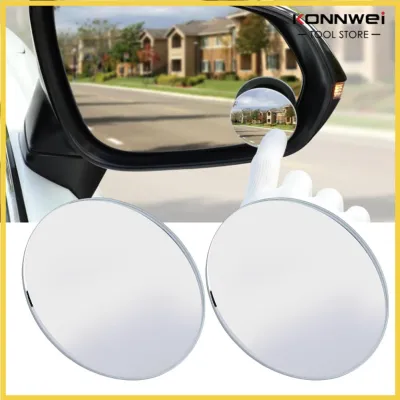
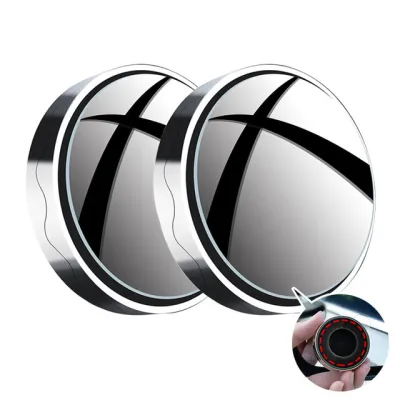
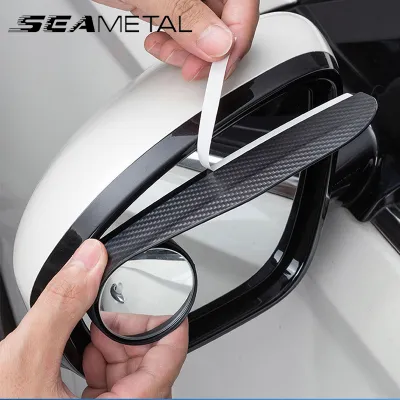
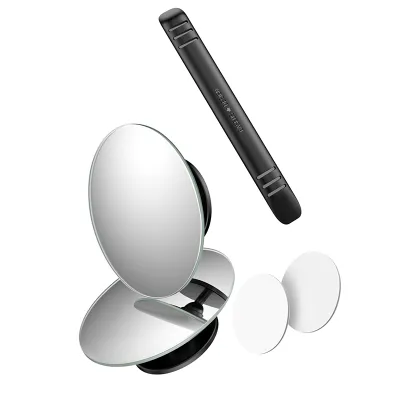
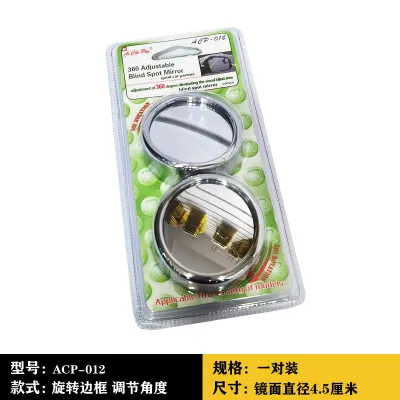
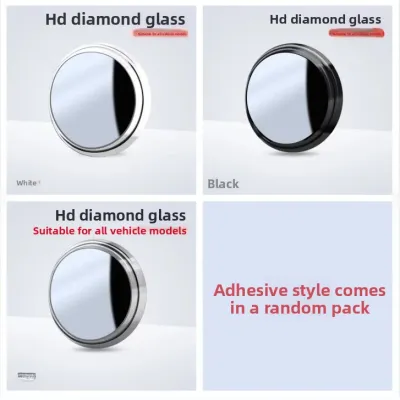
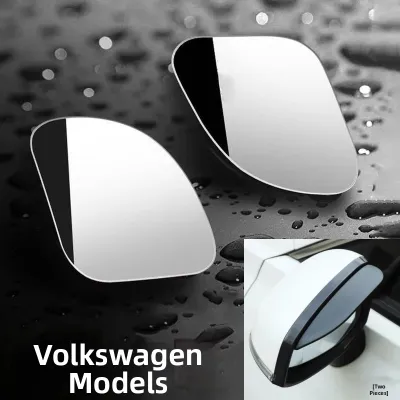
Prices are valid at publication and may change. Please refer to the product page for the latest price.
On the right side, the blind spot sits closer to the curb, which is highly critical when navigating narrow lanes or monitoring active bus lanes. Motorcyclists and power-assisted bicycle riders frequently filter through traffic on both sides of your vehicle during peak hours on major expressways like the PIE, KPE, or AYE. A split-second lane change without full visibility can lead to severe side-swipe collisions.
Singapore’s intense tropical climate further complicates visibility. Heavy afternoon downpours during the monsoon seasons can instantly coat side mirrors in water droplets, severely scattering light and obscuring your view of adjacent lanes. In these wet conditions, standard flat or mildly curved factory mirrors struggle to provide a clear distinction between empty space and an oncoming vehicle.
Additionally, the country’s urban infrastructure features highly demanding architectural designs. Navigating the notoriously narrow, spiraling ramps of older Housing & Development Board (HDB) multi-storey car parks and tight condominium basements requires precise wheel placement. A secondary wide-angle mirror allows you to monitor the rear tires and low-lying concrete kerbs simultaneously, preventing costly wheel scraping and structural damage.
Adding a secondary blind spot side mirror directly addresses these localized risks. By expanding your field of view beyond the physical limits of factory-installed glass, these small accessories bridge the visual gap between your peripheral vision and your rear-view mirror, giving you a continuous, real-time picture of the surrounding traffic.
Key Features to Evaluate When Buying a Blind Spot Side Mirror
Selecting the right blind spot side mirror requires looking past marketing buzzwords and focusing on the underlying optical and structural specifications. Because these accessories are exposed to harsh outdoor elements and must deliver reliable visual data at a glance, several key engineering features dictate their performance.

Mirror Curvature and Field of View
The primary factor governing a mirror’s performance is its curvature. Standard convex mirrors feature a uniform dome shape that compresses a wide angle of view into a small surface area. While this significantly reduces blind spots, it also introduces visual distortion, making objects appear smaller and further away than they actually are.
Alternatively, dual-curvature (or aspheric) designs feature a flatter inner section that transitions to a highly curved outer edge. This hybrid design provides a more natural perspective of vehicles directly behind you while aggressively expanding the field of view at the outer limits. When choosing, consider how your eyes adjust to these distortions, as a highly curved mirror requires more cognitive processing to judge distances accurately.
Shape and Dimensions
The physical profile of the blind spot mirror must complement your vehicle’s existing side mirror glass. Round mirrors are highly versatile but can block a significant portion of your primary view if your factory mirrors are small or narrow.
Fan-shaped, semi-circular, or rectangular mirrors are designed to align with the outer edges of modern side mirrors. These elongated shapes maximize horizontal visibility, which is highly beneficial for multi-lane expressway driving, without consuming excessive vertical space on your primary glass. Measure your factory mirror surface beforehand to ensure the accessory does not block critical sightlines.
Mounting Mechanisms
How the mirror attaches to your vehicle affects both its long-term stability and its adjustability. Permanent adhesive mounts, typically utilizing high-strength double-sided acrylic foam tape, offer a low-profile, flush-fit design that resists wind resistance and vibration. However, once applied, these mirrors cannot be easily repositioned without replacing the adhesive.
Adjustable swivel-base mounts feature an adhesive pad connected to a ball-and-socket joint, allowing you to fine-tune the angle of the blind spot glass independently of the main mirror. While highly convenient for households where multiple drivers share the same car, the extra joint adds physical depth, making the assembly protrude further and increasing vulnerability to high-pressure car washes. Clip-on models attach directly to the outer plastic housing of the side mirror, avoiding adhesive contact with the glass but altering the vehicle’s aerodynamic profile.
Weather and Material Resistance
Singapore’s persistent high humidity, intense sunlight, and frequent rain demand durable materials. Look for mirror housings made from high-grade, UV-stabilized ABS plastic or treated, corrosion-resistant aluminum. Cheap plastics will rapidly degrade, discolor, and become brittle under constant exposure to UV rays.
The glass surface itself should ideally feature a hydrophobic or water-repellent coating to ensure rain droplets slide off rather than pooling on the lens. Anti-glare or blue-tinted coatings are also highly valuable for night driving, as they reduce the blinding reflection of high-intensity headlights from vehicles behind you.
Which Blind Spot Mirror Type Fits Your Vehicle and Driving Style?
Different vehicle categories and driving habits require distinct mirror configurations. Understanding the practical trade-offs of each design type allows you to select a model that integrates seamlessly with your daily commute.
Round Convex Mirrors
Round convex mirrors are the traditional choice for compact hatchbacks, sedans, and city cars. Their symmetrical shape makes them incredibly easy to position, and they can be rotated to suit any angle. Because they lack sharp corners, they present a clean, minimalist appearance that blends naturally with most rounder factory mirror housings.
The main benefit of a round convex mirror is its unobtrusive footprint. It can be tucked neatly into the outermost corner of a small side mirror without completely dominating the glass. However, because the curvature is uniform in all directions, the horizontal field of view is somewhat limited compared to wider shapes, and the vertical compression can make distant objects look highly compressed.
Fan-Shaped and Rectangular Mirrors
For larger vehicles such as sport utility vehicles (SUVs), multi-purpose vehicles (MPVs), and commercial vans, fan-shaped or rectangular blind spot mirrors are highly effective. These shapes are engineered to match the angular contours of modern automotive design, fitting snugly into the lower or outer corners of large side mirrors.
The elongated horizontal axis of a rectangular mirror provides a panoramic view of adjacent lanes, making it much easier to spot fast-approaching motorcycles or vehicles merging from multiple lanes away. Additionally, the wider view helps drivers monitor their rear wheels relative to the curb during tight parallel parking maneuvers. The trade-off is that these mirrors occupy a larger physical surface area, which can obstruct your view of the horizon on smaller vehicles.
Frameless vs. Framed Designs
The choice between frameless and framed mirrors is not merely aesthetic; it directly impacts durability and visual clarity. Frameless glass mirrors feature polished, bevelled edges that provide an uninterrupted, edge-to-edge reflection. This design minimizes visual clutter, making the accessory look like an integrated, factory-installed feature of the side mirror.
Framed designs, on the other hand, enclose the glass edge in a protective plastic or metal bezel. While this frame adds a small amount of visual bulk, it provides crucial impact protection. The frame shields the delicate glass edges from chipping or cracking during automated car wash cycles, tight squeezes against low-hanging branches, or accidental bumps in tight parking spaces.
Step-by-Step Installation and Positioning for Right-Hand Drive Cars
Proper installation and precise positioning are critical to ensuring your blind spot mirrors function as intended. Incorrect placement can create new blind zones or render the accessory completely useless.
Optimal Placement Strategies
Before peeling off any adhesive backing, you must decide on the placement zone that best addresses your driving needs.
- Outer Bottom Corner: This is the most widely recommended position for general driving and parking. Placing the blind spot mirror here allows you to monitor the adjacent lane while keeping a clear view of your rear wheels and the curb. It leaves the upper portion of your primary mirror free to display distant traffic and the horizon line.
- Outer Top Corner: This placement is favored by drivers who prioritize high-speed highway lane changes. It provides a clearer view of vehicles approaching from a distance at higher speeds. However, it can obstruct your view of the horizon on the main mirror and is less effective for parking assistance as it sits too high to show the rear tires clearly.
Preparation and Adhesion
To ensure the mirror remains securely attached through intense tropical downpours and high-pressure car washes, meticulous surface preparation is mandatory. First, consult your vehicle’s manual to ensure your side mirrors do not feature specialized electronic coatings or auto-dimming glass that could be damaged by adhesives.
Clean the factory mirror glass thoroughly using isopropyl alcohol and a clean, lint-free microfiber cloth to remove all traces of road grime, wax, oil, and glass cleaner residue. Avoid using household window cleaners, as they often leave behind a thin silicone film that prevents proper adhesive bonding. Ensure the glass surface is completely dry and warm to the touch before proceeding.
Calibration Process
Once the surface is prepared, sit in your normal driving position and adjust your factory side mirrors to their standard, correct angles. The inner edge of your main mirror should just show the side of your own car, with the horizon line positioned roughly in the middle.
Without removing the adhesive backing, hold the blind spot mirror in your chosen position using temporary tape or a helper’s assistance. Adjust the angle of the blind spot mirror so that it displays the area starting where your main mirror’s view ends, extending outward into your peripheral vision. Once you have verified this seamless transition, carefully apply the adhesive, pressing firmly for at least 30 seconds to activate the pressure-sensitive bond. Avoid washing the car or exposing it to heavy rain for at least 24 hours to allow the adhesive to cure fully.
Critical Safety Limitations You Must Know Before Relying on Them
While blind spot mirrors are invaluable driving aids, they are supplementary tools that must be used with a clear understanding of their physical and optical limitations. Relying solely on them without proper driving habits can lead to dangerous errors in judgment.
Distance Distortion
Because blind spot mirrors rely on a curved, convex surface to compress a wide field of view, they inherently distort depth perception. The classic warning “objects in mirror are closer than they appear” applies doubly to these high-curvature accessories.
A vehicle that appears a safe distance away in the blind spot mirror may actually be right next to your rear bumper. Never use the blind spot mirror to judge the exact distance of an overtaking vehicle or to determine if a gap is large enough for a lane change. Use it strictly as a binary indicator: if you see a vehicle in the blind spot mirror, do not change lanes.
The Shoulder Check Rule
No mirror, regardless of its design or technology, can completely replace a physical head turn. In Singapore’s dense traffic, lane-filtering motorcycles, electric bicycles, and active mobility devices can move at high speeds and change positions rapidly.
These smaller road users can easily slip into the tiny gaps between your mirror’s coverage zones or be obscured by door pillars. A quick, physical shoulder check over your right or left shoulder remains a mandatory safety practice before initiating any lateral movement on the road.
Maintenance and Verification
Over time, exposure to intense tropical heat, UV radiation, and road vibrations can degrade the adhesive bond holding the mirror in place. Make it a habit to gently wiggle the blind spot mirrors during your routine vehicle inspections to ensure they remain firmly attached.
Additionally, the curved surface of these mirrors tends to collect water spots, dust, and road grime more rapidly than flat glass. Clean them regularly with a dedicated glass cleaner and a microfiber cloth to maintain optical clarity, ensuring that dirt does not mimic the shape of a distant vehicle or obscure a genuine hazard.
Frequently Asked Questions (FAQ)
Are aftermarket blind spot mirrors legal in Singapore?
Yes, aftermarket blind spot mirrors are legal in Singapore, provided they meet basic safety guidelines set by the Land Transport Authority (LTA). The mirrors must be securely attached and must not protrude beyond the physical width of the vehicle’s original side mirror housings, as protruding objects can pose a hazard to pedestrians and other road users. Additionally, they must not obstruct the driver’s forward field of vision or interfere with the operation of any original vehicle safety equipment, such as built-in turn signals or camera systems integrated into the mirror housing.
Do I need to install them on both the driver and passenger sides?
While installing a blind spot mirror on the driver’s side (the right side in Singapore) is highly beneficial for highway lane changes, installing them on both sides offers the most comprehensive safety coverage. A mirror on the left (passenger) side is crucial for monitoring the passenger-side blind spot, which is naturally larger due to the driver’s position on the right. This left-side mirror is particularly helpful for detecting cyclists filtering on the inside lane, checking low-lying curbs during parallel parking, and navigating tight left-hand turns without clipping obstacles.
Community discussion
Share your experience or ask a question. Comments are reviewed before publication.