
When navigating Singapore’s tropical climate, stepping inside a car parked under the afternoon sun can be an intense experience, with cabin temperatures rising rapidly. In these driving conditions, choosing the right car air freshener is not just about finding a pleasant scent; it is about selecting a format and fragrance profile that can withstand extreme cabin heat and high humidity without evaporating in a matter of days. For drivers in Singapore, the adjustable Ambi Pur Car vent clip combined with light, volatile fragrance profiles—such as citrus, aqua, or light herbal notes—stands out as the most effective and controllable option. Unlike passive air fresheners that release scent continuously, adjustable vent clips allow you to manage the dispersion rate, preventing the rapid, heat-induced evaporation that quickly drains other formats.
How Singapore's Tropical Climate Alters Fragrance Performance
To understand why certain car air fresheners fail prematurely, it is essential to look at the physical forces at play inside your vehicle. Singapore’s climate is characterized by high ambient temperatures and relative humidity levels that frequently hover above 80 percent. When a vehicle is parked in an open lot or on the street, it acts as a greenhouse. Solar radiation passes through the windshield and windows, heating the dashboard, seats, and steering wheel. Because the cabin is sealed, this thermal energy is trapped, causing the interior temperature to soar far above the outside air temperature within minutes.
This intense heat has a direct, accelerating effect on the evaporation rate of any liquid or gel-based air freshener. At a molecular level, high temperatures increase the kinetic energy of the fragrance oils, forcing them to transition from a liquid state to a gas much faster than they would in a temperate climate. Consequently, a product rated to last up to 30 or 45 days in mild conditions can easily dry out in less than two weeks when subjected to daily sun exposure. Furthermore, different components of a fragrance mixture evaporate at different rates; highly volatile top notes (such as light fruits and fresh herbs) burn off quickly in the heat, leaving behind heavier, concentrated base notes that can smell distorted or excessively heavy.
Products mentioned in this guide
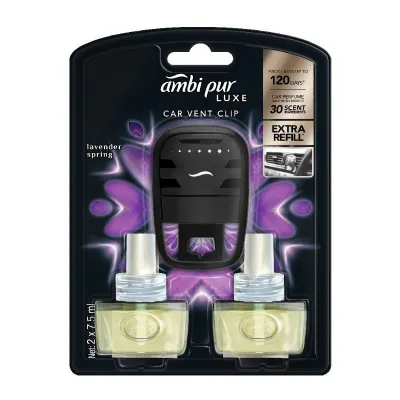
![[Bundle of 3] Ambi Pur Luxe Car Vent Clip Lavender Spring Car Air Freshener 7.5ml](https://img.lazcdn.com/g/p/be8a1e1adfd5c1e2eb6dfc5b9028e789.jpg_400x400q80.jpg_.webp)
![[Bundle of 3] Ambi Pur Car Mini Clip Vanilla Bliss Air Freshener 2.2ml](https://img.lazcdn.com/g/p/e831660c67570ec2c3ca92df5f9fdd0b.jpg_400x400q80.jpg_.webp)
![[Bundle of 6] Ambi Pur Car Mini Clip Lavender Comfort Car Air Freshener 2.2ml x 2](https://img.lazcdn.com/g/p/f600e9bfe96f645b73bee5e6db367b6a.jpg_400x400q80.jpg_.webp)
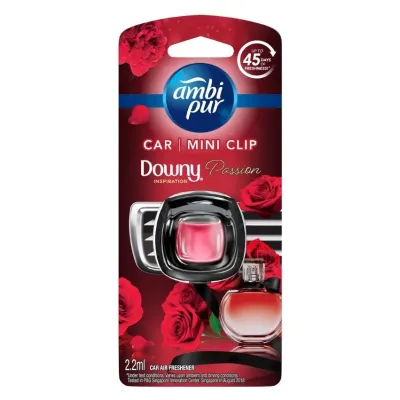
![AMBI PUR Mini Car Freshener (Twin Pack/Single Pack) - [Passion Expiry: 10/26]](https://img.lazcdn.com/g/p/f200488fb38b8d317b6b3a390e827ef4.png_400x400q80.png_.webp)
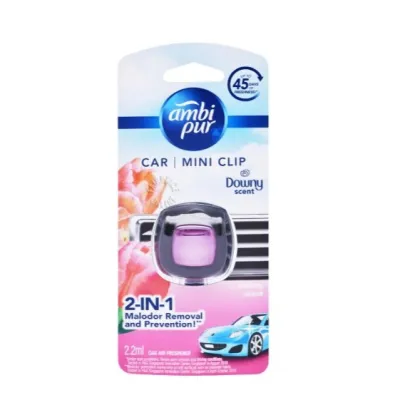
![[CARTON DEAL] Ambi Pur Mini Car Clip Air Freshener 2.2ml - Citrus / Lavender Comfort / Sky Breeze / Passion / x 6 Pcs](https://img.lazcdn.com/g/p/9cd460cfaee7a64c494b479aeba228e8.jpg_400x400q80.jpg_.webp)
Prices are valid at publication and may change. Please refer to the product page for the latest price.
High relative humidity also plays a significant role in how fragrance is dispersed and perceived. When the air is already saturated with water vapor, the physical diffusion of fragrance molecules is slowed down. This can make the scent feel heavy, damp, and stagnant rather than crisp and clean. Additionally, high humidity can compromise the physical integrity of porous diffuser materials, such as hanging cardboard or wooden-capped bottles. These materials absorb ambient moisture from the air, which can interfere with their ability to hold and cleanly wick the fragrance oils, sometimes leading to a damp, musty undertone.
Finally, the frequent and intense use of air conditioning in Singapore creates a highly dynamic environment inside the cabin. When you start your car and run the AC at maximum capacity, you introduce rapid airflow and a sudden drop in temperature. This rapid cooling temporarily reduces the volatility of the fragrance oils, while the high-velocity air from the vents forces a heavy concentration of the scent into the cabin. This constant cycling between extreme, stagnant heat when parked and cold, high-airflow conditions when driving subjects the air freshener to physical stress, making adjustability a crucial feature for maintaining a balanced sensory experience.
Evaluating Ambi Pur Car Formats for Heat and Humidity
Ambi Pur offers several distinct formats designed to fit different parts of your vehicle’s interior. Each format utilizes a unique mechanism to store and disperse fragrance, and understanding how these physical designs interact with high heat and humidity is key to making an informed choice.

Vent Clips: Airflow-Dependent Dispersion
The Ambi Pur Car vent clip is one of the most popular configurations on the market, and for good reason. This format features a small, plastic housing containing a liquid fragrance reservoir and a specialized membrane or wick. The unit clips directly onto your car’s air conditioning vents. The primary advantage of this design is its reliance on active airflow. When your vehicle’s AC blower is running, air is forced over the exposed portion of the wick, carrying the vaporized scent throughout the cabin.
This mechanism is highly efficient for Singapore’s driving habits, where air conditioning is used on almost every journey. Because active dispersion only occurs when air is moving through the vents, the fragrance is conserved while the vehicle is stationary with the engine off. However, vent clips are not entirely immune to the tropical heat. When your car is parked in direct sunlight, the air inside the vent ducts can become incredibly hot. If the vent clip is left fully open, this stagnant heat will continue to draw liquid up the wick, leading to passive evaporation even when the car is not in use.
To combat this, many Ambi Pur vent clips feature an adjustable dial on the top of the housing. This dial allows you to physically restrict or expand the exposure of the wick to the passing air. In a hot climate, keeping this dial set to the lowest effective setting is essential. It prevents the wick from drying out prematurely under the intense, hot airflow of a parked car while still providing adequate scent dispersion when the AC is running.
Hanging and Solid Formats: Passive Evaporation Risks
Hanging liquid bottles, paper cards, and solid gel blocks rely on passive evaporation to scent the cabin. This means they release fragrance continuously, 24 hours a day, regardless of whether you are inside the vehicle or if the car is parked. In a high-heat environment like Singapore, this continuous dispersion is highly inefficient. Because the evaporation process never stops, the lifespan of these products is severely compressed, often lasting only a fraction of their advertised duration.
Hanging liquid bottles present an additional risk in hot climates: leakage. As the temperature inside a parked car rises, the air inside the liquid reservoir expands. This thermal expansion can build up pressure within the bottle, potentially forcing the highly concentrated fragrance oil past the seals or through the wooden cap. If this oil drips onto your dashboard, center console, or leather upholstery, it can cause severe chemical damage. Fragrance oils are potent solvents that can easily melt plastic trims, strip protective coatings, or permanently stain leather surfaces.
Solid and gel-based formats, such as gel cups or small cans, eliminate the immediate risk of liquid spills, but they face their own structural challenges in extreme heat. When exposed to temperatures that can exceed 60 degrees Celsius inside a sealed car parked under the sun, some gel formulations can liquefy, lose their shape, or shrink rapidly into a hard, non-fragrant crust. This rapid physical degradation renders the air freshener ineffective long before its expected lifespan. When using these formats, it is critical to check the manufacturer’s label for maximum storage temperatures and place them in areas shielded from direct sunlight.
Sprays: On-Demand Use and Heat Safety
Ambi Pur also produces on-demand spray air fresheners, which are designed for immediate odor elimination rather than continuous ambient scenting. These are highly effective for quickly neutralizing stubborn smells—such as food odors, damp mustiness from the AC system, or smoke—upon entering a hot, stagnant car. They allow you to clear the air instantly before setting off on your journey.
However, storing spray products in a car in Singapore requires strict adherence to safety boundaries. Many spray air fresheners are packaged in pressurized aerosol cans or contain alcohol-based, highly flammable liquid formulations. Leaving a pressurized aerosol can inside a vehicle parked under direct sunlight is extremely dangerous. The intense heat can cause the internal pressure of the can to rise to dangerous levels, risking a violent rupture or explosion that can shatter windows and severely damage your vehicle’s interior.
To ensure safety, always read the product label for specific storage temperature limits and hazard warnings. Never leave aerosol cans on the dashboard, seats, or in door pockets where they are exposed to direct sunlight. If you must keep an on-demand spray in your vehicle, store it in an insulated glove compartment, a shaded trunk area, or better yet, carry a small pump-spray variant that does not rely on pressurized propellants, and remove it from the vehicle when parking for extended periods.
Format Comparison Matrix
To help you quickly identify which format aligns best with your driving patterns and vehicle setup, the table below compares the physical properties and performance characteristics of each Ambi Pur car format under tropical conditions.
| Format | Dispersion Method | Heat Impact on Lifespan | Spill/Leak Risk | Best Use Case |
|---|---|---|---|---|
| Vent Clip | Active (AC airflow dependent) | Moderate (conserved when AC is off; dial controls rate) | Low (securely sealed reservoir) | Daily commuters who rely heavily on constant air conditioning. |
| Hanging Liquid | Passive (continuous evaporation) | High (rapid depletion due to constant heat) | High (thermal expansion can cause leaks) | Drivers seeking strong, continuous scent who park in shaded areas. |
| Solid / Gel | Passive (continuous evaporation) | High (can melt, shrink, or dry to a hard crust quickly) | Low (non-liquid, though gels can liquefy under extreme heat) | Short-distance drivers wanting a simple, spill-free passive option. |
| Spray | Manual (on-demand pump or aerosol) | Low (only consumed when manually sprayed) | Medium (aerosols pose high heat expansion risks) | Immediate spot-treatment of strong odors; not for continuous ambient scenting. |
Selection Criteria for Tropical Driving Conditions
Choosing the right Ambi Pur car air freshener for Singapore’s unique climate requires looking beyond basic scent preferences. You must evaluate the fragrance chemistry and the physical design of the product to ensure safety, longevity, and comfort.
- Fragrance Families: The chemistry of a fragrance behaves differently depending on the ambient temperature. Heat acts as a powerful natural amplifier, making any scent feel significantly stronger and more intense than it would in a cool environment. For this reason, heavy, sweet, or highly concentrated fragrance families—such as rich vanilla, heavy musks, or dense, sugary florals—should be avoided. In a hot, enclosed car cabin, these heavy scents quickly become cloying, suffocating, and can easily trigger headaches, sinus irritation, or motion sickness during long drives. Instead, opt for lighter, highly volatile fragrance profiles that naturally feel clean and refreshing in high humidity. Citrus notes (such as lemon, lime, or bergamot), marine or "ocean breeze" profiles, and light herbal scents (like green tea, mint, or lavender) are ideal.
- Adjustability: Never buy a car air freshener for a tropical climate that does not offer some form of physical adjustment. Look for Ambi Pur variants that feature a mechanical dial, slider, or adjustable cover. This physical control is your primary defense against premature product depletion. By setting the device to its minimum opening, you restrict the surface area of the fragrance wick or gel exposed to the air, directly slowing down the evaporation rate when the vehicle is parked in the sun.
- Placement Strategy: Where you place your air freshener inside the cabin has a massive impact on its lifespan and safety. Direct ultraviolet (UV) radiation from the sun not only heats up the air freshener but also chemically degrades the fragrance oils, causing them to discolor, lose their scent profile, or develop a sour, oxidized smell. If you are using passive formats like gels or solid blocks, avoid placing them on top of the dashboard or hanging them directly from the rearview mirror. Instead, place them in shaded, lower areas of the cabin, such as the storage compartments under the front seats, the lower door pockets, or the cup holders located in the center console.
- Label Verification: Before purchasing any Ambi Pur car product—whether from a local physical retailer or an online marketplace—always inspect the packaging for manufacturer instructions, safety warnings, and climate-specific storage guidelines. Look for clear indications of maximum storage temperatures and verify that the product is intended for automotive use. If you are buying imported variants online, be aware that some formulations designed for colder markets may not perform well or remain stable under Singapore's extreme heat.
Maintenance, Safety, and Longevity in High Heat
To maximize the lifespan of your Ambi Pur car air freshener and protect your vehicle’s interior from heat-related damage, incorporate a few simple maintenance habits into your routine.
- Heat Mitigation: The most effective way to extend the life of your air freshener is to lower the baseline temperature inside your parked car. Whenever possible, park in multi-storey car parks, basement garages, or under shaded structures. If you must park in an open, sun-exposed lot, always use a high-quality, reflective front windshield sunshade. This simple step blocks a significant portion of solar radiation, keeping your dashboard and vent areas substantially cooler.
- AC Management: For vent clips, develop the habit of closing the adjustable dial on the housing when parking your car for extended periods. Closing the dial seals off the wick from the stagnant, hot air trapped inside the vent ducts, preserving the liquid fragrance. When you return to the vehicle, turn on the engine and let the AC blow out the initial blast of hot air before opening the air freshener dial. This prevents the fresh scent from being wasted on the hot, stale air that is quickly evacuated when you roll down the windows to cool the cabin.
- Observation and Replacement: Regularly inspect the physical condition of your air freshener. For liquid vent clips, check for any signs of discoloration; if the liquid has turned a dark yellow or brown, the fragrance oils have likely oxidized due to heat exposure, which will alter the scent profile. For gel-based formats, replace the unit as soon as the gel shrinks into a hard, dry crust, as it will no longer release fragrance effectively. Most importantly, if you notice a sour, chemically degraded, or off-putting odor, remove the unit immediately.
- Safe Disposal: Once an air freshener is depleted or shows signs of heat damage, dispose of it promptly. Do not leave empty plastic housings or dried-out gel cups in your car, as prolonged exposure to heat can cause the plastic casings to become brittle, crack, or melt, potentially releasing residual chemicals onto your car's interior surfaces. Always handle the units carefully during removal, and if any liquid spills, wipe it up immediately with a damp microfiber cloth and mild soap, following your vehicle manufacturer's interior care instructions to prevent permanent staining or material degradation.
Frequently Asked Questions (FAQ)
Does high humidity make car air fresheners last longer?
No, high humidity does not extend the lifespan of a car air freshener. While moisture-saturated air can sometimes trap scent molecules and make them feel heavier or more noticeable, the primary driver of fragrance consumption is heat. The extreme temperatures inside a parked car in Singapore rapidly accelerate the evaporation of liquid and gel formulas, overriding any atmospheric effects of humidity.
Is it safe to leave Ambi Pur vent clips in the car when parked under the sun?
Yes, Ambi Pur vent clips are generally safe to leave in a parked car because they do not contain pressurized propellants like aerosol cans. However, prolonged exposure to extreme heat and direct sunlight will cause the fragrance liquid to evaporate much faster and can degrade the plastic housing over time. To conserve the liquid and protect the unit, close the adjustable dial when parking.
Which fragrance families perform best in a hot car interior?
Light, crisp, and volatile fragrance families—such as citrus (lemon, bergamot), marine (ocean breeze), and light herbal notes (mint, green tea)—perform best. These scents remain refreshing in a hot cabin, whereas heavy, sweet, or musky fragrances are amplified by the heat, quickly becoming cloying and potentially causing headaches or nausea.
Community discussion
Share your experience or ask a question. Comments are reviewed before publication.