
To determine if the Baseus C02 Pro is compliant with Singapore’s Land Transport Authority (LTA) regulations, car owners must evaluate its physical installation, functional capabilities, and power specifications against local motoring laws. While the LTA does not issue individual approval certificates for specific consumer electronic brands or mounts, compliance depends entirely on how and where the device is mounted, its features, and its electrical integration. Buyers must verify these aspects directly using the manufacturer’s official specifications and physical inspection.
Any accessory attached to a vehicle’s windshield or dashboard must adhere to strict safety standards to ensure it does not pose a hazard to the driver or other road users. Whether you are using the Baseus C02 Pro as a dedicated magnetic mount, a wireless charging dock, or as part of a mobile recording setup, understanding the legal boundaries is essential before hitting the roads in Singapore.
Core LTA Regulations for Dash Cams in Singapore
Operating a vehicle on Singapore roads requires strict adherence to the Road Traffic Act and guidelines set by the LTA. These regulations are designed to maintain optimal driver visibility, prevent driver distraction, and ensure that all electronic accessories meet basic safety standards.
Products mentioned in this guide
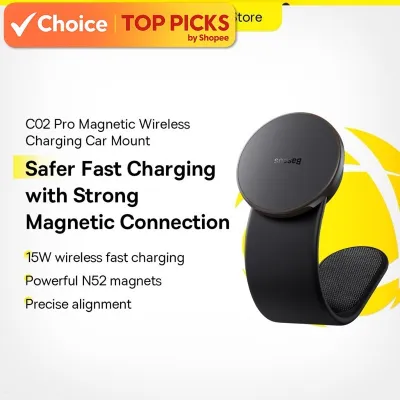
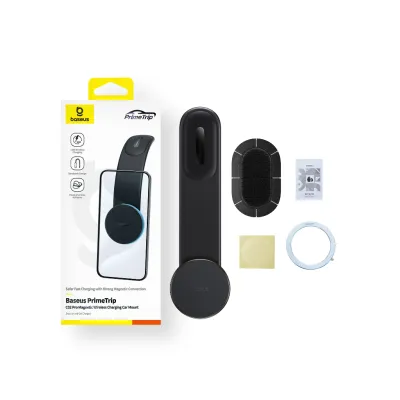
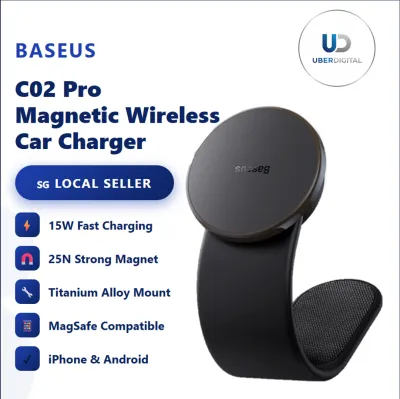
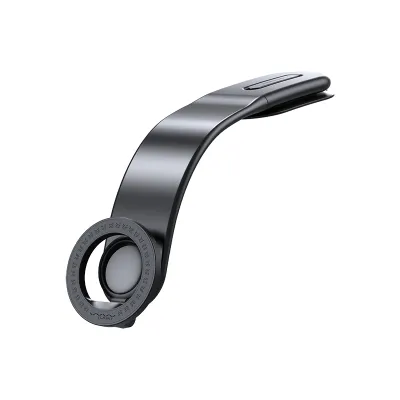
Prices are valid at publication and may change. Please refer to the product page for the latest price.
Windshield placement is one of the most critical aspects of compliance. The LTA dictates that no accessory, sticker, or device may be placed in a manner that obstructs the driver’s direct line of sight. The primary viewing zone of the front windshield must remain completely clear. Any device that blocks a significant portion of the road ahead or interferes with the driver’s ability to see traffic signals, pedestrians, or other vehicles is considered non-compliant and can result in fines.
Furthermore, Singapore law strictly prohibits the use of certain electronic features on public roads. Radar detectors, laser jammers, and any devices designed to interfere with speed-tracking equipment are illegal. Under the Road Traffic Act, possessing or operating such equipment carries severe penalties, including heavy monetary fines and potential imprisonment. Drivers must ensure that any mounted electronic device is purely for navigation, mounting, or standard video recording, with no active signal-jamming or detection capabilities.
Privacy and data recording guidelines also play a significant role when using recording devices on public roads. While capturing footage for insurance claims or accident reporting is generally permitted, drivers must respect the Personal Data Protection Act (PDPA). Recording in restricted security zones, military areas, or private properties where photography is explicitly banned can lead to legal complications. Additionally, publicly sharing recorded footage that identifies individuals or license plates without consent must be handled carefully to avoid violating privacy laws.
How to Verify Baseus C02 Pro Compliance
To ensure the Baseus C02 Pro meets all local requirements, buyers must perform a series of checks on the physical unit, its packaging, and its official documentation. Because product specifications can vary by production batch or regional edition, verifying these details firsthand is the most reliable approach.

First, examine the physical dimensions and mounting mechanism of the Baseus C02 Pro. The device features a flexible, bendable neck designed to attach to the dashboard or windshield. You must measure the overall footprint of the mount, especially when a smartphone or secondary device is attached to it. Ensure that the combined size of the mount and the attached device does not exceed the clearance limits of your vehicle’s windshield. The mounting base must also provide a secure, stable grip that prevents the unit from vibrating excessively or detaching while driving over uneven road surfaces.
Next, verify the official feature list provided in the user manual or on the manufacturer’s website. Confirm that the specific model of the Baseus C02 Pro you own does not contain any restricted wireless transmission or detection technologies. Since the C02 Pro is designed primarily as a magnetic car mount with optional wireless charging, it typically does not feature radar detection or video recording capabilities on its own. However, if you are pairing it with a smartphone or a third-party camera module to record your drives, you must ensure the entire setup remains free of prohibited features.
Finally, review the product packaging and the device’s regulatory label for recognized compliance marks. Look for international safety certifications such as CE (Conformité Européenne), FCC (Federal Communications Commission), or RoHS (Restriction of Hazardous Substances). While these are international standards rather than specific LTA approvals, they demonstrate that the manufacturer has met rigorous electrical safety and electromagnetic compatibility requirements. This reduces the risk of the device causing interference with your vehicle’s onboard electronics or safety systems.
Legal Installation Practices for Your Windshield
Even a fully compliant device can become illegal if it is installed incorrectly. Proper placement is key to maintaining road safety and passing routine vehicle inspections in Singapore.
When planning the installation, identify the legal mounting zones on your windshield. The most common and accepted location is directly behind the rearview mirror, slightly toward the passenger side. This placement utilizes an area of the windshield that is already partially obscured from the driver’s direct line of sight by the mirror itself. Avoid placing the mount directly in the center of the windshield or within the sweep path of the driver’s side windshield wiper, as this can severely compromise visibility during heavy rain.
Cable management is another critical factor in a legal installation. Loose, dangling wires from the mount to the car’s power outlet can distract the driver, snag on gear shifters, or block control panels. All power cables should be neatly routed along the edges of the windshield, tucked behind the interior trim panels, and guided down to the center console or fuse box. Ensure that the routed cables do not cross over or obstruct the deployment paths of the vehicle’s side-curtain or passenger-side airbags.
For advanced setups, such as hardwiring a wireless charging mount or integrating a secondary camera system, seeking professional installation is highly recommended. A qualified automotive technician at a reputable local workshop can ensure that the electrical connections are safely fused and integrated into the vehicle’s electrical system. This prevents potential short circuits, battery drain issues, and avoids voiding your vehicle’s manufacturer warranty.
Managing Battery Safety in Singapore's Climate
Singapore’s tropical climate presents unique challenges for car electronics. Vehicles parked in open-air car parks or on the roadside are subjected to intense sunlight, which can cause cabin temperatures to rise rapidly to dangerous levels.
Standard lithium-ion batteries are highly sensitive to extreme heat. When exposed to high temperatures for prolonged periods, these batteries can degrade quickly, swell, leak hazardous chemicals, or even experience thermal runaway, leading to a fire hazard. In contrast, devices powered by supercapacitors or those that rely solely on direct external power are much safer for use in hot climates, as they do not store energy chemically and have much higher thermal tolerance limits.
To manage safety effectively, check the Baseus C02 Pro’s power specifications on its product label or user manual. If your specific model features wireless charging capabilities, verify whether it contains any internal battery cells or if it operates purely on direct power input from the vehicle’s USB port. Devices that do not contain internal lithium batteries are inherently safer to leave inside a hot vehicle.
Regardless of the device’s power source, practicing good parking habits is highly beneficial. Whenever possible, park in shaded areas, multi-storey car parks, or basement parking lots to keep the cabin temperature as low as possible. If you must park in direct sunlight for an extended period, consider detaching the Baseus C02 Pro from its magnetic base and storing it in the glove compartment, or taking it with you to prevent unnecessary heat exposure.
Frequently Asked Questions (FAQ)
Is Parking Mode Legal Under LTA Guidelines?
Yes, parking mode is legal in Singapore, provided the installation and usage comply with local laws. The recording system must be installed safely, ensuring that any hardwired connection to the vehicle’s battery includes a low-voltage cutoff device to prevent draining the car’s battery. Additionally, the camera must only record public spaces or areas where recording is not explicitly prohibited, and the footage must be handled in accordance with local personal data protection guidelines.
Will a Dash Cam Affect My Vehicle Inspection?
A properly installed dash cam or windshield mount will not cause your vehicle to fail its periodic inspection at authorized centers like VICOM or STA. The inspectors will check to ensure that the device is securely mounted, does not obstruct the driver’s primary line of sight, and has no loose or hazardous wiring hanging in the cabin. If an accessory is found to block the driver’s view, you may be asked to adjust or temporarily remove it before the vehicle can pass the inspection.
Community discussion
Share your experience or ask a question. Comments are reviewed before publication.